Overview of the Victorian Britain Period
The Victorian era spanned the years 1837 to 1901, marked by Queen Victoria’s reign over the British Empire. This period witnessed profound cultural, social, and technological transformations, impacting numerous spheres of life. Industrialization, urbanization, and the expansion of the British Empire played crucial roles in shaping societal norms and cultural expressions. These changes fostered a unique environment conducive to diverse mythological and folklore traditions. The interplay of scientific advancement and traditional beliefs created a fertile ground for mythological narratives to evolve.
Victorian Britain was characterized by a complex interconnection of science, religion, and superstition. The era’s fascination with the supernatural was fueled partly by the tension between emerging scientific discoveries and traditional religious values. This environment encouraged the exploration of mythologies and folklore, allowing them to persist alongside modernization. Understanding this cultural backdrop is essential for comprehending the lasting significance of myths and folklore during this time. The period’s dynamic changes enabled both the adaptation and preservation of mythological elements.
Cultural and Religious Worldviews
Dominant Belief Systems
In Victorian Britain, Christianity, particularly the Anglican Church, played a predominant role in shaping public morality and cultural norms. Despite the increasing influence of scientific rationalism, religion remained a crucial aspect of daily life. The era saw a proliferation of spiritual movements, including spiritualism, which emerged as a reaction to the rigidity of established religious structures. This movement reflected a desire to reconcile faith with newfound scientific insights.
The cosmology of the time was a juxtaposition of religious beliefs and a burgeoning interest in exploration and scientific inquiry. The Victorians were both enchanted and unsettled by the notions of evolution and geology that challenged biblical narratives. These tensions influenced the era’s interpretation of the natural world, leading to a renewed interest in mythological creatures and supernatural phenomena. The cultural landscape became ripe for the continuation and transformation of ancient myths.
Role of Myth in Daily Life
Myths and legends served as essential components of Victorian social life, often underpinning moral lessons and societal norms. They offered frameworks for understanding human experiences and addressing existential concerns. Myths were embedded in children’s literature, forming an integral part of education and moral upbringing. This integration of folklore into daily life helped maintain its relevance amidst societal changes. Myths also functioned as allegorical vehicles for discussing contemporary issues indirectly.
Community identity and cohesion were reinforced through shared folklore and mythological narratives. These stories provided a sense of continuity and belonging, especially in times of rapid social change. Folklore rituals and festivals allowed communities to express collective values and beliefs, serving both as entertainment and as a means of cultural preservation. This dual function ensured that myths remained vital to the social fabric of Victorian Britain.
Mythological Beasts and Supernatural Entities
Common Types of Mythical Creatures
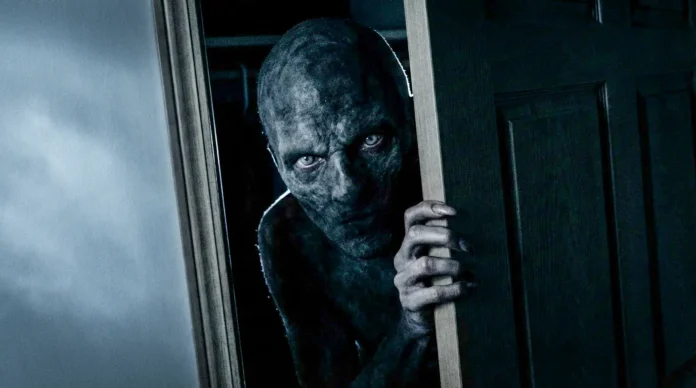
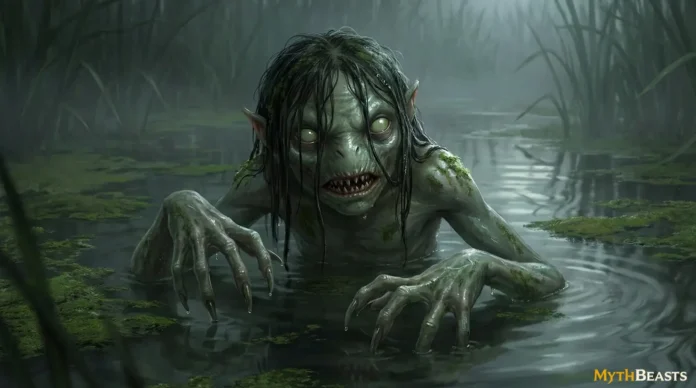
Victorian Britain saw the continuation and adaptation of several mythological creatures, each occupying specific roles within society. Fairies, often depicted as mischievous or benevolent, were popular figures in folklore and literature. Ghosts, too, were ubiquitous, reflecting Victorian concerns with death and the afterlife. The era’s fascination with the unknown also led to a revival of interest in ancient creature myths, such as dragons and sea monsters.
These supernatural beings were categorized according to their perceived nature and influence, often serving as metaphors for societal anxieties. For instance, the fear of industrialization and urbanization was sometimes personified through monstrous entities. This categorization allowed for a nuanced exploration of contemporary social and psychological themes within the safe confines of mythological narratives.
Symbolism and Meaning
In Victorian mythology, creatures often symbolized cultural and psychological tensions. Fairies, for example, could represent both the enchantment of nature and the fear of wilderness in an increasingly industrialized society. Ghosts frequently symbolized unresolved issues and the human fear of death and the unknown. These symbolic interpretations reflected broader societal concerns, offering a means to explore complex emotions and existential questions without direct confrontation.
Mythical beasts often embodied moral allegories, reflecting the era’s preoccupation with virtue and vice. Dragons and monsters were occasionally used to symbolize unchecked ambition or moral corruption. Such symbolism was closely tied to the moral didacticism prevalent in Victorian literature and art. Mythological symbolism thus provided a cultural mirror, reflecting and reinforcing societal values and fears during this transformative period.
Folklore Traditions and Storytelling
Oral and Written Transmission
Folklore in Victorian Britain was transmitted through both oral and written traditions, ensuring the preservation of ancient stories. Oral storytelling remained a vital means of passing down cultural narratives, especially in rural areas. With the rise of literacy, myths were increasingly captured in print, appearing in books, newspapers, and periodicals. This shift allowed for the wider dissemination and standardization of folklore, contributing to its longevity.
Publishers capitalized on the public’s interest in myths by producing collections of folktales and legends. The written word gave new life to old stories, providing them with permanence and accessibility. However, the transition to written forms sometimes altered the original narratives, introducing new interpretations and meanings. This dual transmission method ensured that folklore remained dynamic and adaptable to changing social contexts.
Regional Variations
Despite the homogenizing effect of print culture, folklore retained significant regional variations in Victorian Britain. Different areas preserved distinct myths and legends, influenced by local history and environment. For example, Scottish folklore prominently featured selkies and other sea creatures, reflecting the maritime geography of the region. In contrast, English folklore often emphasized woodland creatures such as goblins and fairies, drawing from its agrarian roots.
These regional differences highlighted the diversity of cultural expressions within Britain, providing insight into the varied ways communities interacted with their surroundings. While some myths crossed regional boundaries, they often adapted to local contexts, acquiring unique characteristics. This regional specificity contributed to the rich tapestry of Victorian folklore, allowing for a multitude of interpretations and expressions.
Relationship Between Humans and the Mythical World
Fear, Protection, and Reverence
In Victorian Britain, mythical creatures were perceived with a mix of fear, reverence, and fascination. Some were seen as protective spirits, guardians of natural landscapes, or harbingers of fortune. Others were viewed with suspicion or fear, embodying chaos or representing moral challenges. This ambivalence reflected the complex relationship between humans and the mythical world, where creatures served as both threats and allies.
The belief in supernatural entities influenced social practices and personal behavior, often guiding moral decision-making. Myths provided frameworks for understanding and coping with the unpredictable elements of life. This relationship underscored the enduring power of mythologies to shape individual and collective experiences, offering protection and guidance through symbolic narratives.
Influence on Art and Material Culture
Mythical themes in Victorian Britain permeated art and material culture, reflecting the era’s fascination with the supernatural. Architectural features often included motifs of mythical creatures, serving both decorative and symbolic purposes. Sculpture and painting frequently depicted legendary scenes, merging artistic expression with cultural storytelling. These representations reinforced mythological narratives, embedding them in the material fabric of society.
In addition, mythological elements appeared in textiles, jewelry, and everyday objects, infusing daily life with symbolic meaning. Such artifacts provided tangible connections to mythical narratives, allowing individuals to engage with folklore on a personal level. The integration of mythology into material culture underscored its significance as a source of inspiration and identity during the Victorian era.
Transition and Legacy of the Victorian Britain Period
As the Victorian era drew to a close, mythological concepts evolved, reflecting changes in societal beliefs and artistic trends. The rise of modernism and scientific rationalism gradually diminished the traditional authority of myths, yet they continued to resonate in new forms. Folklore adapted to contemporary contexts, influencing literature, theatre, and later, cinema. The enduring legacy of Victorian myths was their ability to transform and integrate into modern cultural narratives.
Victorian mythology’s resilience is evident in its influence on subsequent generations, inspiring authors, artists, and filmmakers. The themes and motifs of this period have persisted, illustrating the universality and adaptability of mythological narratives. While some myths faded from prominence, others were reimagined and revitalized, continuing to shape cultural storytelling traditions into the present day. This adaptability underscores the enduring power of Victorian myths.
Historical Reliability and Interpretation
Interpreting Victorian mythology presents challenges due to the era’s complex interplay of belief systems and cultural expressions. Historians and scholars rely on written records, artistic representations, and oral accounts to reconstruct the period’s mythological landscape. However, these sources often reflect contemporary biases and interpretations, complicating efforts to discern historical fact from cultural expression. The symbolic nature of myths invites multiple readings, each offering insights into the period’s values and anxieties.
Scholars emphasize the importance of contextual analysis in understanding Victorian mythology, recognizing the limitations of available sources. While myths provide valuable windows into the era’s cultural psyche, they must be approached with an awareness of their allegorical and metaphorical dimensions. Ultimately, the interpretation of Victorian mythology continues to evolve, shaped by ongoing scholarly inquiry and cultural reflection.