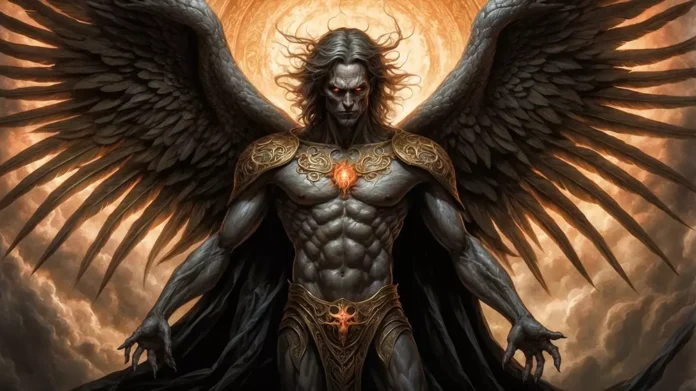
Death Touch – an Overview
Death Touch is a mythological function recognized in various cultural traditions, featuring the power to bring death through mere contact. This concept distinguishes itself from general supernatural harm by its precise and immediate lethality. Historical belief systems often acknowledge Death Touch as a distinct category due to its unique characteristics, setting it apart from broader destructive forces. The classification of Death Touch is crucial because it embodies specific moral and cosmological beliefs within a culture, reflecting ideas about life, death, and the supernatural.
Manifestation and Constraints
How Death Touch Is Expressed
In mythological traditions, Death Touch frequently manifests through immediate death or decay resulting from a touch, often impacting living beings and occasionally the environment. These effects are documented in various cultures, where the slightest contact can lead to transformations like withering or turning to stone. The destructive potential of Death Touch is evident in stories where it causes significant environmental disruption or societal turmoil. Such narratives emphasize its profound cosmological impact that often transcends individual occurrences.
Limits and Conditions
Though potent, Death Touch is not without constraints. Its application is often bound by moral or symbolic conditions. In many traditions, the use of Death Touch is legitimate only under certain circumstances or by specific beings. These constraints serve as a form of social regulation, ensuring that the power is not wielded indiscriminately. Environmental factors or divine decrees might also limit its scope, underscoring the belief that such a formidable force must be kept in check within a cosmological order.
Mythological Role and Meaning
Symbolic and Cultural Significance
Within mythological frameworks, Death Touch often symbolizes the ultimate authority or divine judgment. It reflects a psychological understanding of death as an inevitable, omnipresent force. The cultural significance of Death Touch also includes its role in social regulation, acting as a boundary for moral behavior. In some traditions, it represents the balance between creation and destruction, essential for maintaining cosmic order.
Death Touch in Myth and Folklore
Death Touch plays a critical role in many myths, structuring narratives around authority and transgression. For example, stories might feature beings punished for hubris by entities wielding Death Touch, illustrating moral lessons. This mythological function often delineates boundaries between humans and the divine, highlighting transformation processes or the consequences of crossing forbidden thresholds. Such narratives emphasize the inherent power dynamics and ethical considerations embedded within traditional belief systems.
Beasts with Death Touch
Gorgon Medusa
In Greek mythology, Medusa, a Gorgon, embodies Death Touch through her lethal gaze, petrifying those who look upon her. This deadly attribute defines her identity within the cultural context, symbolizing the dangers of transgression against the divine. Without Death Touch, Medusa’s narrative function in Greek mythology, where she represents divine retribution and transformation, would be fundamentally altered. Her story underscores the power and fear associated with such lethal abilities.
Basilisk
The Basilisk, rooted in European folklore, possesses a Death Touch capable of killing with a glance or touch. Its identity is inexorably tied to this deadly power, often depicted as a creature of pure malevolence. The Basilisk’s mythological role emphasizes the perils of unchecked ambition and human hubris. Historical texts describe the Basilisk as embodying the natural world’s dark forces, warning against arrogance and the disruption of nature’s balance.
Naga
In Hindu and Buddhist traditions, the Naga often holds a symbolic Death Touch, controlling life and death through its venom. This attribute is central to its mythological identity, illustrating themes of balance and the cyclical nature of existence. The Naga’s role in myth demonstrates the duality of life-giving and life-taking forces, essential for maintaining cosmic order. Without Death Touch, the Naga’s influence within these traditions would be significantly diminished.
Cultural Interpretations and Regional Emphasis
Different cultures interpret Death Touch through varied symbolic lenses. In some traditions, it signifies divine wrath, while in others, it’s a natural phenomenon. For instance, within Hindu mythology, Death Touch often implies balance and cosmic cycles. Conversely, Western narratives might frame it as a manifestation of ultimate evil. These varying interpretations highlight cultural divergences in understanding power, morality, and the supernatural. Such differences underscore the diverse mythological frameworks that shape perceptions of life and death.
Similar or Related Mythological Functions
Conceptually adjacent to Death Touch are functions like the Evil Eye and curses, which also result in harm through indirect means. However, Death Touch is distinct in its immediate, direct consequence upon contact. Unlike curses, which may require rituals or invocations, Death Touch operates through the inherent power of the touch itself. This separation emphasizes the unique immediacy and potency of Death Touch in mythological narratives, setting it apart as a more direct manifestation of supernatural wrath or power.
Historical Interpretation and Evidence Limits
Scholarly interpretations of Death Touch often explore its symbolic and literal dimensions. Some suggest it represents psychological projections of fear and mortality, while others view it as allegorical. No verified sources describe specific rituals or ceremonies related to Death Touch, reflecting gaps in historical evidence. This lack of documentation presents challenges in fully understanding its role in ancient belief systems. Thus, interpretations must often rely on reconstructed narratives and comparative mythology, acknowledging the biases inherent in surviving texts.