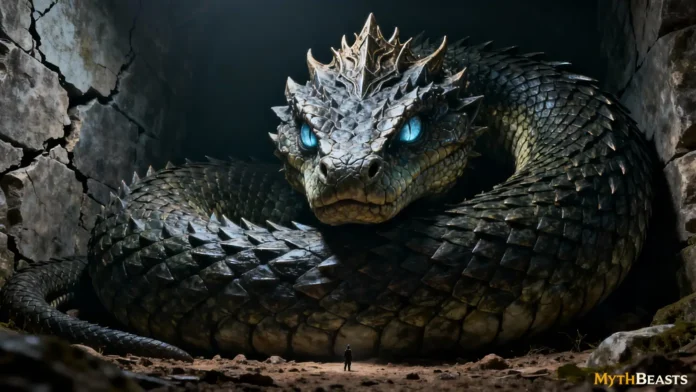
Gaze of Death – an Overview
The Gaze of Death in mythology is a distinct function where a being or force exerts lethal influence through sight or perception. It is recognized across cultures for its unique ability to cause death or destruction.
This function is classified separately from general supernatural abilities due to its specific focus on sight as a conduit of deadly power. It is not merely a magical effect but a profound mythological concept explored in various traditions.
Mythological systems treat the Gaze of Death with reverence and caution, recognizing its potential to disrupt life and balance. It carries a weight of inevitability and doom, often linked with divine or cursed origins.
Manifestation and Constraints
How Gaze of Death Is Expressed
Gaze of Death manifests in mythology through transformative outcomes, such as turning living beings to stone or causing immediate death. These effects are depicted in tales that emphasize the power of vision as a destructive force.
In some traditions, the Gaze of Death is expressed through environmental disruption, where mere sight can alter landscapes or diminish fertility. This power underscores the connection between perception and worldly impact.
Cosmologically, the Gaze of Death represents an alignment with forces of chaos or order, depending on its use. It can uphold divine justice or signify malevolent transgression, reflecting broader mythological narratives.
Limits and Conditions
Symbolically, the Gaze of Death is governed by moral constraints, often wielded by deities or cursed individuals. Its legitimacy is debated within myths, where rightful use aligns with divine will or cosmic balance.
Environmental constraints may limit the Gaze of Death to specific locations or times, such as sacred sites or during mythical conjunctions. These conditions highlight the structured nature of mythological belief systems.
Cosmologically, Gaze of Death’s use is restricted by the moral universe of each tradition. It may punish hubris or transgressions, emphasizing the power’s alignment with mythological justice or vengeance.
Mythological Role and Meaning
Symbolic and Cultural Significance
The Gaze of Death symbolizes ultimate authority and control over life and death. In mythological contexts, it reflects the deep fears and respect for the unseen powers that govern existence.
Culturally, the Gaze of Death serves as a psychological reminder of mortality and the limits of human power. It often appears in cautionary tales that emphasize humility and reverence for the divine.
Socially, it regulates behavior by illustrating consequences for crossing divine or natural laws. In this way, it serves as a cultural mechanism to enforce societal norms and moral boundaries.
Gaze of Death in Myth and Folklore
In mythological narratives, the Gaze of Death structures authority by associating it with divine figures who wield it as a tool of justice or retribution. It underscores their untouchable status.
Transgression is a key theme, with the Gaze of Death marking those who defy divine order. It serves as a warning against challenging established hierarchies or divine decrees.
This function often delineates boundaries between realms, such as the living and the dead, reinforcing the separation of sacred and profane within mythological cosmologies.
Beasts with Gaze of Death
Medusa
In Greek mythology, Medusa’s Gaze of Death turns onlookers into stone. This function is central to her identity as a Gorgon, signifying both fear and mythological boundary protection.
Basilisk
The Basilisk, emerging from European folklore, embodies the lethal gaze, causing death with a single look. It symbolizes the potent danger contained within small, unassuming creatures.
Catoblepas
African myth describes the Catoblepas, whose gaze can kill. This creature highlights the power of eyes in myth, embodying dread and respect for nature’s lethality in folklore traditions.
Cultural Interpretations and Regional Emphasis
Greek traditions often interpret the Gaze of Death as a symbol of divine retribution, reflecting the gods’ power. In contrast, European folklore treats it as a natural force to be avoided and respected.
In African mythologies, the emphasis is on natural balance and the creature’s role within ecosystems, often highlighting the symbiosis between life and death as part of cosmic order.
Regional variations offer distinct moral framings, with some cultures viewing the Gaze of Death as a deserved punishment, while others see it as an indiscriminate force of nature.
Similar or Related Mythological Functions
Paralyzing Stare is a function closely related to the Gaze of Death, where sight causes immobilization instead of death. It represents control over freedom, reflecting themes of power and submission.
The Evil Eye is another adjacent concept, where sight inflicts misfortune rather than death. It highlights the protective and harmful duality of vision within different cultural beliefs.
Death Whisper, where a mere mention or sound causes demise, shares thematic proximity with the Gaze of Death. Both convey fatal influence through subtle, unobtrusive means.
Historical Interpretation and Evidence Limits
Historically, scholars interpret the Gaze of Death through symbolic readings, viewing it as a metaphor for power or fear. Literal interpretations are less common, given the lack of empirical evidence.
Some texts suggest a protective function, though evidence is limited and varies across cultures. The interpretive gap is notable, with few comprehensive sources detailing the full scope of these functions.
No verified sources describe every aspect of the Gaze of Death in all contexts, underscoring the uncertainty and conjecture in scholarly reconstructions of these mythological phenomena.