back to top

Silent Flight

Silent Flight is a legendary skill symbolizing stealth and grace, often associated with mythical creatures capable of moving without sound.

Relevant Beasts

Chile
Death Messenger
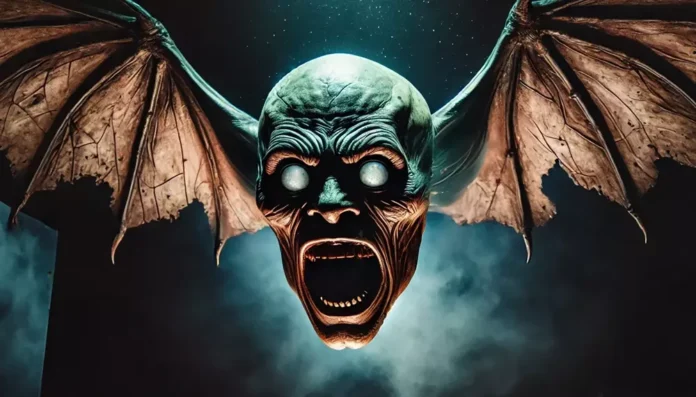
Chonchon - Chilian folklore
Chile

Chonchon

A Chilean creature with human ears that acts as wings, the Chonchon is known to steal life force.

  • Skills
Life DrainSilent Flight
  • Weaknesses
Salt BurnSun Harm

Silent Flight – an Overview

Silent Flight is a distinct mythological function recognized across various cultural traditions. It is often viewed as a mysterious capability linked to supernatural beings or forces. Unlike general supernatural effects, Silent Flight is uniquely characterized by its ability to traverse space without sound, often evoking awe or fear. This function is treated as separate due to its specific implications for invisibility, stealth, and the disruption of natural order. It represents a boundary between the known and the unknown, playing a crucial role in mythological systems by emphasizing the limits of human perception and understanding.

Manifestation and Constraints

How Silent Flight Is Expressed

Silent Flight manifests in mythology through various observable effects, such as unexplained movements or the sudden appearance of creatures in places they could not logically reach. These manifestations often serve as harbingers of change or agents of cosmic balance, indicating the presence of supernatural influence. The phenomenon might be illustrated by footprints left without a discernible source or winds that alter direction with no apparent cause. These expressions underscore the presence of Silent Flight within mythological narratives, emphasizing its impact on the physical and spiritual realms.

Limits and Conditions

The constraints governing Silent Flight are significant, reflecting moral and symbolic boundaries within mythological traditions. Many cultures impose specific conditions under which Silent Flight can occur, often associating it with purity, divine favor, or ancestral lineage. Environmental conditions, such as the presence of sacred sites or celestial events, may also dictate its legitimacy. These constraints ensure that Silent Flight remains a rare and revered phenomenon, reinforcing its status as a controlled and purposeful function rather than an indiscriminate power.

Mythological Role and Meaning

Symbolic and Cultural Significance

Within mythological worldviews, Silent Flight often symbolizes transcendence and mastery over the natural world. It embodies the ability to move beyond ordinary human limits, reflecting a deeper understanding of life’s mysteries. In some traditions, Silent Flight represents the soul’s journey or the passage between life and death, linked to the spiritual realm. It also serves as a metaphor for wisdom and foresight, qualities attributed to those who can navigate unseen paths. These symbolic associations highlight the cultural importance of Silent Flight as a representation of power and insight.

Silent Flight in Myth and Folklore

Silent Flight plays a crucial role in structuring narratives involving authority and transformation. In many myths, it is a tool for divine messengers or trickster figures who disrupt or restore order. The function is often pivotal in tales of metamorphosis, where beings shift forms or transcend earthly constraints. Silent Flight may also delineate boundaries, marking the limits of human territory and signaling entry into sacred or forbidden spaces. These narratives illustrate the enduring influence of Silent Flight in shaping mythological landscapes and moral lessons.

Beasts with Silent Flight

Hugin and Munin

Hugin and Munin, Odin’s ravens in Norse mythology, are central examples of Silent Flight. They embody the god’s omniscience by silently traversing the world to report back to him. Their ability to move without detection represents the extension of Odin’s wisdom and authority. Their identity hinges on Silent Flight, as it allows them to gather information undisturbed, reinforcing their role as crucial messengers in the Norse cosmological framework.

Banshee

In Irish folklore, the Banshee is a spectral figure whose Silent Flight is integral to her identity. Her presence is known not by sight or sound, but by the eerie wail that precedes her. This function allows her to move undetected, a harbinger of death. Without Silent Flight, the Banshee’s role as an omen would be diminished, as her power lies in her ability to appear without warning, symbolizing the unavoidable nature of fate.

Garuda

Garuda, a mythological bird in Hindu and Buddhist traditions, is characterized by Silent Flight. His vast wingspan and silent motion signify divine intervention and protection. As the mount of Vishnu, Garuda’s ability to travel unnoticed embodies the swift and discreet execution of divine will. Without this capability, his role as a celestial vehicle and protector of dharma would be compromised, underscoring the indispensability of Silent Flight in his narrative.

Cultural Interpretations and Regional Emphasis

Silent Flight is interpreted with varying emphasis across cultures, reflecting diverse symbolic meanings. In some traditions, it is associated with divine authority and protection, while in others, it suggests deceit or the unexpected. This divergence illustrates how Silent Flight can embody both positive and negative attributes, depending on cultural context. In Asian traditions, for instance, Silent Flight often signifies harmony and balance, whereas in Western narratives, it may connotate stealth and secrecy. These differences underscore the multifaceted nature of Silent Flight in global mythologies.

Similar or Related Mythological Functions

Functions similar to Silent Flight include Invisibility and Divine Transformation. While both involve transcending ordinary perception, Silent Flight is distinct in its emphasis on movement. Invisibility often focuses on visual concealment without necessarily implying silent traversal. Divine Transformation encompasses broader changes, such as altering form or essence, which may not involve silence. These distinctions highlight Silent Flight’s unique role in mythology, separating it from other supernatural functions while acknowledging conceptual overlaps.

Historical Interpretation and Evidence Limits

Scholars interpret Silent Flight both symbolically and literally, recognizing its varied representations across time. Symbolically, it reflects themes of freedom and mastery over the physical realm. Literally, it is seen in narratives portraying supernatural beings. However, gaps in historical sources present challenges, as many accounts lack detailed descriptions. Some interpretations rely heavily on symbolic readings, which may introduce biases. No verified sources describe Silent Flight with complete clarity, emphasizing the need for cautious analysis in understanding its mythological significance.