back to top

Spell Casting

Explore the role of spell casting in mythology, where it represents the ability to influence reality through spoken words or rituals.

Relevant Beasts

North America
Abyssal Guardian
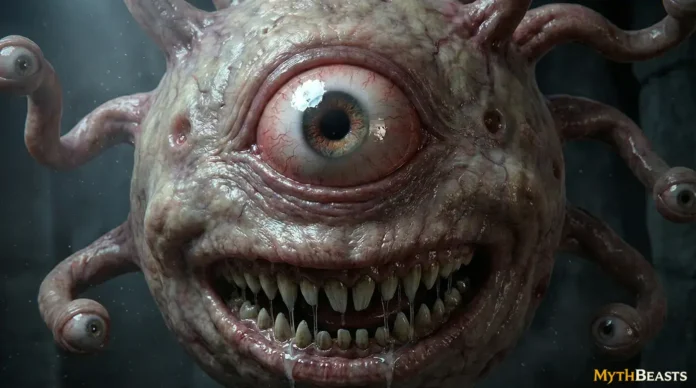
Beholder - dungeons & dragons
USA

Beholder

Beholders are otherworldly creatures with a central eye and many smaller eye stalks, each capable of casting powerful magical...

  • Skills
Life DrainMind Control
  • Weaknesses
Anti-MagicLight
Asia
Elemental Crone
Baba Yaga
Russia

Baba Yaga

A witch from Slavic folklore who lives in a hut on chicken legs, known for her vast magical powers.

  • Skills
Magic ManipulationSpell Casting
  • Weaknesses
Holy GroundSacred Relic

Spell Casting – an Overview

Spell Casting is a mythological function that involves invoking supernatural effects through spoken words, gestures, or rituals. It is distinct from generic supernatural events due to its intentional and often formulaic nature. Typically, Spell Casting is recognized as a method to manipulate reality, distinguishable by its structured invocation and defined outcomes. The function is codified in various traditions as an expressive means of exerting control over elements, beings, or fate. Unlike incidental supernatural occurrences, Spell Casting requires deliberate action, setting it apart within mythological classifications as a controlled and purposeful practice.

Manifestation and Constraints

How Spell Casting Is Expressed

Spell Casting is observable in mythological traditions through tangible effects, such as environmental changes, transformations, or cosmic disturbances. For example, in certain narratives, a spoken incantation might cause a storm, illustrate a shift in reality, or summon supernatural entities. These effects underscore the power attributed to Spell Casting in altering the natural order. The emphasis is on the result rather than the process, highlighting the outcome as the primary evidence of Spell Casting’s presence. This focus on observable consequences provides insight into how ancient cultures perceived its potent influence on the world.

Limits and Conditions

Many mythologies impose constraints on Spell Casting to maintain cosmic balance and moral order. Restrictions can include moral codes, requiring pure intentions, or environmental conditions, like specific times or locations. Such boundaries ensure that Spell Casting aligns with the tradition’s worldview, preventing misuse or disruption. These limitations are vital for maintaining societal norms, reflecting a culture’s ethical framework and cosmological beliefs. By delineating when and how Spell Casting is permissible, traditions embed it within a broader system of rules and ethics, underscoring its regulated nature rather than depicting it as universally accessible.

Mythological Role and Meaning

Symbolic and Cultural Significance

In many cultures, Spell Casting symbolizes the human desire to transcend ordinary limitations and exert influence over the unknown. It may reflect themes of wisdom, power, or divine favor, signifying a connection to higher spiritual forces. Spell Casting is often portrayed as a vehicle for transformation, allowing practitioners to influence their destiny or achieve enlightenment. The act of casting a spell can symbolize authority or transgression, depending on the context, highlighting the nuanced role it plays in the mythological imagination. This symbolic framework reflects cultural values, providing insight into how societies view power and morality.

Spell Casting in Myth and Folklore

In mythological narratives, Spell Casting often serves to establish authority, challenge boundaries, or effect transformation. Characters who cast spells may embody wisdom or rebellion, using their abilities to navigate complex moral landscapes. For instance, heroes might cast spells to overcome obstacles or villains might use them to extend power, illustrating diverse roles. Through these narratives, Spell Casting becomes a tool for exploring themes such as justice, ambition, or hubris. Its role in storytelling is not merely functional but integral to the moral and symbolic architecture of myths, providing a narrative device for depicting change.

Beasts with Spell Casting

Dragon of Eastern Mythologies

In Eastern traditions, dragons are creatures intrinsically linked with Spell Casting, embodying control over weather and elements. Spell Casting defines their identity as they often regulate rain or storms, reflecting their divine status. This mystical ability distinguishes them from other mythical creatures, symbolizing harmony and balance between nature and humans. Without Spell Casting, dragons would lack their pivotal role as mediators of cosmic forces, fundamentally altering their mythological narrative.

Circe from Greek Mythology

Circe, the enchantress from Greek mythology, exemplifies Spell Casting through her transformative spells. Her ability to change men into animals is central to her persona, defining her narrative function. This transformative power underscores her role in myth as a figure of both seduction and caution against overreaching ambition. Spell Casting is not just an attribute but a defining characteristic, integral to her identity and thematic relevance in Greek stories.

Yokai of Japanese Folklore

In Japanese folklore, various Yokai possess Spell Casting abilities, altering reality or perception. Their spells serve to challenge human understanding, blurring boundaries between worlds. Spell Casting is fundamental to their role as cultural symbols of mystery and unpredictability. Without it, Yokai would lose their enigmatic allure, becoming mere creatures rather than embodiments of supernatural ambiguity. Their identity as spellcasters highlights cultural themes of duality and transformation.

Cultural Interpretations and Regional Emphasis

Spell Casting’s interpretation varies significantly across cultures, reflecting divergent beliefs about power and morality. In Western traditions, it often carries a moral undertone, associated with the potential for both good and evil. In contrast, Eastern views may emphasize balance and harmony, with Spell Casting seen as a means to maintain cosmic order. These variations highlight cultural distinctions in understanding supernatural agency, with each tradition framing Spell Casting within its unique ethical and cosmological context. Such differences underscore the diverse ways societies conceptualize control over natural and spiritual realms.

Similar or Related Mythological Functions

Mythological functions akin to Spell Casting include prophecy and divination, which also involve accessing hidden knowledge or power. While similar, these functions focus on revealing rather than altering reality. Ritualistic magic shares proximity but often involves community participation and established tradition. In contrast, Spell Casting is more individualistic and personal. These distinctions clarify the unique role of Spell Casting as an active intervention in the natural order, setting it apart from merely interpretive or communal practices. This separation reflects different cultural approaches to the supernatural, emphasizing individualized agency.

Historical Interpretation and Evidence Limits

Scholars analyze Spell Casting through both symbolic and literal lenses, recognizing it as a metaphor for human aspiration and a historical practice. However, evidence is often fragmented, with many cultures lacking comprehensive documentation. Interpretations must navigate biases in surviving texts, acknowledging their contextual nature. While Spell Casting represents a rich field of study, historical gaps limit definitive conclusions. No verified sources describe the exact rituals across all contexts, highlighting the challenge of reconstructing these beliefs. This underscores the need for cautious interpretation, recognizing both the depth and uncertainty of these traditions.