back to top

Spirit Summoning

Spirit Summoning involves calling forth spirits from the otherworld, a skill seen in various mythologies across cultures.

Relevant Beasts

Hebrews
Death Messenger
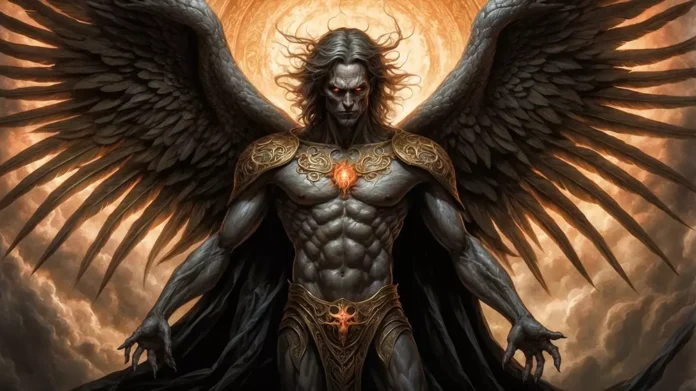
Samael - the angle of death
Hebrews

Samael

Samael, the Angel of Death, is a figure of divine judgment and moral complexity in Jewish lore, known for...

  • Skills
Death & NecromancyDeath Touch
  • Weaknesses
Divine LightDivine Restrictions
Asia
Spectral Being
Yuki-onna - a pale figure in the snow, her skin like moonlight, her breath as cold as the frost
Japan

Yuki-Onna

Yuki-Onna is a legendary Japanese spirit who appears during snowy nights, embodying both beauty and the deadly cold of...

  • Skills
Death & NecromancyElement Control
  • Weaknesses
Element SensitivitiesFire Vulnerable
Europe
Spirit Bringer
Jewish Folklore

Dybbuk

A malevolent spirit that possesses the living, causing distress and sickness in Eastern European Jewish folklore.

  • Skills
Death & NecromancyMental Powers
  • Weaknesses
Divine RestrictionsHoly Ground

Spirit Summoning – an Overview

Spirit Summoning, in mythological terms, refers to invoking non-corporeal entities into the physical realm. This function transcends mere supernatural phenomena and is recognized as a distinct classificatory category within cultural traditions. Unlike general mystical occurrences, Spirit Summoning is formally acknowledged in many belief systems as involving complex interactions between the human and spiritual worlds. Traditions attribute specific rituals, conditions, and agents to this function, setting it apart from other supernatural abilities such as magic or enchantment. The differentiation emphasizes controlled interaction with the spiritual domain, reflecting reverence or fear.

Manifestation and Constraints

How Spirit Summoning Is Expressed

Spirit Summoning is visibly manifest through various mythological phenomena. These include environmental changes, such as sudden gusts of wind, or transformations perceived as evidence of a summoned spirit’s presence. Such disruptions often carry cosmological significance, indicating a spiritual breach of the human realm. In many cultures, the effect of summoning is marked by observable consequences, like altered weather patterns or inexplicable occurrences, validating the summoner’s claim of interaction with spirits.

Limits and Conditions

The practice of Spirit Summoning is often bound by symbolic, moral, and environmental constraints. Traditions may impose sacred times or places where summoning is considered legitimate or effective, underscoring its restricted accessibility. Moral bounds often dictate the intention behind summoning, preventing misuse. Cosmological laws may further impose limitations, such as requiring summoning to align with natural cycles or divine approval. These constraints reflect the belief that summoning is not unrestrained, preserving cosmic balance.

Mythological Role and Meaning

Symbolic and Cultural Significance

Spirit Summoning holds profound symbolic value across various cultures, often representing a bridge between realms. It can symbolize human ambition, the quest for knowledge, or desire for power. In some traditions, it reflects the psychological struggle with mortality or the unknown. Socially, summoning can regulate behavior, embodying moral tales where improper summoning leads to disorder. Cosmologically, it often features in narratives about maintaining or disrupting the world’s balance.

Spirit Summoning in Myth and Folklore

In myth and folklore, Spirit Summoning frequently structures narratives around authority and transgression. Characters who summon spirits may exert control over realms beyond their own, marking a transformation in status or power. Alternatively, tales of failed summoning underline cultural taboos or cautionary teachings. It may define boundaries where the human world intersects with the divine, emphasizing limits on mortal influence. These stories often highlight the consequences of breaching moral or divine laws.

Beasts with Spirit Summoning

Jin of Arabian Folklore

The Jin from Arabian folklore are emblematic of Spirit Summoning, serving as intermediaries between the human and spiritual realms. Originating from Islamic texts, they are summoned to perform tasks or convey messages. Without this summoning aspect, the Jin’s role as versatile mediators would be misclassified, as their function is deeply interconnected with the ability to traverse spectral boundaries at a summons.

Kitsune of Japanese Mythology

Kitsune in Japanese mythology are fox spirits often associated with summoning abilities. They are known to summon other spirits or manifest illusions, a testament to their spiritual power. This ability is central to their identity, as it allows them to function as guides or tricksters within narratives. Without their summoning capability, Kitsune would be relegated to mere shape-shifters, losing significant mythological depth.

Chaneques of Mesoamerican Beliefs

Chaneques, from Mesoamerican traditions, are spirits inhabiting forests and jungles. They possess the ability to summon other spirits or lead humans astray. This summoning is crucial to their mythological role as protectors of nature, ensuring balance between human encroachment and natural order. Without this function, their narrative impact as guardians would be diminished, overlooking their cultural significance.

Cultural Interpretations and Regional Emphasis

Spirit Summoning is interpreted differently across cultures, reflecting distinct symbolic roles and moral frameworks. In Western traditions, summoning often embodies transgression against divine will, associated with hubris. Eastern perspectives may view it as a harmonious interaction with nature’s spirits, emphasizing balance rather than dominance. In African traditions, summoning might incorporate ancestral veneration, focusing on maintaining kinship bonds. These divergences highlight cultural priorities and cosmological views.

Similar or Related Mythological Functions

Functions related to Spirit Summoning include invocation, possession, and necromancy. Invocation involves calling upon divine entities, sharing the summoning aspect but differing in divine focus. Possession overlaps through spirit interaction but emphasizes inhabitation rather than externalization. Necromancy, while involving spirits, specifically deals with communicating with the dead, highlighting its distinct focus on mortality. These adjacent functions illustrate the nuanced separation within mythological practices.

Historical Interpretation and Evidence Limits

Scholars analyze Spirit Summoning through symbolic and literal lenses, debating its historical significance. Symbolically, it reflects cultural values and psychological insights. Literally, it suggests potential ritual practices or historical events inspiring myths. However, evidence is limited by fragmentary texts and cultural biases, obscuring definitive interpretations. Some traditions lack written records, relying on oral histories, further complicating analysis. No verified sources describe this for every context, reflecting gaps in historical documentation.