back to top

Stone Skin

Stone Skin is a legendary skill granting invulnerability by hardening the body like stone, often found in mythological tales.

Relevant Beasts

Africa
Hybrid Creature
Grootslang - African folklore
South Africa

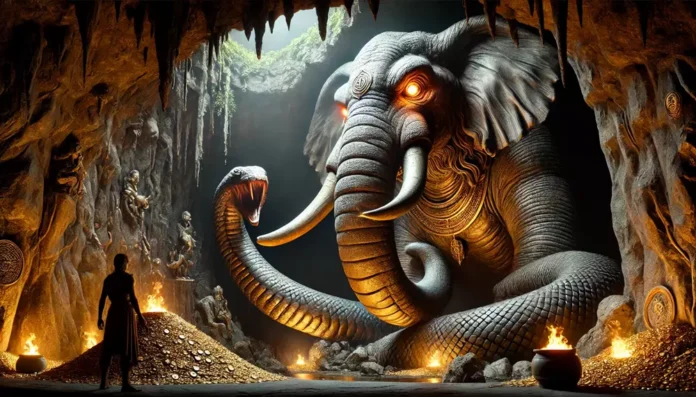
Grootslang

Grootslang is a primordial serpent-elephant hybrid from South African legend, guarding caves of diamonds and gold.

  • Skills
Physical StrengthStone Skin
  • Weaknesses
BeheadingElement Sensitivities
Europe
Mythical Guardian
Jewish Folklore

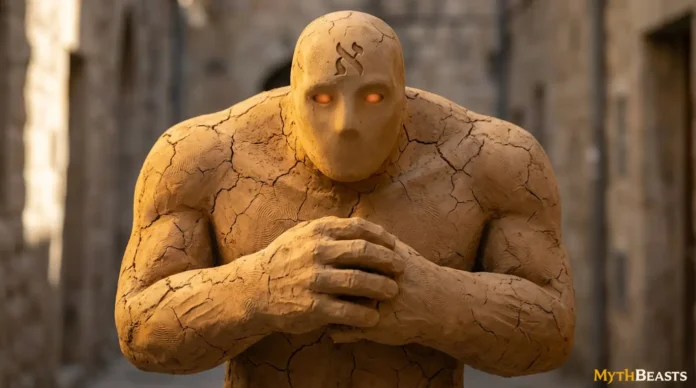
Golem

A manmade creature of clay, animated to protect Jewish communities in Prague during the 16th century.

  • Skills
Physical StrengthStone Skin
  • Weaknesses
BeheadingFragile Skin

Stone Skin – an Overview

Stone Skin is a mythological function recognized across various cultural traditions as a transformation or protective attribute that alters a being’s physical or metaphysical state. It is not merely a supernatural effect but embodies specific cultural, symbolic, and cosmological meanings. In contrast to general attributes like invulnerability or enhanced strength, Stone Skin is often seen as a distinct state that denotes a change in essence or status. It is typified by narratives where beings or objects acquire skin akin to stone, denoting durability, resistance, or transformation. This function appears in diverse mythologies, signifying different aspects depending on the cultural context.

Manifestation and Constraints

How Stone Skin Is Expressed

Stone Skin manifests through observable changes in form, often symbolized by physical transformations into stone-like states. These transformations are not merely superficial but involve a profound alteration of the entity’s nature or role within a mythological narrative. In some traditions, Stone Skin is evidenced by creatures or beings becoming impervious to harm, acting as a narrative device to represent invincibility or divine favor. Environmental changes, such as petrification of landscapes, may also signal Stone Skin’s presence, underscoring its cosmological impact in shaping mythological landscapes. This manifestation is not an arbitrary process but follows established narrative structures within the mythologies it inhabits.

Limits and Conditions

Stone Skin’s mythological application is often bound by symbolic and moral constraints, reflecting broader cosmological orders. Traditions may impose conditions under which Stone Skin is granted or revoked, often tied to moral purity, divine favor, or specific rituals. In many cultures, the ability to acquire Stone Skin is not universally accessible but reserved for those of particular lineage, merit, or divine selection. Such limitations serve to reinforce social and cosmological hierarchies, where acquiring Stone Skin reflects a being’s alignment with sacred principles or natural laws. These constraints prevent Stone Skin from being an unconstrained or universal effect, instead rooting it within specific mythological frameworks.

Mythological Role and Meaning

Symbolic and Cultural Significance

The symbolic role of Stone Skin within mythology often revolves around themes of protection, transformation, and endurance. Culturally, it may signify an entity’s transition from the mortal to the divine, representing an elevation in status or a protective blessing. In some traditions, it conveys moral lessons about resilience, steadfastness, or the consequences of divine will. Stone Skin can also symbolize the imposition of order, where beings with such a trait are seen as enforcers or preservers of cosmic balance. These interpretations vary significantly, reflecting each culture’s unique worldview and moral philosophy within their mythological narratives.

Stone Skin in Myth and Folklore

Within myths, Stone Skin often serves to demarcate boundaries between the natural and supernatural realms. It structures narratives where beings with Stone Skin become agents of transformation or boundary keepers, emphasizing themes of control and authority. In folklore, stories of creatures or heroes gaining Stone Skin often involve trials, divine encounters, or moral tests. These narratives underline the significance of Stone Skin as a marker of transformation and legitimacy, often associated with authority or sacred duty. The emphasis is not on the process itself but on what Stone Skin represents within the myth’s moral and cosmological framework.

Beasts with Stone Skin

The Gorgon

In Greek mythology, the Gorgon is a prime example of Stone Skin’s integral role. Known for their petrifying gaze, the Gorgons’ identity centers around the transformative power of Stone Skin. Their presence signifies boundary crossing between mortality and divinity, reflecting themes of protection and punishment. Without Stone Skin, the Gorgon myth would lose its foundational symbolism, misrepresenting the creature’s role in enforcing divine retribution and natural order.

The Troll

Norse folklore’s Trolls often possess Stone Skin, imbuing them with resilience and an enduring connection to the earth. Their stony hide represents their ancient, elemental nature, underscoring their role as guardians of the natural world. Without Stone Skin, Trolls lose their symbolic association with the earth, misclassifying them as mere antagonists rather than complex figures embodying natural strength and territorial integrity.

The Naga

In Southeast Asian traditions, the Naga often exhibit Stone Skin attributes, symbolizing protection and divine authority. Their stone-like scales indicate transformation and serve as a narrative device to highlight their role as protectors of sacred spaces. Without this aspect, the Naga’s mythological significance as divine guardians and symbols of fertility and prosperity would be incomplete.

Cultural Interpretations and Regional Emphasis

Stone Skin’s interpretation varies widely across cultures, highlighting divergent symbolic and moral framings. In some traditions, it represents divine favor and protection, linked to moral virtue or divine right. In others, it may symbolize punishment or transformation, reflecting more complex moral narratives. For example, in certain Middle Eastern myths, Stone Skin is seen as a divine curse, emphasizing themes of transformation as a consequence of moral or spiritual failure. This contrast showcases the multifaceted interpretations of Stone Skin across different cultural contexts, enriching its mythological significance.

Similar or Related Mythological Functions

Conceptually adjacent to Stone Skin are functions like invulnerability and petrification, though they are not identical. Invulnerability often lacks the transformative and symbolic depth of Stone Skin, focusing more on physical resilience. Petrification may overlap but typically emphasizes punishment or curse rather than a protective or divine aspect. In myths where these functions appear, they are often distinguished by their narrative and symbolic roles, underscoring the unique position Stone Skin holds as a transformative and symbolic function within mythological systems.

Historical Interpretation and Evidence Limits

Scholarly interpretations of Stone Skin often oscillate between symbolic and literal readings, reflecting the complexity of its mythological role. While some scholars emphasize its metaphorical implications, others highlight its literal depiction in myths and artifacts. However, gaps in historical sources can lead to ambiguity, with many traditions lacking comprehensive documentation. These uncertainties necessitate cautious interpretation, acknowledging both the symbolic richness and the lack of complete historical verification for Stone Skin’s mythological function.