back to top

Earth Bound

Earth Bound signifies a mythological constraint where beings are restricted or weakened by their inability to transcend terrestrial limits.

Relevant Beasts

Cherokee
Sacred Animal
Uktena - Cherokee folklore
Cherokee

Uktena

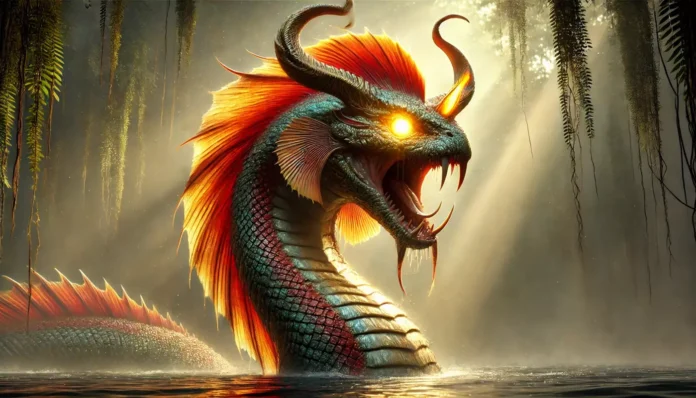
The Uktena, a Cherokee mythical serpent, is a powerful and fearsome creature with horns, glowing scales, and a magical...

  • Skills
Light HealingTidal Wave Summoning
  • Weaknesses
Blunt ForceEarth Bound

Earth Bound – Overview

The concept of Earth Bound represents a significant mythological weakness, serving as a structural limitation within various belief systems. It often signifies a creature’s or being’s inherent restriction or dependency on the earth. This limitation reflects a deeper metaphysical or cosmological constraint rather than an incidental or situational failure. Mythological systems treat Earth Bound as an essential vulnerability that underscores humbling forces, acting as a counterbalance to unchecked power or ambition. Its recurrence across cultures highlights its importance in maintaining balance and order within the mythological cosmos.

Defining Characteristics of the Weakness

Nature of the Limitation

Earth Bound is fundamentally a metaphysical restriction, often manifesting as a dependency on the earth or physical realm. This weakness emphasizes a boundary that prevents certain mythological beings from transcending earthly limitations. Such beings might possess immense power, yet their connection to the earth serves as a grounding force. This grounding acts as a reminder of their inherent limitations within the grand cosmic order. Unlike mere physical vulnerability, Earth Bound indicates a deeper, existential constraint.

Conditions of Exposure

Earth Bound becomes relevant under specific conditions that highlight symbolic, moral, or cosmological themes. Symbolically, it might activate when beings overreach their bounds, seeking to transcend their earthly ties. Morally, it can represent the consequences of hubris, where beings face limitations due to their excessive pride. Cosmologically, it reinforces the boundaries between realms, ensuring that mythological entities remain within their ordained domains. Environmental factors, such as proximity to the earth or certain sacred sites, can also play a role.

Mythological Role and Function

Function Within Mythological Systems

Within mythological systems, Earth Bound operates to regulate power, ensuring that no being achieves absolute dominance. It enforces balance by reminding powerful entities of their inherent limitations. By preserving cosmic order, it prevents the disruption of the natural or divine hierarchy. This weakness also plays a role in enabling downfall, as beings that disregard their Earth Bound nature often face consequences. The systemic function emphasizes the interconnectedness of power, limitation, and balance.

Symbolic and Cultural Meaning

Earth Bound symbolizes inevitability, representing the inescapable ties that bind beings to their origin. Culturally, it reflects a moral consequence, serving as a divine reminder of the limits of hubris. Across traditions, it upholds sacred law, reinforcing the idea that even the mightiest cannot completely sever their earthly ties. The weakness also underscores mortality, illustrating that all beings, regardless of their power, are subject to the natural laws of existence. It serves as a boundary enforcement mechanism, ensuring that cosmic order remains intact.

Distinction from Related Mythological Weaknesses

Conceptual Boundaries

Earth Bound differs from general mortality, which simply denotes the inevitability of death. It is distinct from physical injury, which refers to bodily harm. Unlike divine punishment, Earth Bound does not result from displeasing a deity but rather represents an inherent limitation. It is also separate from taboo violations, which involve breaking cultural or sacred laws. Earth Bound is a universal, existential constraint, whereas situational defeat might occur due to temporary or specific circumstances.

Common Sources of Misclassification

Earth Bound is often oversimplified as a mere physical limitation. However, it encompasses broader existential themes. Misunderstandings arise when scholars conflate it with vulnerabilities like divine punishment or physical injury. Comparative mythology distinguishes Earth Bound by its emphasis on cosmological and metaphysical boundaries. Proper classification requires recognizing its role in enforcing cosmic balance and moral consequence, not just as a narrative obstacle or plot device.

Canonical Beings Defined by Earth Bound

Antaeus

In Greek mythology, Antaeus was a giant whose strength depended on contact with the earth. Without this connection, he was vulnerable, illustrating Earth Bound’s role in defining identity and power limitations.

Jormungandr

The Midgard Serpent in Norse mythology encircles the world, maintaining a crucial Earth Bound connection. This link emphasizes its cosmological role, as severing it would disrupt the world’s balance and order.

Gnomes

Folklore across Europe often depicts gnomes as earth-dwelling beings. Their power and existence are intimately tied to the earth, highlighting Earth Bound as a defining characteristic that grounds their narrative coherence.

Historical Distribution and Cultural Context

Earth Bound appears across diverse cultures and historical periods, reflecting broad patterns in mythological thought. It is prevalent in ancient Greek myths, Norse sagas, and European folklore. The weakness aligns with belief systems that emphasize the earth’s sacredness. These cultures view the earth as a fundamental element in maintaining cosmic order. The recurrence of Earth Bound suggests a shared human understanding of the importance of boundaries and limitations in a cosmological context.

Scholarly Interpretation and Uncertainty

Variation in Interpretation

Earth Bound’s interpretation varies across cultures and scholarly frameworks. Some see it as a symbolic representation of moral limits, while others view it literally as an existential constraint. In historical periods, interpretations shift, reflecting cultural priorities. For example, in medieval Europe, Earth Bound might symbolize divine law, whereas, in ancient Greece, it underscores the natural order. Scholarly debates often center on its symbolic versus literal significance, with interpretations influenced by cultural context and scholarly perspective.

Limits of the Evidence

The evidence for Earth Bound is not always clear-cut, leading to scholarly debates. Some cultures do not explicitly name or describe the weakness, requiring interpretative reconstruction. No verified sources describe Earth Bound uniformly across all mythologies. As a result, interpretations rely on contextual analysis and comparative mythology. While some traditions offer detailed accounts, others necessitate cautious extrapolation, recognizing that Earth Bound’s application can vary and is sometimes ambiguous.

Mythological Function Across Cultures

Earth Bound recurs in different mythological traditions because it addresses shared human concerns about power, limitation, and balance. It serves symbolic needs by reinforcing the idea that all beings have inherent constraints. Recognizing Earth Bound enhances comparative interpretation by highlighting the universal themes of humility and cosmic order. This weakness emphasizes the interconnectivity of power and limitation, offering insights into how diverse cultures navigate existential questions and moral boundaries within their mythological systems.