
back to top

Sacred Chant

Sacred Chant represents a fixed vulnerability, rendering certain mythological beings susceptible to its power and influence.

Relevant Beasts
Asia
Giant Bird
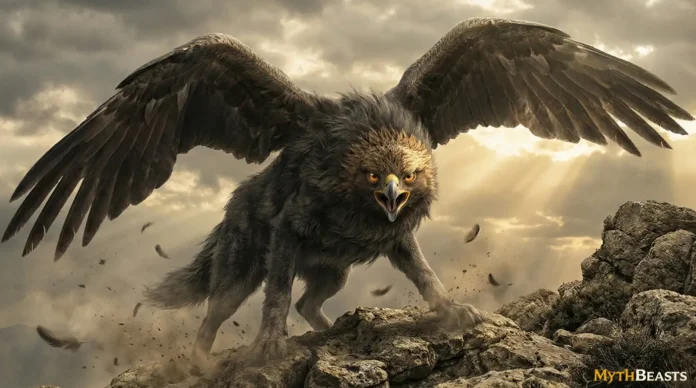
Chamrosh - Guardian bird - Persian and Zoroastrian folklore
Iran

Chamrosh

A mighty guardian bird beneath the sacred tree on Mount Alborz that gathers seeds, spreads them across the earth,...
  • Skills
Animal CommunicationControl & Summoning
  • Weaknesses
Consecrated LandDivine Restrictions
Asia
Guardian Spirit
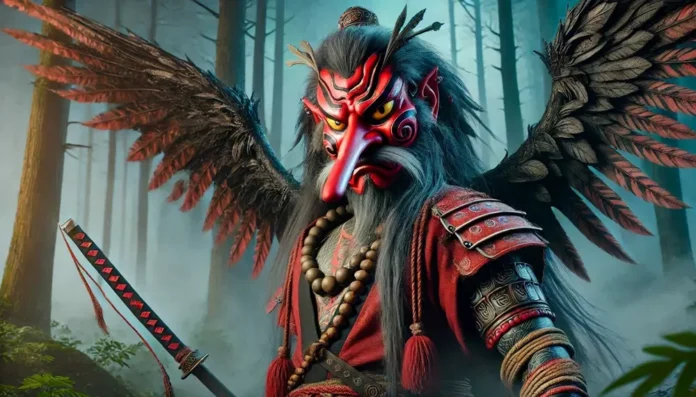
Tengu - Japanese Folklore
Japan

Tengu

Tengu are supernatural beings from Japanese folklore with human-like features, avian traits, and a reputation as guardians of mountains...

  • Skills
Aura of TerrorEnhanced Agility
  • Weaknesses
Aura CollapseOverconfidence

Sacred Chant – Overview

Sacred Chant represents a mythological weakness characterized by its intricate positioning within the belief systems of various cultures. This weakness is not a simple flaw or error but a structural component of mythological thought. It manifests as a limitation deeply embedded in the narrative and cosmological frameworks of societies. Sacred Chant serves as a boundary, ensuring that power is kept in check, enforcing cosmic balance, and preventing any entity from achieving unchecked dominance. This vulnerability is integral, not incidental, to the coherence and stability of mythological systems.

Defining Characteristics of the Weakness

Nature of the Limitation

Sacred Chant as a weakness is primarily a metaphysical restriction that serves as an existential constraint within mythologies. It is not about physical limitations or mere moral prohibitions but a cosmological boundary that entities cannot transcend. This weakness consistently appears in mythologies as a necessary limitation to prevent beings from surpassing certain existential thresholds, thereby preserving the integrity of the cosmological order.

Conditions of Exposure

The activation of Sacred Chant within mythological systems often depends on symbolic and cosmological conditions rather than procedural triggers. It typically emerges under circumstances where the balance of power risks being disrupted, or a moral order is threatened. These conditions underscore the symbolic significance of Sacred Chant as a safeguard against chaos and imbalance in the mythological cosmos.

Mythological Role and Function

Function Within Mythological Systems

Within mythological systems, Sacred Chant functions as a regulatory mechanism that enforces balance and cosmic order. It prevents beings from achieving absolute dominance, thereby ensuring that the narrative universe remains stable and coherent. This weakness is essential in enabling the downfall of overreaching entities, highlighting its role in maintaining systemic equilibrium.

Symbolic and Cultural Meaning

Sacred Chant symbolizes inevitability, moral consequence, and the limitations imposed by sacred laws across cultures. Its presence in mythologies underscores the boundaries of hubris and the enforcement of cosmic order. This symbolic representation is crucial in illustrating the consequences of transgressing divine laws or overstepping existential bounds.

Distinction from Related Mythological Weaknesses

Conceptual Boundaries

Sacred Chant differs from general mortality, divine punishment, and other weaknesses by serving as a metaphysical and cosmological boundary rather than a situational or physical limitation. It is not interchangeable with weaknesses like taboo violations as it embodies a broader, more systemic constraint within mythological classification.

Common Sources of Misclassification

Sacred Chant is often misunderstood or conflated with other vulnerabilities due to its complex nature. Comparative mythology and scholarship distinguish it from other forms by emphasizing its structural and symbolic significance. Misclassification arises when its function as a boundary enforcer is overlooked or simplified.

Canonical Beings Defined by Sacred Chant

Achilles

In Greek mythology, Achilles is defined by his vulnerability associated with Sacred Chant. His narrative role is shaped by this metaphysical constraint, ensuring that his semi-divine status remains within the bounds of human limitation.

Baldr

Norse mythology presents Baldr as another being whose identity is constrained by Sacred Chant. Despite his invulnerability, his story relies on a symbolic weakness that reflects the inevitability and cosmic balance upheld by mythological systems.

Gilgamesh

In Mesopotamian mythology, Gilgamesh’s quest for immortality is curtailed by Sacred Chant, highlighting human limitations against divine boundaries. This constraint reinforces the moral and existential framework of his narrative.

Historical Distribution and Cultural Context

Sacred Chant as a mythological weakness appears across numerous cultures and historical periods. It is prevalent in ancient Greek, Norse, and Mesopotamian traditions, reflecting a shared cultural understanding of cosmic boundaries. Its distribution underscores universal human concerns about power, morality, and the nature of existence within mythological narratives.

Scholarly Interpretation and Uncertainty

Variation in Interpretation

Interpretations of Sacred Chant vary significantly across cultures, historical periods, and scholarly frameworks. While some readings emphasize its symbolic significance, others focus on literal representations. These variations highlight the complexity and depth of its mythological role.

Limits of the Evidence

The evidence for Sacred Chant’s role in mythology is occasionally ambiguous, with scholarly debates surrounding its interpretations. Established readings focus on its metaphysical significance, while uncertain aspects involve its specific manifestations. No verified sources describe procedural methods for exploiting this weakness.

Mythological Function Across Cultures

Sacred Chant recurs across diverse mythological traditions due to shared human concerns about cosmic order and existential limitations. Its presence reflects universal symbolic needs to address power dynamics and enforce moral boundaries. Recognizing this weakness enhances our understanding of mythological systems and their underlying cosmological functions.