Sacred Entry Block – Overview
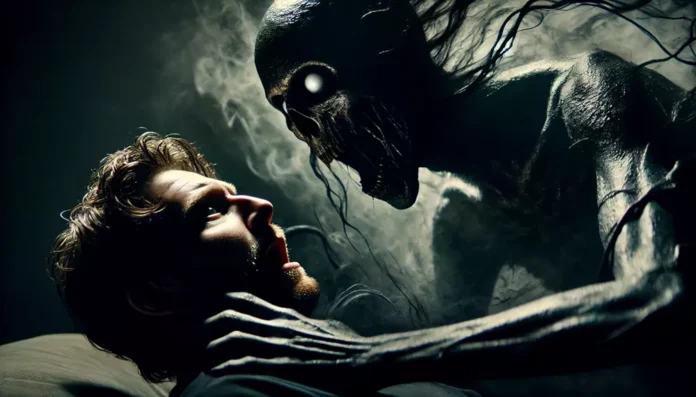
Sacred Entry Block names a mythic limitation where a being’s agency fails at protected thresholds, especially homes, sanctuaries, or demarcated lands, unless legitimate invitation or lawful passage exists.
The weakness is conceptual rather than accidental, because it treats space as morally and ritually qualified, making entry a matter of authority, consent, and cosmic recognition.
Mythic systems emphasize this limit to prevent boundless intrusion, so even powerful entities meet structured resistance at sanctified borders, preserving intelligible social order within a supernatural cosmos.
Defining Characteristics of the Weakness
Nature of the Limitation
Sacred Entry Block is primarily a metaphysical restriction, because it constrains movement across charged boundaries rather than weakening bodies, and it often applies regardless of the intruder’s strength.
It also functions as a cosmological boundary, because thresholds are treated as sites where worlds, statuses, or jurisdictions meet, requiring proper alignment before crossing becomes permitted.
The limitation can carry moral force, because unauthorized entry implies violation of hospitality, kinship, or divine protection, turning space into an ethical field rather than neutral geography.
Unlike general vulnerability, Sacred Entry Block is conditional failure tied to place, because the entity may remain formidable elsewhere, yet becomes categorically constrained at designated protected enclosures.
Conditions of Exposure
The weakness becomes relevant when a boundary is socially recognized as protected, such as a household perimeter or sanctuary precinct, because recognition itself marks the site as defended by norms.
Symbolic exposure often depends on consent, because invitation, welcome, or lawful summons transforms the boundary’s meaning, shifting a space from exclusion to permitted encounter.
Environmental exposure can appear where boundaries are ritually maintained, because fences, doorways, or marked lines represent continuity of guardianship, even when no physical barrier would stop passage.
Cosmological exposure appears when a place is under explicit divine or communal protection, because the intruder’s status conflicts with the jurisdiction claimed by ancestors, gods, or household spirits.
Mythological Role and Function
Function Within Mythological Systems
Sacred Entry Block regulates power by distributing it across locations, because even dangerous beings must negotiate access, allowing ordinary humans to possess meaningful defensive sovereignty.
It enforces balance by limiting predation, because the cosmos remains stable when destructive forces cannot cross into every domain freely, preserving differentiated spaces for life, worship, and kinship.
The weakness enables downfall structurally, because a being’s overreach is checked at a boundary, revealing that superiority is conditional and subject to higher ordering principles.
It preserves cosmic order by making access depend on legitimacy, because boundaries encode rules about belonging, protection, and rightful approach, rather than leaving outcomes to sheer force.
Symbolic and Cultural Meaning
Symbolically, Sacred Entry Block represents the sanctity of the household, because myth treats a home as an extension of lineage and protection, not merely a shelter of materials.
It also represents sacred law, because the boundary stands for norms that bind humans and spirits alike, implying that transcendent power remains accountable to intelligible constraints.
In many settings it signifies limitation of hubris, because the blocked threshold demonstrates that status cannot erase communal rights, especially where hospitality and consent define moral relations.
Modern interpretations often read it as a metaphor for psychological boundaries, but this framing is modern and should not replace older emphases on jurisdiction, purity, and protected space.
Distinction from Related Mythological Weaknesses
Conceptual Boundaries
Sacred Entry Block differs from general mortality, because it concerns access and jurisdiction, not the inevitability of death, and it can constrain even beings otherwise portrayed as deathless.
It differs from physical injury, because blocked entry is not bodily damage, and the mythic logic focuses on rightful passage rather than susceptibility to weapons or ordinary hazards.
It differs from divine punishment, because the constraint is typically preexisting within the world’s structure, rather than an ad hoc penalty imposed after misconduct by a higher agent.
It differs from taboo violation, because taboo concerns prohibited acts, whereas Sacred Entry Block concerns prohibited crossings, making space itself the key medium of constraint.
Common Sources of Misclassification
Misclassification arises when readers treat the block as mere plot delay, because modern narrative habits downplay the cosmological significance of thresholds as legally and spiritually charged sites.
It is also conflated with fear of holy places, because avoidance and incapacity look similar, yet Sacred Entry Block centers on jurisdictional exclusion rather than the sanctity’s harmful radiance.
Comparative scholarship distinguishes them by tracking boundary language, because traditions that emphasize invitation, welcome, or rightful approach signal entry restriction more clearly than generic aversion motifs.
Another confusion comes from translating diverse terms as “cannot enter,” because the underlying logic may vary, and No verified sources describe this for this context in some proposed parallels.
Canonical Beings Defined by Sacred Entry Block
Vampire (Slavic and broader European folklore)
In Slavic and later European vampire traditions, entry into a dwelling is frequently restricted without invitation. Without Sacred Entry Block, the vampire becomes a merely predatory corpse, losing its boundary-focused social logic.
Jinn (Islamic tradition)
In Islamic tradition, jinn occupy a parallel moral world and may intrude, yet many narratives stress protected domestic space through divine remembrance and rightful occupancy. Without Sacred Entry Block, jinn become universally unbounded presences.
Fairy Host or Fair Folk (Insular Celtic folklore)
In Irish and Scottish folklore, fairy beings are powerful yet constrained by household protections and marked boundaries. Without Sacred Entry Block, their otherworldly jurisdiction blurs, collapsing the meaningful separation between human and fairy domains.
Historical Distribution and Cultural Context
Sacred Entry Block appears broadly in societies where households function as moral units, because the home’s boundary expresses kinship authority, making unauthorized crossing a cosmological offense rather than simple trespass.
It is especially visible in Christian-influenced Europe, because domestic space gained strong moral valuation, and folkloric beings were frequently framed as excluded from rightly ordered households unless consent was granted.
Comparable patterns occur in Islamic cultural history, because protected space is linked to divine authority and lawful habitation, making intrusion a question of jurisdiction rather than mere invisibility or strength.
In regions with strong otherworld geographies, such as parts of the Celtic-speaking world, entry restrictions articulate coexistence, because humans and nonhumans are imagined as neighbors with guarded borders.
Scholarly Interpretation and Uncertainty
Variation in Interpretation
Some scholars emphasize Sacred Entry Block as social symbolism, because invitation encodes norms of hospitality and consent, making the weakness a commentary on communal ethics rather than a literal barrier.
Other readings stress metaphysical ontology, because thresholds mark transitions between ordered and unordered space, so blocked entry expresses incompatibility between a being’s nature and a protected domain.
Interpretations vary by period, because later collectors sometimes rationalized older motifs, reframing threshold limits as superstition about contagion or fear, rather than as coherent cosmological boundary theory.
Literal and symbolic readings can coexist, because communities may treat boundaries as truly defended while also using the motif to teach social expectations about welcome, danger, and rightful belonging.
Limits of the Evidence
Evidence is uneven, because many traditions survive through later folklore collections, sermons, or literary retellings, making it difficult to separate long-standing belief from editorial emphasis or regional variation.
For some proposed examples, No verified sources describe this for this context, because modern compilations sometimes generalize an invitation motif beyond the specific cultures where it is clearly documented.
Translation poses limits, because words for “enter,” “cross,” or “approach” may carry legal or ritual nuance, and flattening them can obscure whether restriction or mere reluctance is intended.
Comparative claims remain contested, because similar boundary themes can arise independently, so scholars must avoid assuming diffusion where only functional resemblance is demonstrable.
Mythological Function Across Cultures
The recurrence reflects shared concern for protected domestic life, because many societies treat the home as the smallest sacred polity, requiring mythic reinforcement against forces that disregard consent.
It also addresses anxiety about strangers, because the threshold is where exchange meets risk, and Sacred Entry Block encodes the idea that welcome is an act of power.
The weakness supports cosmologies with layered jurisdictions, because multiple kinds of beings can exist without constant conflict when access is regulated by boundaries recognized as legitimate within the world’s order.
Recognizing Sacred Entry Block improves comparison, because it highlights how myths encode spatial ethics, distinguishing traditions that fear beings everywhere from traditions that locate danger at contested borders.