back to top

Weather

Weather is an inherent constraint, exposing mythological beings to natural forces beyond their control, often affecting their power or presence.

Relevant Beasts

Africa
Sea Monster
Inkanyamba - Zulu Mythology
Zulu

Inkanyamba

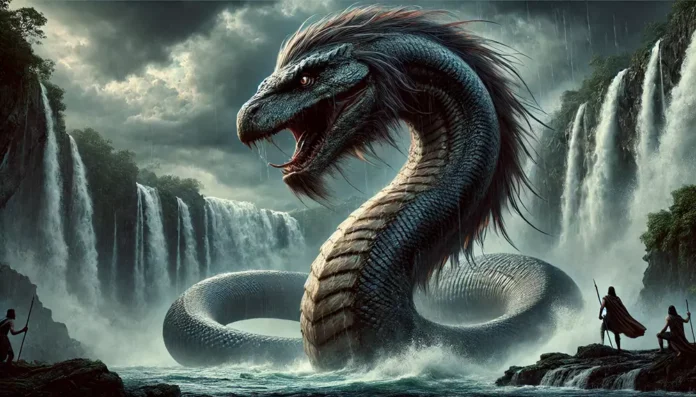
Inkanyamba is a massive water serpent from Zulu folklore, known to cause storms and whirlwinds.

  • Skills
Control WeatherStorm Control
  • Weaknesses
Dry Land HarmWeather

Weather – Overview

Weather functions as a mythological weakness by symbolizing environmental and cosmological limitations imposed on beings or deities. It represents a structural vulnerability rather than a mere situational hindrance. It holds significance in mythological systems due to its role in maintaining balance, enforcing natural order, and preventing unchecked power. Its recurrence in mythologies underscores its importance as a boundary that reflects the constraints of the natural world, emphasizing the limitations imposed by environmental forces. By treating Weather as a structural vulnerability, mythologies highlight its role in defining the limits of power and influence over nature.

Defining Characteristics of the Weakness

Nature of the Limitation

Weather represents an existential constraint within mythological systems, emphasizing the inherent limitations imposed by natural forces. It serves as a cosmological boundary, highlighting the inability of beings to exert absolute control over the environment. Weather’s role is not about physical vulnerability but rather a deep connection to environmental dependencies that shape the actions and fates of mythological beings. This constraint reflects recurring patterns in mythologies, where the natural world holds power over even the most formidable entities.

Conditions of Exposure

Weather becomes relevant under symbolic and environmental conditions in mythological systems. It often reveals itself during significant cosmological events, such as storms or season changes, highlighting the dependence on natural cycles. These conditions serve as reminders of the inherent limitations imposed by Weather, underscoring the delicate balance between beings and their environment. The exposure to Weather in mythologies reflects a broader understanding of nature’s role as a determinant of fate and power.

Mythological Role and Function

Function Within Mythological Systems

Weather operates as a regulatory force within mythological worldviews, maintaining cosmic order and preventing absolute dominance. It enforces balance by ensuring that no single entity can surpass the limitations set by nature. This structural function highlights the broader principle of interconnectedness, where all beings are subject to the same environmental constraints. By integrating Weather as a weakness, mythologies emphasize the necessity of respecting natural boundaries to sustain harmony within the cosmos.

Symbolic and Cultural Meaning

Weather symbolizes inevitability and moral consequence across various cultures, representing the limitations of hubris and the enforcement of sacred law. It serves as a reminder of mortality and the boundaries imposed by nature, emphasizing the need for humility and respect. In mythologies, Weather functions as a symbol of the inherent order and limitations governing existence, underscoring the importance of acknowledging the power of natural forces. Its cultural significance lies in reinforcing the understanding that no entity is exempt from nature’s influence.

Distinction from Related Mythological Weaknesses

Conceptual Boundaries

Weather differs from related weaknesses like general mortality or divine punishment by focusing on environmental and cosmological constraints. It is not interchangeable with physical injury or taboo violation, as it emphasizes the broader ecological limitations inherent in the natural world. While divine punishment and situational defeat might involve external forces, Weather specifically underscores the inherent limitations imposed by nature itself. This distinction highlights Weather’s unique role as a structural boundary within mythological classification.

Common Sources of Misclassification

Weather is often misunderstood or conflated with other vulnerabilities due to its ecological nature. Scholars may misclassify it as divine punishment or situational defeat, failing to recognize its broader environmental implications. Comparative mythology distinguishes Weather by emphasizing its fundamental connection to natural cycles and ecological boundaries. By recognizing this distinction, scholars can better appreciate its role in maintaining cosmic order and preventing unchecked power within mythological narratives.

Canonical Beings Defined by Weather

Thor

In Norse mythology, Thor’s identity is inherently tied to Weather, particularly storms and thunder. His role as the god of thunder emphasizes the environmental constraints that define his power. Without Weather, Thor would be misclassified, as his narrative coherence relies on his connection to natural forces, demonstrating his limitation within the mythological framework.

Zeus

Zeus, in Greek mythology, embodies the power of Weather through his control over storms and lightning. His divine status is intrinsically linked to environmental forces, highlighting his dependency on nature’s cycles. Misclassifying Zeus would overlook the significance of Weather in defining his role as a ruler of gods, underscoring the broader influence of natural phenomena in his mythology.

Susanoo

In Japanese mythology, Susanoo is closely associated with Weather, particularly storms and sea tempests. His narrative role emphasizes the environmental dependency that constrains his actions. Without acknowledging Weather, Susanoo’s identity would lack coherence, as his mythological status is fundamentally tied to his control over natural forces.

Historical Distribution and Cultural Context

Weather as a mythological weakness appears across diverse cultures and historical periods, reflecting broad patterns of belief systems. Its presence is evident in ancient Greek, Norse, and Japanese mythologies, among others. These cultural environments emphasize the significance of natural forces in shaping mythological narratives, highlighting Weather’s role in maintaining cosmic balance. Across various traditions, Weather serves as a reminder of the limitations imposed by nature, reinforcing the interconnectedness between beings and their environment.

Scholarly Interpretation and Uncertainty

Variation in Interpretation

Understandings of Weather vary between cultures, historical periods, and scholarly frameworks, with interpretations ranging from symbolic to literal. Some traditions view Weather as a metaphor for moral consequence, while others emphasize its literal impact on mythological narratives. These variations highlight the complexity of Weather as a concept, reflecting diverse cultural perspectives on its role within mythologies. Scholarly interpretations often grapple with balancing symbolic readings with literal understandings, emphasizing the need for nuanced analysis.

Limits of the Evidence

Gaps and ambiguities exist in the historical and comparative record of Weather as a mythological weakness. While established interpretations highlight its environmental significance, debates persist regarding its broader symbolic meanings. Scholars face challenges in tracing the evolution of Weather across cultures, acknowledging the limits of available evidence. This uncertainty underscores the importance of cautious interpretation, avoiding speculative claims while recognizing the diversity of perspectives on Weather’s role within mythological systems.

Mythological Function Across Cultures

Weather recurs across different mythological traditions due to shared human concerns and symbolic needs. It fulfills cosmological functions by emphasizing the limitations and dependencies imposed by natural forces. Recognizing Weather as a weakness enhances the comparative interpretation of mythological systems, highlighting the universal acknowledgment of nature’s power. This recurrence underscores the importance of understanding environmental constraints as integral to maintaining balance and harmony within mythological narratives.