back to top

Horned Creature

Horned Creature refers to mythological beasts defined by their prominent horns, symbolizing power and mystery across various cultural narratives.

Relevant Beasts

Greece
Horned Creature
Unicorn – The one-horned horse | Classical Greece mythology
Greece

Unicorn

The Unicorn, first described by Ctesias in 5th-century BCE Greece, was a one-horned beast said to live in India....
  • Skills
Aura of VitalityHealing & Life
  • Weaknesses
Magic BoundariesSpell Trapped
Iran
Horned Creature
Shadhavar or Âras - Persian Mythology
Iran

Shadhavar

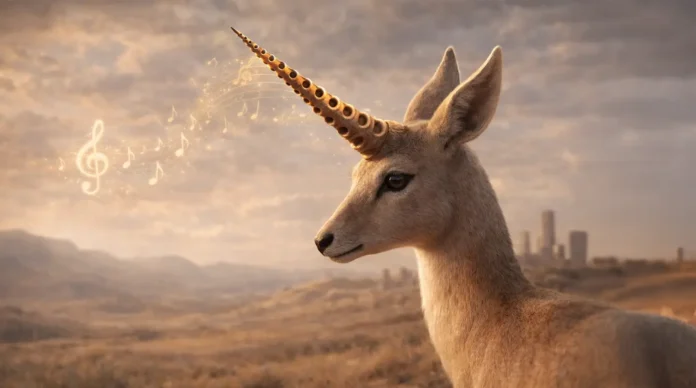
The Shadhavar is a unicorn-like creature from Persian folklore whose horn produces beautiful, enchanting music.

  • Skills
EnchantmentMelody Control
  • Weaknesses
DeafnessLight

Horned Creature – an Overview

The Horned Creature represents a mythological classification encompassing beings characterized by prominent horn features. These entities appear across diverse cultures, signifying various roles, from divine intermediaries to formidable guardians. Their importance lies in their symbolic and functional attributes within mythologies.

Defining Characteristics

Physical Form and Morphology

Horned Creatures typically exhibit various horn structures, ranging from single to multiple appendages. These features may vary in size, curvature, and position, often suggesting strength, otherworldly power, or a connection to nature. Their body forms can be anthropomorphic or animalistic.

Ontological Nature

Beings classified as Horned Creatures are often perceived as supernatural or hybrid entities, existing between realms. Their ontological nature is frequently linked with spiritual significance, serving as bridges between the material world and cosmic forces, embodying elements of chaos or order.

Mythological Role and Function

Place in Mythological Systems

Within mythological systems, Horned Creatures often occupy liminal spaces, acting as mediators between gods and humans. They can also serve as enforcers of cosmic laws, protecting sacred sites or executing divine will, reflecting their intertwined role in cosmology.

Perception and Meaning

Cultures typically view Horned Creatures with ambivalence, perceiving them as both protectors and potential threats. They symbolize transformation, fertility, and power, often appearing as omens or guides in mythological narratives, embodying the duality of fear and reverence.

Distinction from Related Beast Types

Classification Boundaries

Horned Creatures differ from elemental or spirit entities by their distinctive physical horns, often signifying physical presence and impact. Unlike purely spiritual beings, they manifest materially, allowing interaction with the physical world, setting them apart from intangible spirits.

Common Sources of Confusion

Confusion arises when Horned Creatures are conflated with other hybrid beings, particularly those possessing animalistic features. Scholars distinguish them through specific cultural contexts and horn symbolism, emphasizing physical attributes that hold particular mythological significance.

Canonical Beasts Associated with This Beast Type

Minotaur

Originating from Greek mythology, the Minotaur exemplifies the Horned Creature category. Its bull-like head and human body highlight the hybrid nature, underscoring its role as both a fearsome guardian and tragic figure within the labyrinthine mythos.

Cernunnos

Cernunnos, from Celtic tradition, embodies the Horned Creature archetype with his anthropomorphic form and distinct antlers. As a symbol of fertility and nature, he bridges the human and natural worlds, underscoring cycles of life and death.

Yama

In Hindu mythology, Yama appears as a horned figure overseeing death and the afterlife. His horns symbolize authority over life’s transition phases, embodying the Horned Creature’s role as a powerful, guiding force within spiritual cosmology.

Historical Distribution and Cultural Context

Horned Creatures appear globally, from ancient Greece and Celtic regions to Indian subcontinents, highlighting their widespread mythological significance. Their presence across diverse eras reflects a universal fascination with transformative power and mediation between realms.

Scholarly Interpretation and Uncertainty

Variation in Definitions

Definitions of Horned Creatures vary due to cultural perspectives and symbolic interpretations. Some traditions emphasize their role as divine intermediaries, while others view them as manifestations of natural forces, reflecting differing mythological frameworks and academic analyses.

Limits of Available Evidence

Scholarly understanding of Horned Creatures faces limitations due to incomplete historical records. No verified sources describe certain aspects universally, leading to debates about origins and functions. Further research continues to refine these interpretations across traditions.

Taxonomic Relevance

The Horned Creature classification aids in organizing mythological entities by focusing on distinctive attributes, such as horn features, which symbolize power and liminality. This facilitates cross-cultural analysis, highlighting universal themes and variations within mythological contexts.