Intro/Summary
The Unicorn is one of mythology’s most enchanting creatures. It is usually described as a horse-like animal with a single spiraled horn.
Unlike monsters born to terrify, it became an emblem of purity, healing, and divine mystery.
From antiquity to modern times, the Unicorn has fascinated writers, artists, and believers. It symbolized innocence and untamed beauty.
In medieval Europe, it transformed into a sacred Christian allegory. Across cultures, it endures as a universal image of wonder.
History/Origin
The earliest Unicorn-like images appear in the Indus Valley Civilization around 2000 BCE. Carved seals depict animals with a single horn.
Scholars debate whether these were stylized cattle or mythical beasts. Still, they mark the first known “one-horned” figures in history.

Greek authors brought the Unicorn into written tradition. In the 5th century BCE, Ctesias of Cnidus described a creature he claimed lived in India.
He called it a wild ass, swift and fierce, with a horn colored white, red, and black.
“There are in India certain wild asses, fleet of foot, with a horn upon the forehead a cubit and a half long.” (Indica, Ctesias, 5th century BCE)
For the Greeks, this was not a mythical beast but a natural animal from distant lands. Unlike centaurs or gorgons, the Unicorn was presented as zoological fact.
Aristotle mentioned animals with a single horn, using the word monokeros. Later, Pliny the Elder described the Unicorn in his Natural History.
He portrayed it as fierce, impossible to capture alive, and unique among creatures.
The Romans expanded the legend by trading in supposed Unicorn horns. These horns were highly prized and thought to detect poison.
Many were actually narwhal tusks imported from the North. Their rarity reinforced the Unicorn’s mystique.
By Late Antiquity, the Unicorn had become a symbol of strength and rarity. In Christian texts of the early centuries, it appeared in allegories of purity and divinity.
This shift marked its transition from exotic beast to sacred emblem.
During the Middle Ages, Unicorns entered illuminated manuscripts and bestiaries. They were no longer exotic curiosities. Instead, they embodied moral lessons and religious allegories.
By the 12th century, they became powerful symbols of Christ, associated with purity, sacrifice, and incarnation.
This transformation, from an Indian wild ass in Greek imagination to Christlike beast in medieval Europe, shows how the Unicorn evolved with cultural needs. It was reshaped from natural wonder into spiritual symbol.
Name Meaning
The word Unicorn comes from the Latin unicornis, meaning “one horn.” The Greek word monokeros carries the same meaning.
Both derive from the simple but defining feature: a single horn set in the forehead.
In medieval texts, the horn was known as the alicorn. It was believed to hold immense healing power.
Writers claimed it could neutralize poisons and cure disease. Royal treasuries stored these “horns” as precious relics.
“The horn of the Unicorn, if placed in a vessel, makes harmless whatever poison may be poured therein.” (Physiologus, 2nd–3rd century CE)
Most of these treasures were actually narwhal tusks traded through Scandinavia. Yet belief in their power lasted for centuries.
The word alicorn became synonymous with both the horn and the mystical essence of the Unicorn.
The names also carried symbolic weight. To be called one-horned was more than a description. It implied singularity, uniqueness, and purity.
A beast defined by one perfect horn became a metaphor for one divine truth.
Appearance
Descriptions of the Unicorn have shifted across cultures and time periods. Ancient accounts from Ctesias described it as resembling a wild ass, striped with multiple horn colors.
Later writers suggested it resembled a goat or ox.
By the Middle Ages, the Unicorn was drawn in bestiaries as a small, fierce animal. It often had the body of a horse, the tail of a lion, cloven hooves, and sometimes a goat’s beard.
Despite the variations, the horn remained constant.
The horn itself was described as long, spiraled, and often glowing. Some texts claimed it had bands of red, white, and black.
Others portrayed it as pure ivory-colored. Its mystical quality overshadowed the body of the beast itself.
“The Unicorn, fierce and swift, is impossible to capture save by the touch of a maiden.” (Physiologus, 2nd–3rd century CE)
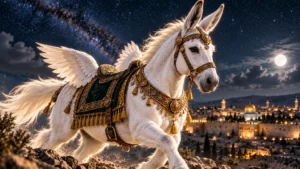
By the Renaissance, artists standardized its appearance. The Unicorn became a white horse with a single spiraled horn.
This elegant form symbolized chastity and purity. It no longer looked like a goat or ox but a creature of celestial beauty.

The whiteness reinforced its spiritual symbolism. White suggested innocence, untouched by corruption. The glowing horn suggested healing and divine blessing.
Together, these traits made the Unicorn an image of perfection.
Across cultures, its appearance placed it apart from monsters and predators. Dragons and griffins terrified. The Unicorn enchanted.
Its beauty and radiance reflected a creature tied not to fear, but to ideals of transcendence and purity.
Background Story
Unlike dragons or serpents, the Unicorn does not star in violent epics. Its narrative is quiet, almost meditative. Its story lies in the encounter between beast, maiden, and hunters.
The Unicorn was considered untamable. Hunters who tried to seize it by force failed. It was too swift and too fierce to overpower.
Yet it could be captured another way.
Legends claimed that if a virgin maiden sat in the forest, the Unicorn would approach. Drawn to her innocence, it would lay its head in her lap.
Only then could hunters capture it.
“Only the pure may see the Unicorn. To all others, it remains forever hidden.” (Bestiary of Philippe de Thaon, 12th century CE)
This story was adopted into Christian allegory. The Unicorn represented Christ, untouchable by violence but willing to come to the Virgin Mary.
Its capture symbolized the Incarnation, when divinity took on mortal form.
Medieval art often depicted this moment. In famous tapestries, the Unicorn rests calmly with the maiden, then is led away by hunters.
The story was not about conquest but about innocence, sacrifice, and mystery.
The background story reveals the Unicorn’s symbolic role. It was never meant as a predator or monster. Instead, it was a mirror of values, purity, innocence, and divine truth.
Through its capture, storytellers explained mysteries of faith.
The Indian Wild Ass of Ctesias
Ctesias of Cnidus, writing in the 5th century BCE, offered the earliest detailed account of the Unicorn in his work Indica. He described the creature as a wild ass found in India, notable for its striking three-colored horn that projected from the forehead.
According to him, the base of the horn was white, the middle part gleamed black, and the tip was vivid crimson. Its body, he claimed, could rival that of a horse in size.
These vivid traits caught the imagination of later writers and traders alike. Ctesias also suggested that cups made from such horns could neutralize poison, adding a mythical medicinal quality to the beast’s legend, blurring lines between observation and moral symbolism.
“There are in India certain wild asses which are as large as horses … a horn in the middle of the forehead that is one cubit in length; the base of this horn is pure white … the upper part is sharp and of a vivid crimson, and the middle portion is black.” (Indica, Ctesias, 5th century BCE)
This description laid the foundation for the Unicorn’s enduring image in the West. Traders and natural historians built upon his description, and the conceit of a healing horn became central to later medieval beliefs even though the actual creature likely never existed.
Ultimately, Ctesias’s account transformed the Unicorn from vague animal lore into a fully formed mythical symbol.
Source: Ctesias’ Indica, quoted via Merriam-Webster wordplay summary (Merriam-Webster)
The Allegory in Physiologus
In the early Christian text Physiologus, written in Greek between the 2nd and 4th centuries CE, the Unicorn gains allegorical meaning. The tale emphasizes that only a virgin maiden can tame the Unicorn, drawing parallels to the Incarnation: Christ, pure and divine, embraced by the Virgin Mary.

The narrative begins with the unicorn entering a forest where no animal dares to drink from poisoned waters. Yet upon sighting a pure maiden, it approaches with gentleness, symbolizing the divine’s openness to human innocence and faith.
“For the unicorn also, which only permits itself to be captured in the lap of a pure virgin, is a type of the Incarnation.” (Physiologus, early Christian work)
This Christian interpretation shaped medieval views of the Unicorn. In churches, manuscripts, and sermons, the Unicorn became a living emblem of purity and holy mystery.
The allegory became deeply embedded in visual and literary culture of the Middle Ages, enriching the Unicorn’s spiritual dimensions.
Source: Catholic Encyclopedia summary of Physiologus content (Catholic Answers)
The Hunt of the Unicorn
Medieval Europe embraced rich, visual storytelling through tapestries such as The Hunt of the Unicorn. This series of 15th-century tapestries depicts noble hunters pursuing the Unicorn through an ornate forest.
They finally corner it only when aided by a maiden, echoing the Physiologus allegory.
In the final panel, titled The Unicorn in Captivity, the creature remains alive and serene, chained in a garden. Interpretations suggest a symbolic resurrection: the Unicorn dies, yet lives on, much like Christ.

Artists layered Christian symbolism within lush allegorical scenes. The maiden’s presence stands for purity, the hunt for the Passion, and the Unicorn’s survival for resurrection hope.
This imagery became a powerful cultural reference for redemption, beauty, and spiritual transformation.
“He had once been hunted to death and caught, and yet he survived, bound yet alive within the garden of hope.” (The Hunt of the Unicorn tapestry series, late 15th century)
Source: Hazel Stainer blog on Physiologus and unicorn symbolism within the Unicorn tapestries (Hazel Stainer)
Cultural Impact
The Unicorn influenced art, literature, and heraldry. In medieval Europe, its image filled illuminated manuscripts and tapestries. Nobles embraced it as a symbol of chastity, strength, and virtue.
Its story resonated across Christian allegory and secular culture.
In Scotland, the Unicorn became a royal emblem. By the 12th century, kings used it on seals and banners.
Its chained form symbolized both great power and noble restraint. Today, it remains Scotland’s national animal, still present in official coats of arms.
Writers from the Renaissance onward used Unicorns in allegories. For some, it stood for love, for others spiritual truth.
The enduring fascination came from its paradoxical nature, fierce yet gentle, untamable yet drawn to innocence.
Similar Beasts
The Unicorn has parallels in many traditions, where horned or wondrous creatures embody purity, strength, or divine mystery. Though forms differ, their symbolic roles show striking similarities.
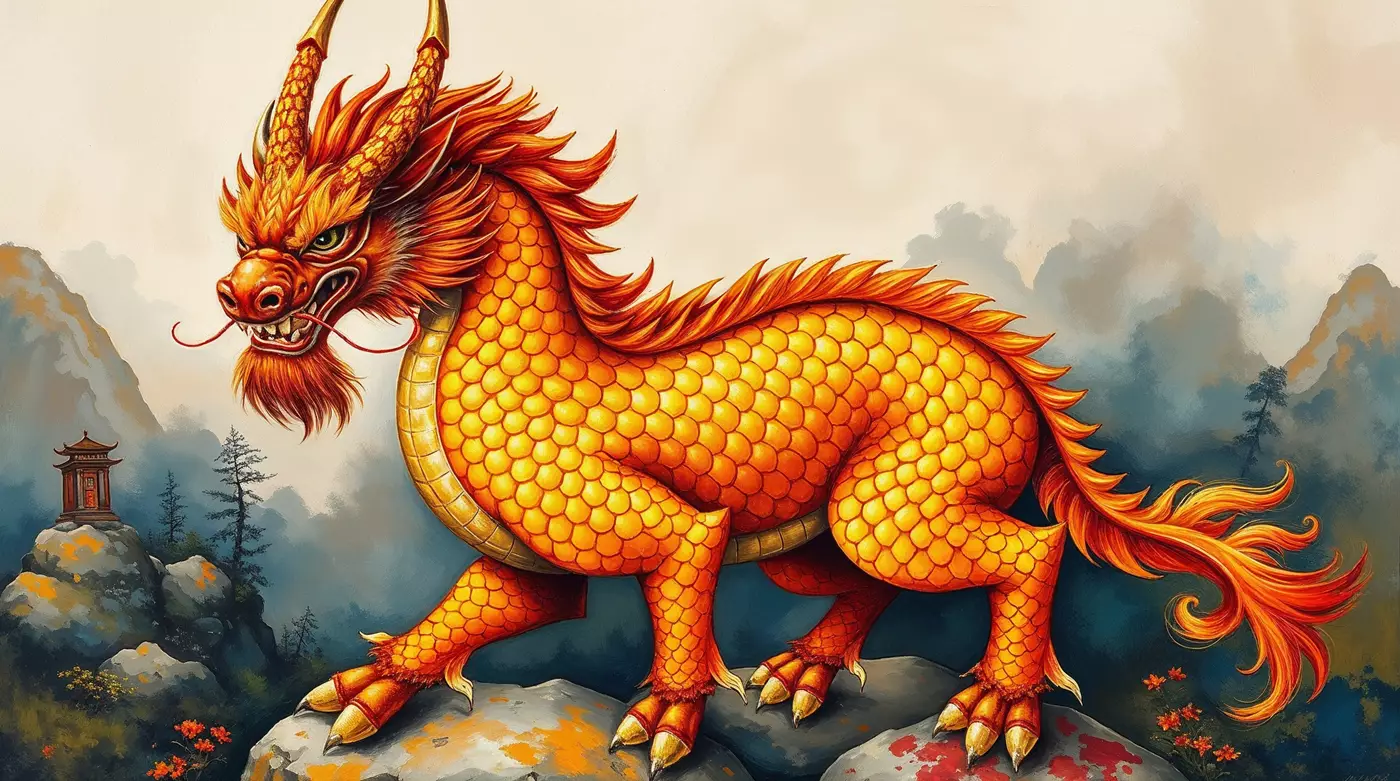
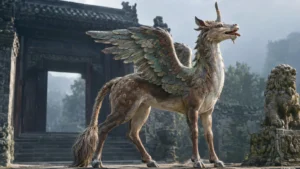
The Qilin of Chinese lore combines traits of deer, ox, and dragon. It represents virtue, prosperity, and the arrival of wise rulers.
Its appearance was seen as a sign of moral harmony and good governance.
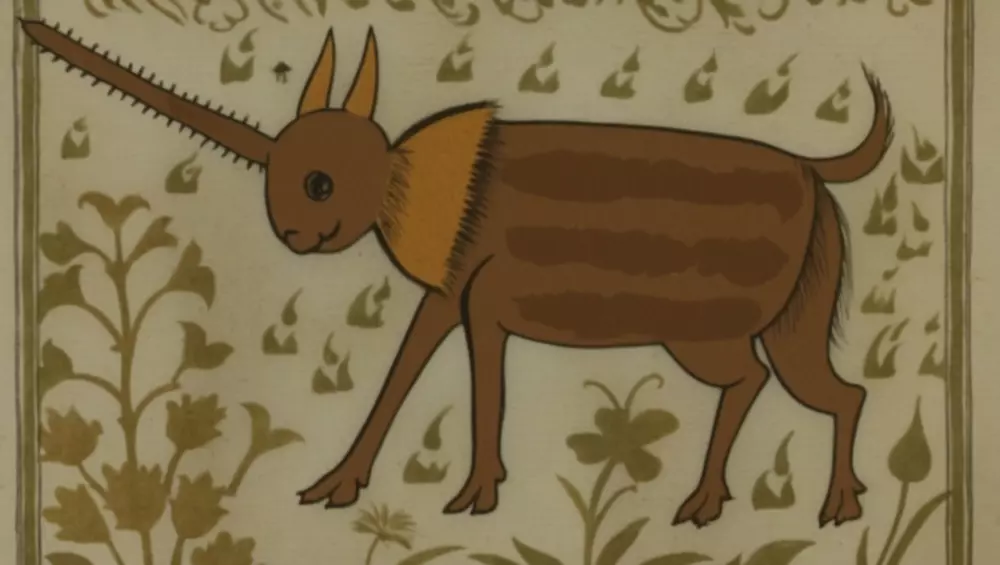
The Karkadann, described in Persian and Arabic natural histories, resembles a powerful rhinoceros. Writers portrayed it as fierce and dangerous, often roaming the plains near India and Persia.
Its horn was sometimes credited with protective or healing powers.
The Shadhavar, also from Persian lore, is more fantastical. It was said to have a hollow horn pierced with 42 holes.
When the wind blew through it, the horn played melodies that could enchant animals and humans alike. In some stories, its music lured prey into danger.
Greek mythology gives us the Pegasus, the winged horse that sprang from Medusa’s blood. Unlike the Unicorn, Pegasus symbolized poetic inspiration and divine ascent.
Yet both creatures bridged the human world with higher truths.
Religion/Ritual
The Unicorn became entwined with Christian faith. Early bestiaries linked its capture by a virgin maiden with the Incarnation.
The maiden symbolized Mary, and the Unicorn represented Christ’s divine yet approachable nature.
Clergy used this allegory in sermons. They taught that just as the Unicorn yielded only to innocence, Christ gave himself freely to humanity through Mary.
The imagery reinforced values of purity and sacrifice.
Unicorn horns, known as alicorns, also shaped rituals. Kings and popes collected them as relics. Believed to protect against poison, they were carved into ceremonial cups.
These objects embodied both spiritual and physical protection.
The blending of Unicorn myth with religious ritual shows how powerfully it shaped medieval thought. It stood not only as allegory but as a tangible presence in sacred and political life.
Scientific or Rational Explanations
Scholars often explain the Unicorn through mistaken identities. Ancient travelers may have seen oryx, rhinoceroses, or wild asses.
Reports blurred fact and wonder, creating a composite beast both natural and fantastic.
Narwhal tusks imported by northern traders deepened belief. Europeans mistook them for Unicorn horns. These tusks filled royal treasuries, strengthening the myth.
The supposed healing powers of alicorns gave practical weight to legend.
Some argue that the Unicorn survives because it speaks to psychological needs. It symbolizes hope, purity, and unreachable perfection.
These qualities make it more than an animal. It becomes an archetype of the human search for transcendence.
The lack of evidence for real Unicorns never reduced their influence. Instead, rational explanations underline how cultural imagination reshaped ordinary animals into extraordinary myths.
Modern Cultural References
The Last Unicorn (1968 novel, 1982 film)
Peter S. Beagle’s The Last Unicorn became one of the most beloved fantasy stories of the 20th century. It follows a unicorn on a quest to discover what happened to her kind.
The 1982 animated adaptation gave the tale lasting cultural impact.
Harry Potter Series (1997–2007, books, films)
In J.K. Rowling’s Harry Potter books, unicorns embody purity and innocence. Their blood is described as powerful but cursed, while their hair becomes wand cores.
This depiction reinforced the unicorn’s dual nature, beautiful yet dangerous to exploit.
Thelma the Unicorn (2024, film)
Netflix released Thelma the Unicorn, an animated musical film about a pony who gains fame after becoming a unicorn. It uses unicorn imagery to explore themes of authenticity, self-acceptance, and the risks of chasing popularity.
Death of a Unicorn (2025 film)
The upcoming A24 film Death of a Unicorn subverts the classic myth. Instead of purity, its unicorn becomes unsettling and eerie.
This modern retelling highlights how unicorns remain powerful symbols open to reinterpretation.
My Little Pony: Friendship Is Magic (2010–2020, TV series)
This animated series features unicorn characters such as Twilight Sparkle. These unicorns embody friendship, magic, and growth. The show helped reframe unicorns for a new
Conclusion
The Unicorn endures as more than a mythical horse. From ancient seals to billion-dollar startups, it continues to evolve.
Its horn still carries the promise of healing and purity, even when reimagined in glitter or film.
Across cultures, it symbolizes innocence, wonder, and power. Whether chained in royal heraldry, painted in medieval tapestries, or glowing on a rainbow latte, the Unicorn remains alive in imagination.
It reflects humanity’s constant need for ideals beyond the ordinary.
Further Reading
“The Ancient One-Horned Ass”
Author: C. Lavers
Source: Greek, Roman, and Byzantine Studies
This academic article examines Ctesias’s portrayal of the unicorn (as a wild ass) and its mythic characteristics rooted in classical literature.
“The Little-Known Tale of the Medieval Unicorn”
Author: Getty Iris Editorial Team
Source: Getty Iris (The Getty Museum’s blog)
This article explores unicorns in medieval bestiaries and illuminated manuscripts, detailing their allegorical ties to resurrection and Christian symbolism.
“The Unicorn and Christ – Metamorphosis and Symbology”
Authors: Luis Mendonça de Carvalho, Francisca M. Fernandes, Maria F. Nunes, Ana Maria Costa, Paula Nozes
Source: International Journal of Research and Teaching in Polarities (2025)
This modern peer-reviewed article analyzes unicorn iconography within Christian art, exploring its symbolism of divinity and purity.
The Unicorn Tapestries
Author: Metropolitan Museum of Art (Met Museum Bulletin)
This authoritative publication examines the famous Unicorn Tapestries (c. 1495–1505), their historical context, craftsmanship, and allegorical meanings.