back to top

Serpentine Beast

Relevant Beasts

Cherokee
Sacred Animal
Uktena - Cherokee folklore
Cherokee

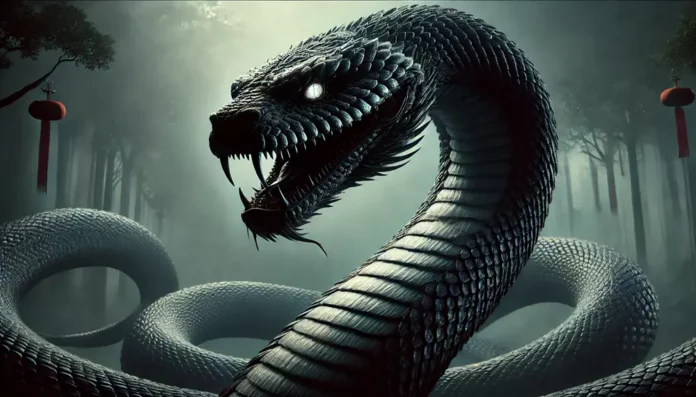
Uktena

The Uktena, a Cherokee mythical serpent, is a powerful and fearsome creature with horns, glowing scales, and a magical...
  • Skills
Light HealingTidal Wave Summoning
  • Weaknesses
Blunt ForceEarth Bound
Africa
Aquatic Hybrid
Mamlambo - Zulu folklore
Zulu

Mamlambo

Mamlambo is a South African water serpent believed to lure victims with its glowing charm.

  • Skills
Element ControlWater Breathing
  • Weaknesses
Element SensitivitiesFire Vulnerable
Asia
Serpentine Beast
Bashe - Chinese Mythology
China

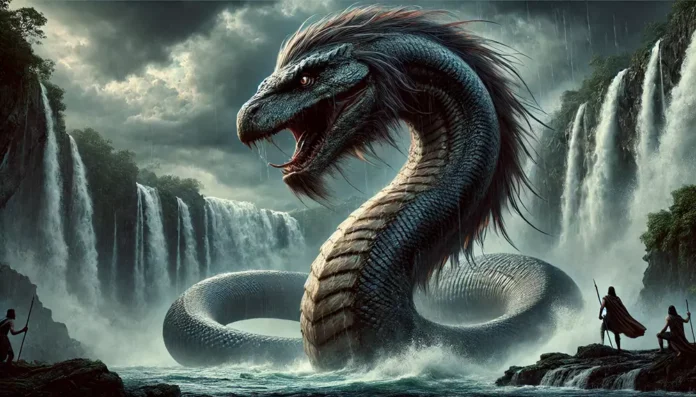
Bashe

Bashe is a snake-like dragon from Chinese legend that swallows elephants whole and hides in the bamboo forests.
  • Skills
Earth ManipulationStrength
  • Weaknesses
Fire VulnerableLoud Noise
Africa
Sea Monster
Inkanyamba - Zulu Mythology
Zulu

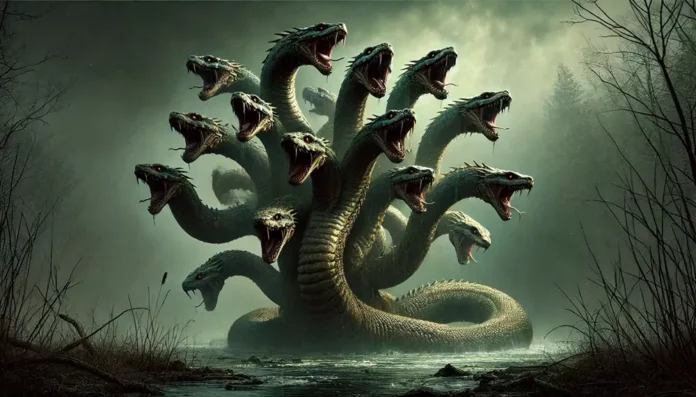
Inkanyamba

Inkanyamba is a massive water serpent from Zulu folklore, known to cause storms and whirlwinds.
  • Skills
Control WeatherStorm Control
  • Weaknesses
Dry Land HarmWeather
Greece
Serpentine Beast
Hydra -the multi-headed serpent
Greece

Hydra

The Hydra, a multi-headed serpent of Greek mythology, grew two heads for each severed. Heracles defeated it as one...

  • Skills
Healing & LifeRegeneration
  • Weaknesses
Fire Vulnerable
Akkadian Empire
Serpentine Beast
Akkadian Empire

Tiamat

A primordial sea goddess in Mesopotamian mythology, Tiamat embodies chaos and creation. She is often depicted as a massive...

  • Skills
Element ControlShape Shifting
  • Weaknesses
BeheadingPhysical Limits

Serpentine Beast – Overview

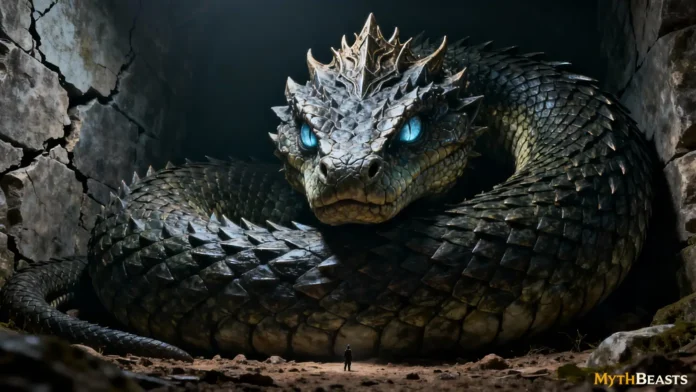
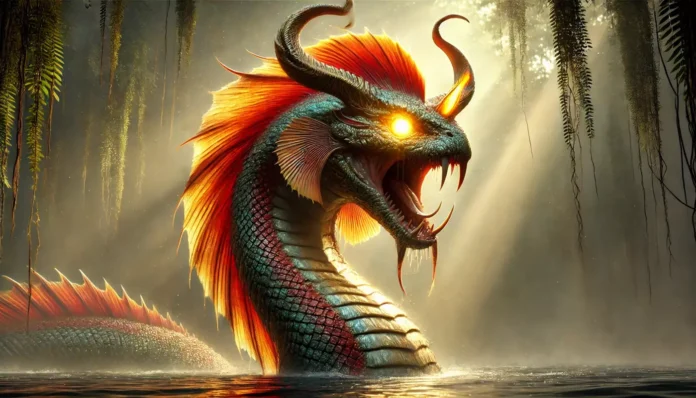
Serpentine Beasts in mythology are creatures characterized by their snake-like forms, embodying complex symbolic roles across various cultures. Their defining concept involves elongated bodies, often associated with both terrestrial and aquatic elements. These beasts typically symbolize duality, embodying both life-giving and destructive aspects. Universally, they serve as mediators between different realms or forces, representing fertility, chaos, or wisdom depending on their cultural context. Their presence in mythological narratives reflects human attempts to understand and interact with the natural and supernatural worlds around them.

Defining Characteristics

Physical Form and Morphology

Serpentine Beasts are predominantly defined by elongated, snake-like bodies, often adorned with scales. Many possess limbs, wings, or other appendages, reflecting hybrid forms. These creatures may display vibrant coloration or multiple heads, enhancing their exotic allure. Their morphology often combines traits from different animals, emphasizing their otherworldliness and adaptability. This composite nature underscores their symbolic significance across various mythological landscapes.

Ontological Nature

In mythological terms, Serpentine Beasts are often seen as liminal entities, existing between the mundane and the divine. They are frequently associated with the underworld, water bodies, or celestial realms, representing the continuum between life, death, and rebirth. These creatures may embody chaos and order, acting as guardians of sacred knowledge or treasures. Their ontological nature often reflects dualistic themes, challenging boundaries between creation and destruction.

Mythological Role and Function

Place in Mythological Systems

Serpentine Beasts occupy a vital place in mythological systems, often serving as boundary markers between worlds or dimensions. They can act as defenders of divine realms or as challenges to heroes. In some traditions, they are revered as ancestors or progenitors, linking humanity to primordial forces. Their interactions with gods, natural elements, or heroes illustrate moral and cosmological lessons, emphasizing balance and transformation.

Perception and Meaning

Cultures perceive Serpentine Beasts variously as threats, protectors, or symbols of cyclical time and renewal. They often embody omens or portents, offering guidance or danger. Their serpentine form suggests hidden knowledge, fertility, or immortality. Symbolically, they mediate between extremes, embodying equilibrium or chaos. Their depiction often reflects broader cultural narratives about power, survival, and the unknown.

Distinction from Related Beast Types

Conceptual Boundaries

Serpentine Beasts are distinct from elemental beings or animal-based creatures through their unique hybrid morphology and symbolic roles. Unlike humanoid monsters, they lack anthropomorphic traits, focusing instead on raw, primal forces. They are not spirits or ghosts, as their manifestations are typically physical. Instead, they bridge physical and metaphysical realms, emphasizing transformation over static existence.

Common Sources of Confusion

Confusion arises when Serpentine Beasts are conflated with dragons, due to overlapping characteristics like flight or fire-breathing. However, dragons possess distinct cultural and narrative roles, often emphasizing regal authority. Scholars distinguish Serpentine Beasts by focusing on their snake-like form and dualistic symbolism, whereas dragons are more personified and hierarchical in mythological hierarchies.

Canonical Beasts Associated with This Beast Type

Quetzalcoatl

Originating from Mesoamerican mythology, Quetzalcoatl is a feathered serpent deity, embodying wisdom and creation. Revered as a cultural hero, Quetzalcoatl exemplifies the Serpentine Beast through his association with dual realms of earth and sky.

Jörmungandr

In Norse mythology, Jörmungandr, the Midgard Serpent, encircles the earth, representing the cycle of time and destruction. Its presence as a Serpentine Beast underscores its role in cosmic balance and eventual apocalypse within Ragnarok.

Naga

In Hindu and Buddhist traditions, Nagas are serpent beings associated with water and fertility, often depicted as protectors of treasure and sacred spaces. Their dual forms as guardians and challengers highlight their Serpentine Beast classification.

Historical Distribution and Cultural Context

Serpentine Beasts appear across diverse cultures, from ancient Mesoamerica to Asia and Northern Europe. Their presence in early mythologies underscores their deep-rooted significance, evolving alongside societal and environmental changes. This widespread distribution reflects universal human themes of duality, transformation, and the reconciliation of opposing forces. They often appear during times of ecological or social transition, symbolizing adaptability and resilience.

Scholarly Interpretation and Uncertainty

Variation in Definitions

Definitions of Serpentine Beasts vary across cultures, with some emphasizing their protective qualities, while others focus on their chaotic nature. Academic frameworks highlight their symbolic flexibility, adapting to differing cultural values. Interpretations may change with historical context, reflecting evolving societal needs and philosophical outlooks.

Limits of Available Evidence

Limited archaeological and textual evidence complicates precise definitions of Serpentine Beasts. Ambiguous depictions or incomplete records lead to scholarly debates about their roles and characteristics. No verified sources describe specific rituals or priesthoods dedicated solely to these creatures. Careful analysis of existing evidence is necessary to avoid speculation, ensuring responsible reconstructions.

Mythological Role Across Cultures

Serpentine Beasts recur globally, addressing shared human concerns about life, death, and nature's cycles. They serve as metaphors for transformation, reflecting humanity's quest for understanding and control over the unknown. By recognizing these themes, scholars can interpret mythological systems comparatively, revealing underlying cultural dynamics and shared human experiences. Their symbolic roles help societies navigate existential uncertainties, offering insight into universal human psychology and cosmology.