Introduction
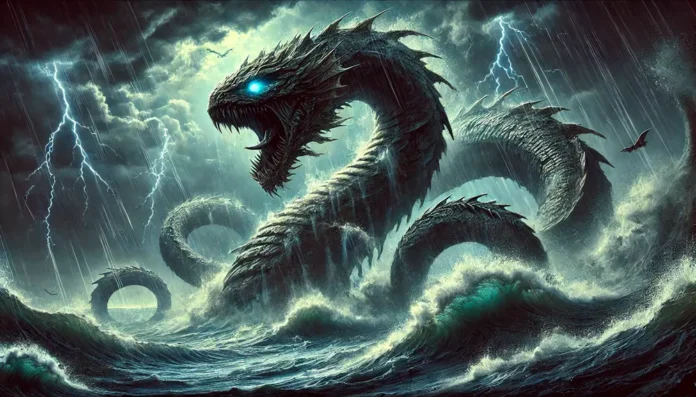
Leviathan is one of the Hebrew Bible’s most powerful sea monsters, a vast creature linked with deep water, serpentine motion, terrifying strength, and forces beyond human control. Biblical writers use it differently, sometimes as a living creature, sometimes as cosmic chaos.
In Job, Leviathan becomes the ultimate example of something humans cannot master. Its armored body, dreadful teeth, smoking nostrils, and fiery breath create an image larger than ordinary wildlife, while God’s speech insists that even this terrifying being remains under divine authority.
Elsewhere, the creature shifts roles. Psalm 74 remembers God crushing Leviathan’s multiple heads, Isaiah imagines a future defeat of the twisting sea-serpent, and Psalm 104 presents Leviathan almost peacefully, swimming in the sea as one creature among the many works of creation.
These contrasting portraits make Leviathan more than a single monster with one fixed biography. It belongs to an ancient Near Eastern tradition of dangerous sea-serpents, yet biblical poets reshape that tradition to express divine power, the limits of humanity, and order over chaos.
History/Origin
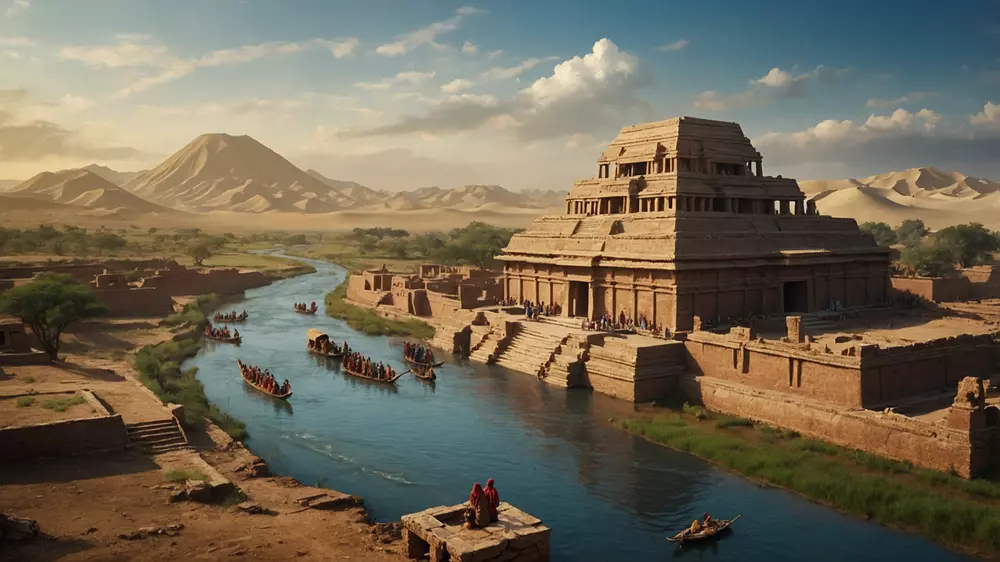
The closest older parallel comes from Late Bronze Age Ugarit, a coastal city at modern Ras Shamra in northern Syria. Ugaritic religious poems preserve Litan, often vocalized Lotan, a serpent associated with the sea and defeated within the mythic struggles surrounding Baal.
“Can you draw Leviathan with a hook, or press down its tongue with a cord? Will it make pleas to you, or speak softly to you?
Will it make a covenant with you, so that you take it as a servant forever?” (Job 41:1-4)
The resemblance is unusually specific. Ugaritic poetry calls Litan a fleeing serpent and a twisting serpent, language closely echoed by Isaiah’s description of Leviathan.
Another Ugaritic passage gives the monster seven heads, while Psalm 74 likewise speaks of Leviathan’s heads in the plural.
“Its sneezings flash with light, and its eyes resemble the eyelids of dawn. Burning torches go from its mouth, and sparks of fire leap out.
Smoke comes from its nostrils like a boiling pot; its breath kindles coals.” (Job 41:18-21)
Scholars therefore usually treat Ugaritic Litan and biblical Leviathan as closely related figures from a shared Northwest Semitic mythic tradition. That connection does not make every biblical passage a copy of Ugaritic myth, because each Hebrew poem gives the creature a different theological role.
“On that day, the Lord will punish Leviathan, the fleeing serpent, Leviathan, the twisting serpent, with his harsh, great, strong sword; and he will kill the dragon that is in the sea.” (Isaiah 27:1, translated directly from the Hebrew text)
Name Meaning
The Hebrew name is לִוְיָתָן, transliterated Livyatan or Liwyatan. Traditional Hebrew lexicons connect it with a root carrying ideas of joining, twisting, or coiling, which suits the serpent imagery.
However, scholars have also considered whether the name reflects a foreign term.
That uncertainty matters because Ugaritic ltn is linguistically close to Hebrew liwyatan and belongs to a similar sea-serpent tradition. The relationship strongly supports a shared ancient name or inherited mythic vocabulary, even though scholars do not reconstruct every stage of the word’s development identically.
In later English, “leviathan” expanded beyond the biblical creature and became a general word for something enormous or overwhelmingly powerful, especially a huge sea animal, ship, institution, or state. That later usage grows from the monster’s scale rather than from one precise zoological identification.
Appearance
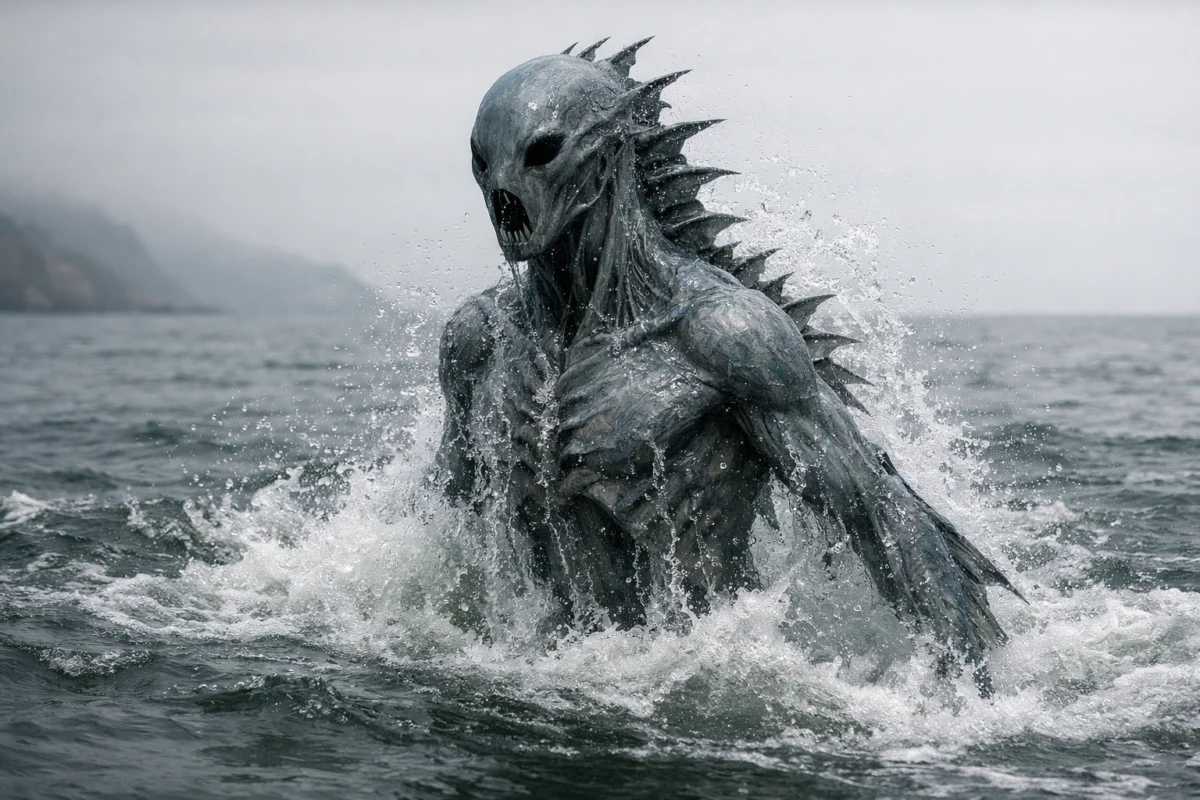
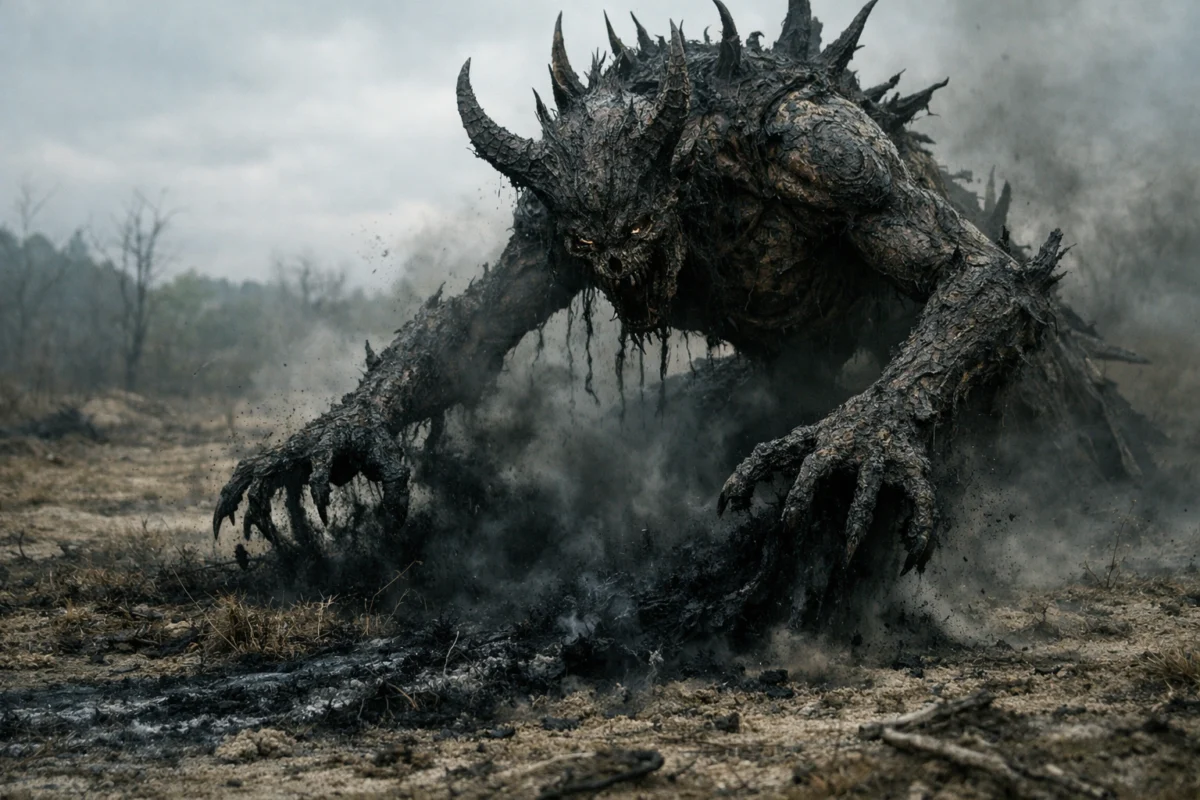
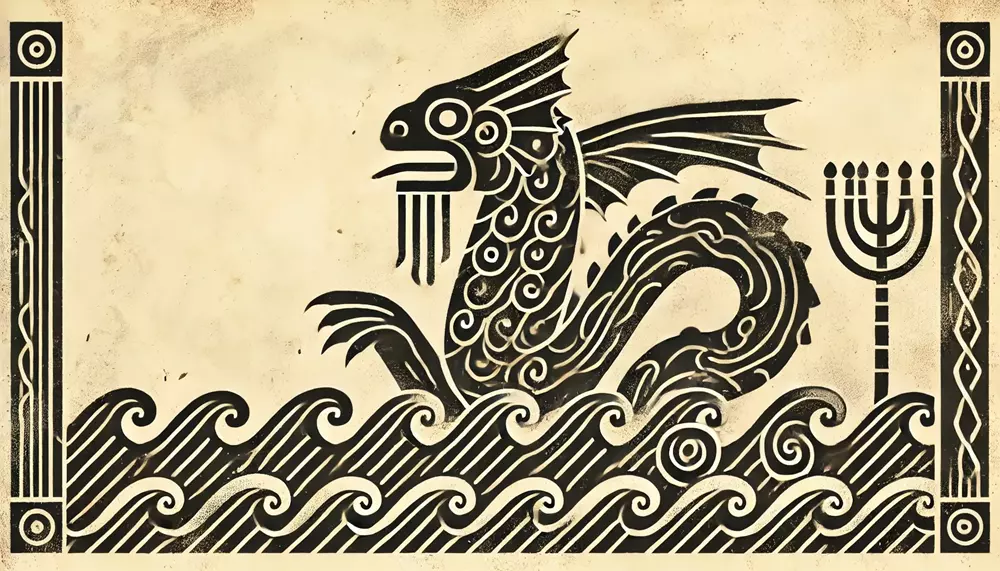
Job gives the most elaborate physical description. Leviathan has frightening teeth, closely sealed rows of protective scales, a powerful neck, a hard chest, and an underside compared with sharp pottery fragments.
Weapons fail against it, and its movement makes the deep water churn.
The same poem adds deliberately extraordinary features. Light flashes with its sneezing, smoke pours from its nostrils, sparks leap from its mouth, and its breath seems to ignite coals.
These images push the creature beyond a straightforward naturalistic portrait of a crocodile or whale.
Other biblical poems add different traits. Psalm 74 gives Leviathan more than one head, while Isaiah calls it both a fleeing serpent and a twisting serpent before identifying the enemy as a dragon in the sea.
The imagery therefore combines aquatic, serpentine, and monstrous features.
No single biblical passage supplies a standardized body plan, color, exact size, or number of limbs. A historically careful reconstruction should therefore emphasize a gigantic serpentine sea monster, armored in Job and multi-headed in Psalm 74, without inventing horns, wings, fins, or other unsupported details.
Background Story
Leviathan does not have one continuous biography in the Hebrew Bible. Instead, several poems reuse the creature for different purposes.
The shared idea is immense power associated with the sea, but the surrounding story changes according to each author’s literary and theological purpose.
In Job, God confronts Job with questions about Leviathan’s untamable nature. A human cannot hook, bind, domesticate, bargain over, or defeat the creature.
The argument moves from the monster’s independence toward a larger point: humanity cannot claim mastery over everything within creation.
Psalm 74 places Leviathan inside a victory hymn. God breaks the sea, smashes sea monsters, and crushes Leviathan’s heads before establishing springs, rivers, day, night, sun, and seasons.
The poem blends combat imagery with creation language to present divine order overcoming hostile waters.
Psalm 104 changes the mood dramatically. The sea contains countless creatures, ships move across it, and Leviathan appears as a creature God formed to play there.
The terrifying chaos monster becomes part of an ordered world that depends, like every other animal, on its creator.
Isaiah 27 restores the threatening serpent image but projects its defeat into the future. The prophet describes Leviathan as fleeing and twisting, then pairs it with the dragon in the sea.
The passage turns traditional monster-combat language into an image of coming divine judgment.
Famous Folklore Stories
The Two Leviathans at Creation
Rabbinic tradition expands Leviathan’s creation into a story about two monsters rather than one. Bava Batra says God created a male and a female Leviathan, drawing on the paired images of the fleeing serpent and twisting serpent associated with the creature.
The pair posed a danger simply by existing together. According to the story, if they reproduced, their offspring would overwhelm creation itself.
God therefore prevented that possibility before the creatures could join, turning cosmic preservation into part of Leviathan’s legendary history.
“He castrated the male and killed the female, and salted the female to preserve it for the righteous in the future.” (Babylonian Talmud, Bava Batra 74b, Late Antiquity)
The surviving male remained alive, while the female’s body became something deliberately preserved rather than discarded. The legend therefore transforms destruction into preparation.
Leviathan’s terrifying scale serves two opposite purposes at once: threatening creation while also becoming part of divine provision.
This story also explains why later Jewish traditions could describe Leviathan as both a living monster and future food. Rabbinic storytellers connected scattered biblical images into a larger mythology without claiming that the Hebrew Bible itself contained one continuous Leviathan biography.
Leviathan Battles Behemoth
Leviticus Rabbah imagines Leviathan facing Behemoth before the righteous in the world to come. Rather than describing an ordinary hunt, the midrash presents the two giant creatures as participants in a spectacular contest watched by people who rejected pagan arena entertainments.
Behemoth attacks with its horns, while Leviathan answers with its powerful fins. Each creature possesses the weapon suited to its own body, and the confrontation turns their enormous natural features into instruments of mutual destruction rather than tools directed against humankind.
“The Behemoth will stab the Leviathan with its horns and tear it open, and the Leviathan will smash the Behemoth with its fins.” (Leviticus Rabbah 13:3, c. 5th century CE)
The rabbis then raise an unexpected legal question. If these creatures kill one another with horns and fins, can the resulting meat count as properly slaughtered food?
The discussion deliberately combines fantastic eschatology with detailed Jewish law, making the legend characteristically rabbinic.
The combat became one of Leviathan’s most enduring postbiblical images. Medieval Jewish poetry later repeated the scene, especially the Shavuot poem Akdamut, where Behemoth gores with its horns and Leviathan counters with fins before God prepares the promised feast for the righteous.
The Feast and the Skin of Leviathan
Bava Batra also develops Leviathan’s fate into a vision of reward. Rabbi Yohanan teaches that God will prepare a feast for the righteous from Leviathan’s flesh, turning the creature that no human could master into food served at a divinely ordered celebration.
The legend continues beyond the meal. Leviathan’s immense hide becomes material for the righteous, but the reward changes according to merit.
The most deserving receive an entire shelter, while others receive smaller coverings, necklaces, or amulets fashioned from the monster’s skin.
“In the future, the Holy One, Blessed be He, will make a feast for the righteous from the flesh of the leviathan.” (Babylonian Talmud, Bava Batra 75a, Late Antiquity)
The remaining hide becomes a public wonder rather than private property. The Talmud says God spreads it across Jerusalem’s walls, where its radiance reaches across the world.
Leviathan therefore becomes nourishment, shelter, ornament, and a visible sign of transformed cosmic power.
This ending gave Jewish tradition a striking reversal of the sea monster’s earlier threat. The creature’s body no longer represents uncontrolled danger.
Every surviving part receives a purpose in the world to come, converting terror into abundance and placing Leviathan inside an eschatological celebration.
Cultural Impact
Leviathan became a durable symbol because writers could detach its enormous power from a literal sea monster. In Jewish literature it remained an image of divine mastery, while later European writers increasingly used the name for overwhelming political, military, natural, or institutional power.
Thomas Hobbes created the most influential secular transformation in 1651 by naming his political treatise Leviathan. He compared the commonwealth to an immense artificial person whose power exceeds individual citizens, turning the biblical monster into a lasting metaphor for the centralized state.
That political use helped broaden the word itself. “Leviathan” now commonly describes something gigantic, formidable, or exceptionally powerful.
The cultural shift did not erase the ancient creature, but it allowed the name to function independently wherever writers needed an image of overwhelming scale.
Similar Beasts
Lotan
Lotan, or Litan, is Leviathan’s closest known mythological relative within ancient Northwest Semitic religion. In the Ugaritic Baal Cycle, Baal defeats this fleeing, twisting, seven-headed serpent.
Isaiah uses remarkably similar language for Leviathan, making the historical relationship unusually strong.
Tiamat

Tiamat belongs to Babylonian creation mythology and personifies the primordial salt sea. Marduk defeats her and establishes cosmic order.
Like Leviathan, she links dangerous waters with chaos, although Tiamat is a divine female figure rather than part of the same serpent tradition.
Jörmungandr
Jörmungandr, the Midgard Serpent of Norse mythology, encircles the human world and eventually battles Thor during Ragnarök. Its gigantic serpentine body and final confrontation with a god resemble Leviathan traditions, but no historical evidence directly connects the two mythologies in surviving sources.
Apep

Apep, or Apophis, is the great hostile serpent of ancient Egyptian religion. He threatens the solar order associated with Ra and must repeatedly be defeated.
Like Leviathan, Apep embodies dangerous cosmic opposition through serpent imagery, yet develops within a separate Egyptian tradition.
Religion/Ritual
The Hebrew Bible never presents Leviathan as a deity whom Israelites should worship. Instead, biblical poetry places the monster beneath God’s authority.
Later Jewish interpretation develops that relationship further, especially through stories in which Leviathan’s eventual destruction becomes part of messianic reward.
Leviathan entered Jewish liturgical imagination through Akdamut, an Aramaic poem traditionally associated with Shavuot in Ashkenazi communities. Its closing vision describes Leviathan fighting Behemoth before God prepares their flesh as a banquet for the righteous in the world to come.
Mystical literature also reused Leviathan symbolically rather than establishing a cult around it. Zoharic passages connect the serpent with cosmic or spiritual forces, while later Jewish tradition continued to treat its eventual defeat as an image of divine control over threatening powers.
Scientific or Rational Explanations
Interpreters have long proposed the Nile crocodile as the natural model behind Job 41. The armored scales, formidable teeth, aquatic habitat, physical strength, and resistance to ordinary weapons fit crocodilian traits, although the poem heightens them with deliberately fantastic fire and smoke imagery.
Other passages resist that identification. Psalm 104 can describe Leviathan as a great creature moving through the sea, encouraging comparisons with whales or other large marine animals, while Psalm 74 and Isaiah preserve multi-headed or cosmic-serpent features that no real animal possesses.
A historical explanation therefore works better than a single zoological answer. Biblical authors appear to combine observations of formidable animals with inherited Near Eastern monster imagery.
The Ugaritic Lotan parallels show that the serpent-combat tradition existed independently of attempts to identify Leviathan scientifically.
Modern Cultural References
Final Fantasy XVI: The Rising Tide
Square Enix made Leviathan the “lost Eikon of Water” in Final Fantasy XVI: The Rising Tide, released in 2024. The game turns the ancient sea-monster name into a water-aligned summon and major story figure while preserving its association with overwhelming aquatic power.
Subnautica
Subnautica uses “Leviathan” as a classification for its largest alien fauna, including Reaper, Ghost, Sea Dragon, and Sea Emperor Leviathans. The game broadens the term beyond one monster, using the traditional name as shorthand for enormous creatures dominating an oceanic ecosystem.
Subnautica Leviathan Class source
Yu-Gi-Oh!: Number 17: Leviathan Dragon
Konami’s Yu-Gi-Oh! Trading Card Game includes Number 17: Leviathan Dragon, a WATER-attributed Dragon Xyz Monster. Rather than reproduce the biblical creature directly, the card converts Leviathan into a stylized combat dragon whose identity keeps the traditional connection with water and immense strength.
Official Yu-Gi-Oh! card database
Magic: The Gathering
Magic: The Gathering introduced a card simply named Leviathan in The Dark. Wizards of the Coast later described it as an early milestone in the game’s escalating monster sizes, where its enormous statistics helped establish Leviathan as shorthand for gigantic fantasy creatures.
God of War
God of War reuses the name for Kratos’s Leviathan Axe rather than a sea monster. PlayStation describes the enchanted weapon as forged by Brok and Sindri to restore balance, showing how modern fantasy preserves the name’s suggestion of exceptional power without preserving its aquatic form.
Official PlayStation God of War page
Destiny 2
Destiny 2 gives the name Leviathan to Emperor Calus’s enormous vessel and the setting of its original Leviathan raid. Bungie later returned players to Calus’s Leviathan, extending the ancient name into science fiction as a marker of intimidating scale and imperial power.
Conclusion
Leviathan survives because no single interpretation exhausts it. It can represent an untamable animal, a mythic sea serpent, defeated chaos, a future eschatological prize, or simply immense power.
Across traditions, each period preserved part of the creature while reshaping its meaning.
Its oldest recognizable relatives belong to ancient Near Eastern monster-combat traditions, while biblical authors placed that imagery firmly beneath divine authority. Rabbinic storytellers expanded the creature’s future, and later writers transformed its name into political metaphor, fantasy monster, weapon, spaceship, and cultural shorthand.
That flexibility explains Leviathan’s unusual longevity. The creature remains identifiable through water, enormity, danger, and power, yet it never became trapped inside one standardized appearance.
Its changing forms reveal how mythology survives by retaining a recognizable core while cultures continually reinterpret it.
Further Reading
Myth, History, and Metaphor in the Hebrew Bible by Paul K.-K. Cho, Cambridge University Press, 2019.
Examines biblical sea-monster traditions and their relationship with earlier ancient Near Eastern mythology.
A Jewish Bestiary: Fabulous Creatures from Hebraic Legend and Lore by Mark Podwal, Penn State University Press, 2021.
Surveys Leviathan through biblical, rabbinic, midrashic, folkloric, and kabbalistic Jewish traditions.
Akdamut: History, Folklore, and Meaning by Jeffrey Hoffman, The Jewish Quarterly Review, 2009.
Studies the Shavuot poem containing the famous future combat between Leviathan and Behemoth.
JSTOR article
A Seven-Headed Demon in the House of Study by Sara Ronis, AJS Review, 2019.
Includes scholarly discussion of Ugaritic Lotan and its relationship to Hebrew Leviathan traditions.
Cambridge University Press
Bava Batra 74b-75a, Babylonian Talmud, Late Antiquity.
Primary rabbinic source for Leviathan’s creation, preservation, future banquet, hide, and eschatological reward.
Sefaria text