Introduction
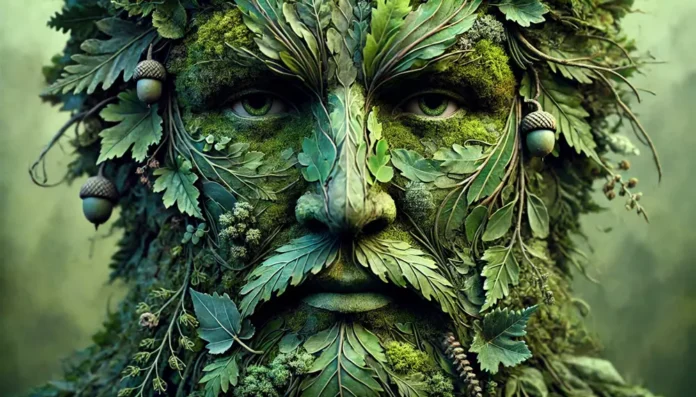
The Green Man, also known as “Grēne Mann” in Old English, is a powerful figure symbolizing the cycles of nature, rebirth, and humanity’s connection with the earth. This figure has appeared across British, European, and even some Middle Eastern folklore, depicted as a face made of or surrounded by leaves and branches, embodying both human and plant life.
While rooted in ancient mythology, the Green Man has evolved over the centuries to represent environmentalism, ecological preservation, and humanity’s dependency on nature.
His face can be found carved into medieval churches, Renaissance art, and even as a symbolic motif in modern conservation movements. Though once relegated to stone carvings in sacred spaces, the Green Man’s image now speaks to a modern world grappling with environmental challenges, keeping his spirit as relevant as ever.
History and Origin
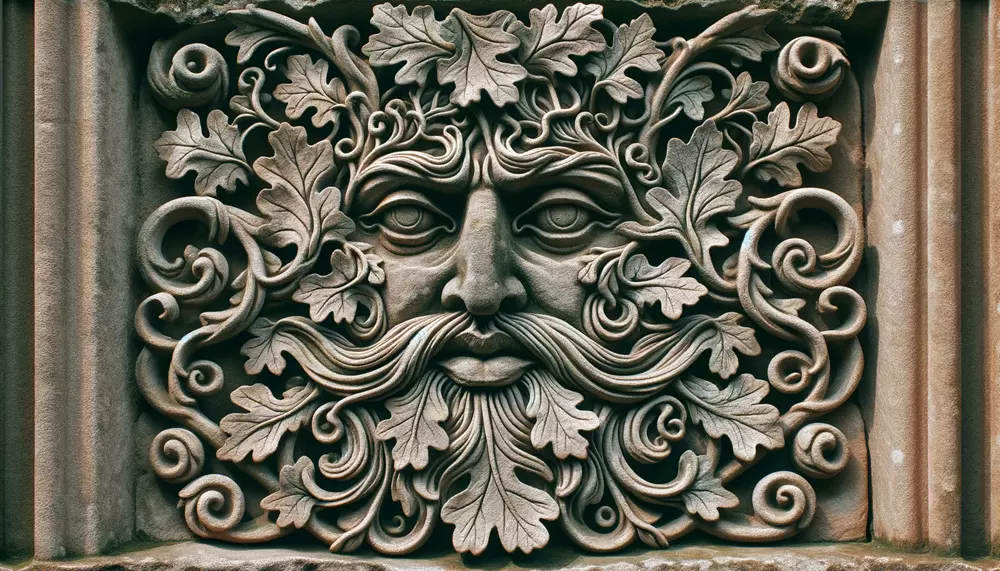
The earliest known appearances of the Green Man trace back to European medieval churches and sacred sites between the 12th and 16th centuries. Medieval stone carvings of the Green Man depict a human face entangled with foliage, particularly ivy or oak leaves, which either emanate from his mouth or completely cover his visage.
These sculptures often reflect the Green Man as a figure merging humanity and nature, representing a potent symbol of rebirth, growth, and the interdependence between humans and the earth.
One of the most significant medieval quotes about the Green Man appears in a Latin manuscript from 1392: “Hic est viridis vir, arboris filius et custodia terrae.” Translated, this means: “Here is the Green Man, son of the trees and guardian of the earth.”
Such texts suggest that the Green Man served as a symbol of vitality and resilience amid the cycles of the natural world. These figures often appeared in cathedrals and religious buildings across Europe, possibly as a way for medieval society to blend the old pagan reverence for nature with the newer Christian order.
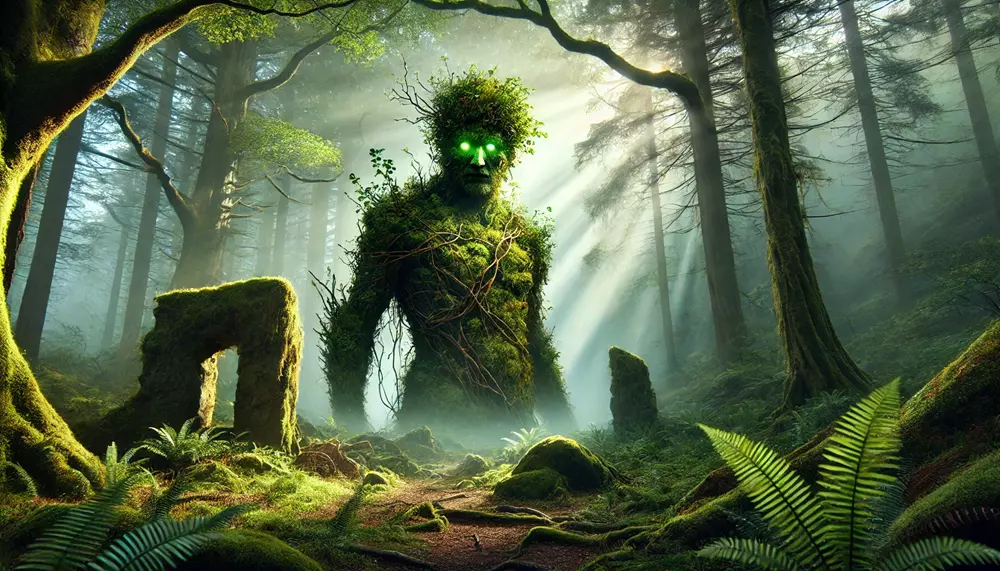
Interestingly, some scholars argue that the Green Man’s origin may have even deeper roots in ancient Celtic and Germanic traditions. Pagan rituals dedicated to the god of vegetation often involved processions and offerings to ensure a bountiful harvest, and the Green Man’s presence in early British architecture suggests a symbolic continuity between the old and new religions of Europe.
Another early mention of a figure resembling the Green Man comes from William Langland’s Piers Plowman in 1377, where he describes “a forest man adorned in green with a crown of oak leaves, wild and strange.” This literary depiction suggests that even as Christianity spread, the reverence for a “nature spirit” or “forest guardian” persisted, providing a symbolic bridge between humanity’s ancient past and the changing religious landscape of medieval Europe.
Name Meaning
The term “Green Man” originates from Old English, known as “Grēne Mann,” literally translating to “Green Man.” This name likely reflects his association with the forest, vegetation, and the idea of humanity intertwined with nature.
Throughout centuries, variations of the Green Man’s name have appeared across different cultures. In Welsh, he is known as “Gŵr Gwerdd,” while in certain French legends, he is “Homme Vert.”
Each title evokes the verdant, earthy essence of this figure, highlighting his universal presence across various European cultures as an emblem of renewal and growth.
Background Story
Legends surrounding the Green Man are varied, but they all emphasize his connection to the natural world. One recurring tale describes the Green Man as a nature spirit, brought to life each spring to awaken the plants, encourage growth, and ensure a fruitful harvest.
In one popular legend, he appears in the spring as a symbol of life’s revival, only to perish in the winter, when nature falls dormant. This seasonal cycle, of life, death, and rebirth, mirrors humanity’s understanding of natural rhythms and underpins the Green Man’s connection to agricultural societies.
In some myths, the Green Man is a protector of the forest, enforcing harmony and balance in the natural world. Intruders who harm the forest are said to encounter the wrath of the Green Man, experiencing strange misfortunes and frightening visions.
This protective role elevates the Green Man from a mere symbol to an active, sometimes fearsome force ensuring that nature remains respected.
The Green Man also appears as a guardian in stories where he aids travelers or imparts wisdom to those respectful of nature. These interactions are often mysterious; travelers recount hearing whispers from the trees or glimpsing a face among the leaves.
Such tales underscore the Green Man’s role as a benevolent yet enigmatic figure, embodying nature’s own protective spirit.
Cultural Impact
The Green Man’s influence on culture has been both profound and enduring, especially within Britain and Europe, where he remains an iconic representation of humanity’s relationship with nature. His image can be found in churches, cathedrals, and public buildings, embodying a silent reminder of life’s regenerative cycles.
Medieval Church Carvings
In many English and European churches, the Green Man is carved into doorways, ceilings, and capitals.
These carvings, which feature leaves and vines growing from a human face, remind parishioners of nature’s omnipresence and the divine power within it. Some churches, such as the Rosslyn Chapel in Scotland, house over a hundred depictions of the Green Man, highlighting his importance in religious architecture.
Morris Dances
The Green Man features prominently in Morris dancing, a traditional British folk dance that involves lively costumes, bells, and symbols of spring. Dancers wear masks or costumes reminiscent of the Green Man during festivals celebrating nature, especially around May Day, symbolizing the triumph of spring over winter.
May Day Celebrations
In various May Day celebrations across England, the Green Man is honored as a figure of spring.
Processions and “greening” ceremonies, where people decorate themselves with foliage, invoke the Green Man as a harbinger of fertility and growth. He is often paired with the May Queen, representing the unity between man and nature.
Architectural Revival
The 19th-century Arts and Crafts movement revived the Green Man’s image, with figures like William Morris incorporating him into wallpapers, textiles, and home decor. This artistic revival reintroduced the Green Man as a symbol of the organic beauty of nature and inspired environmental awareness, which remains relevant today.
Similar Beasts
The Green Man, cloaked in leaves and rooted in ancient lore, stands as a powerful figure of nature and rebirth. Yet he is not alone.
Across cultures and mythologies, there are other beings who echo his connection to the forest, guardianship, and the untamed spirit of the wild. Below are some of his closest mythic kin.
Ghillie Dhu
In Scottish folklore, the Ghillie Dhu is a solitary forest guardian, described as a small man clothed entirely in moss, bark, and leaves. Dwelling in the birch woods of the Highlands, he is gentle toward children and fiercely protective of his woodland home.
Like the Green Man, the Ghillie Dhu blends into the forest, appearing only when needed and vanishing just as suddenly. His form changes with the seasons, a living reflection of the woods he watches over.
Both figures represent the animate spirit of the forest and the importance of honoring the wild.
Adnei haSadeh
Rooted in ancient Jewish tradition, the Adnei haSadeh were wild, humanoid beings said to be tethered to the earth by a living cord. Dependent on this connection for survival, they embody the idea that nature and life are inseparably linked.
Though not leafy in appearance, their total reliance on the land mirrors the Green Man’s symbolic bond with natural cycles. These beings are reminders that disrupting the balance of nature severs life itself.
Ents
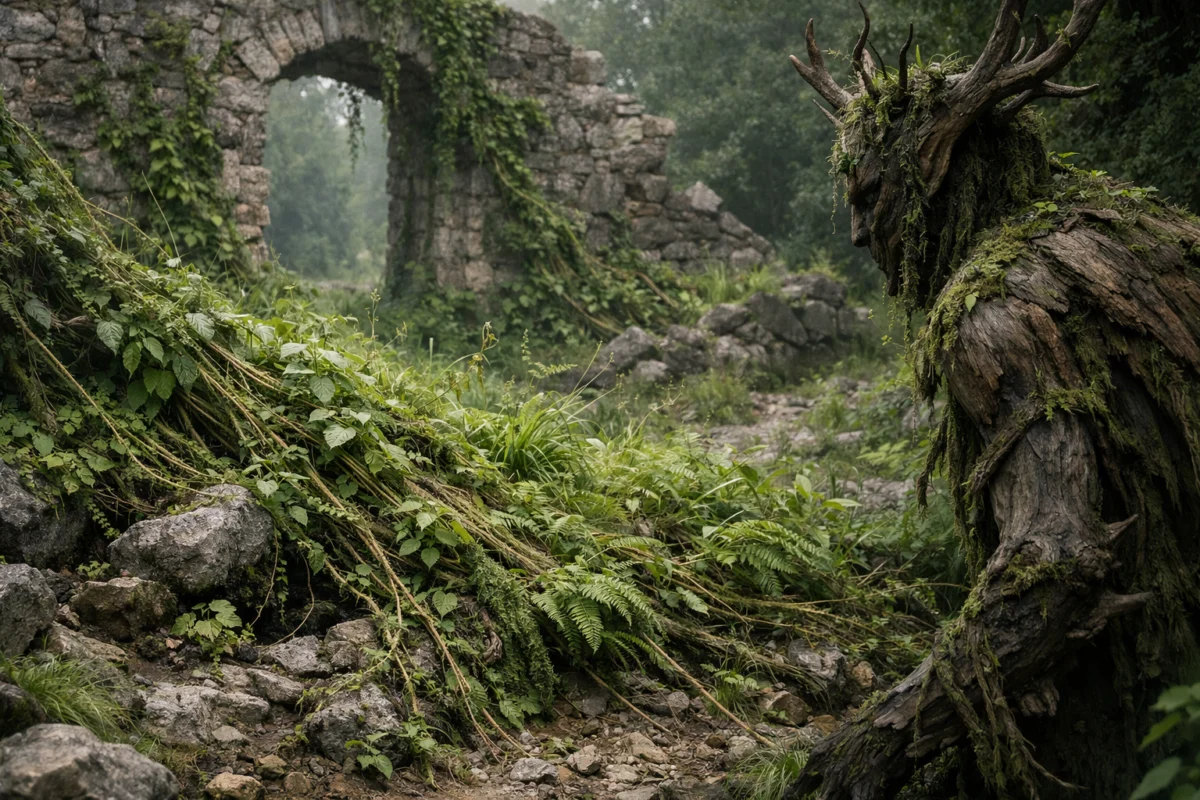
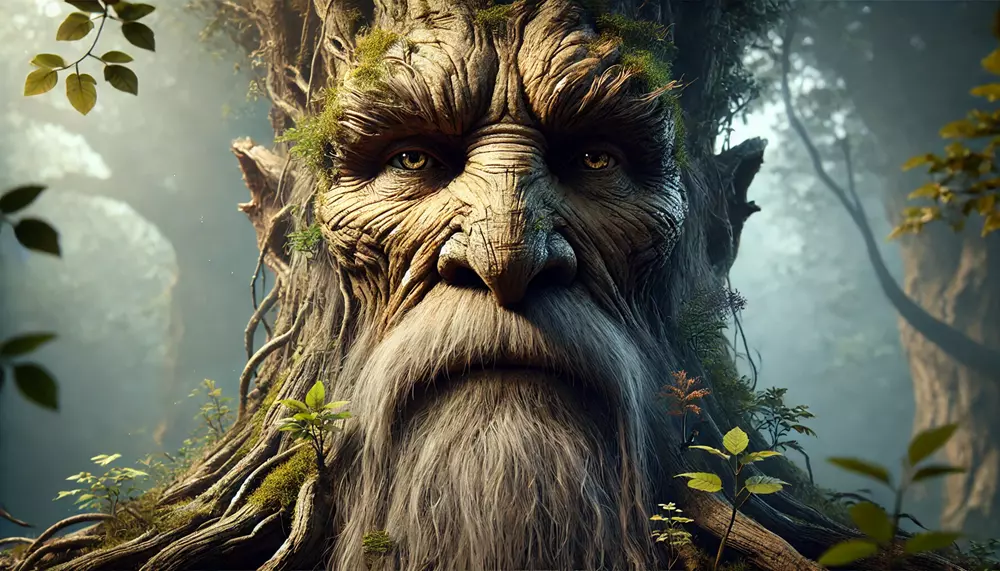
Tolkien’s Ents, ancient tree-guardians from The Lord of the Rings, are another spiritual cousin. Towering and wise, they walk and speak like men, yet they are made of bark and limb.
Inspired in part by Green Man imagery, Ents are the forest given voice and movement. They serve not only as protectors of trees but also as ancient memory-keepers of nature.
Their mournful slowness and fierce defense of their kind echo the Green Man’s role as both symbol and sentinel of the wild.
Leshy
From Slavic mythology, the Leshy is a capricious forest spirit who protects animals and misleads humans who disrespect the woods. Sometimes tree-like in form, other times appearing as a bearded man covered in moss, the Leshy is a guardian and trickster all at once.
Like the Green Man, he is deeply tied to forest ecosystems and demands that people show reverence to nature. Where the Green Man watches silently, the Leshy acts, sometimes helpfully, sometimes harmfully, depending on how he is treated.
Silvanus
The Roman deity Silvanus is a rustic god of forests, uncultivated lands, and boundaries. Often depicted with leaves and branches, he safeguarded groves and wild places long before the rise of urban religion.
His presence in ancient rituals and inscriptions shows a widespread reverence for the natural world, much like the Green Man’s enduring face in medieval and modern architecture. Both figures serve as sacred reminders that the wild deserves protection and awe.
Green Maמ compared to Ents and Ghillie Dhu
| Aspect | Green Man | Ents | Ghillie Dhu |
|---|---|---|---|
| Symbolism | Symbolizes nature and rebirth, reflecting humanity's bond with the earth. | Represents the spirit of trees, guardians of the forest, and nature's balance. | Embodies the essence of nature, often depicted as a protector of the woods. |
| Cultural Origin | Originates from British and European folklore, evolving through centuries. | Rooted in ancient mythology, particularly within Celtic traditions. | Stems from Scottish folklore, representing the spirit of the forest. |
| Representation | Depicted as a face surrounded by leaves, merging human and plant life. | Often visualized as a tree-like humanoid, embodying forest vitality. | Portrayed as a man covered in moss and foliage, symbolizing nature's harmony. |
| Historical Context | First appears in medieval churches, reflecting spiritual connections to nature. | Emerges in ancient tales, emphasizing the importance of trees in culture. | Found in folklore, representing the deep connection between humans and nature. |
| Ecological Significance | Symbolizes ecological preservation and humanity's reliance on the environment. | Represents the balance of ecosystems, emphasizing the importance of trees. | Highlights the significance of forests in maintaining ecological health. |
| Artistic Depiction | Carved into stone in churches, representing a blend of art and nature. | Featured in various artworks, showcasing the beauty of the natural world. | Illustrated in folklore art, emphasizing the mystical aspects of nature. |
Whether nestled in birch thickets, carved into cathedral walls, or hidden in the pages of ancient texts, these similar beasts all share one role: guardians of the green. Like the Green Man, they live at the threshold of human and wild, watching, remembering, and reminding us that the forest is never truly silent.
Religion and Ritual
The Green Man’s role in religious and seasonal rituals emphasizes his connection to the cyclical nature of life and growth. Medieval May Day festivals, particularly in England, centered around the Green Man.
People dressed in green foliage, embodying his spirit, and danced around the Maypole, a tradition that symbolized growth, fertility, and unity with the land. In ancient forests, sacrifices or offerings were sometimes made to the Green Man, asking for good harvests or protection for the fields.
These rituals echo those found in pre-Christian pagan practices, preserving a reverence for the natural world that remains deeply rooted in European culture.
Scientific or Rational Explanations
Scholars and historians offer several interpretations of the Green Man as an archetypal figure born from humanity’s agrarian roots. Some suggest he represents a symbolic attempt by early societies to understand the cycles of growth and decay in nature, which were crucial to agricultural survival.
Others argue that the Green Man might have evolved from pagan fertility gods such as the Celtic Cernunnos or the Greek god Pan. Psychological interpretations link him to the “Green Man archetype,” a concept in Jungian psychology that embodies humankind’s collective need to connect with nature, especially during times of industrialization or urbanization.
In Modern Culture
The Green Man has found new relevance in contemporary culture, symbolizing environmentalism, ecological preservation, and the interdependence of humanity and the earth. Here are some notable modern references:
J.R.R. Tolkien’s Ents
The Ents, tree-like beings in The Lord of the Rings, are inspired by the Green Man.
Tolkien’s portrayal of these ancient guardians reflects his love for nature and concern over industrial expansion, echoing the Green Man’s role as protector of the forest.
The Green Man Pub Names
Across the UK, there are numerous pubs named “The Green Man,” each serving as a nod to his mythological significance and local heritage.
These pubs often have Green Man carvings, reinforcing his place in British culture.
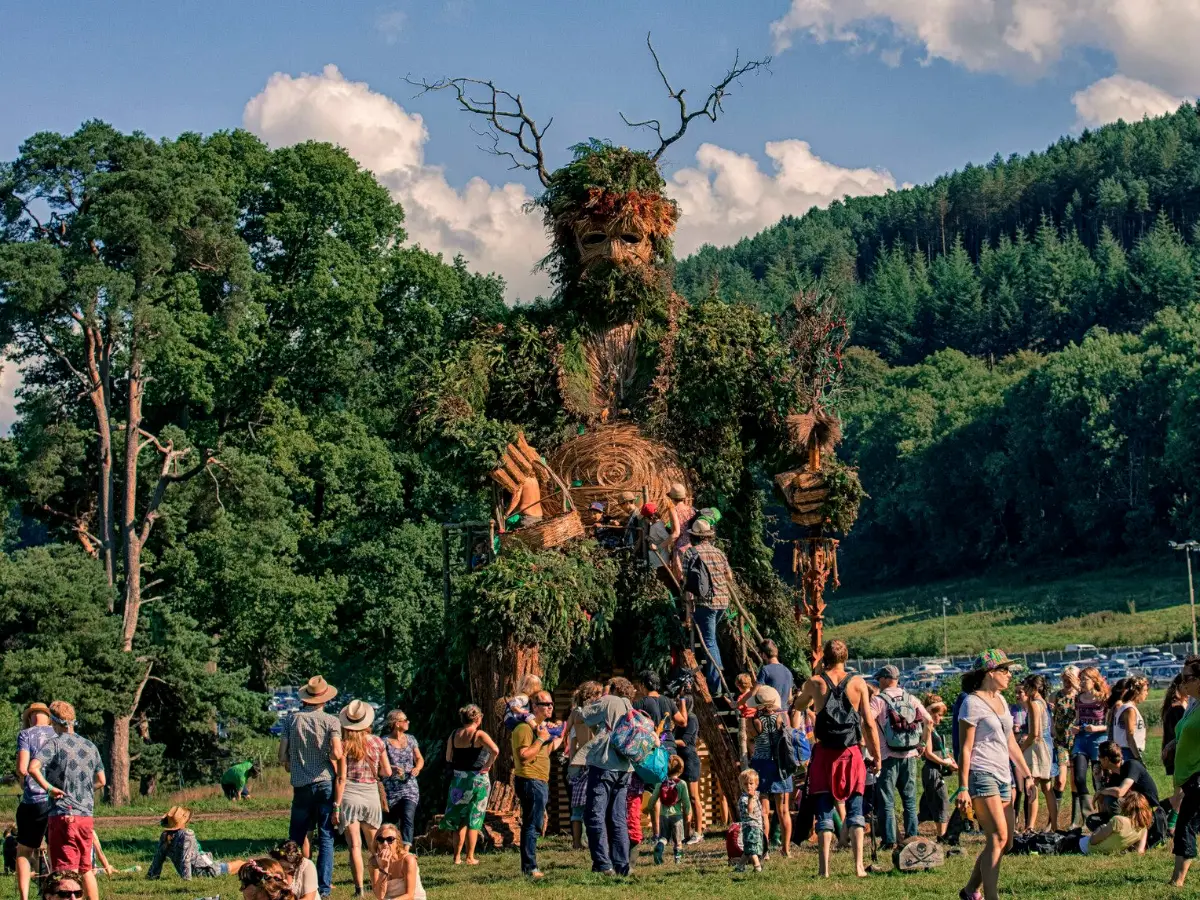
Green Man Festival
Held annually in Wales, this music festival celebrates nature, art, and music, with themes that honor the Green Man’s legacy.
It’s become a popular gathering for those interested in reconnecting with nature, arts, and conservation.
Gardening and Landscape Design
The Green Man has inspired garden decor, from planters to fountains, symbolizing his enduring presence in natural spaces.
Many garden ornaments and structures use his image, embodying his spirit as the guardian of green spaces.
Tattoo Culture
In modern tattoo art, the Green Man represents environmental consciousness, vitality, and a connection to nature. His face, often intertwined with ivy or oak, has become a symbol of personal commitment to environmental stewardship.
Conclusion
The Green Man has evolved from a mysterious figure in medieval stone carvings to a modern emblem of humanity’s bond with nature and a symbol for environmental advocacy. His presence in myth, architecture, art, and modern culture reflects our timeless need to honor and protect the earth.
As climate change and ecological crises threaten our world, the Green Man serves as a powerful reminder of the life-sustaining cycles that connect us to the natural world and the responsibility we have to safeguard it. His story, etched in ancient stone and alive in contemporary culture, continues to inspire those who seek harmony with nature.