Intro/Summary
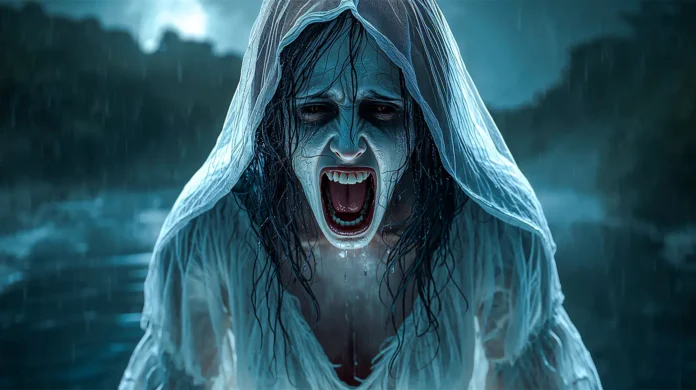
La Llorona, the Weeping Woman, is one of the most enduring figures in Mexican and Latin American folklore. She roams riverbanks at night, her cries echoing in the darkness.
Her legend captures the terror of grief and the danger of wandering too close to water.
“AY DE MÍ, LLORONA, LLORONA… LLÉVAME AL RÍO, TÁPAME CON TU REBOZO, LLORONA.”(Woe is me, Llorona, Llorona… take me to the river, cover me with your shawl, Llorona.)
Her story blends tragedy and morality with supernatural dread. Some tales describe a mother who drowned her children in rage or despair.
Others portray her as betrayed by love and cursed to eternal sorrow. Wherever she appears, her wail embodies punishment, loss, and warning.
Unlike heroic or monstrous beings in myth, La Llorona inspires both fear and pity. She is neither wholly villain nor victim but a spectral figure caught between.
That duality explains her resilience in oral tradition, song, and modern storytelling across the Americas.
History/Origin
La Llorona’s origins reach deep into pre-Hispanic and colonial Mexico. Some historians connect her to Aztec myths of Cihuacóatl, a goddess who appeared before the Spanish conquest, crying for her lost children.
Chroniclers like Bernardino de Sahagún described a wailing woman who lamented the fate of her people.

After colonization, indigenous legends fused with Spanish morality tales. Catholic missionaries reshaped the figure into a warning against sin and female disobedience.
By the seventeenth century, La Llorona became a recognizable ghost in popular culture, merging ancient goddesses with colonial anxieties about purity, family, and spiritual punishment.
Colonial accounts tied La Llorona to the violent disruptions of conquest. Her wails symbolized the grief of indigenous women who lost families and traditions.
The myth spread throughout Mexico and beyond, carried orally in rural villages and later reinforced through Catholic teaching, popular ballads, and frightening bedtime warnings to children.
By the nineteenth century, printed tales and corridos firmly established her legend. Scholars such as Thomas Janvier noted her presence in folklore collections.
In rural Mexico, her story became a tool for moral instruction, warning children against wandering at night near rivers or defying parental authority.
La Llorona crossed into broader Latin American traditions, appearing in Guatemala, Venezuela, and the American Southwest. Each adaptation retained her core image as a weeping mother yet reflected local fears: betrayal, infanticide, or colonial suffering.
Her adaptability made her one of the most enduring figures in the Americas.
Name Meaning
The name La Llorona directly translates from Spanish as “The Weeping Woman.” This straightforward title highlights her defining characteristic: eternal cries of grief.
The emphasis on her sorrowful sound explains why oral traditions often describe people hearing her before seeing her ghostly figure.
The verb llorar means “to cry” in Spanish, while the suffix -ona intensifies meaning. Thus, Llorona suggests not just crying, but weeping excessively.
The name frames her as consumed by grief, unable to find peace, forever mourning both her children and her choices.
Her name also contrasts with earlier pre-Hispanic figures. For example, the Aztec Cihuacóatl carried divine authority, while La Llorona is defined by human weakness and despair.
The Spanish language and colonial worldview reduced her to tragedy, reshaping an ancient divine archetype into a sorrowful ghost.
Appearance
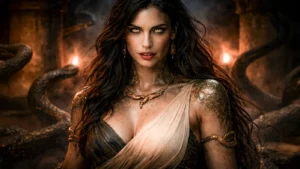
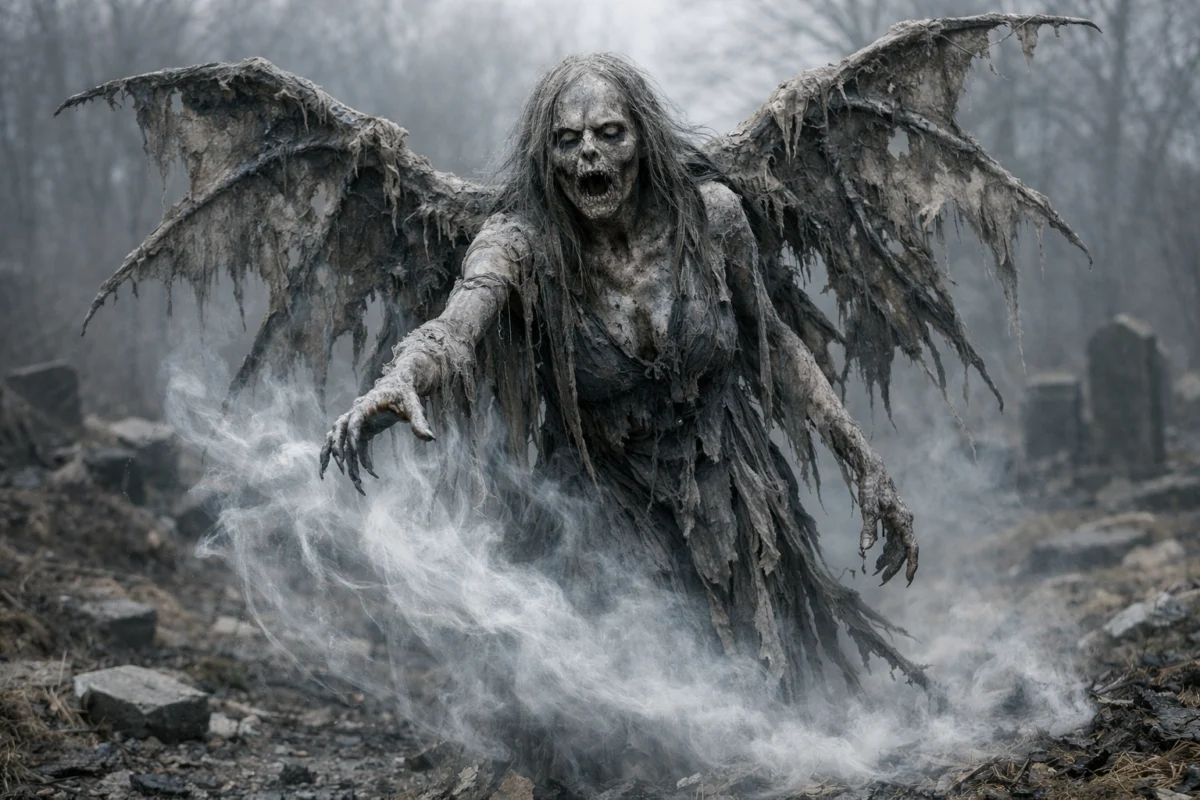
Descriptions of La Llorona emphasize her ghostly beauty and terrifying presence. She appears as a tall woman, often dressed in a long white gown, with flowing dark hair.
Her eyes are hollow with grief, and her face sometimes appears skeletal or pale like death itself.
Witnesses claim she floats above the ground or glides along riverbanks at night. Her gown, though radiant in moonlight, often appears tattered or wet.
Some stories describe her veil obscuring her face until she reveals a terrifying visage that chills the living with dread.
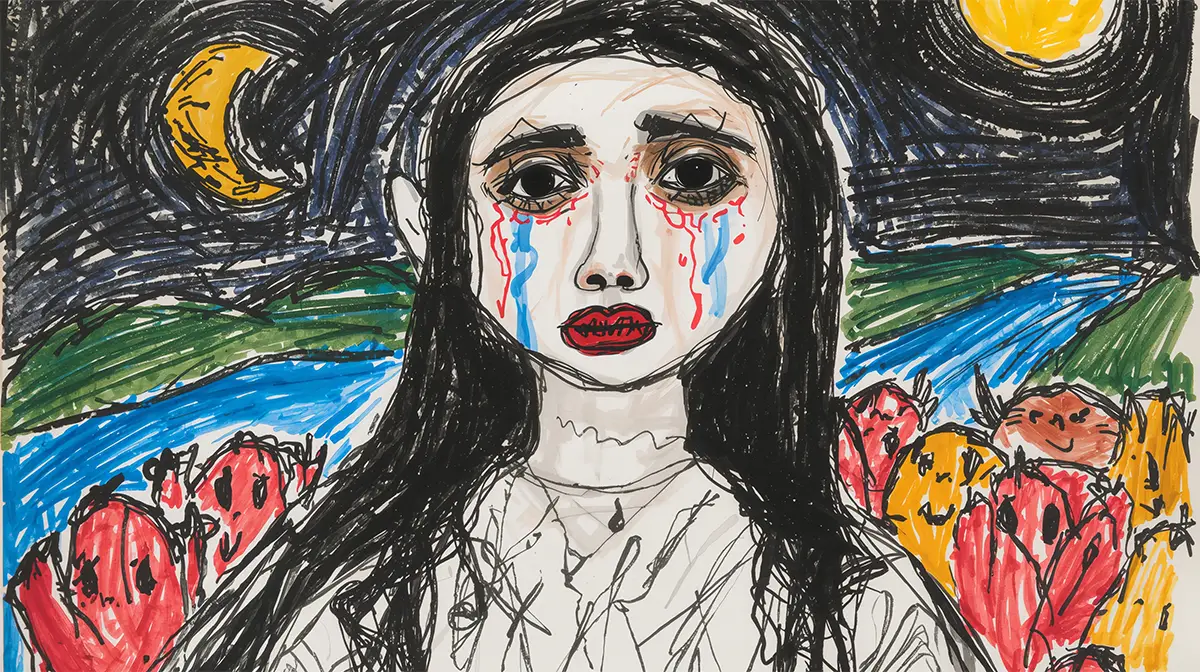
Children are often warned that she may appear near lakes or irrigation canals. Her beauty hides danger: many tales describe her luring men or children before revealing her cursed nature.
Her image represents both the purity of motherhood and the horror of eternal punishment.
La Llorona’s appearance has evolved in art and literature. In colonial plays, she was dressed as a penitent soul.
In modern film, she often resembles a ghost bride. Regardless of style, her essence remains the same: a sorrowful woman trapped between beauty and terror.
Background Story
At the heart of the legend is the story of a woman undone by love and grief. A poor woman falls in love with a nobleman.
They have children together, but he abandons her for another, wealthier match. Heartbroken and enraged, she takes her children to the river.
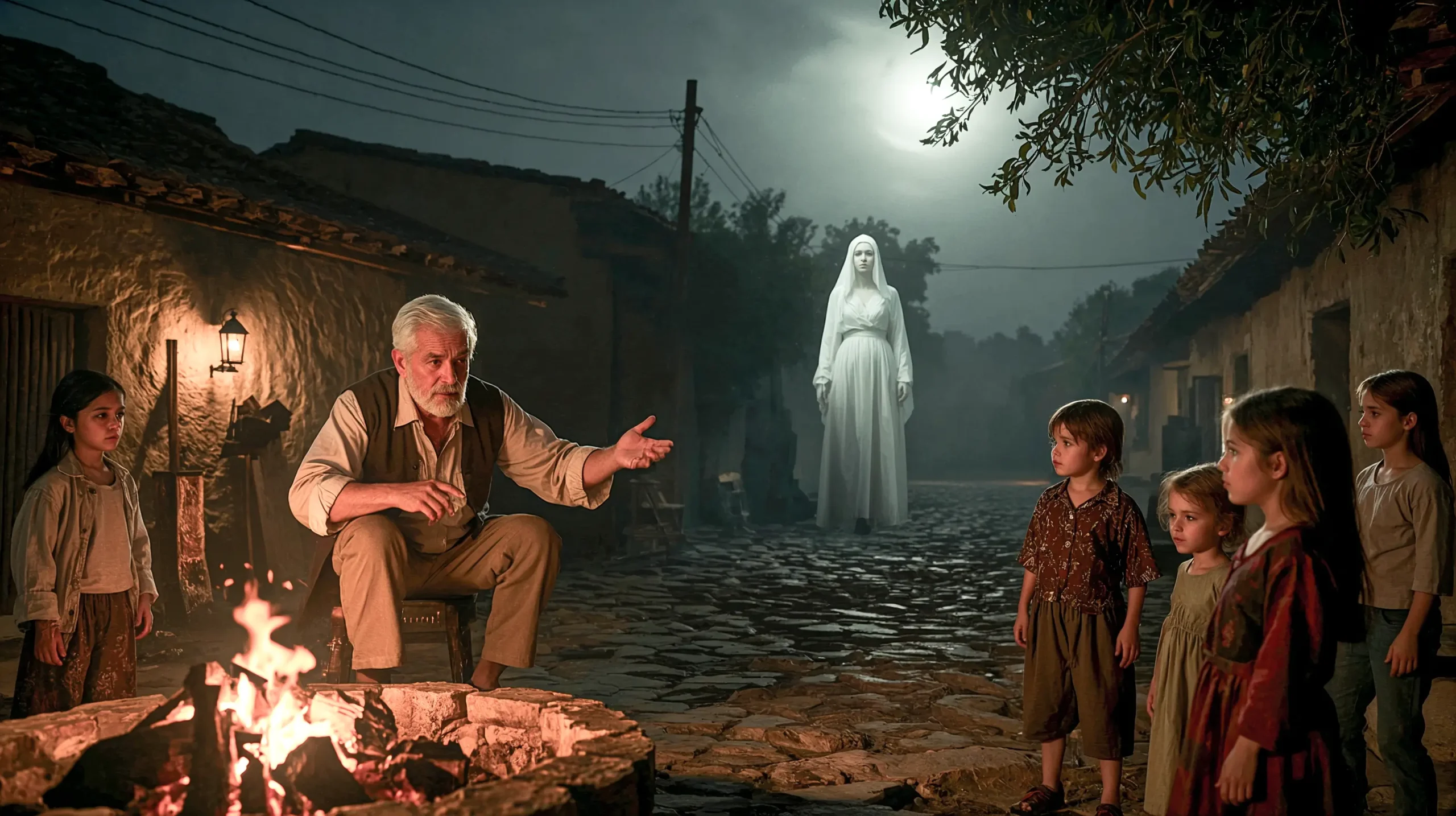
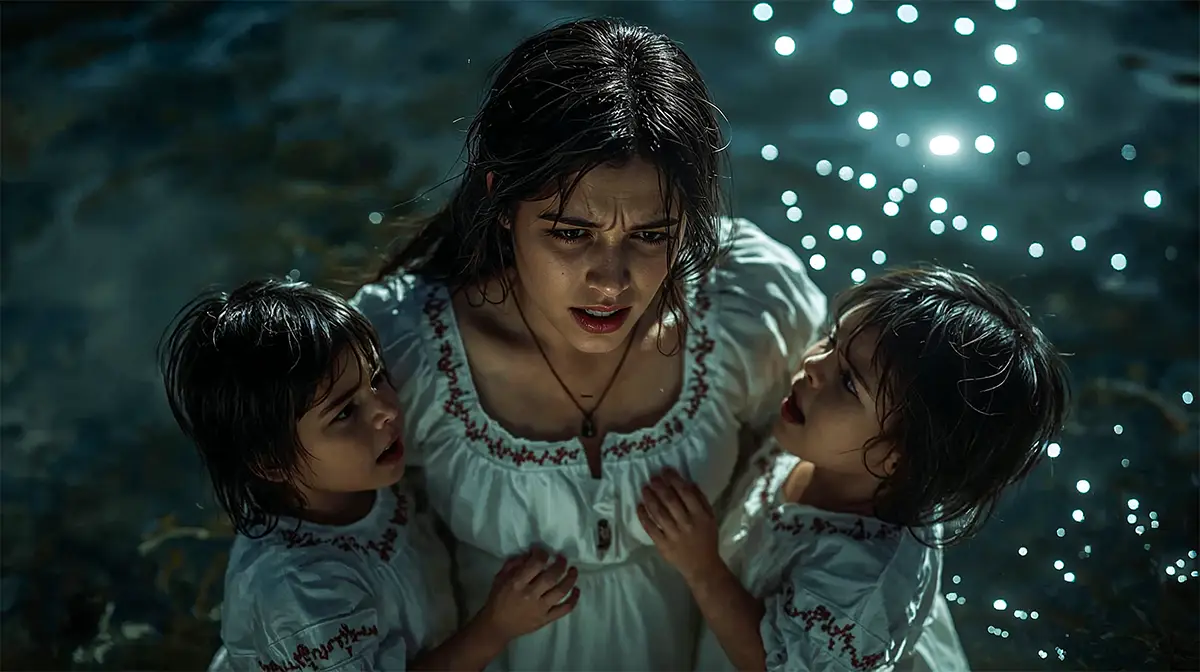
In a moment of despair, she drowns them. Immediately she realizes what she has done, but it is too late.
Overcome with remorse, she casts herself into the same waters. Death, however, does not grant her peace. Divine judgment condemns her to wander the earth forever.
Her ghost searches endlessly, crying out for her lost children. Travelers who hear her wail speak of terror so deep it freezes the soul.
Parents warn children that her voice may mistake them for her own, a story that teaches both fear of water and obedience to family.
The Jealous Mother of the Riverbank
A traditional oral tale describes a woman named María, whose love for a nobleman turns to despair when he abandons her. In rage, she drowns her children, realizing her mistake too late.
Her spirit returns as La Llorona, eternally crying, “¡Ay, mis hijos!”
“Mes hijos, ya nos debemos ir lejos” (“My children, now we must go far away”), Bernardino de Sahagún, Historia general de las cosas de Nueva España (16th century)
Her wailing form haunts rivers and lakes. Parents use her story to keep children safe from dark waters, while adults recall it as a warning about betrayal, jealousy, and the destructive power of despair.
The Spanish Colonial Ballad
Colonial ballads tell of María as a scorned lover. When her husband leaves her, she drowns her sons so he cannot take them away.
Remorse drives her to the same river, where she drowns herself. Yet she rises again, transformed into the Weeping Woman.
Her cry terrifies those who hear it. If she sounds near, she is far away; if faint, she is close.
This eerie inversion lingers in oral tradition, making her not only a ghostly mother but also a harbinger of death and doom.
Cultural Impact
La Llorona shapes childhood warnings, community storytelling, and public memory. Parents retell her legend to teach caution near dark waterways.
Educators and folklorists also document her voice as a living tradition that adapts to place and time across Mexican and diasporic communities.
Artists and writers reframe her grief to address colonial trauma, migration, and identity. Museums and cultural programs present La Llorona during fall observances, highlighting how her lament resonates with remembrance practices without merging with formal religious rites.
Her story endures because sorrow and danger remain universally legible.
Contemporary scholars trace Indigenous antecedents and colonial retellings to explain her power. This layered history lets communities reinterpret La Llorona for new audiences, from classrooms to stage.
The figure becomes both cautionary tale and cultural mirror, reflecting evolving social concerns with notable flexibility.
Similar Beasts
Yūrei
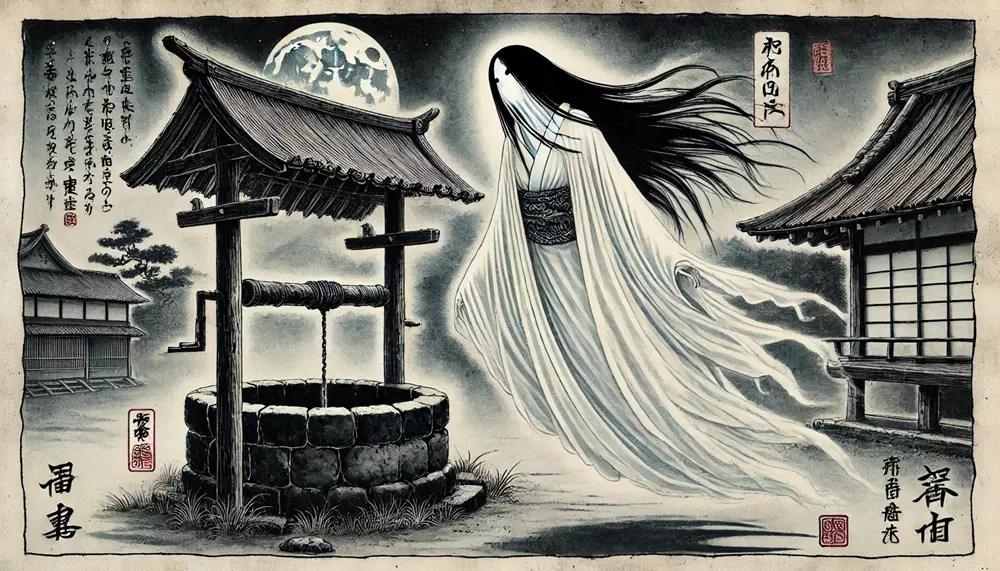
Japanese ghosts bound by unfinished business. Often depicted as white-clad women with unbound hair. Like La Llorona, they haunt liminal spaces and express unresolved grief.
Both warn the living through fear, sorrow, and uncanny encounters by night.
Yuki Onna

A winter spirit who appears as a beautiful woman on snowy roads. She lures travelers to death with chilling breath.
Her beauty hides danger, echoing La Llorona’s fatal allure, though snow replaces riverbanks as the deadly threshold.
Bean Nighe

A Scottish death-omen spirit who washes bloodied garments at fords. Sightings foretell a nearby death. She mirrors La Llorona’s mournful presence near water and the role of warning figure, but rarely interacts beyond prophecy.
Iara

An Amazonian water enchantress who sings from riverbanks to lure listeners. While more siren-like than ghostly, she shares the themes of seduction, perilous waters, and nocturnal encounters.
Both figures turn rivers into sites of beauty and danger.
Baobhan Sith

A Highland vampiric fairy appearing as a lovely woman who dances men to death. She shares the motif of deceptive femininity and nocturnal predation, resembling La Llorona’s fatal appeal though rooted in fairy lore rather than maternal tragedy.
Religion/Ritual
Communities tell La Llorona stories alongside seasonal observances, especially around late October and early November. Families sometimes share her legend during heritage events, yet they separate it from formal worship.
The tale operates as cultural memory rather than liturgy.
Storytellers use the legend to explore morality, parental responsibility, and communal safety. Her wail signals boundaries between life and death without constituting doctrine.
In educational settings, tradition bearers present La Llorona as folklore that teaches vigilance near water and compassion for suffering.
Public programs and museum features contextualize the legend within migration, language, and memory. Such presentations honor community voice while clarifying that La Llorona functions as a narrative of warning, grief, and resilience rather than a formal article of faith.
Scientific or Rational Explanations
Scholars connect riverbank apparitions to night travel, poor visibility, and auditory illusions near moving water. Wind, currents, and echo can distort cries into uncanny wails, especially where reeds and banks reflect sound unpredictably.
Such conditions amplify fear and suggest presence.
Folklorists read La Llorona as a social caution that discourages children from prowling canals after dark. The story also frames grief and betrayal through a memorable figure, turning household rules and public safety into vivid moral drama.
Historical readings trace her to converging Indigenous and colonial narratives. Interpreters see the legend articulating trauma, gender expectations, and family order in disrupted communities, explaining why the tale persists and adapts across regions and eras.
Modern Cultural References
The Curse of La Llorona (Film, 2019)
A Conjuring-universe feature where a social worker confronts the Weeping Woman in 1970s Los Angeles.
The film popularized the legend for global audiences and sparked renewed discussion of cultural roots.
La Llorona (Film, 2019)
Jayro Bustamante’s critically acclaimed Guatemalan drama reframes the legend within reckoning for war crimes, blending political haunting and folk horror.
It uses the figure to examine memory and justice.
Grimm: “La Llorona” (TV Episode, 2012)
The series adapts the legend for Halloween, centering child abductions tied to a spectral mother. Spanish dialogue and folkloric details anchor the retelling.

Coco (Film, 2017)
Pixar’s Día de Muertos film features the traditional song “La Llorona,” highlighting the legend’s musical life and cultural familiarity for Mexican audiences.
La Llorona / The Weeping Woman (Book, 1987; later editions)
Joe Hayes’s bilingual retelling remains a staple in classrooms and libraries, preserving oral tradition for young readers with sensitivity and clarity.
Conclusion
La Llorona endures because grief, danger, and moral warning never lose relevance. Her wail turns ordinary places into thresholds that test caution and empathy.
Each retelling reveals new meanings, yet the river’s edge remains her stage and the night her voice.
As communities move and change, the legend travels with them. Educators, artists, and families reshape the tale for new contexts without discarding its core.
La Llorona continues as a mirror of shared memory, reminding listeners that sorrow demands witness and boundaries require respect.
Further Reading
La Llorona | Legend, Description, History, & Facts by Encyclopaedia Britannica Editors, 2024.
Concise overview of origins, themes, and variants across the Americas.
Link: https://www.britannica.com/topic/La-Llorona
¡Ay, mis hijos!, a Llorona Story by Xánath Caraza, Smithsonian Magazine, 2018.
Cultural reflection from the Smithsonian Latino Center on memory and fear.
Link: https://www.smithsonianmag.com/blogs/smithsonian-latino-center/2018/10/23/ay-mis-hijos-llorona-story/
La Llorona: An Introduction to the Weeping Woman by Stephen Winick, Library of Congress, 2021.
Folklife essay on motifs, function, and narrative variations.
Link: https://blogs.loc.gov/folklife/2021/10/la-llorona-an-introduction-to-the-weeping-woman/
La Llorona: Roots, Branches, and the Missing Link from Spain by Stephen Winick, Library of Congress, 2021.
Historical context and Indigenous influences on the legend’s formation.
Link: https://blogs.loc.gov/folklife/2021/10/la-llorona-roots-branches-and-the-missing-link-from-spain/
Muñeca de La Llorona by National Museum of American History, Smithsonian, n.d.
Museum object page summarizing the legend’s core story and themes.
Link: https://americanhistory.si.edu/collections/object/nmah_1170907