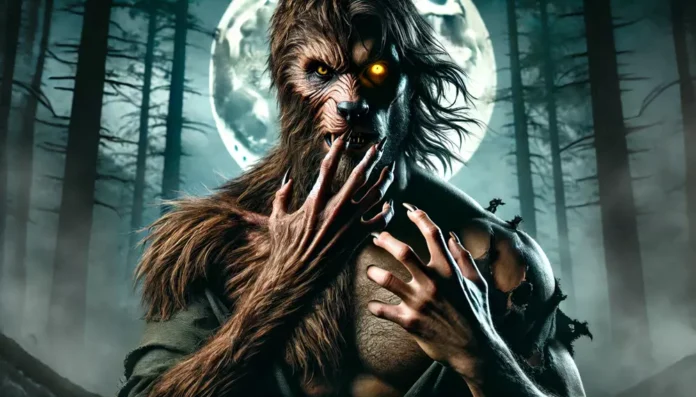
Overview of the Colonial America Period
Colonial America generally denotes European colonies in mainland North America from the early seventeenth century through independence, although boundaries and dates vary among historical definitions.
The period included Indigenous nations with distinct political, linguistic, and religious traditions, alongside European settlements and communities formed through African enslavement and migration.
These societies did not share one mythology; colonial settings brought traditions into contact under unequal conditions, making cultural transmission historically complex and uneven.
Religious explanation mattered because illness, weather, mortality, and unfamiliar landscapes were interpreted through inherited cosmologies, practical knowledge, and competing accounts of divine or spiritual agency.
Cultural and Religious Worldviews
Dominant Belief Systems
Christianity shaped colonial institutions and household life, with Protestant denominations prominent in many British settlements and Roman Catholic communities established in Spanish and French territories.
Christian teachings commonly located supernatural agency within a creation governed by God, while allowing belief in angels, demons, providence, and morally significant spiritual encounters.
Indigenous cosmologies varied substantially among nations; particular accounts connected human communities with animal persons, ancestors, places, or other-than-human agencies, without forming a single continental system.
Enslaved Africans brought diverse religious inheritances to colonial societies, but evidence for particular beliefs is often mediated by hostile observers or later documentation.
Role of Myth in Daily Life
Folklore helped communities interpret uncertain events through familiar narratives, especially when experience exceeded available medical, environmental, or theological explanations.
Stories about supernatural wrongdoing could reinforce local expectations concerning conduct, but their meanings depended on specific speakers, audiences, and circumstances rather than a uniform moral code.
In Indigenous communities, oral narratives could convey relationships among people, animals, land, and origins; surviving records rarely capture the full performance context.
Colonial Christian authorities sometimes treated particular practices as superstition or error, creating written accounts that reveal religious conflict as much as ordinary belief.
Mythological Beasts and Supernatural Entities
Common Types of Mythical Creatures
European settlers carried traditions of witches, ghosts, devils, and portentous apparitions into America; these beings belonged to Christian and regional European frameworks, not a newly unified colonial mythology.
Indigenous traditions included culturally specific animal and spirit beings, but translating them as “mythical creatures” can distort categories that also expressed kinship, place, or sacred responsibility.
Accounts of witchcraft in New England described suspected human practitioners rather than a separate species of supernatural beast, reflecting contemporary religious and legal assumptions.
No verified sources describe a single creature tradition shared across Colonial America; regional, linguistic, and religious differences prevent such a classification.
Symbolism and Meaning
Witchcraft accusations could mark anxieties about social disorder, religious authority, or misfortune, although individual cases require analysis within their particular legal and community settings.
Animal figures in Indigenous narratives could express relationships between human and nonhuman persons, but their meanings cannot be generalized across nations or detached from specific traditions.
Ghost accounts in European-derived folklore often concerned unresolved obligations or the boundary between the living and dead, though surviving descriptions vary in purpose and detail.
Interpreting supernatural beings as psychological symbols is a modern analytical approach, not proof that historical narrators understood them metaphorically.
Folklore Traditions and Storytelling
Oral and Written Transmission
Oral transmission preserved narratives through repeated telling, but colonial observers usually recorded only selected versions, often translated or reshaped for European readers.
Printed sermons, court records, diaries, and correspondence document supernatural claims, although each genre reflects its author’s aims rather than offering transparent access to belief.
Christian scripture supplied authoritative language for many colonists’ supernatural interpretations, while Indigenous oral traditions followed distinct modes of transmission not reducible to biblical models.
Later manuscripts and collections may preserve earlier material, but dating a story’s wording and separating historical testimony from editorial intervention can be difficult.
Regional Variations
New England records preserve extensive documentation of witchcraft accusations, particularly during the seventeenth century; this archival prominence does not establish that the region held uniquely uniform beliefs.
French and Spanish colonial communities developed within Catholic institutional settings, differing from many British Protestant settlements in religious authority and devotional practice.
Indigenous traditions remained nation-specific across eastern woodlands, the Southeast, and other regions; colonial borders did not erase established cultural distinctions.
African-descended communities adapted religious knowledge under enslavement and displacement, but surviving evidence is uneven and cannot support a single account of shared supernatural traditions.
Relationship Between Humans and the Mythical World
Fear, Protection, and Reverence
Some colonists understood reported apparitions or witchcraft as threats to Christian order, a framing evident in sermons and legal records but not universal among residents.
Indigenous relationships with animal or spiritual beings could involve respect and reciprocal obligations, although specific interpretations must be tied to documented communities.
Protective interpretations of supernatural beings occur in particular traditions, yet evidence does not justify assigning guardianship as a general colonial function.
Belief and factual verification are distinct historical questions: records establish that claims were made, not that supernatural events occurred.
Influence on Art and Material Culture
Christian churches and printed religious works conveyed supernatural imagery through familiar biblical subjects, rather than through a distinct, continent-wide bestiary.
Indigenous material expressions varied by community and purpose; interpreting an animal motif as a supernatural image requires contextual evidence unavailable in many surviving objects.
Colonial court documents and pamphlets preserved descriptions of alleged supernatural events, making writing itself an important material record of contested belief.
Objects associated with protection or devotion require careful identification, since ordinary domestic use cannot establish a supernatural function by itself.
Transition and Legacy of the Colonial America Period
After independence, older European and Indigenous traditions continued changing through migration, religious reform, print culture, and the formation of new national identities.
Nineteenth-century collectors and writers recorded or reshaped earlier folklore, sometimes presenting diverse local traditions as a coherent national inheritance.
Some supernatural motifs persisted in regional storytelling, but continuity cannot be assumed without evidence linking later versions to earlier colonial accounts.
Colonial-era encounters also affected how Indigenous traditions were documented, often through outside classifications that later scholarship has reassessed.
Historical Reliability and Interpretation
Historians distinguish evidence for reported belief from evidence that an alleged supernatural event occurred; contemporary records usually establish the former, not the latter.
Colonial documentation is shaped by literacy, institutional power, translation, and preservation, leaving many community perspectives inaccessible or represented indirectly.
Descriptions by missionaries, officials, and settlers may misclassify Indigenous concepts through Christian categories, so terminology requires scrutiny before comparative use.
Modern symbolic readings can illuminate social context, but they remain interpretations and should not replace evidence about historical speakers’ stated understandings.
No verified sources describe a uniform mythology for Colonial America as a whole; responsible taxonomy must preserve distinct traditions and mark uncertainty where documentation is limited.