Introduction
The manticore is a legendary creature that has captured the imagination of many cultures throughout history. Known for its fearsome appearance and mythical origins, it is a staple in ancient folklore and mythology.
This beast is often depicted as a monstrous hybrid, combining features of a lion, a human, and a scorpion. Its terrifying visage and mythical attributes have made it a subject of fascination and fear.
Originating from Persian mythology, the manticore has been referenced in various ancient texts and has influenced numerous cultures. Its presence in art and literature underscores its enduring impact on human imagination.
While the manticore is primarily known in the Western world, its roots trace back to ancient Persian tales. Over centuries, its story has evolved, integrating into the lore of different civilizations.
History/Origin
The manticore’s origins can be traced to ancient Persia, where it was first described in texts as a man-eater. The creature’s legend spread through the writings of Greek historians and philosophers.
Greek physician Ctesias, in his work “Indica,” provided one of the earliest detailed descriptions of the manticore. He described it as a fearsome beast with a lion’s body and a human face.
As the legend traveled to the Western world, the manticore’s mythos expanded, incorporating elements from various cultures. It appeared in medieval bestiaries, further cementing its place in European folklore.
Throughout history, the manticore has symbolized danger and the unknown. Its terrifying nature and exotic origins made it a metaphor for the perils lurking beyond familiar territories.

Name Meaning
The name “manticore” is derived from the early Persian word “mardyakhor,” which translates to “man-eater.” This name reflects the creature’s fearsome reputation and its role as a predator in mythology.
In Greek, the term evolved into “mantikhoras,” maintaining the essence of its original meaning. This linguistic transition highlights the cultural exchange and adaptation of myths across regions.
The name emphasizes the creature’s predatory nature and its humanlike features, which are central to its mythological depiction. The manticore’s name has become synonymous with danger and ferocity.
As the myth spread, the name “manticore” became entrenched in European folklore. It was often used to describe any fearsome, exotic beast encountered in exploration or imagination.
Appearance
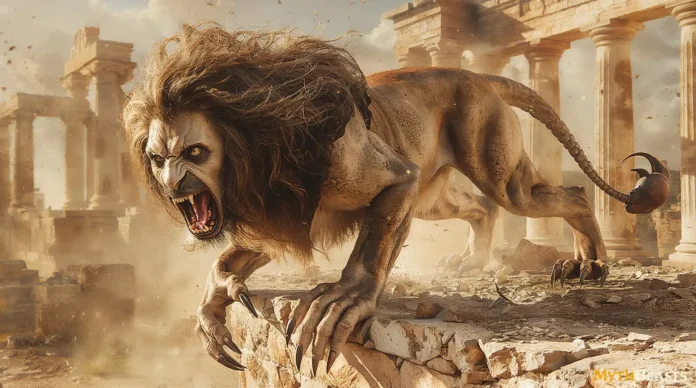
The manticore is typically depicted with the body of a lion, the face of a human, and the tail of a scorpion. This hybrid form combines elements of known creatures to create an unsettling, otherworldly beast.
Its lion-like body symbolizes strength and power, while the human face adds an eerie, intelligent aspect. The scorpion tail, often described as venomous, represents the creature’s deadly nature.
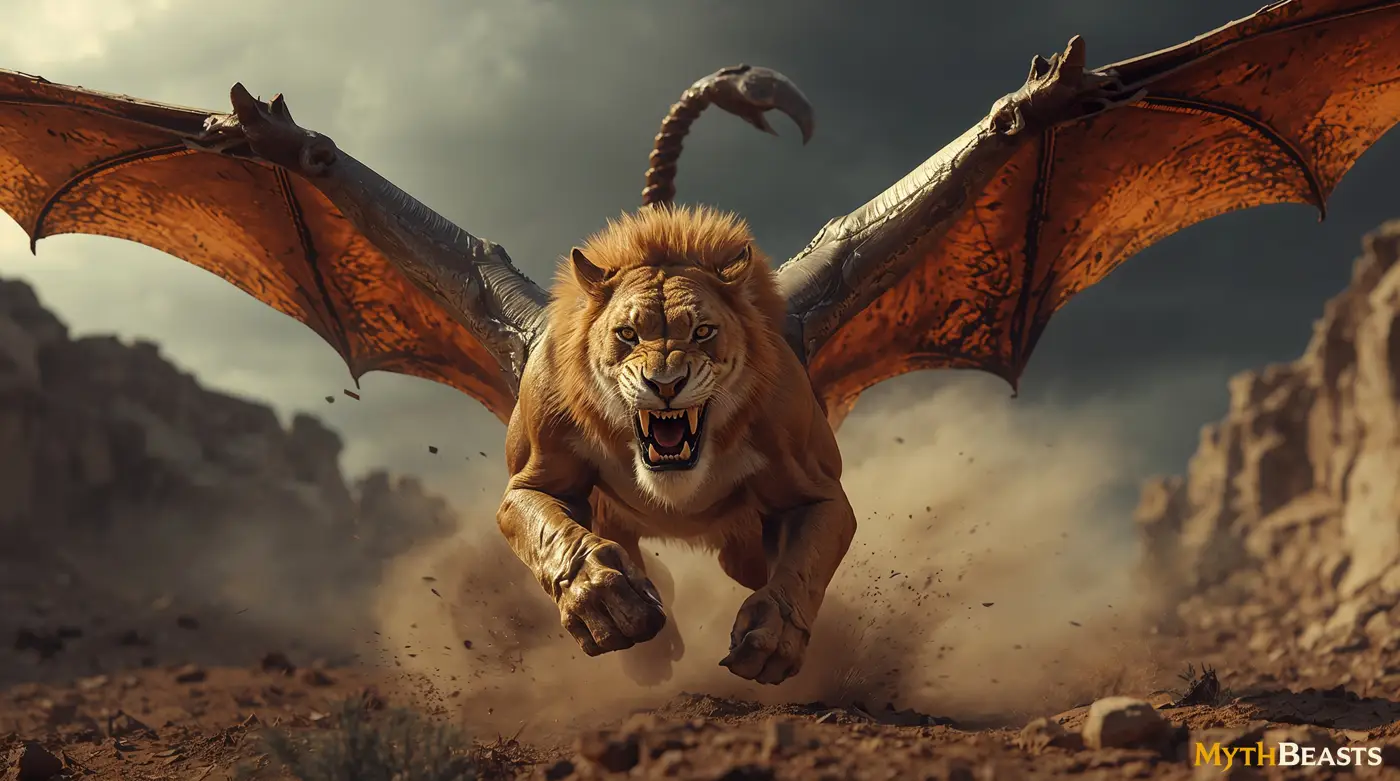
Some descriptions include additional features, such as bat-like wings or a triple row of sharp teeth. These variations highlight the creature’s adaptability in folklore and its role as a fearsome predator.
The manticore’s distinctive appearance made it a popular subject in medieval bestiaries, where it was often depicted as a symbol of the unknown and the fearsome.
Background Story
The Manticore’s earliest known account appears in the Greek physician Ctesias’ Indica, a work describing creatures said to inhabit distant eastern lands. Ctesias writes of a fearsome man-eating beast with the body of a lion, a humanlike face, and a tail capable of delivering deadly venom.
His description, presented as natural history, formed the foundation of all later Manticore lore.
Greek writers treated the Manticore as evidence of the dangers believed to lurk in unexplored regions. As stories traveled westward, the creature shifted from a supposedly real animal into a symbol of foreign mystery.
Roman authors repeated Ctesias’ report, gradually adding details such as multiple rows of teeth and enhanced predatory abilities.
By the Middle Ages, the Manticore entered European bestiaries, where it no longer served as a natural curiosity but as a moral emblem. In these texts, it represented deceit or hidden danger, its humanlike face suggesting the threat posed by those who conceal malice behind a civilized exterior.
This medieval interpretation ensured that the Manticore endured in cultural memory long after belief in Ctesias’ “Indian beasts” faded.
Famous Folklore Stories
Important: Manticores do not possess native Persian folklore narratives.
What exists are textual appearances recorded by Greek authors and later medieval writers.
These serve as the only legitimate “stories” for the creature.
Ctesias’ Account in Indica
Ctesias’ description remains the closest thing to an original Manticore narrative. He portrays a creature dwelling in remote eastern regions, capable of consuming humans whole and leaving no remains.
Although presented as observation, the account reads like a tale of wonder, blending traveler’s lore with imagination. It represents the earliest complete portrait of the Manticore in Classical literature.
Medieval scholars later reinterpreted this material as cautionary instruction. The beast embodied the hazards of distant lands and the unreliability of travelers’ tales.
Its features, particularly the humanlike face and predatory appetite, became tools for discussing deception and unseen threats.
Pliny the Elder’s Natural History Retelling
In Natural History, Pliny repeats Ctesias’ characterization of the Manticore while adding interpretative embellishments. He reinforces the creature’s man-eating nature and its rapid movement, presenting it alongside other exotic beasts.
Although Pliny frames his writing as scientific, his retelling functioned as a popular source for European audiences who knew little of Ctesias’ original work.
This retelling became part of medieval storytelling traditions. Monks and scholars copied Pliny’s passages into encyclopedic works, ensuring the Manticore appeared in both scholarly and moral literature.
Through this transmission, the creature gained a quasi-folkloric presence despite lacking traditional narrative myths.
Medieval Bestiary Depictions
Medieval bestiaries gave the Manticore an allegorical role, transforming it into a narrative device that embodied danger masked behind familiar appearances. These manuscripts often described how the creature lured humans close with its humanlike features before killing them, presenting the tale as a spiritual warning rather than literal myth.
The bestiary tradition shaped how later centuries imagined the Manticore. It became a creature not of Persian or Greek myth, but of medieval moral literature, where its hybrid form served as a metaphor for hidden peril and corrupted nature.
This transformation marks the closest medieval culture came to producing “stories” around the creature.
Cultural Impact
Historically, the manticore symbolized the unknown and the dangers lurking beyond familiar borders. Its depiction in art and literature served as a reminder of the world’s mysteries and the threats they posed.
In medieval bestiaries, the manticore illustrated the blending of human and animal traits, reflecting societal fears of the unnatural. These texts often used the creature to discuss moral and ethical dilemmas.
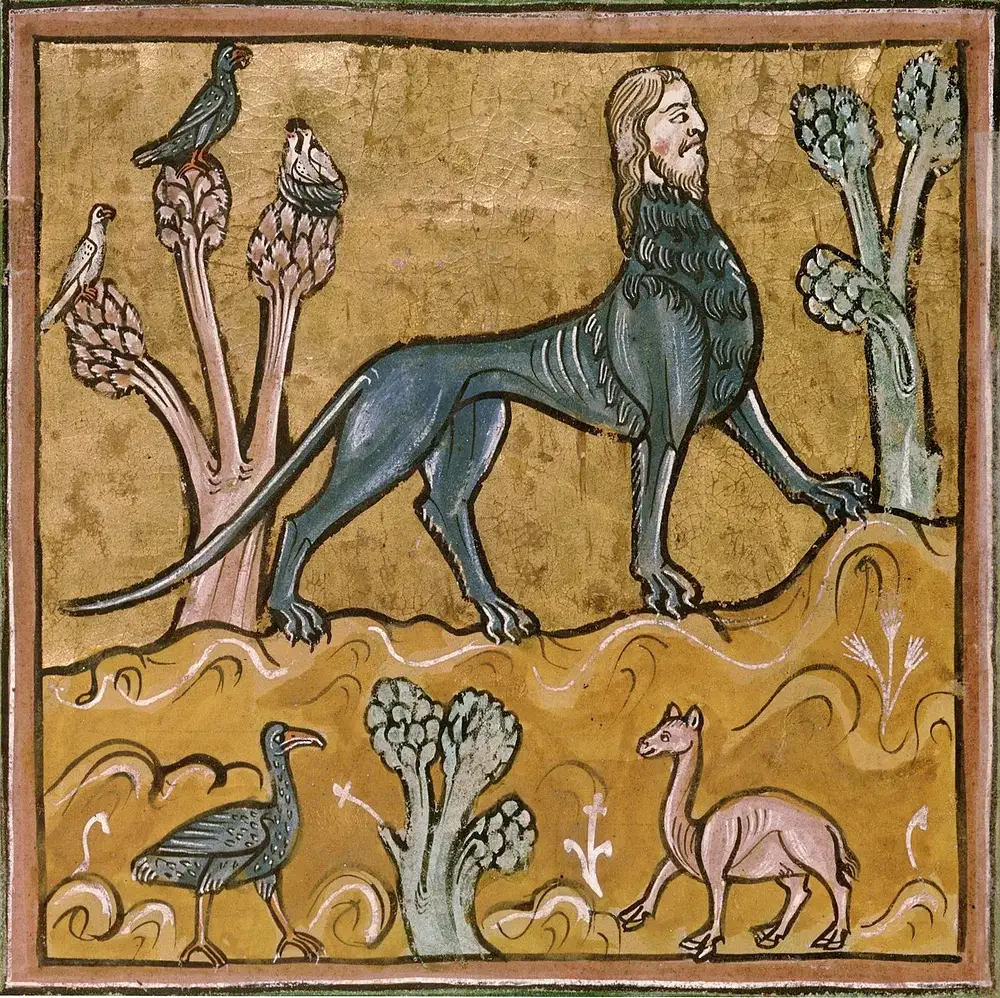
Modern interpretations view the manticore as a symbol of the monstrous aspects within humanity. Scholars suggest it represents the fear of what lies beneath civilized behavior, a theme explored in contemporary literature.
Some modern works reinterpret the manticore as a misunderstood creature, challenging its traditional portrayal as purely malevolent. This shift reflects changing attitudes toward mythological beings in popular culture.
Similar Beasts
Chimera

The chimera, a Greek mythological creature, shares similarities with the manticore. It is a hybrid beast with a lion’s head, goat’s body, and serpent’s tail, embodying the concept of monstrous amalgamations.
Sphinx
The sphinx, known for its riddles, combines a human head with a lion’s body. While less deadly than the manticore, it shares the theme of human-animal hybrids with mysterious and dangerous qualities.
Griffin
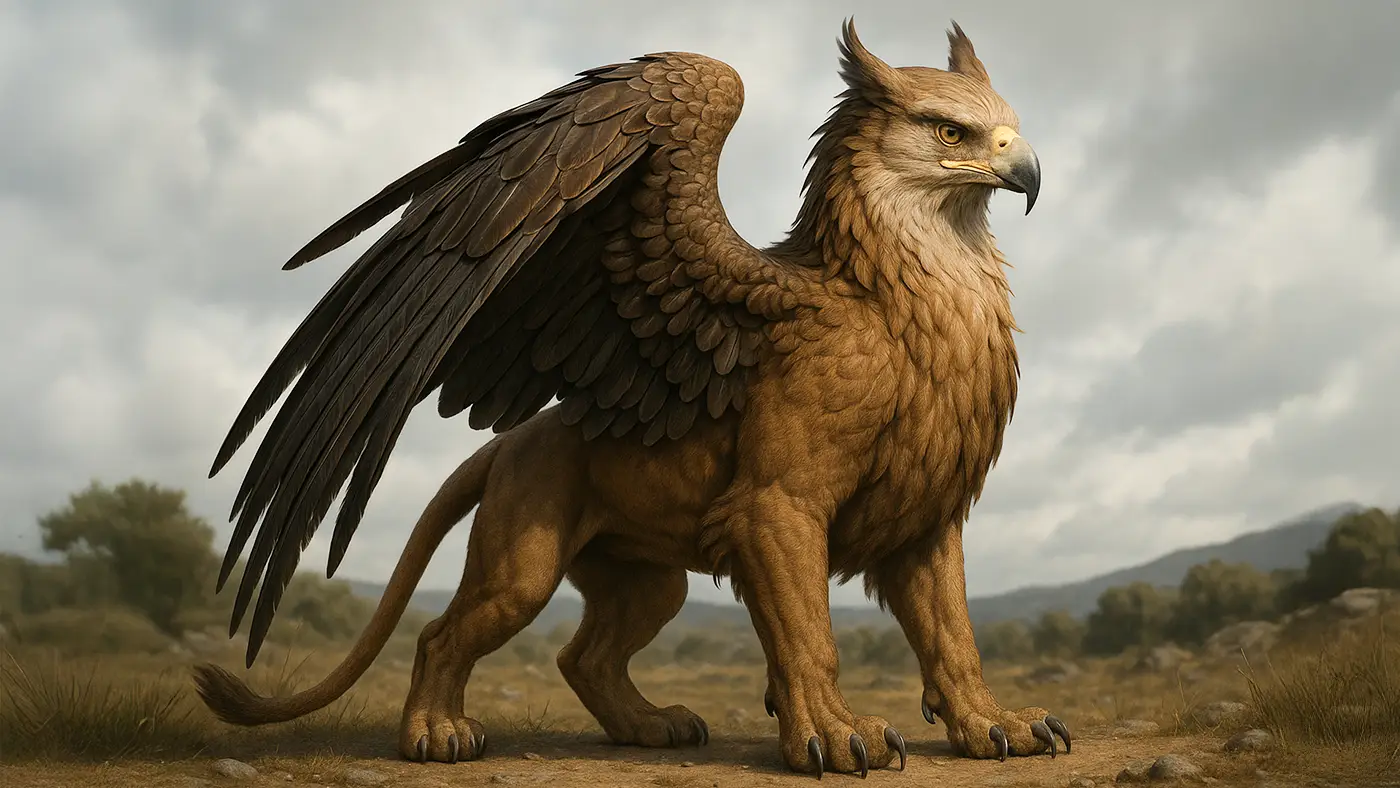
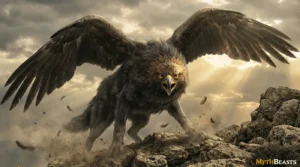
The griffin, with the body of a lion and the head and wings of an eagle, is another mythical hybrid. Though not as fearsome as the manticore, it symbolizes strength and vigilance in mythology.
Chupacabra
Originating from Latin American folklore, the chupacabra is often depicted as a blood-sucking creature. While not a hybrid like the manticore, it shares the theme of predatory danger and mystery.
Manticore compared to Chimera, Griffin, and Chupacabra
| Aspect | Manticore | Chimera | Griffin | Chupacabra |
|---|---|---|---|---|
| Origin | Originating from ancient Persian mythology, the manticore is a legendary hybrid creature. | The chimera is rooted in Greek mythology, combining various animal traits into one. | Griffins are derived from ancient mythology, often depicted as guardians of treasures. | Chupacabra originates from Latin American folklore, known for its vampiric traits. |
| Appearance | The manticore features a human face, lion body, and a barbed tail, creating a fearsome image. | Chimeras are depicted with a lion's head, goat's body, and a serpent's tail, symbolizing chaos. | Griffins have the body of a lion and the head and wings of an eagle, representing strength. | Chupacabras are often described as reptilian creatures with spikes along their backs. |
| Diet | The manticore is known as a relentless predator, often preying on unsuspecting travelers. | Chimeras are mythically known to consume anything in their path, embodying destruction. | Griffins are often depicted as protectors, guarding treasures and sacred places. | Chupacabras are infamous for draining the blood of livestock, particularly goats. |
| Habitat | The manticore is primarily associated with arid desert regions, where it hunts. | Chimeras are often linked to mountainous terrains, symbolizing wildness and danger. | Griffins are typically associated with high cliffs and remote areas, emphasizing their guardianship. | Chupacabras are said to inhabit rural areas, often near livestock farms. |
| Cultural Impact | The manticore has influenced various cultures, appearing in art and literature throughout history. | Chimeras have inspired countless stories and artworks, symbolizing the blending of different worlds. | Griffins have been prominent in heraldry, representing courage and nobility across cultures. | Chupacabras have become a modern legend, influencing popular culture and media. |
| Abilities | The manticore possesses mythical abilities, including speed and cunning intelligence in hunting. | Chimeras are known for their ferocity and ability to breathe fire, enhancing their fearsome reputation. | Griffins are often depicted as wise and powerful, capable of flight and fierce protection. | Chupacabras are rumored to have stealth and agility, making them elusive and dangerous. |
Religion/Ritual
The Manticore does not appear in any known Persian religious texts or ritual practices. No Zoroastrian, Avestan, or later Middle Persian tradition includes references to the creature, and there is no evidence it played a role in temple rites, household protections, or ceremonial offerings.
Its association with Persia stems primarily from Greek interpretations of eastern wonders, not from indigenous belief systems.
In Greek and Roman writing, the Manticore appears exclusively in natural-history literature rather than religious contexts. Authors used it as a symbol of distant lands rather than as a divine or demonic entity.
Its presence in medieval bestiaries also reflects moral allegory rather than ritual function. These texts employed the Manticore to illustrate human vices, particularly deception, but did not prescribe any ritual responses to it.
Modern spiritual or symbolic interpretations are creative reinterpretations rather than continuations of ancient practice. Contemporary occult or neo-pagan mentions of the Manticore arise from modern fantasy culture, not historical religious systems.
Therefore, the creature’s ritual significance remains firmly in the realm of later imaginative reworking rather than genuine tradition.
Scientific or Rational Explanations
Some historians theorize that the manticore legend may have originated from encounters with real animals, such as tigers or lions, embellished over time into mythical creatures.
Anthropologists suggest that the manticore could be an amalgamation of various animal traits, inspired by travelers’ exaggerated tales of exotic wildlife encountered in distant lands.
Another theory posits that the manticore represents a psychological archetype, embodying human fears of the unknown and the blending of familiar and unfamiliar elements.
Rational explanations emphasize the role of cultural exchange in shaping the manticore myth, as stories and descriptions evolved through contact between different civilizations and their mythologies.
Modern Cultural References
Harry Potter and the Order of the Phoenix, novel, J.K. Rowling, 2003. The Manticore is mentioned as part of the magical creatures in the wizarding world, adding depth to its mythical ecosystem. Wizarding World
Witcher 3: Wild Hunt, video game, CD Projekt Red, 2015. This game features the Manticore as a formidable beast, challenging players with its deadly abilities and enhancing the game’s lore. Official Site
Percy Jackson’s Greek Heroes, novel, Rick Riordan, 2015. The Manticore appears as a dangerous adversary, reflecting its fearsome reputation in Greek mythology within a modern narrative. Rick Riordan’s Official Site
Critical Role, audio drama, created by Matthew Mercer, 2015–present. The Manticore is featured in various campaigns, providing an engaging challenge for players and listeners alike. Critical Role Official Site
Comparison: Original vs Modern Manticore

| Feature | Original Manticore (Ancient Sources) | Modern Manticore (Fantasy Media) |
|---|---|---|
| Origin | Persian term martya-khvara recorded by Greek writers | Fantasy interpretation used across games, books, and films |
| Appearance | Lion body, human face, scorpion tail | Lion body, beastlike face, wings often added |
| Abilities | Venomous sting, great speed | Flight, enhanced magic or venom, powerful combat abilities |
| Symbolism | Exotic danger from distant lands | Fantasy predator or boss creature |
| Habitat | Remote eastern regions (India in Greek accounts) | Deserts, mountains, dungeons, fantasy wilderness |
| Role in Lore | Natural-history curiosity, bestiary allegory | Monster encounter, magical beast, antagonist in stories |
Conclusion
The Manticore, with its terrifying appearance and mythical origins, continues to captivate audiences. This legendary creature embodies both the allure and fear of the unknown.
Its depiction in folklore and modern media underscores its enduring impact on human imagination. From ancient Persia to contemporary fantasy, the Manticore remains a symbol of mystery and danger, reflecting humanity’s fascination with the monstrous and the magical.
As a creature of legend, the Manticore serves as a reminder of the power of storytelling. Its presence in various cultures and media highlights its adaptability and the universal themes it represents.
By examining the Manticore’s role in mythology and culture, we gain insight into the human psyche and our timeless quest to understand the world around us.
Further Reading
Manticore – World History Encyclopedia (Mark Cartwright, 2018)
A reliable overview of the Manticore’s Persian origins, Greek transmission, and role in medieval bestiaries, written by a trusted history scholar.
https://www.worldhistory.org/Manticore/
Mantikhoras – Theoi Greek Mythology
A curated entry compiling all surviving classical references to the Manticore, including Greek and Roman textual sources.
https://www.theoi.com/Thaumasios/Mantikhoras.html
Manticore – Mythus Fandom Wiki
A fan-curated encyclopedia entry summarizing the Manticore’s mythological origins, attributes, and appearances across various fantasy media.
https://mythus.fandom.com/wiki/Manticore