Overview of the Classical Greece Period
Classical Greece is conventionally dated from the early fifth century to 323 BCE, the year of Alexander the Great’s death. These boundaries represent scholarly conventions, not universally fixed historical divisions.
The period encompassed independent Greek communities across mainland Greece, the Aegean islands, and western Anatolia. Shared language and religious practices connected them without erasing local political and cultural differences.
Persian Wars commemoration, civic institutions, drama, philosophy, and monumental art shaped the period’s surviving record. Myth remained culturally significant within these developments rather than belonging to an isolated sphere of belief.
Cultural and Religious Worldviews
Dominant Belief Systems
Greek religion generally recognized numerous gods with distinct names, attributes, and local associations. No single authoritative scripture established a uniform theology across all communities during the Classical period.
Divine powers were understood to affect human affairs and natural processes, although explanations varied among poets, philosophers, and communities. Surviving evidence does not establish one consistent account of supernatural causation.
Role of Myth in Daily Life
Myths supplied shared narratives for civic identity, particularly when communities associated their origins or local landmarks with gods and heroes. Such connections strengthened claims of belonging without producing identical traditions everywhere.
Tragedy and public festivals presented inherited stories to civic audiences, inviting reflection on kinship, obligation, justice, and divine limits. Their influence is documented, though individual audience responses cannot be recovered.
Mythological Beasts and Supernatural Entities
Common Types of Mythical Creatures
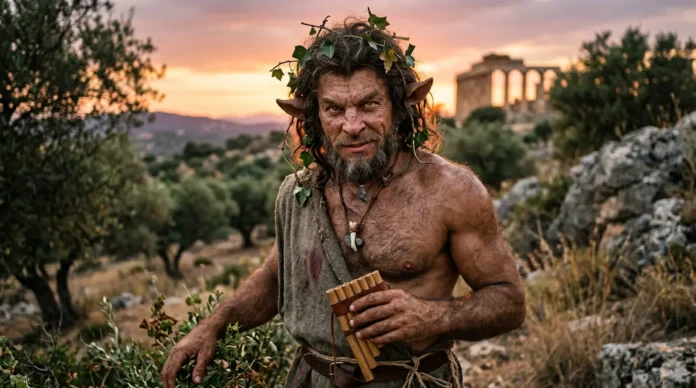
Greek narratives included hybrid beings combining human and animal features, such as centaurs and satyrs. These categories differed in context, and their depictions cannot be reduced to one stable meaning.
Serpents, dragons, and other monstrous opponents appear in Greek mythic narratives, often connected with heroic encounters or sacred places. The ancient terms and later classifications do not always correspond precisely.
Nymphs, river powers, and other localized supernatural beings connected divine presence with particular landscapes. Their representation varied by place and genre, so no single taxonomy captures every ancient usage.
Symbolism and Meaning
Hybrid creatures could mark boundaries between human social order and untamed environments in Greek visual and literary traditions. This interpretation is useful, but individual representations may carry different emphases.
Monsters defeated by heroes often helped narrators frame exceptional deeds and establish heroic reputations. Their narrative function does not prove that audiences regarded every creature as a literal animal.
Folklore Traditions and Storytelling
Oral and Written Transmission
Poets and performers transmitted traditional narratives orally, adapting them to particular occasions and audiences. Such performance helps explain variation, although the details of many earlier versions remain unrecoverable.
Written poetry, drama, and inscriptions preserve selected mythic materials from the Classical period. Later manuscript copies transmit many works, creating uncertainty about wording, editing, and the history of particular passages.
Regional Variations
Athenian drama often reshaped panhellenic myths for civic performance, while local communities maintained distinctive cult associations and origin traditions. This contrast reflects different settings rather than separate, sealed mythologies.
Greek settlements around the Mediterranean adapted inherited divine and heroic traditions to local landscapes. Evidence differs substantially by region, making broad claims about uniform popular belief historically unsafe.
Relationship Between Humans and the Mythical World
Fear, Protection, and Reverence
Mythic threats could represent dangers associated with wilderness, travel, or disrupted social boundaries. Their presence in stories indicates cultural concern, but does not demonstrate a universal fear of specific beings.
Some supernatural figures received reverence through established religious practices, while monstrous beings more commonly appeared as narrative adversaries. These roles diverged, and should not be treated as interchangeable categories.
Influence on Art and Material Culture
Greek pottery and sculpture depicted gods, heroes, and hybrid creatures in recognizable narrative scenes. Such images demonstrate public familiarity with mythic subjects, not necessarily agreement about their religious meaning.
Architectural sculpture used mythological combat scenes in civic and sacred settings, including the Parthenon’s sculptural program. These choices connected mythic imagery with place, although their precise interpretations remain debated.
Transition and Legacy of the Classical Greece Period
After 323 BCE, Hellenistic kingdoms supported new settings for Greek literary and religious traditions. Older myths persisted through adaptation, rather than disappearing with the Classical period’s conventional endpoint.
Roman authors and artists adopted and reworked many Greek divine and heroic narratives. Their versions became influential in later European traditions, though Roman religious contexts differed from Greek civic practices.
Historical Reliability and Interpretation
Mythological evidence survives unevenly through poetry, drama, images, inscriptions, and later copies. Each medium selects material for particular purposes, limiting reconstruction of ordinary belief across the population.
Scholars distinguish narrative representation from verifiable historical events, while examining how communities used stories and images. Symbolic interpretations remain arguments grounded in evidence, not direct access to ancient thought.
No verified sources describe this for every community or creature in this context. Regional evidence is incomplete, and surviving literary works cannot establish how widely particular supernatural beliefs were held.