
Introduction
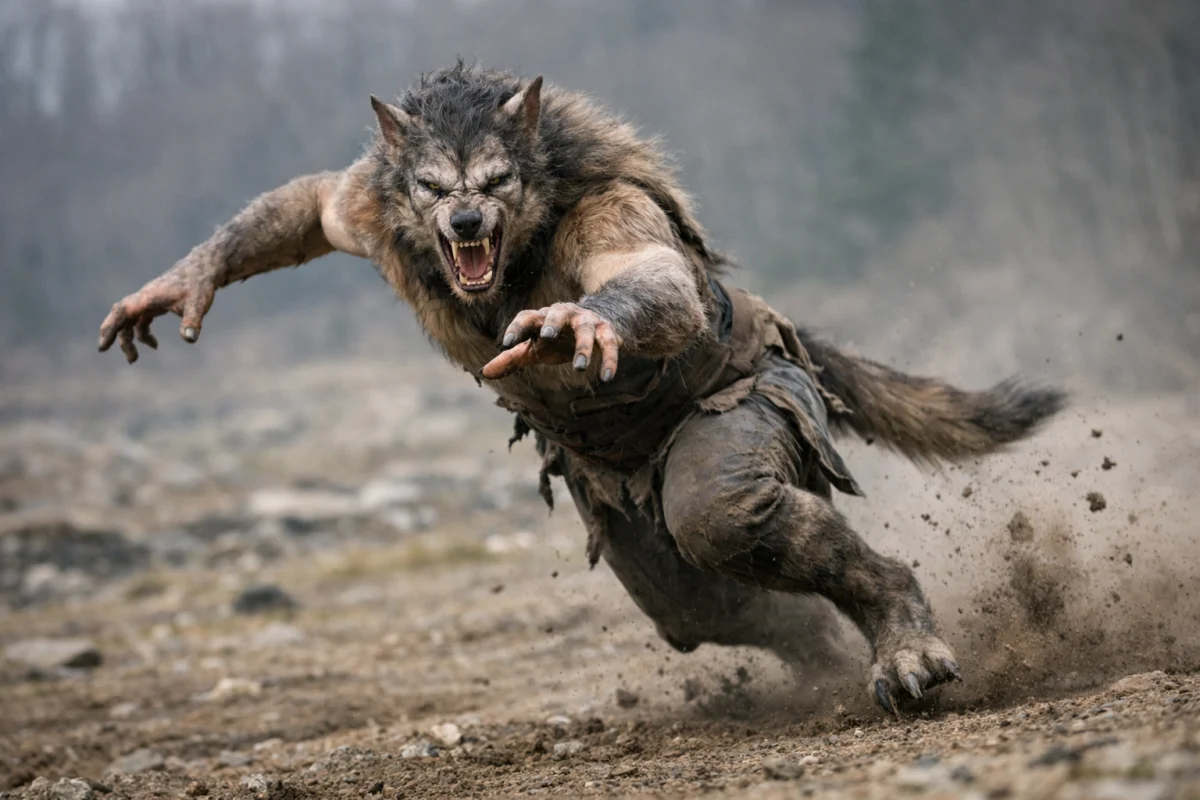
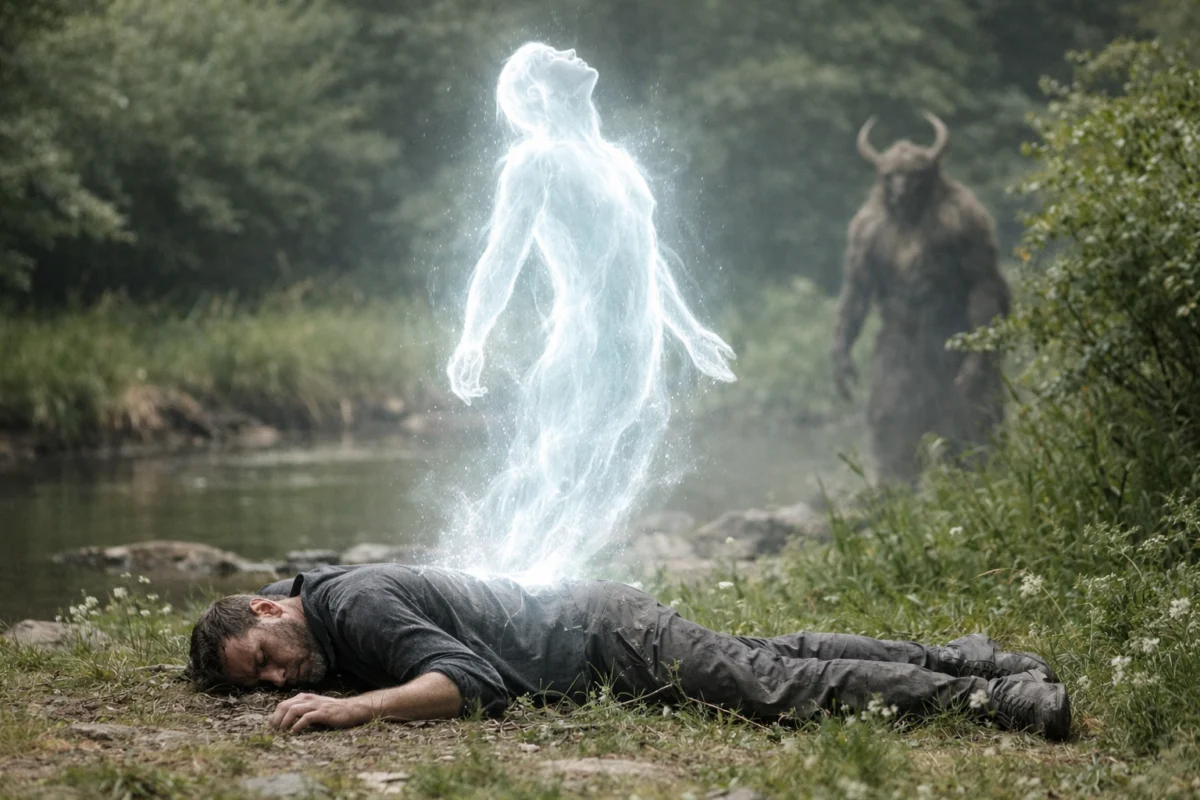
The Wulver is a modern mythic figure said to come from the Shetland Islands in Scotland. Described as a humanoid creature with the head of a wolf and the body of a man, it stands apart from many beast legends by its gentle and peaceful nature.
Unlike traditional werewolves, the Wulver does not transform, hunt humans, or carry any curse. It is known for living alone, fishing, and occasionally offering food to people in need.
The story of the Wulver appears only in the work of Jessie M. E. Saxby, specifically in her book Shetland Traditional Lore, published in 1932.
She describes the Wulver as a solitary figure who lives in a cave and places fish on the windowsills of poor families. While this tale is often presented as folklore, there is no record of the Wulver in older Shetland traditions or writings.
Today, many folklorists classify the Wulver as “fakelore,” a term used for modern inventions that are presented as ancient tradition. Although its roots are not authentic to historical Scottish folklore, the Wulver continues to appear in modern media and online mythology collections, where its message of kindness gives it lasting appeal.
History/Origin
The origin of the Wulver begins in the early 20th century with the writings of Jessie Saxby. Her 1932 book Shetland Traditional Lore contains the first and only known historical description of this creature.
Saxby wrote that the Wulver had a wolf’s head, a human body, and lived in the hills near a rock called the “Wulver’s Stane.” She described it as a harmless creature who fished and shared its catch with struggling families.

There are no earlier sources that mention the Wulver. No manuscripts, oral traditions, or folklore collections from before the 1930s contain any reference to it.
Modern research by the Shetland Museum and linguists like Jakob Jakobsen shows that Saxby may have misunderstood or creatively reinterpreted local place names. For example, “Wulver’s Hool” likely meant “fairy hill” in Old Norse and had no connection to wolves or monsters.
“He was fond of fishing, and had a small rock in the deep water which is known to this day as the ‘Wulver’s Stane.’ … He was reported to have frequently left a few fish on the window‑sill of some poor body.”
(Shetland Traditional Lore, Jessie Saxby, 1932)
While some modern writers have added more stories to the Wulver’s mythos, these are not part of Saxby’s original account. The Wulver is not found in any genuine pre-modern Shetland folklore, and its appearance in modern folklore discussions is based entirely on Saxby’s writing.
Name Meaning
The name “Wulver” appears to be a modern invention or adaptation. It may have been created by Saxby herself or based on misheard or misread place names such as “Wulver’s Hool,” which actually referred to a fairy hill in the Shetland landscape.
Linguists believe this term came from the Old Norse word álfr, meaning “elf” or “fairy,” rather than anything related to wolves.
There is no historical evidence that “Wulver” was ever a term used in traditional Shetland or Scots vocabulary to describe a specific type of creature. It does not appear in older stories, glossaries, or Norse sagas associated with the region.
The similarity to the English word “wolf” may have influenced the creature’s imagined appearance, but the name itself has no deeper linguistic or mythological background.
Appearance
Jessie Saxby described the Wulver as a creature with the body of a man and the head of a wolf. It was covered in short brown hair and walked upright like a human.
According to her account, the Wulver did not wear clothes and was often seen fishing from a rock in the water, known locally as the Wulver’s Stane.
This physical description comes entirely from Saxby’s book and has been repeated in later sources. There are no traditional Shetland drawings, sculptures, or carvings that depict such a being.
The Wulver does not appear in local folklore art or early literature. Everything known about its form stems from one short passage written by Saxby.
Background Story
The Wulver’s story, as recorded by Jessie Saxby, is simple and moral. It is not the tale of a cursed man or a magical transformation.
Instead, the Wulver is presented as a separate kind of being, not fully human and not fully animal. It lives alone in the hills, fishes daily, and quietly leaves fish for poor families during hard times.
There is no narrative about its creation, origin, or connection to gods, curses, or rituals. The Wulver is never said to speak, fight, or attack anyone.
If threatened, it simply retreats. According to Saxby, the Wulver was respected by locals for its peaceful nature and generosity.

No other background or folklore tradition about the Wulver exists. The creature has only the story Saxby provided, and all modern interpretations or expansions are fictional additions with no basis in historical Shetland culture.
Cultural Impact
Although the Wulver does not have deep roots in Shetland oral tradition, its brief appearance in Jessie Saxby’s Shetland Traditional Lore has had a lasting effect on how modern audiences interpret folklore. Despite its late invention in the early 20th century, the Wulver has gained popularity in recent decades due to its unique characteristics, most notably, its kindness and solitary behavior.
These traits have made it appealing in contrast to violent or cursed monsters that dominate much of Western mythology.
The Wulver’s cultural footprint grew significantly with the rise of online folklore communities and digital encyclopedias. Its image as a helpful, non-threatening creature fits well into modern reimaginings of legendary beings as symbols of empathy or misunderstood guardians.
Some fans of mythology now treat the Wulver as a symbol of quiet strength and altruism, even if its historical authenticity remains in question.
The Wulver’s modern reputation, while built on limited foundations, speaks to a broader cultural shift in how monsters are viewed. Rather than serving as warnings or embodiments of evil, figures like the Wulver are celebrated for their compassion.
This transformation reflects changing values in storytelling, especially among audiences drawn to moral complexity in mythical beings.
Similar Beasts
Though the Wulver is unique to Jessie Saxby’s writings, there are mythological creatures from other cultures that share overlapping traits. These similarities are thematic rather than direct, as no other traditions feature a being exactly like the Wulver.
Faoladh (Ireland): The Faoladh is a werewolf figure in Irish folklore known for protecting children and the sick. Like the Wulver, it does not attack humans unless provoked and is sometimes viewed as a guardian.
Unlike the Wulver, however, the Faoladh is often linked to transformation and curses.
Berserkers (Norse): While not wolf-headed, Norse berserkers were warriors who channeled animal strength, often associated with bears or wolves. Their connection to Shetland’s Norse heritage may have influenced Saxby’s creation, though berserkers were known for violence, unlike the peaceful Wulver.
Werewolves (continental Europe): Most European werewolf myths describe cursed men who become violent beasts. These stories usually involve moral warnings about losing control or breaking social codes.
The Wulver lacks this duality and curse dynamic, which separates it clearly from the werewolf tradition.
Woses or Woodwoses (Britain): These wild men of the woods appear in medieval English legend and art. Often covered in hair and living in isolation, they sometimes represent nature spirits or untamed humanity.
Though not animal-headed, their solitary and rustic nature loosely mirrors the Wulver’s role.
Scientific or Rational Explanations
Given the Wulver’s highly specific origin in a single modern text, scholars do not treat it as a creature that was ever believed to physically exist. Unlike other cryptids such as the Loch Ness Monster or Bigfoot, there are no alleged sightings or regional legends that attempt to verify its presence.
Some have speculated that Saxby’s description might have been inspired by local hermits or individuals with rare conditions like hypertrichosis, a genetic disorder that causes excessive hair growth across the body. In theory, such individuals may have been mythologized into strange figures.
However, there is no record of any person in Shetland who was identified or remembered in this way.
Linguistic research suggests that the story of the Wulver most likely came from Saxby misreading or reinterpreting the name “Wulver’s Hool,” a location that likely meant “Fairy Hill” in Old Norse. Scholar Brian Smith and the Shetland Museum and Archives have concluded that the creature likely emerged from a misunderstanding of folklore terminology rather than real events or oral history.
Without credible sightings, local beliefs, or biological evidence, the Wulver is not considered a real animal or supernatural entity. Its story exists as a literary creation that became embedded in modern folk discussions, rather than as a cryptozoological mystery or misunderstood species.