back to top

Spirit Reapers

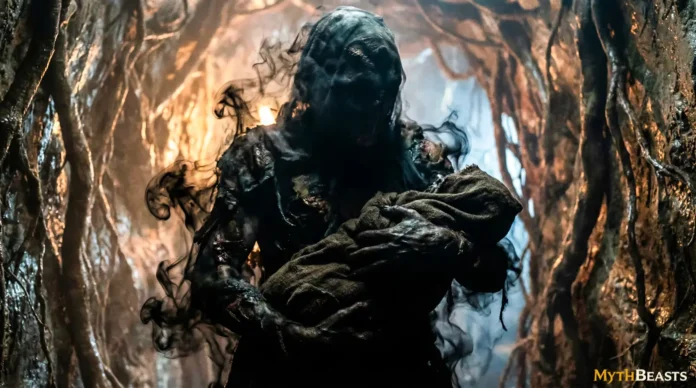
Spirit Reapers spectral entities harvesting souls at the boundary between life and death guiding the departed to the afterlife with unerring precision

Relevant Beasts
Chile
Death Messenger
Chonchon - Chilian folklore
Chile

Chonchon

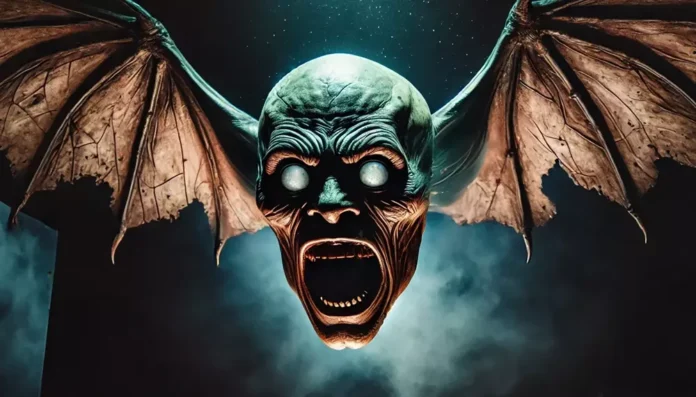
A Chilean creature with human ears that acts as wings, the Chonchon is known to steal life force.

  • Skills
Life DrainSilent Flight
  • Weaknesses
Salt BurnSun Harm

Spirit Reapers: A Mythological Lore Type

The concept of Spirit Reapers is a recurring motif found across various mythologies and folklore traditions worldwide. Spirit Reapers are typically understood as supernatural entities or forces associated with the transition of souls from the world of the living to the afterlife. While specific characteristics and narratives vary, the core themes of Spirit Reapers include death, the afterlife, and the moral judgment of souls. These themes resonate deeply within cultural belief systems, influencing how societies understand life, death, and morality.

Core Themes and Characteristics

The defining elements of Spirit Reapers revolve around death and the afterlife. Often depicted as guides, psychopomps, or harbingers, Spirit Reapers facilitate the journey of the soul from the corporeal realm to the spiritual one. Their role is not inherently malevolent; rather, it is a necessary function within the cosmological order, ensuring that the deceased reach their destined afterlife or judgment.Common attributes of Spirit Reapers include a spectral or ethereal appearance, symbolizing their connection to the spiritual world. They are often portrayed as impartial and detached, reflecting the inevitability and universality of death. In many traditions, Spirit Reapers carry tools or symbols such as scythes, which signify the harvesting of souls, or boats and ferries, suggesting the passage across metaphysical boundaries.

Narrative Function and Symbolism

Within mythological narratives, Spirit Reapers serve several critical functions. They personify the mystery and inevitability of death, providing a tangible representation of the abstract concept. This personification helps individuals and societies confront and process the idea of mortality. Moreover, Spirit Reapers often embody themes of judgment and morality, as they are sometimes involved in assessing the virtue of souls and determining their fate in the afterlife.Symbolically, Spirit Reapers highlight the transient nature of life and the importance of ethical living. By emphasizing the moral consequences of actions, these entities underscore cultural values and norms, reinforcing societal cohesion through shared beliefs about life and death.

Cultural Variations and Interpretations

While the core themes of Spirit Reapers are broadly consistent, cultural interpretations vary significantly. In ancient Egyptian mythology, the god Anubis is depicted as a guide of souls, overseeing the weighing of the heart ritual to determine a soul’s worthiness. In Greek mythology, Charon serves as the ferryman of the dead, transporting souls across the River Styx. Both figures highlight the transition to the afterlife and the judgment of souls, albeit in culturally specific contexts.In Eastern traditions, such as Japanese and Chinese folklore, Spirit Reapers may appear as benevolent guardians or fearsome entities, reflecting diverse attitudes towards death and the spirit world. The Yama kings in Chinese mythology, for instance, are known for judging the dead and administering justice, emphasizing karmic principles.

Persistence Across Cultures and Time

The persistence of Spirit Reapers across cultures and time periods can be attributed to their fundamental role in addressing universal human concerns about death and the afterlife. As societies grapple with the uncertainties surrounding mortality, Spirit Reapers provide a framework for understanding and managing these existential fears. Their narratives offer comfort, moral guidance, and a sense of continuity between the physical and spiritual realms.Overall, the Spirit Reaper lore type remains a vital component of mythological and cultural traditions, reflecting humanity’s enduring quest to comprehend the mysteries of life and death. By embodying themes of transition, judgment, and morality, Spirit Reapers continue to shape cultural identities and philosophical outlooks across the globe.