
Post-Colonial Amazonian
Relevant Beasts
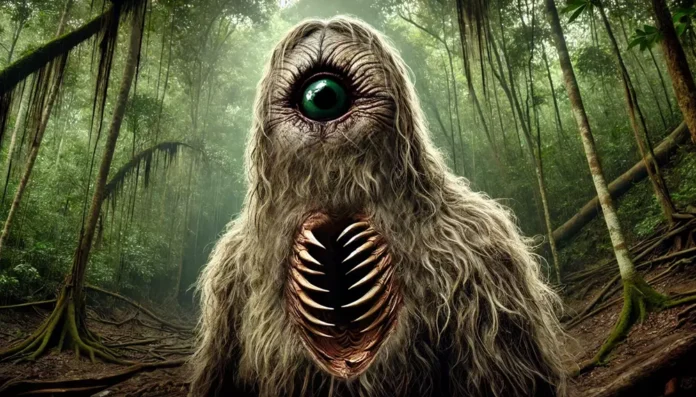
A large, sloth-like creature from Amazonian legend, known to emit a foul stench that incapacitates its prey.
A large, sloth-like creature from Amazonian legend, known to emit a foul stench that incapacitates its prey.
“Post-Colonial Amazonian” is not a universally standardized historical period; here it describes Amazonian societies after Iberian independence, amid continuing colonial influences and changing national boundaries.
Independence from Portugal and Spain unfolded during the early nineteenth century, but Amazonian communities experienced political change unevenly across territories now belonging to several countries.
The region’s histories include Indigenous nations, Afro-descendant populations, riverine communities, and settlers; no single civilization or unified religious system represents this diverse period.
Rubber extraction, missionary activity, migration, and state expansion altered community relations during later nineteenth- and twentieth-century decades, influencing how traditions circulated and were recorded.
Indigenous cosmologies remained locally distinct, with relationships among humans, animals, places, and spiritual beings varying by language community and historical circumstance.
Catholic Christianity became influential through colonial institutions and later missions, but its presence did not erase Indigenous interpretations or produce one consistent regional theology.
In many documented contexts, beings associated with animals or landscape express personhood beyond human society; interpreting such accounts requires attention to particular communities.
Traditional narratives could communicate expectations about conduct, kinship, and environmental relationships, although their authority and use differed among speakers and communities.
Accounts of dangerous places or beings could convey practical caution about forests and waterways, without proving that every listener understood them literally.
Shared storytelling also sustains collective memory, especially where community histories and knowledge are transmitted orally rather than preserved in locally produced written records.
Amazonian traditions include accounts of animal-associated spirits, transformative beings, and forest presences; these categories describe recurring motifs, not a single regional creature taxonomy.
Brazilian folklore collections feature figures such as the boto and Curupira, but their forms reflect regional storytelling and historical documentation rather than universal Indigenous beliefs.
The Mapinguari appears in accounts collected from parts of Amazonia, yet descriptions and interpretations vary; its classification as a shared ancient being is not established.
Animal transformations can express culturally specific ideas about boundaries between human and nonhuman persons, rather than functioning merely as decorative supernatural motifs.
Forest beings may mark limits on movement or resource use in particular narratives, though their meanings cannot be generalized across Amazonian societies.
Modern folklorists sometimes interpret these figures as expressions of environmental concern; such readings are interpretations, not evidence that historical narrators intended that meaning.
Oral transmission has been central to many Amazonian communities, allowing narratives to persist through performance, memory, and adaptation across generations.
Missionary accounts, travel writings, and later ethnographic records preserve some material, but these sources filter Indigenous speech through outside languages and purposes.
Written collections often standardize variant accounts, making printed versions useful evidence for recording history but imperfect substitutes for community-specific oral contexts.
River systems, language boundaries, and local histories shape distinct narrative traditions; a figure recorded in Brazilian folklore cannot automatically represent neighboring Indigenous communities.
Brazilian national collections often frame beings as folklore characters, whereas Indigenous accounts may place comparable presences within specific relations among people, land, and animals.
These differences concern context and classification, not simply alternate names; evidence must be evaluated within each community’s own historical and linguistic setting.
Some narratives present supernatural beings as dangerous, establishing caution around particular activities or locations; the precise lesson depends on the account and audience.
Other accounts situate nonhuman beings within reciprocal relationships, complicating classifications of them as either hostile threats or protective guardians.
Descriptions of divine messengers should be used carefully, since that category may impose external religious assumptions on distinct Indigenous concepts.
Amazonian material culture includes designs and objects whose meanings vary locally; identifying a motif as a mythical beast requires contextual evidence.
Archaeological images cannot alone establish a specific narrative, because visual resemblance does not demonstrate the maker’s intended supernatural interpretation.
Missionary and museum records document selected objects, but their labels may reflect colonial categories rather than Indigenous explanations of significance.
Later generations continued adapting narratives under urbanization, schooling, religious change, and migration, rather than simply preserving an unchanged precolonial inheritance.
Printed folklore and national education helped circulate selected Amazonian figures beyond local settings, sometimes recasting community-specific beings as regional or national symbols.
Christian interpretation and Indigenous cosmologies have interacted in diverse ways; evidence does not support one uniform process of religious replacement or combination.
Contemporary retellings may preserve older motifs while altering emphasis, so present-day versions cannot automatically establish earlier meanings or historical continuity.
Historical knowledge relies on uneven evidence, including oral testimony, colonial documentation, ethnography, and material remains, each shaped by distinct collection conditions.
Colonial writers often misunderstood Indigenous concepts or translated them into Christian categories, creating uncertainty about the original meanings of recorded beings.
No verified sources describe this for this context: a single, region-wide post-colonial Amazonian canon of mythical beasts or shared beliefs.
Researchers distinguish documented testimony from interpretation, especially when connecting animal figures with environmental symbolism or reconstructing earlier belief from later accounts.
Responsible classification therefore identifies community, location, date, and source type wherever possible, preserving differences instead of presenting a unified Amazonian mythology.
From hidden lore to legendary beasts, immerse yourself in the world of myth
All content, images, and articles on Myth Beasts are protected by copyright. Content © 2024 Myth Beasts. Reproduction or redistribution without permission is strictly prohibited