back to top

Death Sense

Death Sense is a mythological skill enabling perception of impending death, often associated with divination and supernatural awareness.

Relevant Beasts

Celtic
Ghostly Apparition
Banshee - Celtic folklore
Celtic

Banshee

The Banshee is a legendary figure rooted deeply in Irish mythology, recognized primarily for her mournful wail that is...

  • Skills
Death & NecromancyDeath Sense
  • Weaknesses
Divine RestrictionsHoly Ground
Mexico
Ghostly Apparition
La Llorona - Mexican Folklore ghost stories
Mexico

La Llorona

A cursed ghostly woman of Mexican folklore, La Llorona eternally wanders riverbanks, weeping for her lost children and luring...

  • Skills
Aura of DeathDeath Sense
  • Weaknesses
Divine RestrictionsMortal Flaws
Celtic
Ghostly Apparition
Bean Nighe - Scotish Folklore
Celtic

Bean Nighe

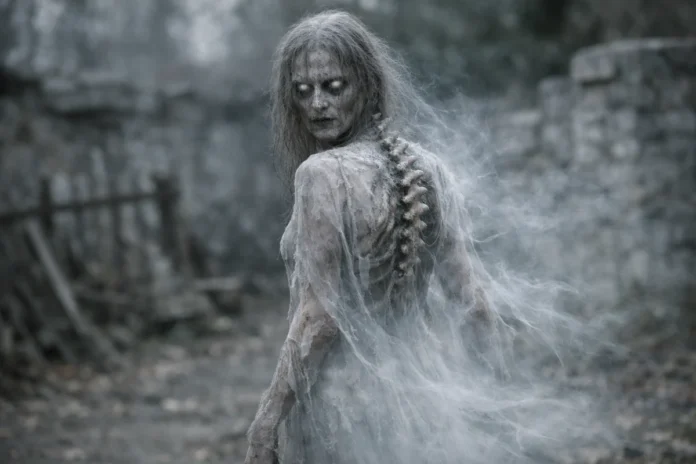
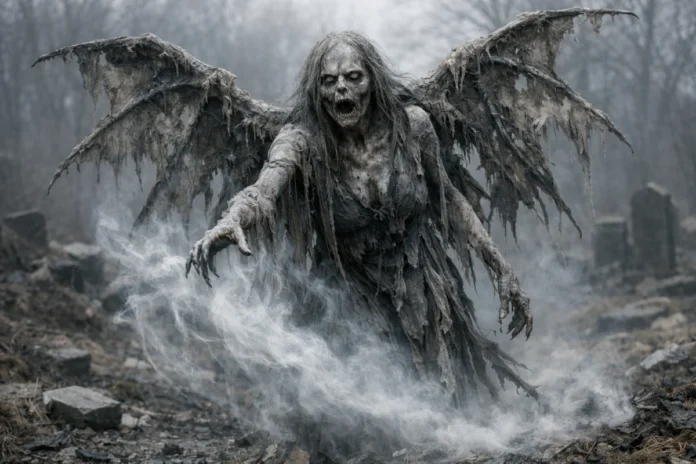
The Bean Nighe is a Scottish spirit from Celtic lore, known as a harbinger of death who washes bloodied...
  • Skills
Death & NecromancyDeath Sense
  • Weaknesses
Blessed WeaponDivine Restrictions

Death Sense – an Overview

Death Sense functions as a distinct mythological ability, recognized across various cultural traditions. It allows certain beings or places to perceive or predict death-related phenomena. This capability extends beyond ordinary senses, offering insights into the realm of mortality. In many traditions, Death Sense is not merely a general supernatural effect but a separate category. This distinction underscores its unique role in bridging life and death. Cultures often ascribe it to specific entities or sacred locations, marking them as intermediaries between the living and the deceased. Its distinct classification reflects its significance in mythological structures. The notion of Death Sense challenges human understanding of mortality. Its presence in folklore highlights a belief in the interconnectedness of life and death. By existing as a separate category, Death Sense provides a framework for exploring themes of mortality, destiny, and cosmic order, as seen through the eyes of mythological beings.

Manifestation and Constraints

How Death Sense Is Expressed

Death Sense manifests in mythology through various observable effects, which are often dramatic and unsettling. These can include sudden environmental changes, such as darkening skies or unnatural silence, signaling an impending death. In some traditions, physical transformations occur. Entities possessing Death Sense might gain a heightened awareness or altered perception, allowing them to foresee death. This ability isn’t limited to individuals; it can extend to sacred locations. Certain lands are believed to resonate with death, marked by eerie atmospheres or spectral visions. In these cases, Death Sense aligns with the environment, further emphasizing its significance. These manifestations anchor Death Sense within cultural contexts, grounding an abstract concept in tangible phenomena. The expression of Death Sense is thus integral to the mythological narratives that surround it, serving as both an omen and a guide to the mysteries of death.

Limits and Conditions

Death Sense is not an unrestricted ability within mythological systems. Its expression is often bounded by strict conditions, reflecting cultural values and cosmological beliefs. Certain moral or ritual conditions might be necessary for its activation. For example, only individuals deemed worthy or ritually pure can access this sense. In other traditions, Death Sense might be limited by geographical or temporal factors. Some cultures believe Death Sense is strongest in specific times or places, such as during a full moon or at sacred sites. These limitations serve to reinforce the sacredness and rarity of this sense. By imposing restrictions, myths ensure that Death Sense remains a revered and controlled ability, preserving its role as a mediator between life and death. Thus, limitations on Death Sense are as significant as its manifestations, shaping its narrative function and cultural significance.

Mythological Role and Meaning

Symbolic and Cultural Significance

Within mythological frameworks, Death Sense holds substantial symbolic weight. It often represents the ultimate knowledge of the life-death cycle, embodying a profound understanding of existence. Cultures imbue Death Sense with moral and psychological significance. It serves as a reminder of life’s impermanence, prompting reflection on mortality and moral choices. The ability to sense death is not just a passive awareness; it actively guides societal behavior and ethical decisions. In some traditions, possessing Death Sense signifies spiritual enlightenment or divine favor. It distinguishes the possessor as a guardian of cosmic balance. Thus, Death Sense fulfills both a symbolic and didactic role, teaching societies about the inevitability of death and the importance of moral integrity. Its presence in myth underscores humanity’s quest to comprehend and navigate the mysteries of life and death.

Death Sense in Myth and Folklore

Mythological narratives often feature Death Sense as a key element in the plot or the character’s journey. It defines the roles of gods, spirits, or heroes who navigate the boundaries between worlds. These beings use Death Sense to guide souls, predict fate, or avert disasters. In some myths, a character’s journey to acquiring Death Sense marks a rite of passage. It may involve overcoming trials or receiving knowledge from a divine source. The role of Death Sense is not merely to predict death but to structure mythological authority. By determining the legitimate possessor of Death Sense, myths delineate boundaries and emphasize the importance of rightful power. Thus, Death Sense acts as a mechanism of control and understanding, shaping mythic landscapes.

Beasts with Death Sense

Cŵn Annwn

Originating from Welsh mythology, the Cŵn Annwn are spectral hounds associated with the otherworld. These creatures are believed to possess Death Sense, allowing them to herald impending death. Their howls are omens, signifying the arrival of the otherworldly hunt. Without Death Sense, the Cŵn Annwn would lose their integral role in guiding souls. They are more than mere harbingers; they embody the connection between the mortal and immortal realms, emphasizing the inevitability of death.

Banshee

The Banshee is a figure from Irish mythology known for its mournful wailing. This sound is a manifestation of Death Sense, forewarning families of an imminent death. The Banshee’s identity is deeply entwined with this ability, marking it as a supernatural messenger. Without Death Sense, the Banshee would merely be another spectral figure. Its role as a familial guardian relies on this sense, underscoring its cultural importance.

Ankou

In Breton folklore, the Ankou is a personification of death itself, appearing as a skeletal figure. This entity possesses Death Sense, guiding the souls of the deceased to the afterlife. The Ankou’s presence is a reminder of the inevitability of death, and its sense ensures a seamless transition. Without Death Sense, the Ankou’s function as a psychopomp would be incomplete, severing its role in the cosmological order.

Cultural Interpretations and Regional Emphasis

Interpretations of Death Sense vary significantly across cultures, highlighting different symbolic and moral frameworks. In Celtic traditions, Death Sense is seen as a divine gift, associated with the spirit world and ancestral connections. Conversely, in some Eastern traditions, it is linked to spiritual enlightenment. Here, Death Sense is not just an awareness of death but a step towards transcendence. These differences illustrate how Death Sense is not a monolithic idea. It adapts to cultural values and philosophical beliefs, reflecting diverse understandings of mortality and existential purpose. By examining these variations, one can appreciate the richness and complexity of Death Sense across global traditions.

Similar or Related Mythological Functions

Death Sense is conceptually related to other mythological functions, such as prophecy and necromancy. Both involve insights into the unknown, but with distinct scopes. Prophecy often encompasses broader foresight, not limited to death. Necromancy, by contrast, involves communication with the dead, but lacks the anticipatory aspect of Death Sense. While all these functions deal with hidden knowledge, Death Sense is unique in its focus on the immediate awareness of death. Its role as an anticipatory and guiding force separates it from these related concepts, ensuring its distinct place in mythological taxonomies.

Historical Interpretation and Evidence Limits

Scholarly interpretations of Death Sense vary, influenced by cultural perspectives and available evidence. Some scholars view it symbolically, as a reflection of human fears and desires surrounding death. Others consider it a literal belief, deeply embedded in spiritual practices. However, historical sources often lack detailed descriptions, limiting our understanding. Many traditions relied on oral transmission, leaving gaps in documentation. This absence of comprehensive records results in interpretative challenges. Researchers must navigate these limitations cautiously, acknowledging uncertainty. No verified sources provide exhaustive accounts of Death Sense in all contexts. Thus, while interpretations abound, scholars remain reliant on fragmentary evidence.