
back to top

Whirlpool Creation

Whirlpool Creation is a mythological skill involving the control and formation of powerful whirlpools in legendary narratives.

Relevant Beasts
Europe
Water Dwelling Creature
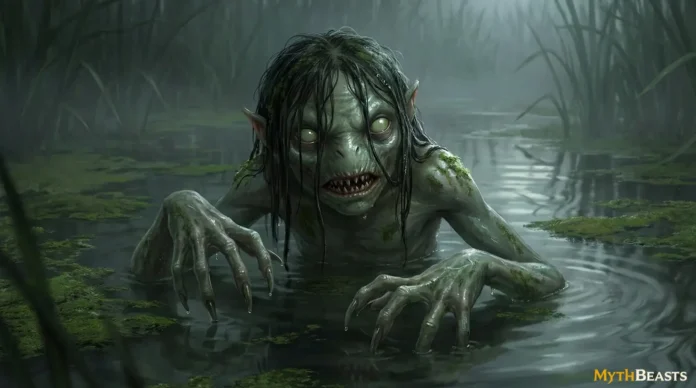
Grindylow - water spirit from 18th-century English folklore
United Kingdom

Grindylow

Grindylow, a sinister water spirit from 18th-century English folklore, haunted marshes and ponds, snatching children who strayed too close...
  • Skills
CamouflageFog Generation
  • Weaknesses
BeheadingFire Vulnerable
Europe
Sea Monster
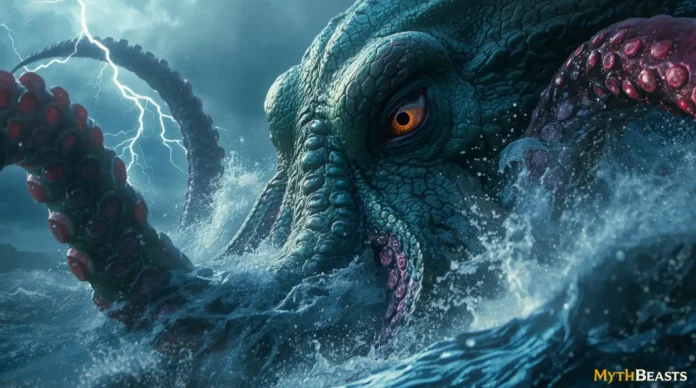
Kraken - Nord mythology
Vikings

Kraken

The Kraken, a giant sea monster from Norse myth, lurks off Scandinavian coasts. Capable of sinking ships, it epitomizes...
  • Skills
Element ControlPhysical Strength
  • Weaknesses
Dry Land HarmElement Sensitivities
North America
Tidal Guardian
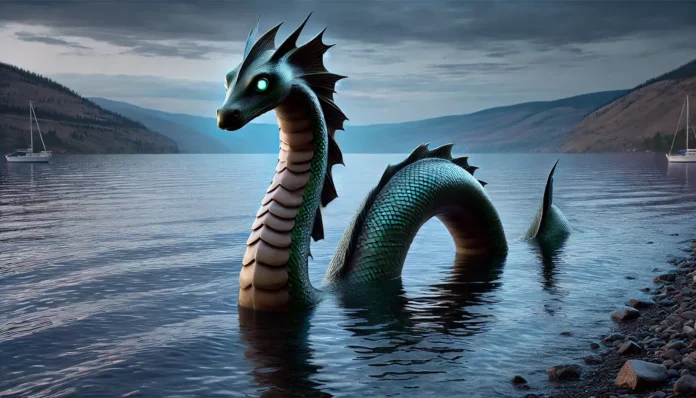
Ogopogo - British Columbia
Salish

Ogopogo

Ogopogo is a serpentine water monster from Canadian folklore, believed to inhabit Okanagan Lake and connected to Indigenous myths.
  • Skills
Enhanced AgilityWater Breathing
  • Weaknesses
Drought SensitiveDry Land Harm
Greece
Water Spirit
Charybdis
Greece

Charybdis

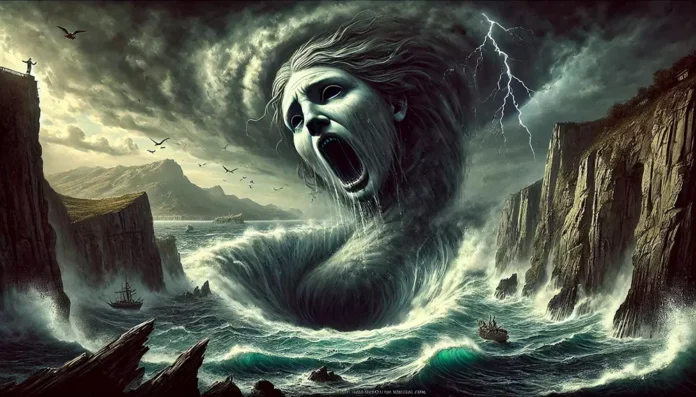
Charybdis, the deadly whirlpool in Greek mythology, symbolizes the unavoidable perils of the sea, alongside its counterpart Scylla.

  • Skills
Whirlpool Creation
  • Weaknesses
Ocean Depth

Whirlpool Creation – an Overview

Whirlpool Creation is a mythological function recognized for its transformative and chaotic potential within mythological systems. It is often depicted as a mechanism of change in both natural and supernatural realms. Unlike general supernatural effects, Whirlpool Creation specifically involves turbulence that disrupts established orders or boundaries in distinct ways. It is not merely an elemental phenomenon but a complex symbol reflecting deeper cosmological principles and existential themes. Mythological systems treat it as a separate category because it carries unique implications for power dynamics and cosmic balance. This function appears in diverse traditions, consistently associated with chaos and transformation.

Manifestation and Constraints

How Whirlpool Creation Is Expressed

In mythological traditions, Whirlpool Creation is often depicted through dramatic environmental changes, such as the sudden formation of whirlpools in water bodies leading to significant transformations. These whirlpools symbolize the disruption of normal reality, manifesting chaos as a creative force. According to the lore, such events can result in new land formations, altered ecosystems, or the emergence of mythical creatures. The cosmological impact of Whirlpool Creation often signifies a pivotal moment where existing orders are destabilized, allowing new possibilities to unfold. This function is deeply tied to stories of creation and destruction, where whirlpools act as catalysts for significant mythological events.

Limits and Conditions

The constraints governing Whirlpool Creation are often symbolic or moral rather than physical. Many traditions impose specific moral or environmental conditions under which this function can be invoked. For example, it may require a significant transgression or act of hubris to trigger such events, reflecting a cosmic balance theme. Similarly, certain geographical or temporal conditions may limit its occurrence, underscoring its unpredictability. Cosmologically, Whirlpool Creation is not universally accessible; it often requires a significant force or divine intervention to manifest. This restriction underscores its role as a mechanism for divine retribution or renewal, emphasizing the moral dimensions of mythological narratives.

Mythological Role and Meaning

Symbolic and Cultural Significance

Within mythological worldviews, Whirlpool Creation frequently symbolizes chaos and transformation, representing both fear and reverence for nature’s unpredictable forces. It often embodies the dual nature of creation and destruction, illustrating the fine line between order and chaos. As a cultural symbol, it often serves as a reminder of the limitations of human control over natural elements. In psychological terms, it reflects inner turmoil or transformative processes, symbolizing spiritual renewal or social upheaval. Socially, whirlpools can serve as cautionary symbols, warning against hubris or disrespect toward the natural world. This duality highlights the complex moral and philosophical themes present in these stories.

Whirlpool Creation in Myth and Folklore

Whirlpool Creation plays a critical role in structuring authority and transformation within mythological narratives. It often serves as a narrative device to delineate boundaries, whether between worlds, social classes, or moral orders. For instance, whirlpools may act as gateways or barriers between realms, marking spaces of transition or liminality. In myths, they often represent moments of transgression or divine intervention, indicating a significant shift in the story’s moral or existential landscape. This function helps articulate the consequences of human actions, divine will, or cosmic balance, emphasizing the transformative power inherent in mythological storytelling.

Beasts with Whirlpool Creation

Charybdis

Charybdis, originating from Greek mythology, is a sea monster famed for creating massive whirlpools. This creature embodies the terrors of maritime navigation and the unpredictable nature of the sea. Without Whirlpool Creation, Charybdis would be reduced to a mere sea hazard, missing its symbolic representation of chaos and maritime threat. Her role often involves testing the hero’s resolve or fate, embodying the uncontrollable forces of nature that define human limitations and the divine order.

Vodyanoy

In Slavic folklore, the Vodyanoy is a water spirit associated with whirlpools and water disturbances. It is said to create whirlpools to drown those who disrespect water bodies, reinforcing respect for natural elements. Without this feature, the Vodyanoy would lose its narrative function of enforcing moral and environmental respect. The creature symbolizes the consequences of human arrogance in the face of nature’s power, encapsulating themes of respect and balance within Slavic mythologies.

Yacuruna

From indigenous Amazonian mythology, the Yacuruna is a water creature that creates whirlpools as portals to their underwater realm. This function distinguishes it as a guardian of aquatic thresholds and a symbol of the mysteries beneath the water’s surface. Without Whirlpool Creation, the Yacuruna would not serve as a liminal figure mediating between worlds. It emphasizes the enigmatic and dangerous allure of the river, highlighting the boundary between the known and unknown in these cultural narratives.

Cultural Interpretations and Regional Emphasis

Whirlpool Creation is interpreted differently across various cultures, reflecting unique symbolic and moral frameworks. In Greek mythology, whirlpools often signify divine wrath or natural law, emphasizing the moral consequences of hubris and disobedience. Contrastingly, in indigenous Amazonian narratives, they represent sacred thresholds and access to hidden realms, highlighting the wonder and mystery of natural phenomena. In Slavic traditions, the function underscores respect for natural forces and environmental stewardship. These differences reflect how each culture integrates nature, morality, and cosmology into their mythological systems, offering insight into diverse understandings of balance and order.

Similar or Related Mythological Functions

Functions conceptually adjacent to Whirlpool Creation include Storm Creation and Earthquakes. Storm Creation involves manipulating weather patterns, often reflecting divine power or emotional turmoil. While both share themes of chaos and transformation, Storm Creation differs in its association with atmospheric phenomena. Earthquakes, associated with ground upheaval, similarly challenge stability and order. Unlike Whirlpool Creation, which focuses on water as a medium, earthquakes emphasize terrestrial disruption. These functions occupy a unique space within mythological systems, highlighting diverse expressions of chaos and cosmic reordering, while remaining analytically distinct from Whirlpool Creation’s aquatic focus.

Historical Interpretation and Evidence Limits

Scholarly interpretations of Whirlpool Creation explore both symbolic and literal readings of ancient texts. Some scholars emphasize its metaphorical aspects, viewing whirlpools as symbols of societal or psychological chaos, reflecting deeper existential themes. Others focus on literal interpretations, examining how these phenomena informed practical navigation and survival strategies in ancient cultures. However, evidence for specific ritualistic or theological contexts remains sparse. No verified sources describe Whirlpool Creation in exhaustive detail for every tradition, highlighting gaps and biases in available records. This absence necessitates cautious interpretation, acknowledging the limitations and uncertainties inherent in reconstructing these mythological traditions.