
back to top

Blunt Force

Blunt Force is an inherent weakness exposing beings to damage from non-edged impacts, often found in mythological creatures and entities.

Relevant Beasts
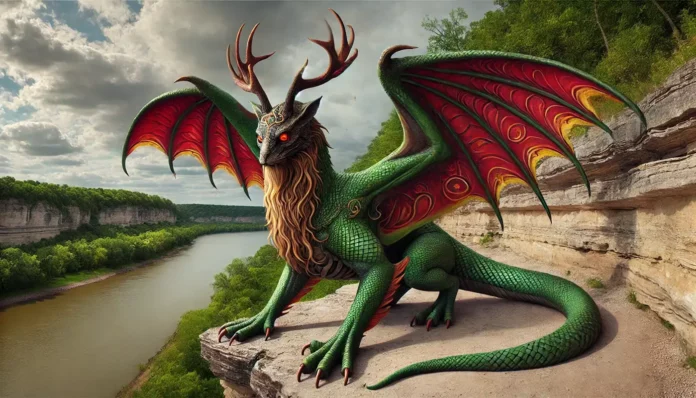
Mississippian
Guardian Animal
The Piasa Bird - Native American folklore
Mississippian

Piasa Bird

The Piasa Bird, a monstrous winged predator from Native American folklore, is said to dwell near the cliffs of...

  • Skills
CamouflageFire Breathing
  • Weaknesses
Blunt ForceLightning Damage
Cherokee
Sacred Animal
Uktena - Cherokee folklore
Cherokee

Uktena

The Uktena, a Cherokee mythical serpent, is a powerful and fearsome creature with horns, glowing scales, and a magical...

  • Skills
Light HealingTidal Wave Summoning
  • Weaknesses
Blunt ForceEarth Bound
Asia
Giant Humanoid
Yeti - Tibetian Folklore
Tibet

Yeti

Yeti of the Rockies is a North American version of Bigfoot, a solitary giant humanoid roaming the Rockies.

  • Skills
Blizzard CreationCold Resistance
  • Weaknesses
Blunt ForceHeat Sensitive
Mississippian
Sacred Animal
Mishipeshu - the water panther - North American folklore
Mississippian

Mishipeshu

Mishipeshu, the legendary water spirit of Anishinaabe folklore, is a powerful and protective creature. Often depicted as a mix...

  • Skills
Enhanced StaminaSwamp Manipulation
  • Weaknesses
Blunt ForceDry Land Harm
Basque
Cyclopean Form
Tartalo - Basque folklore
Basque

Tartalo

Tartalo is a cyclopean giant from Basque folklore, known for his strength and predatory nature.

  • Skills
Physical StrengthTitan Grip
  • Weaknesses
Blunt ForceCave Dependent

Blunt Force – Overview

Blunt Force in mythology represents a weakness associated with immovable, overwhelming power that lacks precision or subtlety. It is a structural vulnerability affecting beings or entities otherwise seen as invincible. Mythological systems consider Blunt Force significant due to its ability to reveal an entity’s limitations, often illustrating the hubris-mortality boundary. Rather than incidental, it functions as a necessary counterbalance within narratives, ensuring that no creature or force achieves absolute dominance, thus maintaining cosmic equilibrium.

Defining Characteristics of the Weakness

Nature of the Limitation

Blunt Force is primarily a physical vulnerability, focusing on the impact of overwhelming force against otherwise resilient beings. Though not exclusively physical, it often symbolizes metaphysical or existential constraints. Across mythologies, it signifies the inevitable consequence of sheer force meeting an immovable object, representing limitation within narratives. The concept transcends mere physical harm, reflecting deeper truths about power and vulnerability.

Conditions of Exposure

Blunt Force becomes relevant under specific symbolic and environmental conditions. It often activates when beings overextend their power or defy cosmic order. This weakness manifests through moral or cosmological infractions rather than tactical missteps. Environmental contexts, like sacred sites or times, may also render beings susceptible, emphasizing a connection between cosmological order and physical vulnerability. The interplay between power and environment often triggers this mythological weakness.

Mythological Role and Function

Function Within Mythological Systems

Blunt Force regulates power within mythological systems by enforcing natural limitations and preventing entities from achieving unchecked dominance. It maintains cosmic order, ensuring balance and preventing hubris. By enabling downfall, it reinforces the principle that excessive force leads to self-destruction. This weakness does not just constrain physical capabilities but upholds a broader metaphysical integrity essential for narrative balance and cosmic harmony.

Symbolic and Cultural Meaning

Blunt Force symbolizes inevitable consequences and serves as a reminder of mortality and moral boundaries. Across cultures, it reflects the sacred law that power must be tempered with restraint. It underscores the danger of hubris and the necessity of respecting cosmic boundaries. By embodying limitation, it teaches the importance of humility and balance, emphasizing that even the mightiest beings are subject to universal laws beyond their control.

Distinction from Related Mythological Weaknesses

Conceptual Boundaries

Blunt Force differs from general mortality and physical injury by highlighting overwhelming impact rather than inevitable decay or finite life. Unlike divine punishment, it is not a moralistic consequence but a natural limitation. Blunt Force is distinct from taboo violations as it does not arise from forbidden actions. Situational defeat typically involves tactical failures, whereas Blunt Force reveals innate vulnerabilities. This distinction underlines its unique role in mythological classification.

Common Sources of Misclassification

Blunt Force is often misunderstood due to its apparent similarity to general physical vulnerabilities. Its emphasis on overwhelming power is frequently conflated with common injuries or defeats. Comparative mythology distinguishes it by focusing on the inherent limitation within narratives, not circumstantial failures. Scholars emphasize its metaphysical implications, underscoring the necessity for precise classification to avoid oversimplification and ensure accurate mythological interpretation.

Canonical Beings Defined by Blunt Force

The Greek Giant Antaeus

In Greek mythology, Antaeus derives strength from contact with the earth. His defeat by Heracles demonstrates Blunt Force, as Antaeus’ invulnerability fails when lifted from the ground, revealing his crucial weakness.

The Hindu Demon Ravana

Ravana, from Hindu epics, illustrates Blunt Force through his vulnerability to overwhelming divine power. Despite possessing near-invincible strength, his downfall highlights the limits of brute force against cosmic justice, reinforcing his mythological role.

The Japanese Oni

Japanese Oni embody Blunt Force by wielding immense physical strength but lacking finesse and strategy. Their susceptibility to cunning or environment changes emphasizes this weakness, reflecting the cultural value of intellect over raw power.

Historical Distribution and Cultural Context

Blunt Force appears in diverse cultures, reflecting common human experiences and beliefs about power and limitations. From ancient Greek to Japanese folklore, it addresses universal themes of hubris, restraint, and moral balance. This weakness often surfaces in societies where hierarchical power structures exist, serving as a cautionary reminder of the dangers associated with unchecked authority. Its thematic presence across historical periods indicates its enduring relevance in human storytelling.

Scholarly Interpretation and Uncertainty

Variation in Interpretation

Interpretations of Blunt Force vary between cultures and scholarly perspectives, with some viewing it as a literal physical limitation while others see it symbolically. In some traditions, it underscores the futility of resistance against fate, while others emphasize its role in maintaining social or cosmic order. Differences in interpretation often depend on historical context and cultural values, highlighting the complexity of evaluating this mythological concept.

Limits of the Evidence

The historical record regarding Blunt Force is sometimes ambiguous, with varying degrees of evidence across cultures. Some interpretations are well-established, while others remain contested or speculative. Scholars acknowledge the challenges in identifying concrete instances due to mythological narratives’ interpretive nature. Careful analysis and comparison are necessary to distinguish established beliefs from uncertain traditions, ensuring responsible scholarship in understanding Blunt Force.

Mythological Function Across Cultures

Blunt Force recurs across mythological traditions due to shared human concerns about power, vulnerability, and balance. It addresses the symbolic need to understand limitations and the consequences of hubris. By recognizing this weakness, scholars gain insight into how different cultures conceptualize power and morality. This understanding enriches comparative mythology, revealing common themes and underlying structures within diverse belief systems. The recurrence of Blunt Force underscores its significance in exploring the human condition.