back to top

Divine Barrier

Divine Barrier represents an inherent vulnerability where supernatural forces are restricted by sacred boundaries.

Relevant Beasts

Akkadian Empire
Hybrid Creature
Mushussu
Akkadian Empire

Mushussu

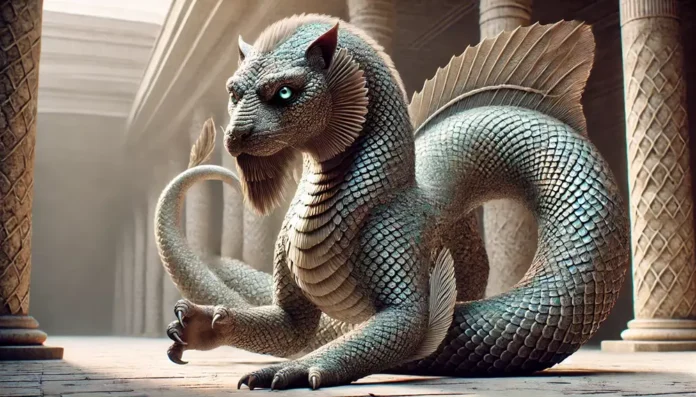
The Mushussu, a guardian beast from ancient Mesopotamian mythology, is known for its lion-dragon-serpent form and its role as...

  • Skills
Element ControlFire Breathing
  • Weaknesses
Divine BarrierMagic Boundaries

Divine Barrier – Overview

Divine Barrier is a mythological weakness that represents inherent limitations within deities or supernatural entities. It is not a mere situational failure but a structural weakness that affects their capacities. This concept is central in mythological systems, ensuring that even powerful beings must adhere to certain existential limitations. These constraints are significant because they reflect the inherent balance and order within the cosmos, preventing any entity from achieving absolute control or dominance.

Defining Characteristics of the Weakness

Nature of the Limitation

Divine Barrier typically represents metaphysical restrictions or cosmological boundaries. These limitations manifest in mythologies where deities are constrained by universal laws or existential frameworks. They do not arise from a single event but are inherent to the entity’s nature, reflecting recurring patterns across different cultures.

Conditions of Exposure

Divine Barrier becomes relevant under specific symbolic, moral, or cosmological conditions. Often, this weakness is exposed through the violation of sacred laws or through challenges that test moral integrity. Environmental factors, such as sacred spaces or cosmic alignments, can also trigger these limitations, reflecting deeper cosmic orders.

Mythological Role and Function

Function Within Mythological Systems

Within mythological systems, Divine Barrier functions to regulate power and enforce balance. It prevents deities from achieving unchecked dominance, thus enabling the potential for downfall and the preservation of cosmic order. This weakness is crucial in maintaining equilibrium within mythological narratives, ensuring that no entity overrides the established divine hierarchy.

Symbolic and Cultural Meaning

Symbolically, Divine Barrier represents inevitability and sacred law. It often embodies moral consequences and the limitations of hubris, serving as a boundary that reinforces cosmic norms. Across cultures, it signifies mortality and the inherent constraints of existence, offering a reflection on the limitations faced by all beings, regardless of power.

Distinction from Related Mythological Weaknesses

Conceptual Boundaries

Divine Barrier differs from general mortality, physical injury, or divine punishment. While mortality implies a natural end, Divine Barrier is a broader existential constraint. It is not a punishment but a fundamental boundary, distinct from situational defeats or taboos, which are often narrative-specific.

Common Sources of Misclassification

Misclassification of Divine Barrier often occurs due to oversimplification or conflation with other vulnerabilities. It is commonly misunderstood as a narrative convenience or a flaw akin to human weaknesses. Scholarly work distinguishes these concepts by emphasizing their systemic roles and the non-negotiable nature of Divine Barrier within mythologies.

Canonical Beings Defined by Divine Barrier

Prometheus

In Greek mythology, Prometheus faces a Divine Barrier through his perpetual punishment, symbolizing the hubris of defying Zeus. His narrative illustrates the inherent consequences of challenging cosmic order, portraying him as incomplete without this metaphysical constraint.

Brahma

Hindu mythology presents Brahma with a Divine Barrier, limiting his power of worship and creation. This limitation underscores the cosmological balance among deities, highlighting that even creator gods are subject to universal laws, ensuring a balanced divine hierarchy.

Raven

In Native American mythology, particularly among the Haida, Raven faces Divine Barrier through his dualistic nature. While a creator, his actions are often constrained by cosmic principles, ensuring he cannot transcend the inherent balance of creation and chaos.

Historical Distribution and Cultural Context

Divine Barrier appears broadly across many cultures and historical periods. It is prevalent in polytheistic systems, where deities must operate within an established order. This concept is less pronounced in monotheistic traditions, reflecting different theological structures. The recurrence of Divine Barrier across diverse contexts suggests a universal human recognition of existential constraints.

Scholarly Interpretation and Uncertainty

Variation in Interpretation

Interpretations of Divine Barrier vary across cultures and scholarly frameworks. Some view it as a literal constraint, while others see it symbolically. These differences reflect broader debates on divine nature and cosmology. The symbolic readings highlight moral and existential themes, while literal interpretations focus on theological consistency.

Limits of the Evidence

Gaps and ambiguities in historical records complicate the understanding of Divine Barrier. Many interpretations rely on fragmentary texts or oral traditions, leading to contested readings. The lack of comprehensive sources necessitates careful distinction between established interpretations and speculative reconstructions.

Mythological Function Across Cultures

The recurrence of Divine Barrier across mythological systems reflects shared human concerns about power, balance, and cosmic order. It symbolizes limitations inherent in existence, adding depth to mythological narratives. Recognizing this weakness aids comparative analysis and enhances understanding of mythologies as reflections of human experience and cosmological thought.