
back to top

Lightning Damage

Lightning Damage is a mythological vulnerability that exposes beings to destructive electrical forces, often resulting in severe consequences.

Relevant Beasts
Native American
Giant Bird
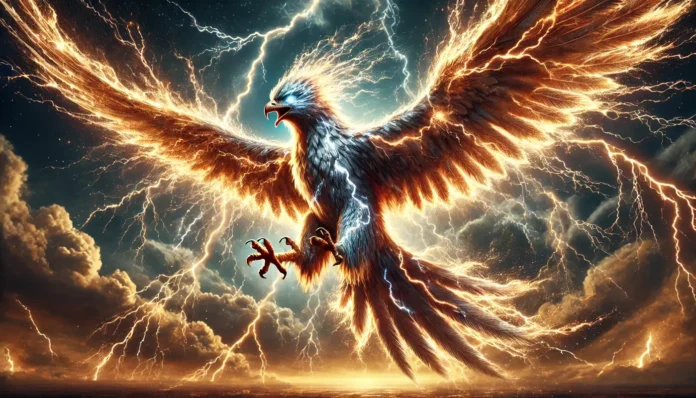
Thunderbird - Native American Folklore
Native American

Thunderbird

The Thunderbird, a powerful symbol of storms and divine wrath, is a legendary bird from North American Indigenous cultures....
  • Skills
Lightning SummoningPhysical Strength
  • Weaknesses
Lightning DamageWind Impact
Mississippian
Guardian Animal
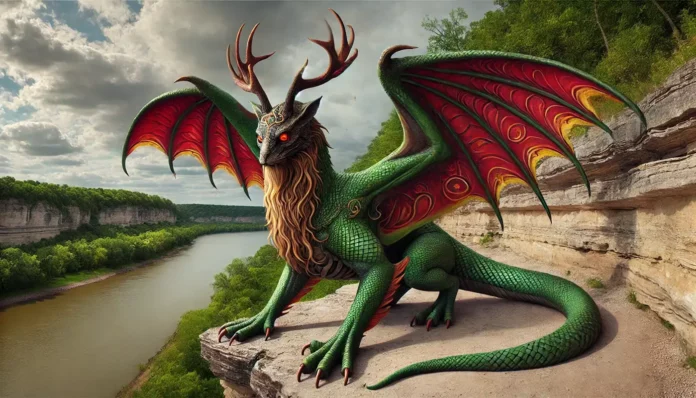
The Piasa Bird - Native American folklore
Mississippian

Piasa Bird

The Piasa Bird, a monstrous winged predator from Native American folklore, is said to dwell near the cliffs of...

  • Skills
CamouflageFire Breathing
  • Weaknesses
Blunt ForceLightning Damage
Hebrews
Giant Bird
Ziz- jewish - folklore
Hebrews

Ziz

The Ziz is a colossal bird from Jewish mythology, believed to rule the skies alongside the Behemoth and Leviathan....

  • Skills
Control WeatherElement Control
  • Weaknesses
Element SensitivitiesLightning Damage

Lightning Damage – Overview

Lightning Damage as a mythological weakness represents a fundamental vulnerability rooted in natural and cosmological forces. It signifies a profound limitation that mythological systems interpret as a structural constraint rather than an incidental setback. Through this concept, differing cultures articulate a universal limitation of beings or deities, suggesting an inherent susceptibility to the elemental force of lightning, which often embodies divine judgment or cosmic power. This mythological construct is not a narrative device but a meaningful classification, highlighting limits on power and agency within mythic frameworks.

Defining Characteristics of the Weakness

Nature of the Limitation

The essential nature of Lightning Damage lies in its metaphysical and cosmological restriction. It often signifies an existential constraint, highlighting the finite power of beings exposed to it. This weakness reflects the boundary of supernatural or divine abilities, emphasizing the supremacy of elemental forces in mythological narratives. Lightning, as a natural phenomenon, becomes a symbol of ultimate authority and divine will, imposing limits on entities that might otherwise seem limitless. This recurring pattern underscores the dominance of nature over even the most potent mythological figures.

Conditions of Exposure

Lightning Damage becomes relevant under specific symbolic and cosmological circumstances within mythology. These conditions often involve moral or environmental contexts where the breach of cosmic laws or overstepping boundaries provokes lightning’s wrath. It serves as a reminder of hubris and the inevitable retribution from higher powers. The activation of this weakness is not tactical but rooted in the transgression of sacred laws, highlighting a fundamental moral and cosmic order. Exposure aligns with scenarios where divine retribution enforces universal balance.

Mythological Role and Function

Function Within Mythological Systems

Within mythological systems, Lightning Damage plays a crucial role in regulating power and maintaining cosmic order. It prevents absolute dominance by acting as a natural check against beings that might threaten the universal balance. This weakness enforces a hierarchical structure where even the most formidable entities are subject to elemental authority. By enabling downfall or curbing excessive power, it preserves harmony within the mythic cosmos. Through this regulation, Lightning Damage ensures that no single force or being can disrupt the natural order indefinitely.

Symbolic and Cultural Meaning

Symbolically, Lightning Damage represents inevitability, the moral consequence of hubris, and divine law enforcement across cultures. It embodies the sacred, non-negotiable boundary that must not be crossed, reflecting mortality and the limits of ambition. This weakness serves as a metaphor for the human understanding of nature’s supremacy and the futility of excessive pride. Across diverse traditions, it symbolizes the ultimate control of cosmic forces over mortal or divine actions, illustrating a universal moral and existential boundary.

Distinction from Related Mythological Weaknesses

Conceptual Boundaries

Lightning Damage is distinct from related weaknesses such as general mortality or divine punishment. It is not a physical injury or situational defeat but a fundamental cosmological boundary. Unlike divine punishment, which may involve moral failings or taboo violations, Lightning Damage transcends specific actions and embodies an elemental constraint. It cannot be reduced to situational defeat or punishment but remains a profound, inherent limitation imposed by the natural order, distinguishing it from other mythological vulnerabilities.

Common Sources of Misclassification

Often misunderstood, Lightning Damage is mistakenly conflated with other vulnerabilities due to its elemental nature and dramatic effects. Comparative mythology clarifies these distinctions by emphasizing its role as a cosmic boundary rather than a narrative inconvenience. Misclassification arises when this elemental constraint is interpreted as divine punishment or general mortality. Scholarship distinguishes Lightning Damage as an existential limitation, highlighting its unique function in reinforcing cosmic order and preventing unchecked power.

Canonical Beings Defined by Lightning Damage

Zeus (Greek Mythology)

In Greek mythology, Zeus wields lightning as a symbol of cosmic authority. His identity as a supreme deity is entwined with this elemental force, illustrating his dominion and enforcing divine order. Without Lightning Damage, his role would lack the necessary cosmic authority, diminishing his stature as a ruler of gods and men.

Thor (Norse Mythology)

Thor, the Norse god of thunder, is defined by his association with lightning and storms. This connection underlines his power to enforce cosmic balance and protect Asgard. Lightning Damage, as an elemental constraint, enshrines his role as a defender of divine order, essential for his mythological coherence.

Raijin (Japanese Mythology)

Raijin, the Japanese god of lightning, thunder, and storms, embodies this elemental force’s awe-inspiring power. His cultural origin as a storm deity emphasizes his role in maintaining natural order. Without Lightning Damage, Raijin’s mythological function would be incomplete, severing his vital link to natural and cosmic forces.

Historical Distribution and Cultural Context

Lightning Damage appears across diverse cultures and historical periods, reflecting broad patterns of belief in elemental forces. It features prominently in polytheistic traditions where gods interact with natural elements, like Greek and Norse mythologies. In these contexts, lightning signifies divine will and cosmic authority. Cultures imbue lightning with symbolic meaning, associating it with divine retribution or cosmic balance. This recurrent theme highlights humanity’s enduring fascination with lightning’s power and its integration into mythological systems to express universal truths about nature and existence.

Scholarly Interpretation and Uncertainty

Variation in Interpretation

Understanding of Lightning Damage varies between cultures and historical periods, reflecting different scholarly frameworks. Some traditions emphasize its literal force as divine retribution, while others interpret it symbolically as a boundary marker. Scholars examine these varied interpretations to understand its role within mythological systems. The symbolic versus literal readings highlight its multifaceted nature, illustrating its deep integration into cultural narratives and worldviews. Such interpretations contribute to a nuanced understanding of its significance across traditions.

Limits of the Evidence

Scholarship acknowledges gaps and ambiguities in the historical record regarding Lightning Damage. Discrepancies arise from varied cultural interpretations and sparse documentation. Despite these uncertainties, established interpretations highlight its role as a cosmic boundary and elemental constraint. Uncertain or contested readings often stem from limited textual sources or regional variations, necessitating cautious interpretation. Scholars emphasize the importance of distinguishing established facts from speculative interpretations to maintain accuracy in analyzing its mythological significance.

Mythological Function Across Cultures

Lightning Damage recurs across mythological traditions due to shared human concerns and cosmological functions. It embodies universal themes of power, limitation, and cosmic order, resonating with varied cultural narratives. Recognizing this weakness enriches comparative interpretations by highlighting a consistent theme: the interplay between natural forces and mythological beings. By understanding this weakness’s role, scholars gain insights into how cultures articulate boundaries and express fundamental truths about existence and power through myth.