back to top

Sun Harm

Sun Harm is an inherent weakness where exposure to sunlight causes damage or diminishment in mythological beings.

Relevant Beasts

Europe
Water Dwelling Creature
Grindylow - water spirit from 18th-century English folklore
United Kingdom

Grindylow

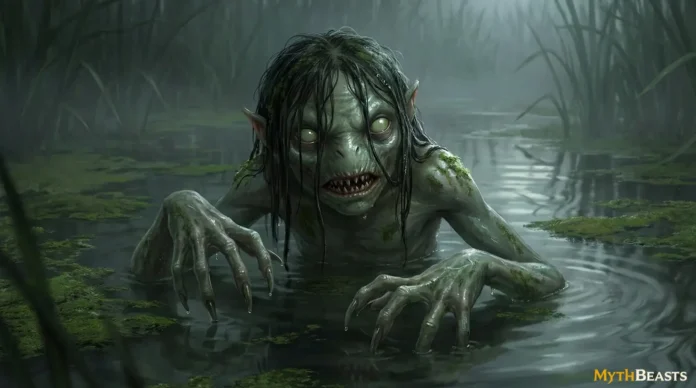
Grindylow, a sinister water spirit from 18th-century English folklore, haunted marshes and ponds, snatching children who strayed too close...

  • Skills
CamouflageFog Generation
  • Weaknesses
BeheadingFire Vulnerable
Europe
Vampire
Vampire - Slavic Folklore
Slavic

Vampire

A fearsome undead being from Eastern European folklore, the Vampire feeds on life essence. It is tied to dark...

  • Skills
Healing & LifeHypnosis
  • Weaknesses
Divine RestrictionsElement Sensitivities
Celtic
Elemental Crone
Cailleach Bheur - Celtic folklore
Celtic

Cailleach Bheur

Cailleach Bheur, the ancient winter hag of Celtic lore, ruled storms and sculpted mountains with frost and stone, embodying...

  • Skills
Earth ManipulationElement Control
  • Weaknesses
Seasonal LimitSun Harm
Asia
Giant Humanoid
Yeti - Tibetian Folklore
Tibet

Yeti

Yeti of the Rockies is a North American version of Bigfoot, a solitary giant humanoid roaming the Rockies.

  • Skills
Blizzard CreationCold Resistance
  • Weaknesses
Blunt ForceHeat Sensitive
American West
Ethereal Being
Californian Dark watchers
American West

Dark Watchers

The Dark Watchers are mysterious, tall, shadowy figures from California folklore, often seen observing travelers from the Santa Lucia...

  • Skills
Hallucination InducementInvisibility
  • Weaknesses
Fog BlindnessSlow Movement
Africa
Aquatic Hybrid
Mamlambo - Zulu folklore
Zulu

Mamlambo

Mamlambo is a South African water serpent believed to lure victims with its glowing charm.

  • Skills
Element ControlWater Breathing
  • Weaknesses
Element SensitivitiesFire Vulnerable

Sun Harm – Overview

Sun Harm is a mythological weakness that signifies vulnerability to solar influences. It often manifests as a limitation or constraint within mythological contexts. This weakness is not merely an incidental obstacle but a structurally significant aspect. In mythological systems, Sun Harm represents a specific vulnerability linked to the solar element. It is integral to the narrative coherence and ontological status of beings. It serves as a boundary that prevents unchecked power or dominance in mythological worldviews.

Defining Characteristics of the Weakness

Nature of the Limitation

Sun Harm primarily represents a metaphysical restriction. It is an existential constraint tied to exposure to sunlight. This weakness has profound implications for beings whose existence is limited by solar influence. It often delineates boundaries that beings cannot cross without facing dire consequences. Sun Harm may also entail a moral prohibition, where exposure to the sun signifies a transgression of sacred laws. It is not merely a physical vulnerability but a deeper metaphysical boundary.

Conditions of Exposure

Sun Harm becomes relevant under specific symbolic conditions. Exposure to sunlight often triggers this weakness, symbolizing moral boundaries. In many traditions, solar influence symbolizes divine judgment or cosmic order. Environmental conditions can also dictate the presence of Sun Harm. For instance, daylight may symbolize a realm inaccessible to certain beings. The cosmological context, where the sun embodies divine authority, is crucial to understanding this weakness.

Mythological Role and Function

Function Within Mythological Systems

Sun Harm regulates power within mythological systems. It enforces balance by delimiting the capabilities of beings. This weakness prevents absolute dominance by ensuring that no entity can surpass cosmic laws. It serves as a check against hubris, preserving the cosmic order. Sun Harm also enables downfall when beings attempt to transgress solar boundaries. Its function is systemic, ensuring the stability of mythological worldviews.

Symbolic and Cultural Meaning

Sun Harm embodies inevitability and moral consequence across cultures. It represents the limitations inherent in the universe, highlighting the sacred law. The sun is often a symbol of divine presence, imposing boundaries on beings. Limitation of hubris and the enforcement of moral laws are central to its symbolic meaning. Sun Harm acts as a reminder of mortality and the inherent restrictions of existence.

Distinction from Related Mythological Weaknesses

Conceptual Boundaries

Sun Harm differs from general mortality as it is not merely about life and death. It is a specific metaphysical and cosmological boundary. Unlike physical injury, it signifies exposure to a transcendent force. Divine punishment involves moral failure, whereas Sun Harm is more about cosmic equilibrium. A taboo violation implies social or cultural transgression, unlike the existential constraint posed by Sun Harm. It is distinct from situational defeat due to its systemic role.

Common Sources of Misclassification

Sun Harm is often misunderstood or oversimplified due to its metaphysical nature. It is confused with generic concepts like vulnerability to injury. Comparative mythology clarifies these distinctions by highlighting Sun Harm’s unique solar association. Scholars emphasize its cosmological role, preventing it from being conflated with other weaknesses. Proper classification requires acknowledging its foundational influence in mythological systems.

Canonical Beings Defined by Sun Harm

Vampires (European Folklore)

In European folklore, vampires are cosmologically constrained by Sun Harm. Sunlight exposes them to vulnerability, reinforcing their existential limitations. Misclassifying them as invulnerable ignores their dependency on nocturnal environments and inherent solar constraints.

Yokai (Japanese Folklore)

Japanese Yokai often face limitations similar to Sun Harm. Many avoid sunlight, symbolizing moral boundaries and cosmic order. Without Sun Harm, their narratives would lack tension and fail to explain their nocturnal nature.

Wendigo (Algonquin Mythology)

The Wendigo’s aversion to sunlight in Algonquin mythology signifies moral and cosmological boundaries. Sun Harm defines its nature, reinforcing the monstrous transformation linked to taboo violation. Misclassification would ignore its solar vulnerability.

Historical Distribution and Cultural Context

Sun Harm appears in various cultural contexts throughout history. It is prevalent in European, Asian, and Indigenous mythologies. The weakness is often associated with belief systems that emphasize cosmic balance and divine authority. The widespread presence of Sun Harm highlights its importance in conveying metaphysical constraints and moral teachings. Its cross-cultural presence underscores its foundational role in mythological frameworks.

Scholarly Interpretation and Uncertainty

Variation in Interpretation

Interpretations of Sun Harm vary significantly across cultures. Some view it as a literal vulnerability, while others see it symbolically. Differences also exist across historical periods and scholarly frameworks. Modern interpretations often emphasize its symbolic implications rather than literal exposure. Comparative mythology explores these variations to understand cultural nuances in the conceptualization of Sun Harm.

Limits of the Evidence

The evidence for Sun Harm’s historical understanding is sometimes limited. Scholars acknowledge ambiguities and debates surrounding its role in mythologies. Established interpretations focus on its metaphysical and symbolic meanings. Uncertain readings arise from cultural differences in the depiction of solar-related vulnerabilities. While some traditions offer clear textual evidence, others rely on reconstructed beliefs.

Mythological Function Across Cultures

Sun Harm recurs in multiple mythological traditions due to shared human concerns about cosmic balance. It reflects universal symbolic needs, such as enforcing moral laws and preventing hubris. The cosmological function of Sun Harm highlights inherent limitations that define existence. Recognizing this weakness improves the comparative interpretation of mythological systems. It offers insights into how cultures understand the interplay between power and limitation.