
back to top

Forest Guardian

Forest Guardian beasts symbolize protection and balance in myth, embodying the spirit and mystery of woodland realms.

Relevant Beasts
Basque
Forest Guardian
Basajaun - Spain Mythlogoy
Basque

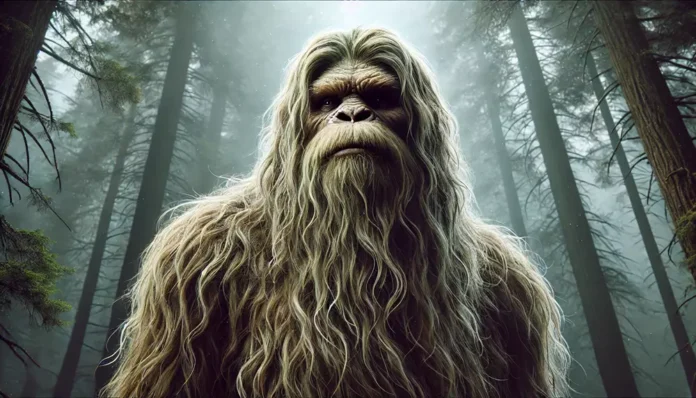
Basajaun

Basajaun is a wild hairy giant from Basque folklore, a guardian of the forests and livestock.
  • Skills
Control & SummoningNature Control
  • Weaknesses
Element SensitivitiesFire Vulnerable
Amazon
Forest Giant
Mapinguari - Amazonian Mythology
Amazon

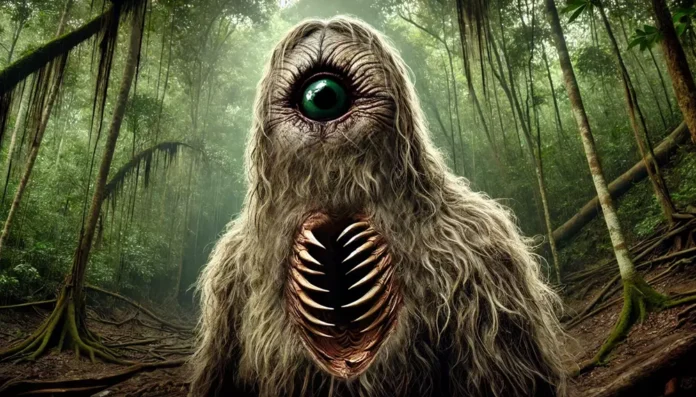
Mapinguari

A large, sloth-like creature from Amazonian legend, known to emit a foul stench that incapacitates its prey.

  • Skills
Foul OdorStrength
  • Weaknesses
Fire VulnerableSun Harm
Hebrews
Forest Guardian
Hebrews

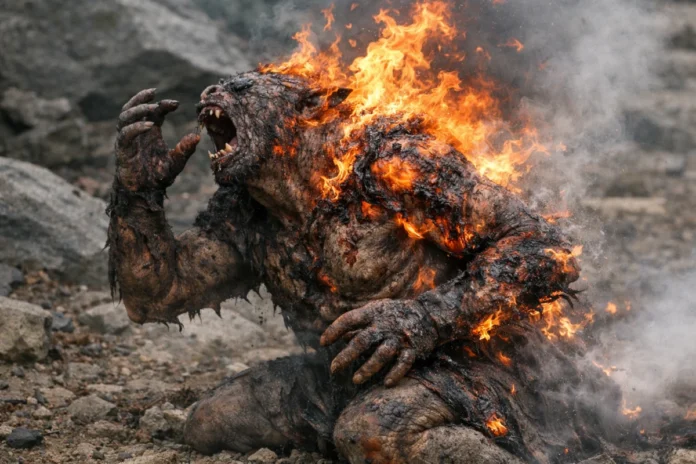
Behemoth

a colossal beast from ancient Jewish mythology, known for its incredible strength and its role as the land counterpart...
  • Skills
Colossal ChargeEarth Manipulation
  • Weaknesses
Element SensitivitiesFire Vulnerable

Forest Guardian – an Overview

The Forest Guardian is a mythological beast type often characterized by its protective role over woodland areas. Typically, these creatures are seen as stewards, ensuring the balance within forests. This classification transcends individual myths, representing a protective archetype across various cultures. Understanding Forest Guardians involves recognizing them not as singular beings but as a broader category involving multiple entities playing similar roles in different mythologies.

Defining Characteristics

Physical Form and Morphology

Forest Guardians often exhibit a combination of both animalistic and humanoid traits. They might possess the physical robustness of large mammals, often with features resembling trees or plants. Their forms frequently integrate elements such as antlers or bark-like skin, symbolizing their connection to the woodland environment. These physical characteristics help them blend into their surroundings, emphasizing their role as guardians of the forest.

Ontological Nature

Beings classified as Forest Guardians are predominantly seen as supernatural entities. They often embody the spiritual essence of the forest, acting as intermediaries between the natural world and the divine. In some traditions, they are considered hybrid creatures, part animal and part spirit, symbolizing the inseparable link between the physical and spiritual realms within their woodland domains.

Mythological Role and Function

Place in Mythological Systems

Forest Guardians often hold a central place within mythological systems, representing the embodiment of nature’s protection. They are considered pivotal in maintaining the balance and harmony of their environments. These guardians are often invoked in tales where forests serve as both literal and symbolic settings for transformation, growth, and mystery.

Perception and Meaning

Culturally, Forest Guardians are generally perceived as protectors and benefactors. They might also be seen as omens or guides within their forested habitats. While some cultures might view them as fearsome protectors, others see them as benevolent entities ensuring fertility and prosperity within the natural world.

Distinction from Related Beast Types

Classification Boundaries

Forest Guardians differ significantly from other beast types such as elemental beings or spirits, which may not specifically embody protective roles. While elemental creatures might represent raw, untamed natural forces, Forest Guardians are often seen as harmonious and integrative, emphasizing stewardship rather than dominion or chaos.

Common Sources of Confusion

Confusion often arises when Forest Guardians are mistaken for general nature spirits or deities due to their similar protective roles. Scholars distinguish them through their specific association with woodland areas and their often hybridized forms, which set them apart from more abstract nature entities.

Canonical Beasts Associated with This Beast Type

Greco-Roman Dryads

Originating from Greco-Roman mythology, Dryads are tree nymphs acting as wardens of forests. Their lives are intrinsically linked to the trees they inhabit, embodying the connection between tree and spirit, a hallmark of Forest Guardians.

Slavic Leshy

The Leshy is a creature from Slavic folklore known for protecting the forest and its inhabitants. It often appears in a humanoid form but can change size and shape, emphasizing its supernatural guardianship role.

Japanese Kodama

Kodama are spirits in Japanese folklore inhabiting trees, especially ancient ones. They are believed to protect the forests, and disturbing a Kodama’s tree is thought to bring misfortune, highlighting their role as Forest Guardians.

Historical Distribution and Cultural Context

The concept of Forest Guardians is prevalent in many ancient cultures, particularly those with significant woodland regions. Such entities appear in European, East Asian, and North American indigenous myths. Each tradition reflects the cultural importance of forests and the perceived necessity for their protection by spiritual entities. While the specifics may vary, the archetype often symbolizes the universal human recognition of nature’s sacredness.

Scholarly Interpretation and Uncertainty

Variation in Definitions

Definitions of Forest Guardians can vary significantly between cultures and scholarly interpretations. Some traditions emphasize their role as protectors, while others highlight their connection to fertility and rebirth. Scholars debate whether these differences represent distinct archetypes or variations within a single classification.

Limits of Available Evidence

The historical record for Forest Guardians is incomplete, with much of the evidence coming from oral traditions and fragmented texts. This leads to debates about the consistency of their symbolic roles across cultures, with no verified sources universally describing their attributes.

Taxonomic Relevance

Forest Guardians serve as a critical taxonomy category within mythological studies. By classifying them, scholars can explore cross-cultural connections and variations in nature-related mythologies. This classification aids in understanding how different cultures conceptualize the relationship between humanity, nature, and the divine, highlighting the universal themes of protection and stewardship.