Introduction
The Bogeyman (or Boogeyman in American) is not a single creature with a fixed mythological identity. It is a recurring fear figure documented in early modern English usage, shaped by language and social need rather than epic narrative.
In English-speaking contexts from at least the 17th and 18th centuries, the term referred to an imagined being used to frighten children into obedience. Unlike dragons, witches, or demons, the Bogeyman has no origin myth, no divine genealogy, and no stable physical form.
Its defining characteristic is adaptability.
The word developed from earlier Middle English terms such as bugge, recorded in the 14th and 15th centuries to describe frightening spirits or goblin-like apparitions. In Scotland, the related term bogle referred to ghostly or malevolent presences haunting isolated spaces.
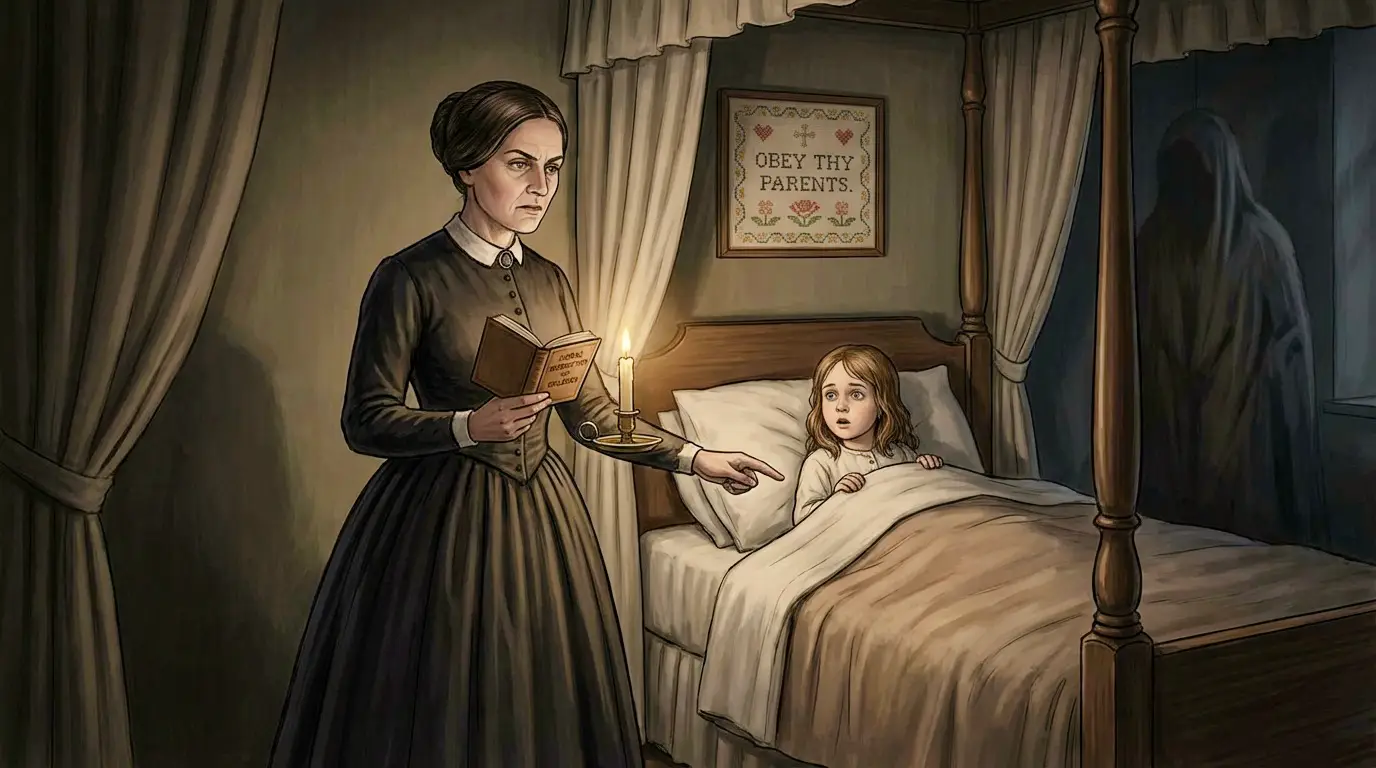
These beings were not worshiped, nor did they occupy central positions in sacred cosmology. They functioned within domestic and communal life as warnings.
Adults invoked them to regulate behavior concerning sleep, wandering after dark, or disobedience.
Comparable figures appear in other cultural contexts, not through direct transmission but through similar social mechanisms. In Spain, El Coco appears in lullaby traditions documented from the early modern period.
In Scotland, bogles populated rural folklore. In Akita Prefecture in Japan, the Namahage ritual, documented from the Edo period, involves costumed “visiting deities” confronting children during New Year observances.
These figures differ in theology and imagery, yet they serve parallel disciplinary roles. The Bogeyman is therefore best understood not as a monster with a single birthplace, but as a recurring social construct found in multiple historical settings.
Origins & Evolution
Medieval Linguistic Roots
The Bogeyman began as a word before it became a character. Its earliest documented form appears in Middle English as bugge, attested in 14th- and 15th-century texts to describe a frightening specter or goblin-like apparition.
The term functioned broadly, referring to terror-inducing spirits rather than a specific legendary being.
Related forms such as bogge and the Scots bogle developed in regional dialects. These words described ghostly or malevolent presences associated with fear, particularly in isolated or liminal spaces.
At this stage, the figure existed primarily as vocabulary.
Early Modern Domestic Use
By the late 16th century, fear figures of this type were clearly embedded in domestic culture. In 1584, Reginald Scot, in The Discoverie of Witchcraft, criticized the practice of frightening children with invented devils and horned creatures who would “catch us away.”
His account demonstrates that such beings were widely recognized as tools of behavioral control rather than theological entities.
During the 18th century, the standalone term “bogey” entered common English usage, and “bogeyman” became established in print as a generalized child-frightener. The addition of “man” personalized the threat, making it feel immediate and proximate within household life.
Regional Parallels and Independent Development
In Scotland, the related term bogle persisted in dialect usage and folklore. The Dictionary of the Scots Language defines it as a frightening ghost or specter.
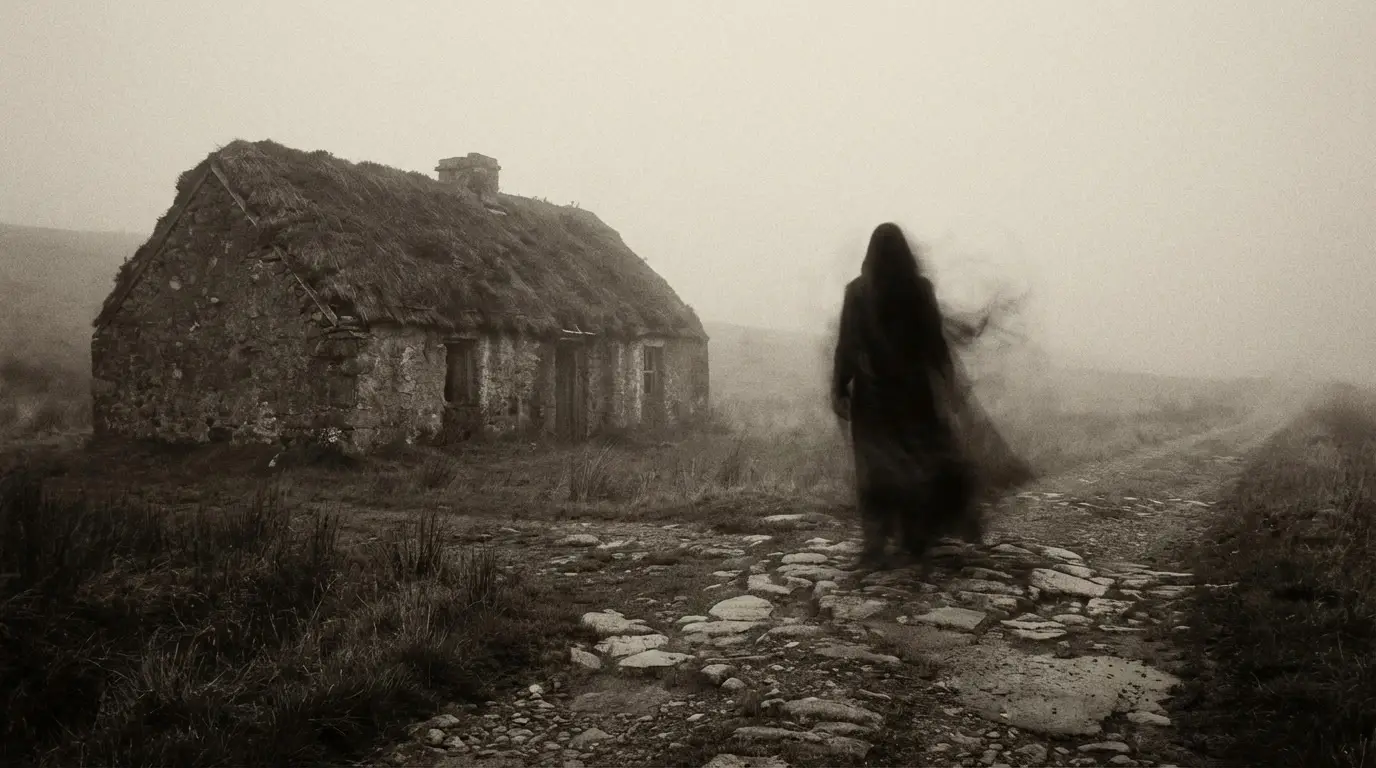
Nineteenth-century folklorist John Gregorson Campbell recorded Highland accounts of bogles haunting roads, fields, and abandoned dwellings. These stories emphasized caution about isolation and darkness rather than structured myth.
Across the Iberian Peninsula, El Coco appears in early modern lullaby traditions documented from the 17th century onward. Warning verses directed at sleepless children circulated widely.
These songs rarely described the figure in detail, instead relying on implication and repetition within the domestic sphere.
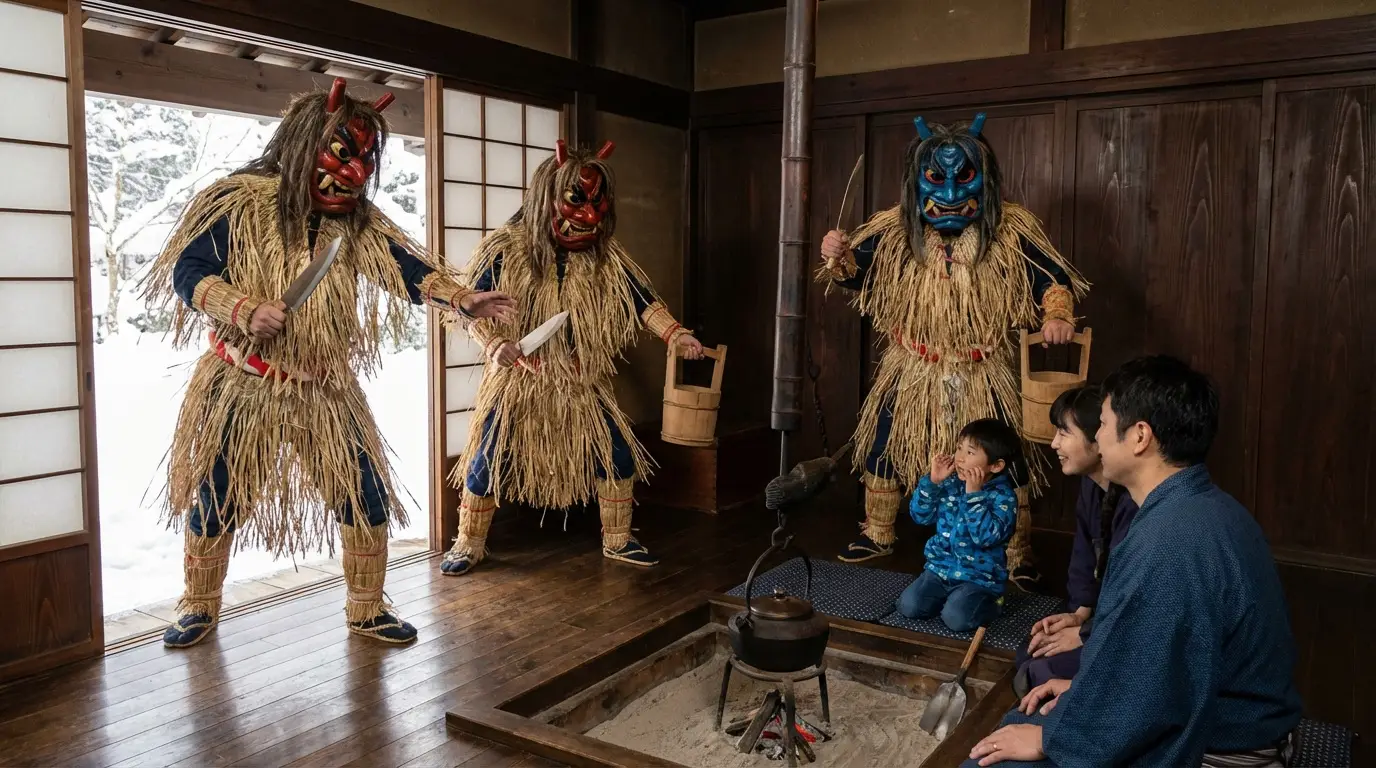
In northern Japan, the Namahage tradition of Akita Prefecture offers a ritualized counterpart. Documented from the Edo period onward, Namahage are classified as raiho-shin, or visiting deities, who enter homes during New Year observances to admonish laziness and idleness.
Unlike the English Bogeyman, Namahage operate within formalized communal ceremony. Yet their corrective function reflects a comparable social mechanism.
These traditions did not spread from a single origin point. Instead, they illustrate how different societies independently developed fear figures to regulate behavior, particularly in childhood.
Print Culture and Visual Transformation
During the late 18th and especially the 19th century, the Bogeyman evolved alongside print culture. Gothic literature and illustrated chapbooks began giving formerly indistinct fear figures more exaggerated traits.
Visual storytelling demanded clearer forms, and the once-vague presence acquired claws, elongated limbs, or monstrous silhouettes under the influence of Gothic aesthetics.
Despite these developments, no single authoritative version emerged. The figure remained adaptable, shaped by literary trends, artistic imagination, and changing cultural anxieties.
From Domestic Warning to Global Archetype
Over centuries, the Bogeyman transitioned from flexible fear-term to enduring cultural archetype. Its development reflects shifts in language, domestic discipline, folklore collection, and mass media.
What began as a medieval label for a frightening presence evolved into one of the most recognizable symbols of childhood fear.
Its continuity lies not in mythic genealogy but in function. The figure persists because societies continue to use narrative as a boundary marker, especially in the space between childhood vulnerability and adult authority.
Name Meaning
The name “Bogeyman” developed through linguistic evolution rather than mythological narrative. Its earliest roots lie in the Middle English word bugge, attested in 14th- and 15th-century texts to describe a frightening specter or goblin-like apparition.
Related forms such as bogge and the Scots bogle referred to ghostly or malevolent beings associated with fear rather than structured legend.
By the 17th century, terms such as “bugbear” and “bogey” were used in English to describe imagined terrors, especially those invoked to frighten children. The compound “bogeyman” is attested in printed English by the 18th century as a generalized child-frightener.
The addition of “man” did not imply a fully human figure. It intensified immediacy, transforming an abstract spirit into something imagined as capable of approach or action.
Unlike mythic names such as Medusa or Krampus, which identify specific beings within defined cosmologies, “Bogeyman” functions as a categorical label. It does not preserve biography, genealogy, or divine lineage.
It names a role: the constructed agent of fear.
In Spanish tradition, the parallel term El Coco or El Cuco serves a similar function. Documented in early modern Iberian sources, the name has been linked in folkloric interpretation to carved gourds or grimacing masks used to frighten children, though this etymology remains debated.
As in English usage, the emphasis falls on effect rather than anatomy.
Across languages, the naming pattern reflects purpose. The word defines what the figure does, not what it is.
Appearance
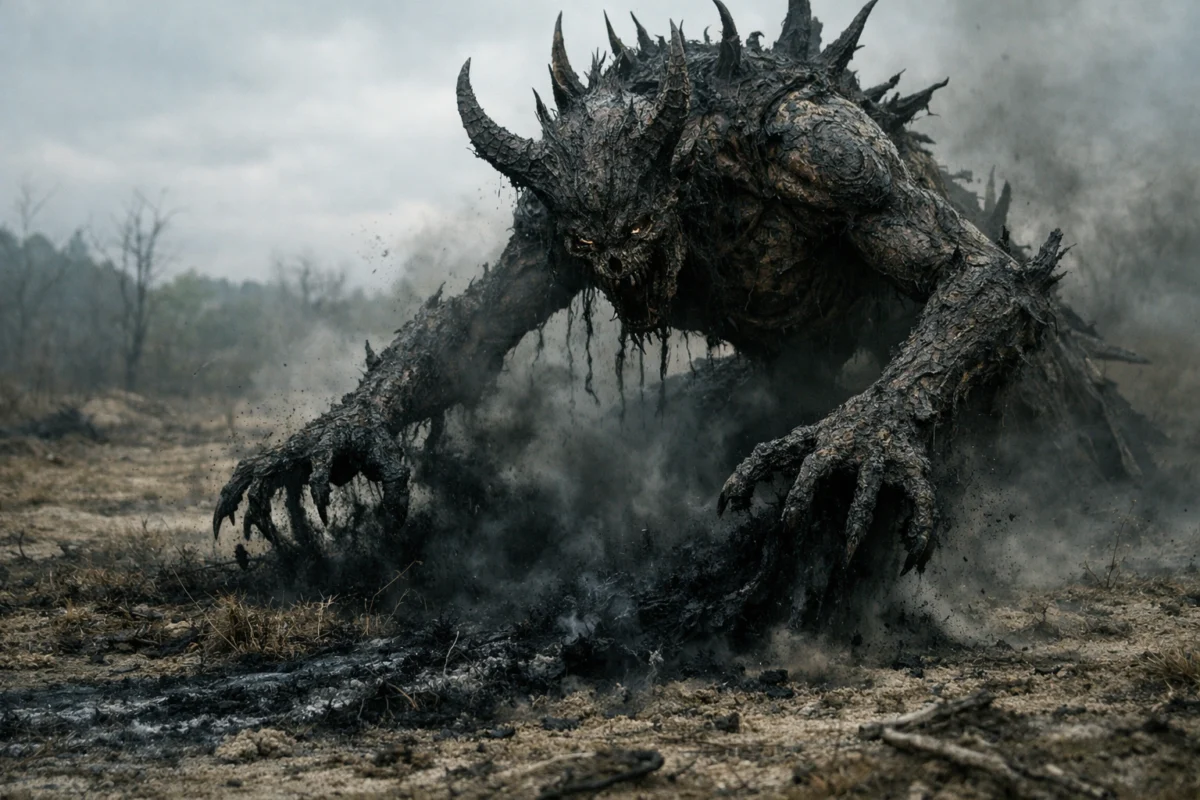
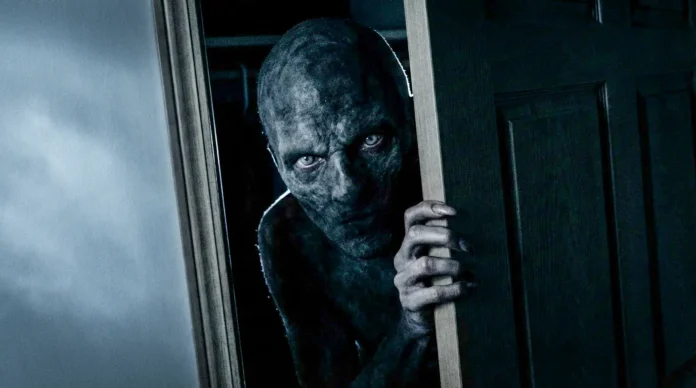
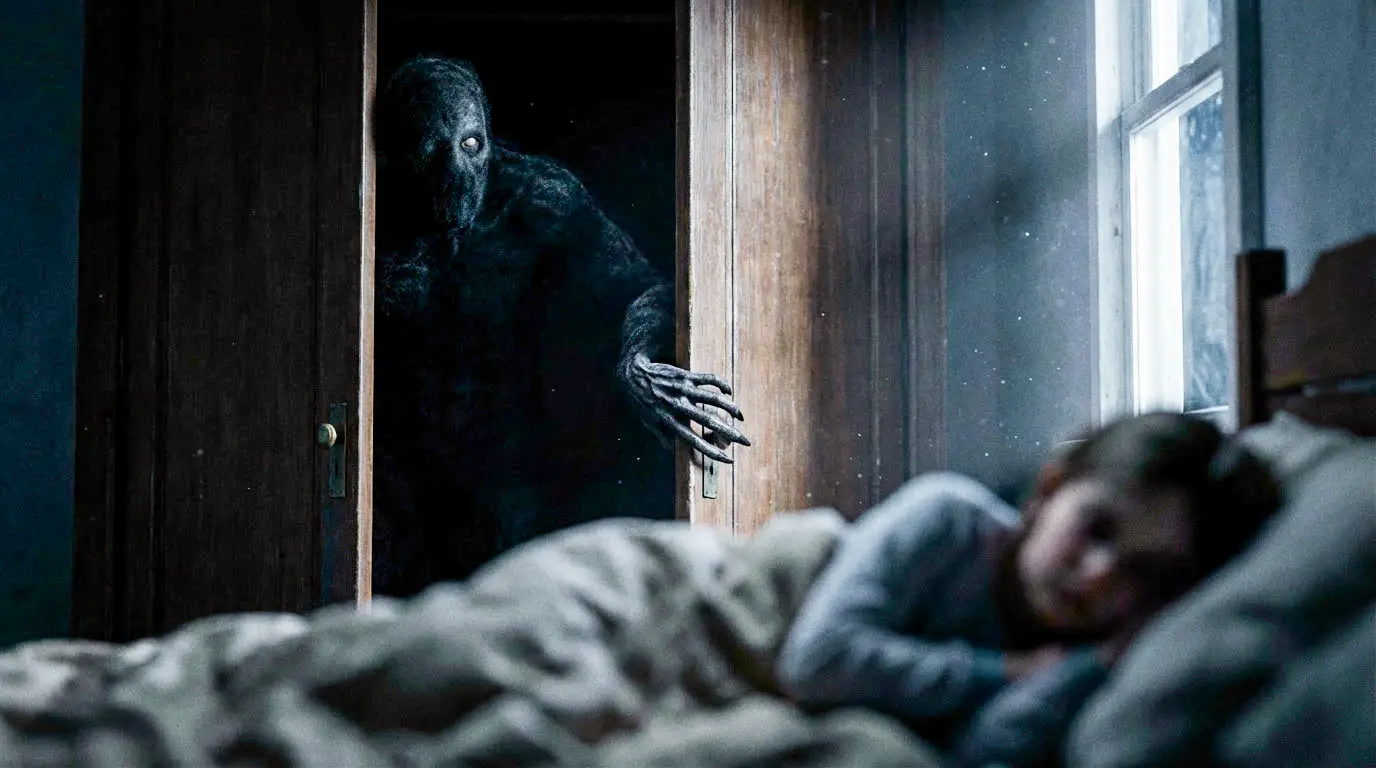
The Bogeyman has no canonical physical form. Early English references imply presence rather than provide description. It exists in darkness, beneath beds, behind doors, or within shadowed corners.
Its shape remains indistinct, allowing imagination to supply detail.
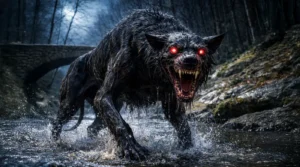
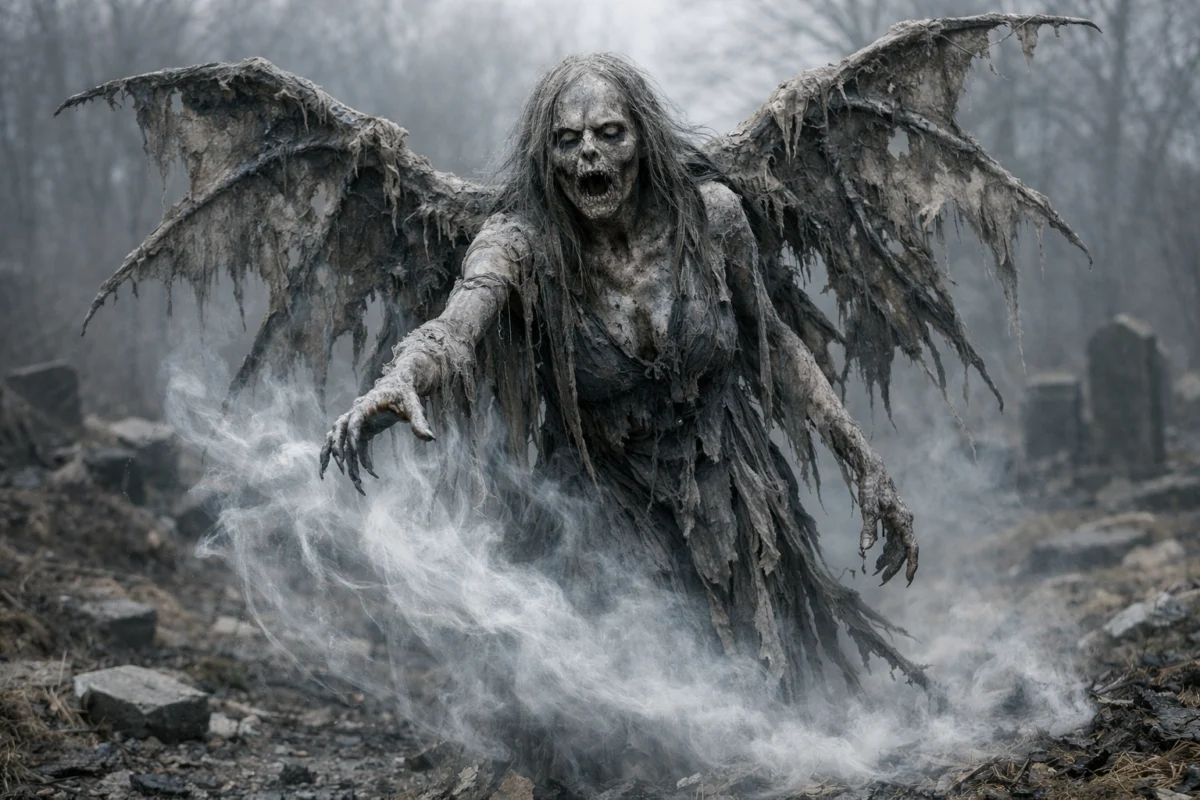
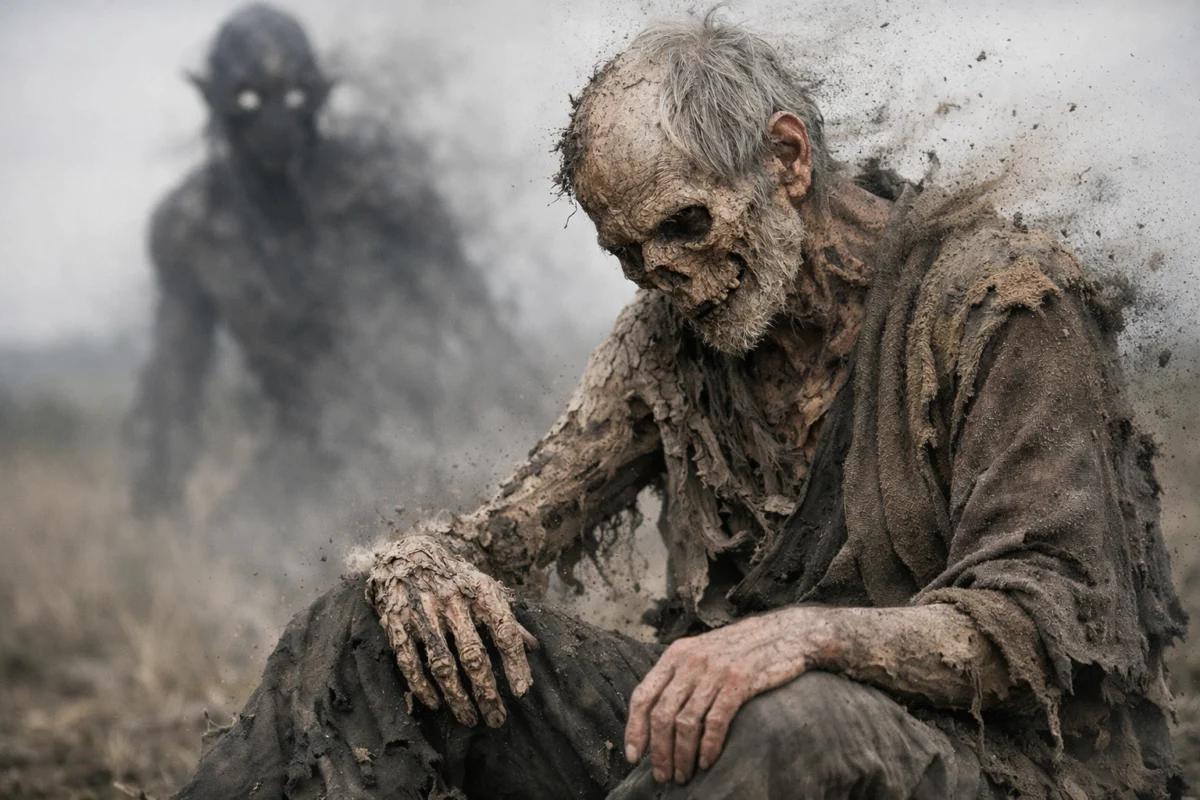
During the late 18th century and especially throughout 19th-century Gothic literature and illustrated chapbooks, the Bogeyman increasingly acquired exaggerated traits. Elongated limbs, clawed hands, glowing eyes, and ragged garments appear more frequently in visual culture influenced by Gothic fiction and Victorian sensational imagery.
Earlier folklore emphasized sudden manifestation and invisibility rather than grotesque anatomy. The monstrous form reflects literary aesthetics rather than medieval tradition.
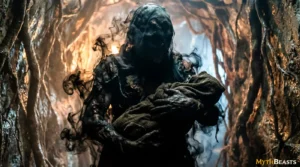
Because the Bogeyman functions as a disciplinary warning rather than a narrative protagonist, its appearance adapts to local expectations. It may resemble a ghost, a goblin, a distorted man, or a faceless shadow.
Its visual instability allows continued reinterpretation across generations.
English & Scottish Tradition – The Bogles
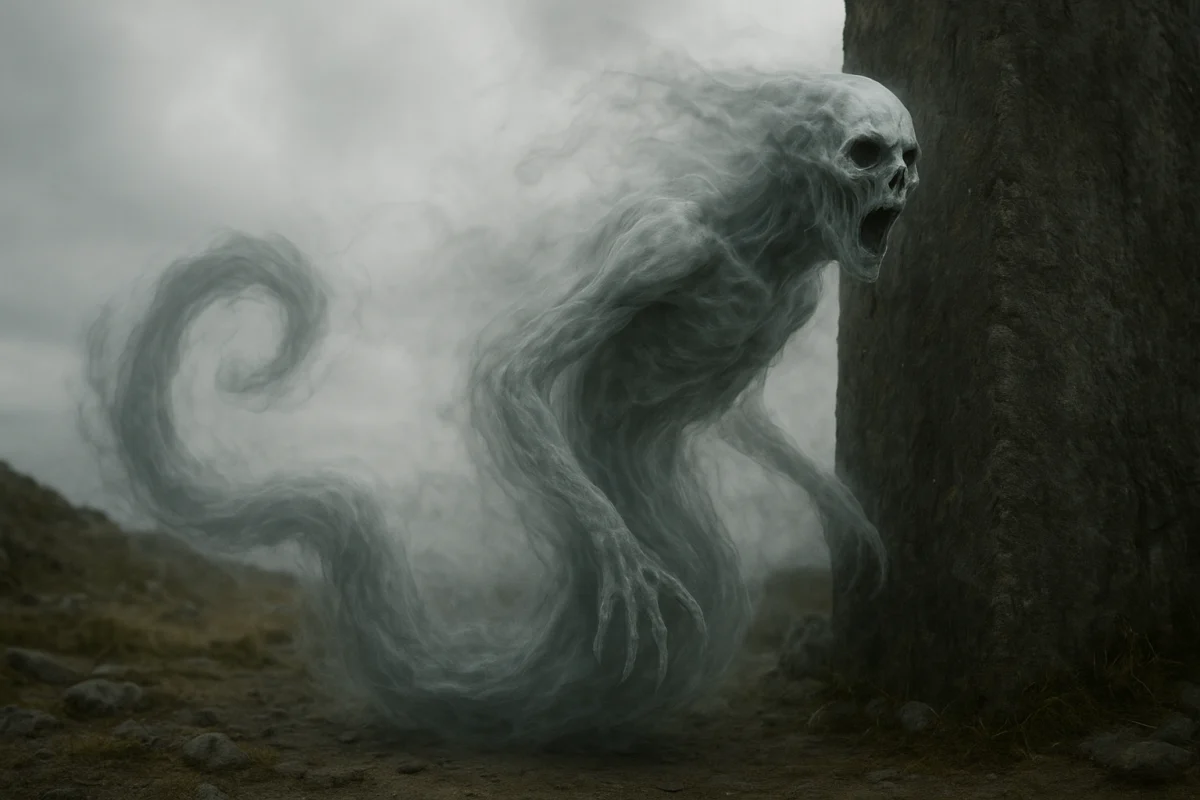
In Britain, earlier fear figures such as bogles were typically described as ghost-like or goblin-like beings haunting rural landscapes. Folklore recorded in the 18th and 19th centuries, including Highland material collected by John Gregorson Campbell, presents bogles as shadowy presences encountered at crossroads, along isolated paths, or near abandoned dwellings.
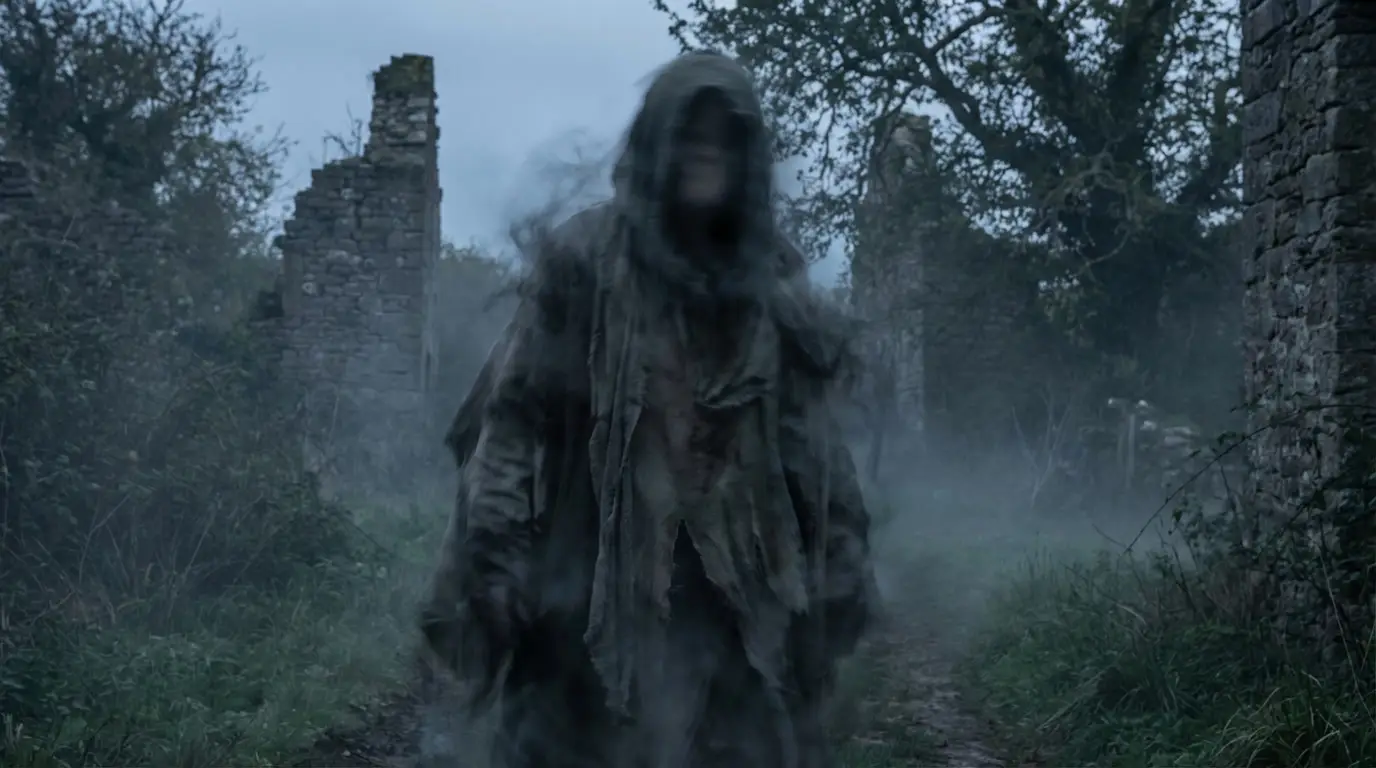
Traditional British bogles were not consistently grotesque. They might appear human-sized and cloaked, or simply as moving darkness.
Compared to later nursery-era Bogeyman imagery, the Scottish bogle aligns more closely with spectral haunting than with domestic child-snatching. The emphasis rests on uncertainty rather than physical monstrosity.
Spanish Tradition – El Coco
In early modern Spanish lullabies circulating from the 17th and 18th centuries, El Coco receives almost no physical description. The verses warn of approach and punishment but do not specify horns, claws, or skeletal features.
The fear lies in anticipation.
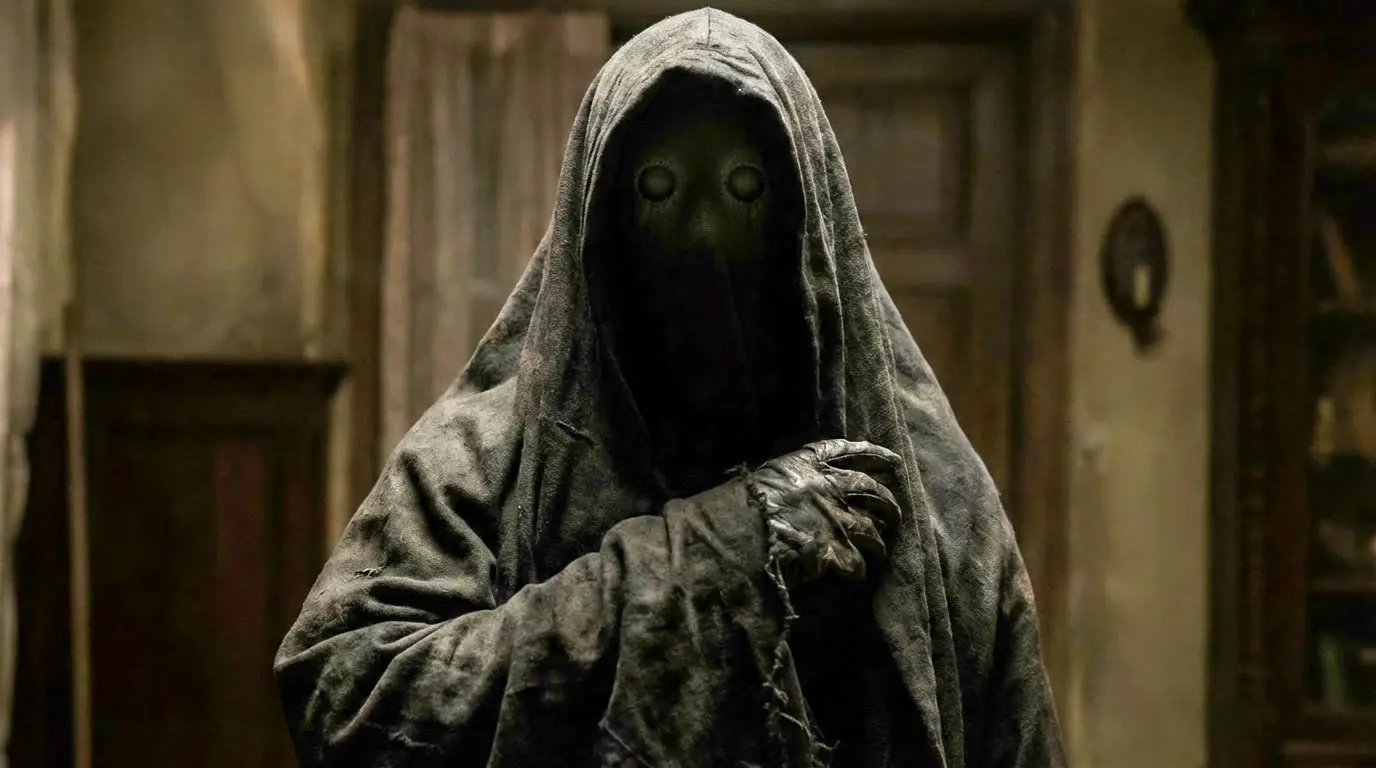
From the 19th century onward, illustrated chapbooks and later 20th-century children’s media began portraying El Coco as a hooded black figure, a skeletal being, or a shadow with hollow eyes. Some depictions draw upon the folkloric association of coco with mask-like or skull-like forms.
Compared to the Anglo shadow-form, modern representations of El Coco often appear more explicitly predatory, though early textual sources remain minimal.
Japanese Tradition – Namahage
The Namahage of Akita Prefecture presents a sharply defined contrast to the vague Western Bogeyman. Documented from the Edo period onward, Namahage are ritual figures classified as raiho-shin, or visiting deities.
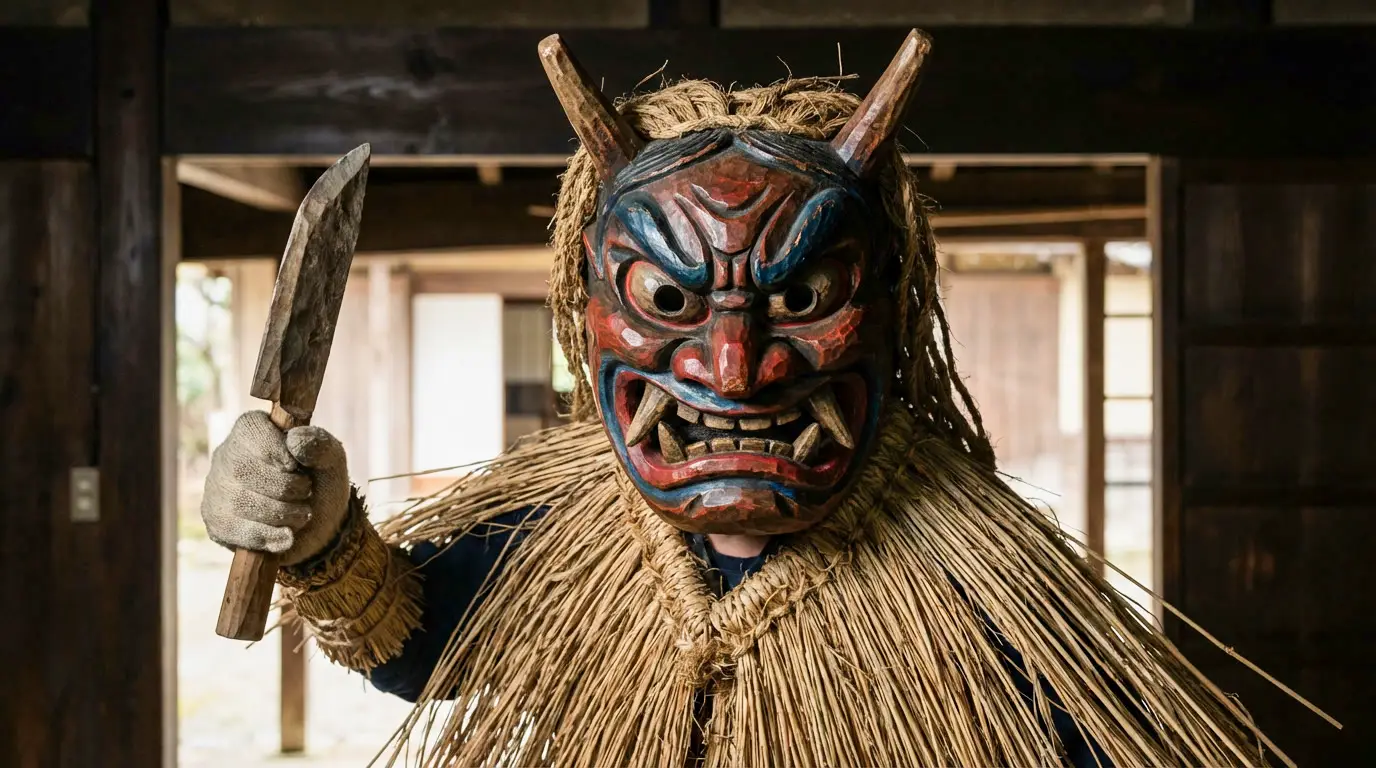
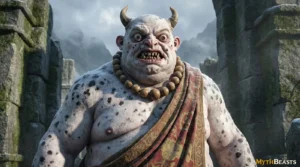
Participants wear vividly colored demon masks with horns, bulging eyes, and fanged mouths. They dress in straw capes and carry symbolic wooden knives associated with admonition and ritual drama.
Unlike the hidden Bogeyman, Namahage enter homes publicly during New Year observances. Their appearance is standardized, theatrical, and communal.
Visually, they resemble oni of Japanese folklore. Despite their dramatic embodiment, their social function parallels that of the Bogeyman: reinforcing diligence and moral conduct through controlled fear within a recognized ritual framework.
Famous Folklore Stories
Because the Bogeyman operates as a category rather than a singular character, its most famous stories are short, localized episodes rather than epic legends. These narratives function as warnings embedded in daily life.
The Bogle That Followed
In 19th-century Scottish Highland accounts recorded by John Gregorson Campbell, travelers describe sensing a presence trailing behind them on remote roads. Each time they turn to confront it, nothing stands there.
The unease escalates until the traveler reaches safety. The tale reinforces vigilance in isolated landscapes rather than presenting a dramatic confrontation.
The Coco Lullaby
“Duérmete niño, duérmete ya,
que viene el Coco y te comerá.”
This lullaby functions as a complete narrative unit. A child refuses sleep. The Coco approaches.
The implied consequence remains unstated beyond threat. The story’s power lies in nightly repetition across generations, not in narrative expansion.
The Namahage Visit
In Akita Prefecture, the Namahage ritual transforms warning into performance. During New Year observances documented from the Edo period onward, masked participants enter homes and question children about diligence.
The exchange follows a recognizable structure: accusation, parental explanation, symbolic admonition, departure. The drama resolves publicly, reinforcing community norms.
The English Bedtime Warning
By the 18th and 19th centuries, English domestic culture increasingly invoked the Bogeyman in bedtime instruction. Though rarely preserved as full prose tales, references in nursery literature and moral instruction books describe the figure as a consequence for disobedience.
The story remains fragmentary by design. Its function is immediate compliance rather than entertainment.
Similar Beasts
The Bogeyman belongs to a broader category of fear figures used to regulate behavior, especially in childhood. Unlike mythic monsters tied to divine genealogies or epic cycles, these beings often function as disciplinary presences.
Bogeyman compared to Bogle, El Coco, and Krampus
| Aspect | Bogeyman | Bogle | El Coco | Krampus |
|---|---|---|---|---|
| Cultural Origin | Originated in English folklore as a fear figure. | Derived from Middle English terms describing frightening spirits. | Rooted in Spanish folklore as a child scare figure. | Originated in Alpine folklore as a punisher of misbehavior. |
| Physical Form | Has no fixed physical appearance or form. | Often depicted as a ghostly or malevolent presence. | Typically portrayed as a monstrous figure or creature. | Often represented as a horned, hairy being. |
| Purpose | Used to frighten children into obedience and compliance. | Serves as a warning against wandering or disobedience. | Intended to instill fear in children to ensure good behavior. | Punishes naughty children, promoting moral behavior. |
| Historical Usage | Documented in English usage since the 17th century. | Recorded in Scottish folklore during the 14th century. | Mentioned in Spanish literature since the 19th century. | Known in Alpine regions for centuries as a folklore figure. |
| Adaptability | Highly adaptable to various cultural contexts and needs. | Maintains a consistent role as a fear-inducing figure. | Evolves with societal changes and parental concerns. | Varies in representation across different cultures. |
| Fear Factor | Instills a significant level of fear in children. | Creates anxiety about the unknown and disobedience. | Generates fear through its unpredictable nature. | Evokes terror through its association with punishment. |
The following figures share structural similarities with the Bogeyman, though each emerges from a distinct cultural context.
Baba Yaga – Slavic Folklore
Baba Yaga appears in East Slavic folklore as an ambiguous forest-dwelling figure who may help or harm those she encounters. Unlike the Bogeyman, she possesses a defined personality, dwelling, and mythic presence.
However, she shares the role of enforcing boundaries.
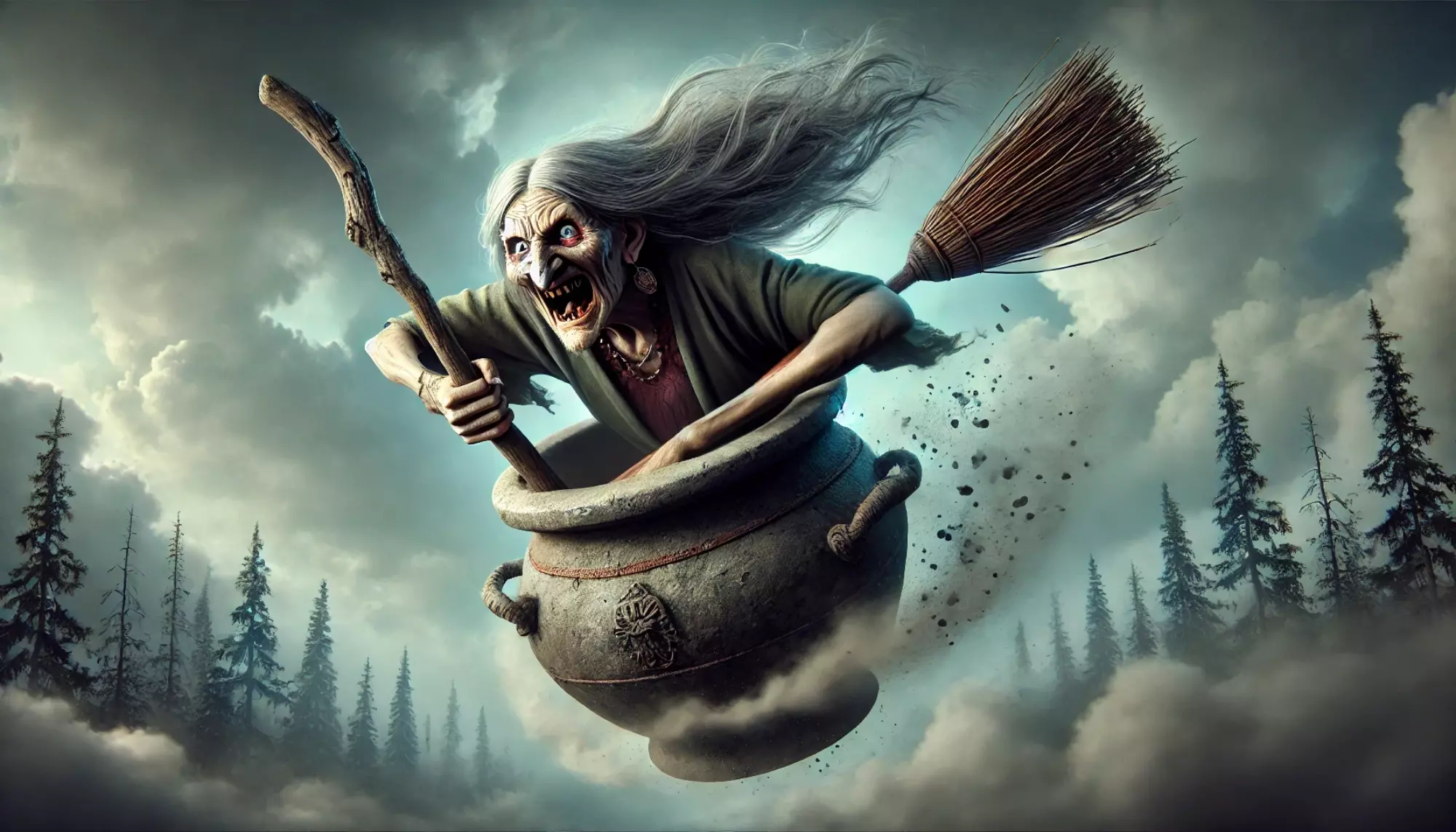
Children who wander too far into the woods risk encountering her. The warning structure resembles the Bogeyman’s logic, though Baba Yaga operates within fully developed narrative traditions rather than fragmentary domestic threats. Read More
Krampus – Alpine Tradition
Krampus, documented in Alpine regions from the early modern period onward, serves as a punitive counterpart to Saint Nicholas during winter festivities. Unlike the invisible Bogeyman, Krampus is embodied and ritually enacted in public processions.
He punishes misbehavior directly rather than existing as a vague threat. While visually more defined and tied to Christian seasonal ritual, his function as a corrective fear figure parallels the Bogeyman’s disciplinary role.
El Coco – Iberian Tradition
Though already discussed as a regional variant, El Coco remains one of the closest structural parallels. Like the Bogeyman, El Coco lacks fixed anatomy and canonical myth.
It appears primarily in lullabies and domestic warnings. The similarity lies in narrative minimalism. Both figures exist in conditional form: they come when called upon as consequence.
Black Annis – English Folklore
Black Annis appears in English folklore as a hag-like figure said to dwell in trees or caves and to prey upon children. Unlike the generalized Bogeyman, Black Annis is geographically specific and occasionally described in greater detail.
Namahage – Japanese Folk Religion
Namahage differ significantly in theological framing, as they are classified as raiho-shin, or visiting deities. Yet their disciplinary function aligns with the Bogeyman model.
They confront laziness and reinforce social norms through fear, though in a structured ritual context rather than private domestic warning. The similarity lies in purpose rather than form.
Structural Similarities and Differences
What unites these figures is not shared ancestry but shared function. Each appears when boundaries are crossed. Each reinforces moral or behavioral expectations.
The differences lie in embodiment and cosmology. Some, like Krampus and Namahage, are ritually enacted and communally visible. Others, like El Coco or the English Bogeyman, remain deliberately undefined.
The Bogeyman stands out for its abstraction. It lacks fixed iconography, seasonal anchoring, or theological role. Its flexibility allows it to merge with local fears more easily than its more structured counterparts.
Religion / Ritual
The Bogeyman does not occupy a formal place within organized religious doctrine. In English-speaking contexts, it has never functioned as an object of worship, prayer, or theological system.
Early references, including those criticized by Reginald Scot in the late 16th century, indicate that such fear figures were recognized as domestic inventions rather than doctrinal entities.
However, while the English Bogeyman remained informal, comparable fear figures in other cultures sometimes developed ritual frameworks. The Namahage of Akita Prefecture in Japan provide a clear example.
Documented from the Edo period onward, Namahage are classified as raiho-shin, or visiting deities, within regional folk religion. During New Year observances, masked participants enter homes to admonish children and encourage diligence.
Though fear-based, the ritual is structured, seasonal, and socially sanctioned.
In Alpine regions, Krampus appears within the Christian calendar as a companion figure to Saint Nicholas. Documented from the early modern period, Krampus processions involve costumed participants who publicly dramatize punishment for misbehavior.
Unlike the invisible Bogeyman, Krampus exists within a liturgical season and communal performance structure.
These examples demonstrate an important distinction. The English Bogeyman remains primarily domestic and informal, while certain cultural counterparts integrate fear into ritual performance.
The shared function is disciplinary, but the degree of religious framing varies. The Bogeyman stands at the secular end of the spectrum, operating within household storytelling rather than institutional religion.
Scientific or Rational Explanations
Modern scholars interpret the Bogeyman not as a supernatural belief but as a social and psychological mechanism. Folklorists classify such figures within the category of “child-frightening beings,” a widespread narrative type used to regulate behavior.
Rather than transmitting cosmology, these figures transmit norms.
From a psychological perspective, the Bogeyman aligns with common childhood fears of darkness, separation, and the unknown. Developmental research shows that children often respond strongly to ambiguous threats, especially those associated with nighttime environments.
The figure’s lack of defined anatomy enhances this effect, allowing imagination to generate individualized fear.
Anthropologists view such beings as tools of informal social control. In premodern societies lacking formal enforcement within the domestic sphere, narrative threat provided a low-cost method of behavior regulation.
The Bogeyman represents an example of what scholars describe as “didactic folklore,” stories designed to teach rather than entertain.
Importantly, these explanations do not diminish the cultural significance of the figure. Instead, they clarify its persistence. The Bogeyman survives because it adapts to developmental psychology and social structure.
Its power lies not in theology but in narrative efficiency.
Modern Cultural References
Monsters, Inc., Pete Docter, (Film), 2001
Animated comedy where monsters harvest screams for energy until a human child enters their world.
It flips the bogeyman premise, revealing fear as manufactured, teachable, and ethically reversible today too.
https://www.pixar.com/monsters-inc (Pixar Animation Studios)
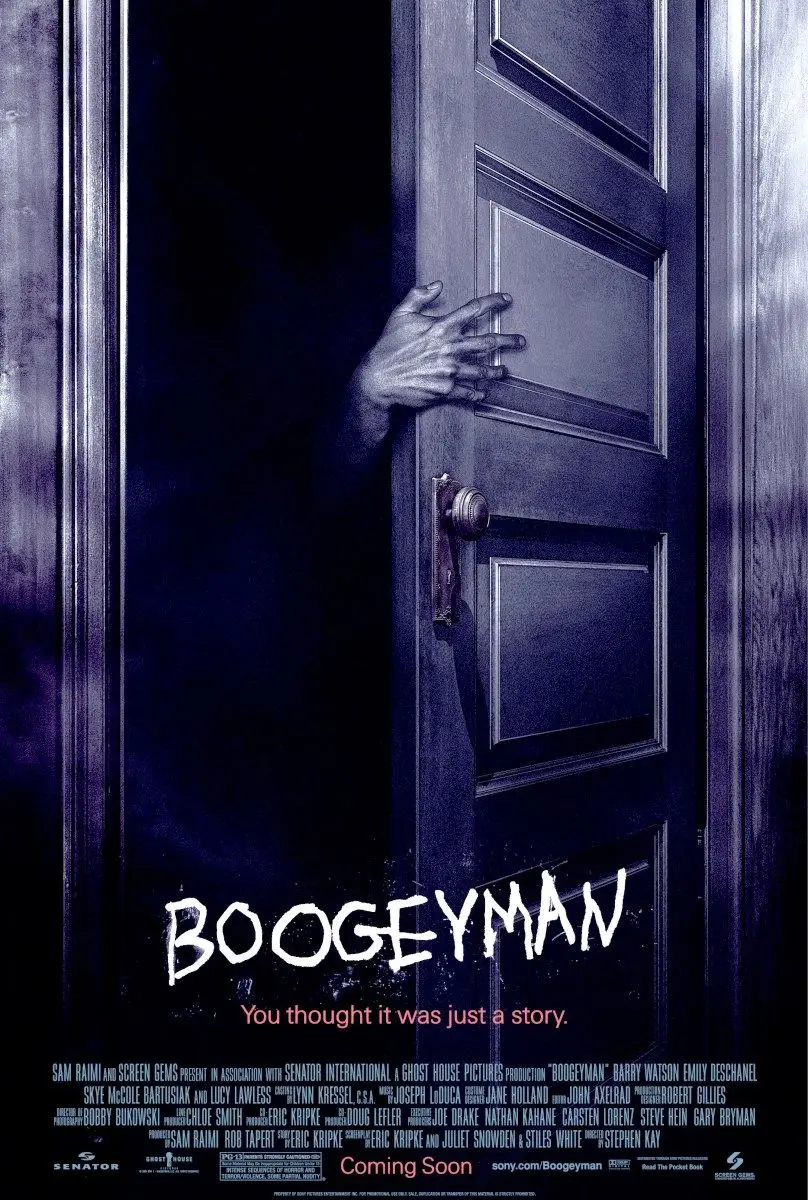
Boogeyman, Stephen Kay, (Film), 2005
Supernatural horror that turns a childhood bedtime threat into a literal entity linked to trauma.
The story shifts bogeyman from parental warning to personal haunting, emphasizing fear’s persistence into adulthood.
https://www.imdb.com/title/tt0357507/ (IMDb)
Don’t Be Afraid of the Dark, Troy Nixey, (Film), 2010
Dark fantasy horror where secret basement dwellers exploit a child’s curiosity in an old mansion.
It modernizes under-the-house fears, showing how unseen domestic spaces become gateways for threat again today.
https://www.miramax.com/movie/dont-be-afraid-of-the-dark/ (Miramax)
Supernatural, Eric Kripke, (TV series), 2005
Long-running genre series that treats folklore as a catalogue of huntable creatures.
Its bogeyman episode reframes the figure as a predator feeding on fear, fitting myth into monster-hunt rules cleanly.
https://www.warnerbros.com/tv/supernatural (Warner Bros)
The Sandman #1, Neil Gaiman, (Comic), 1989
Gaiman’s dark fantasy begins with Dream’s imprisonment and explores nightmares as characters.
While not a single bogeyman tale, it expands the archetype into mythic systems about fear, sleep, and stories.
https://www.dc.com/comics/the-sandman-1989/the-sandman-1 (DC)
Conclusion
The Bogeyman is not a monster with a birthplace, lineage, or epic mythology. It is a recurring cultural construct shaped by language, domestic life, and social expectation.
From the medieval English bugge to the 18th-century “bogeyman,” the figure developed through vocabulary before it solidified in imagination. Its identity has always remained flexible.
Across Scotland, Iberia, and Japan, comparable fear figures demonstrate how societies mobilize narrative to regulate behavior. Whether through lullaby, roadside tale, ritual visitation, or nursery warning, the structure remains consistent: misbehavior triggers threat.
Some traditions ritualize the encounter, as in Namahage or Krampus processions. Others preserve it within the private sphere of bedtime instruction.
What distinguishes the Bogeyman is abstraction. It lacks fixed iconography, seasonal anchoring, and theological framework. That absence grants longevity.
Because it has no definitive form, it adapts to new anxieties, new households, and new generations.
Modern psychological and folkloric analysis confirms what early observers like Reginald Scot recognized centuries ago: such figures operate as tools of social instruction. They embody the unknown in order to make rules memorable.
The Bogeyman persists not because it is believed as doctrine, but because it functions efficiently.
In the end, the Bogeyman represents a simple but enduring principle of folklore. Fear, when shaped into story, becomes a boundary marker.
It defines where a child should not go, what behavior is unacceptable, and when darkness begins. The figure survives because that boundary never disappears.
Further reading
Middle English Dictionary, University of Michigan.
Defines the term “bugge” as a frightening specter or hobgoblin in medieval English texts, providing linguistic evidence for the early conceptual roots of the Bogeyman tradition.
https://quod.lib.umich.edu/m/middle-english-dictionary/dictionary/MED6244
Scot, Reginald, 1584, The Discoverie of Witchcraft.
Early modern English text criticizing superstition and documenting how imaginary devils and frightful beings were used to scare children, offering historical proof of disciplinary fear figures.
https://archive.org/details/discoverieofwitc00scot
Dictionary of the Scots Language, “Bogle”.
Provides historical definitions and usage examples of the Scots word “bogle,” meaning a frightening ghost or specter, linguistically linked to later “bogey” terminology.
https://www.dsl.ac.uk/entry/snd00063537
Biblioteca Virtual Miguel de Cervantes, “El coco y el miedo en el niño”.
Documents Spanish lullaby traditions involving El Coco, preserving primary verses that demonstrate how fear figures were embedded in early modern childcare practices.
https://www.cervantesvirtual.com/obra-visor/el-coco-y-el-miedo-en-el-nino/html/
Oga City Namahage Official Site, Akita Prefecture.
Explains the New Year Namahage ritual, including traditional admonitions directed at children, illustrating a structured cultural parallel to Bogeyman-type behavioral enforcement.
https://www.namahage-oga.akita.jp/english/
Middle English Dictionary, University of Michigan, “Bugge” entry.
Defines the Middle English term bugge as a frightening specter or goblin, establishing the linguistic root of “bogey” and providing primary evidence for the early English fear-term tradition.
https://quod.lib.umich.edu/m/middle-english-dictionary/dictionary/MED6244