Introduction
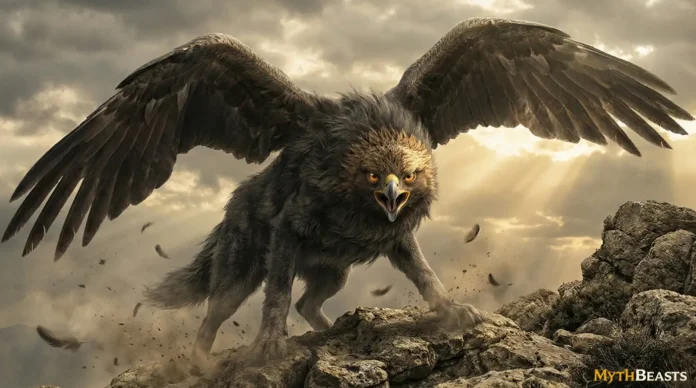
The Chamrosh is a mythological creature from Iranian and Zoroastrian tradition, best understood as a protective cosmic bird rather than a heroic or narrative figure. Its role appears in religious cosmological texts rather than epic storytelling, placing it within the framework of world maintenance and preservation rather than mythic adventure.
In Zoroastrian cosmology, Chamrosh is associated with the safeguarding of creation, particularly plant life and fertility. It operates within the broader dualistic worldview of Zoroastrianism, where forces of order must actively defend the world against decay and destructive influences.
Chamrosh functions as one of these protective agents, working quietly within the structure of the universe.
Chamrosh is closely linked to Mount Alborz (Harā Bərəzaitī), the sacred cosmic mountain at the center of the world in Iranian mythology. It is also connected to the divine bird Simurgh, whose actions initiate the scattering of seeds that Chamrosh helps to protect.
Together, these beings express the interdependence of divine order, nature, and regeneration.
Although Chamrosh is less prominent than figures like Simurgh in later Persian literature, its presence in foundational religious texts underscores its importance within early Iranian thought. Its mythological significance lies in its function, representing protection, continuity, and the preservation of life within the cosmic order.
History / Origin
Chamrosh originates from Middle Persian Zoroastrian literature, with its most important references found in the Bundahishn, a cosmological text that describes the creation of the world and the mechanisms by which it is sustained. Unlike epic heroes or demons, Chamrosh belongs to a class of beings whose purpose is to maintain and defend creation rather than to dominate mythic narratives.
In the Bundahishn, Chamrosh is described as dwelling on Mount Alborz, where it plays a role in the protection of seeds after they have been scattered from the primordial plant associated with Simurgh. These seeds represent all plant life, and their survival is essential to the continuation of the world.
Chamrosh’s function reflects a central concern of Zoroastrian cosmology: the vulnerability of creation to destructive forces, often represented by noxious creatures and chaos. By guarding seeds and preventing their destruction, Chamrosh contributes to the preservation of life and the renewal of the natural world.
Its inclusion in Zoroastrian cosmological texts demonstrates that Chamrosh was not a later folkloric invention, but a component of early religious thought. The creature’s role emphasizes the belief that creation must be constantly protected through divine and semi-divine agents to endure against corruption and decay.
Name Meaning
The name Chamrosh (Middle Persian: Čamrōš) appears in Middle Persian religious texts, though its exact linguistic origin remains uncertain. Scholars have not reached a definitive conclusion regarding its etymology, and no single translation is universally accepted.
Unlike many Zoroastrian divine beings whose names clearly reflect specific attributes or cosmic functions, Chamrosh’s name does not transparently describe its role. This ambiguity is not unusual in Middle Persian mythological terminology, especially for creatures that likely derive from older oral or symbolic traditions.
Because of this uncertainty, scholars tend to interpret the meaning of Chamrosh through its mythological function rather than its linguistic roots. Its consistent association with protection, guardianship, and preservation has shaped how the name is understood within the tradition, even if its original meaning is unclear.
As a result, the name Chamrosh has become symbolically linked to its role as a defender of creation, reflecting how mythological identity in Zoroastrianism is often defined by function rather than literal translation.
Appearance
Zoroastrian and Middle Persian texts refer to Chamrosh primarily as a mythical bird, without providing a detailed anatomical description. Early sources focus on what Chamrosh does rather than on how it looks, which is typical of Zoroastrian cosmological literature.
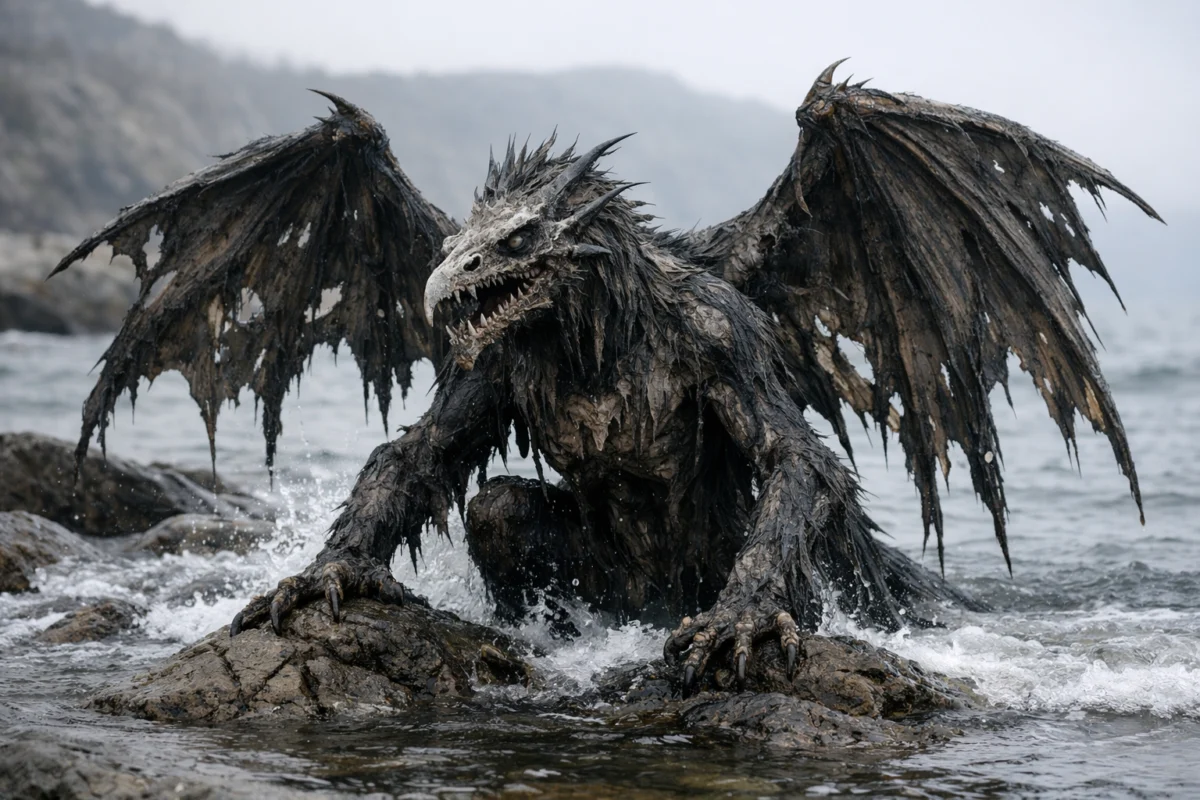
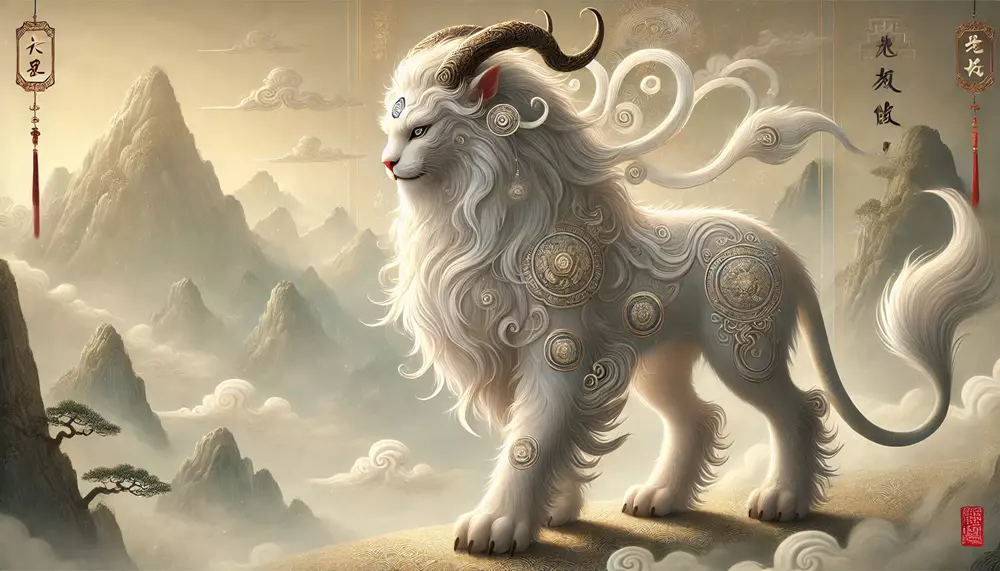
In later interpretations and modern summaries, Chamrosh is often depicted as a hybrid creature, commonly described as having the body of a dog or wolf with the head and wings of a bird of prey, such as an eagle. This depiction emphasizes both guardianship and vigilance, qualities strongly associated with dogs in Iranian culture and birds in mythological symbolism.
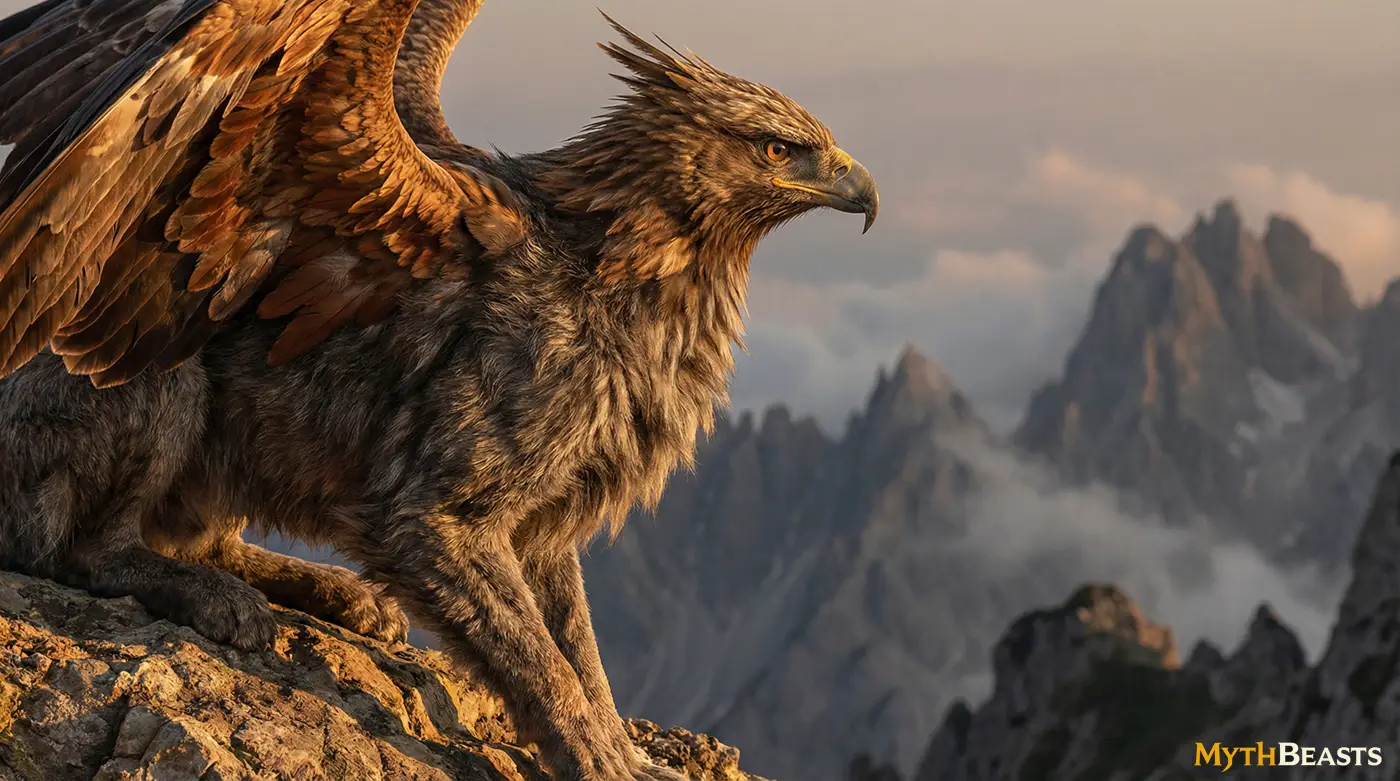
It is important to distinguish this form from the griffin, which has a lion’s body and an eagle’s head and wings and appears frequently in Achaemenid art. While griffin imagery from sites like Persepolis is sometimes incorrectly labeled as Chamrosh, there is no firm evidence that these sculptures were intended to represent the Chamrosh specifically.
Taken together, the most accurate description of Chamrosh is that of a great guardian bird, later visualized as a dog-bodied avian protector. This hybrid imagery reflects symbolic roles rather than a fixed canonical appearance, aligning with Chamrosh’s function as a defender within the cosmic order rather than a creature defined by a single visual form.
Background Story
Chamrosh’s story is primarily rooted in its role within Zoroastrian cosmology. It is said to reside on Mount Alborz, where it gathers and protects birds, ensuring their safety from harm.
In ancient texts, Chamrosh is depicted as a guardian against chaos, preventing the destruction of avian life. Its actions are crucial in maintaining the cosmic balance, a central theme in Zoroastrian beliefs.
No verified stories elaborate on specific encounters or rituals involving Chamrosh. Its presence in mythology is more symbolic, representing the order and protection of life.
While not as prominent as other mythological creatures, Chamrosh’s role in preserving avian life highlights its importance in the broader context of Persian mythology and religious thought.
Famous Folklore Stories
The Guardian of the Seeds
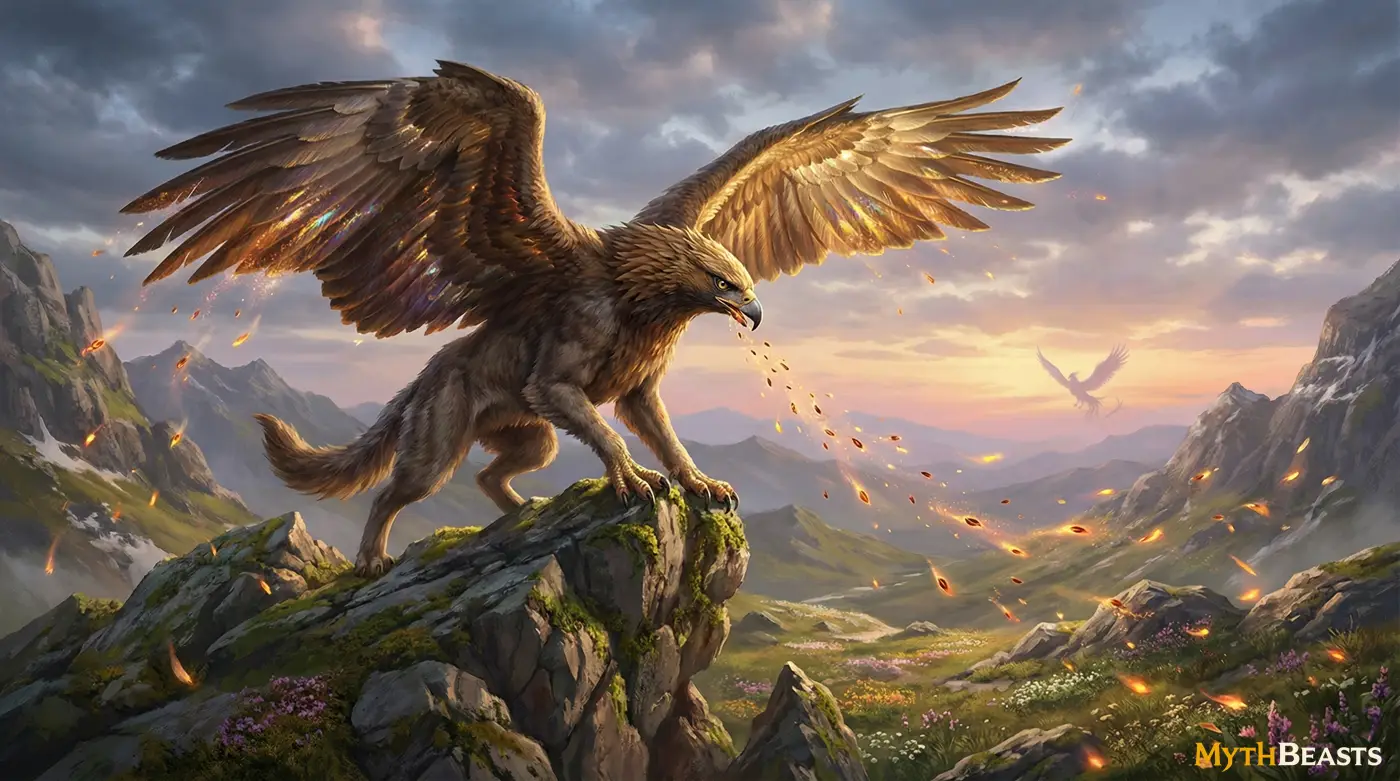
In ancient Persian folklore, Chamrosh was believed to guard seeds scattered by the divine bird Simurgh. This tale, rooted in Zoroastrian texts, highlights Chamrosh’s role in protecting the earth’s fertility.
The story describes how Chamrosh would gather seeds from Simurgh’s wings and distribute them across the land. This ensured the growth of plants and maintained agricultural abundance.
The tale emphasizes Chamrosh’s protective nature and its connection to life cycles.
Cultural Impact
Chamrosh occupies a specialized but meaningful role within Iranian mythological thought, particularly in Zoroastrian cosmology. Rather than functioning as a heroic figure or object of popular worship, Chamrosh represents a cosmic guardian principle, reflecting how ancient Iranian culture understood the protection of life and the natural order.
Its association with the safeguarding of seeds places Chamrosh within the broader Zoroastrian emphasis on agriculture, fertility, and the maintenance of creation. In an agrarian society where survival depended on successful harvests, myths explaining how plant life was preserved against destructive forces carried deep cultural importance.
Chamrosh symbolized the idea that the natural world required active defense against chaos, decay, and harmful creatures.
Chamrosh’s presence in Zoroastrian texts also reinforces the cultural concept of asha, the principle of order, truth, and balance. By guarding seeds and preventing their destruction, Chamrosh participates in the ongoing cosmic struggle against druj, the forces of disorder.
This role reflects a worldview in which even non-divine beings contribute to sustaining the moral and physical structure of the universe.
Although Chamrosh did not become a prominent figure in later Persian epic literature or popular folklore, its continued appearance in religious cosmological texts indicates that it held enduring symbolic value. Its cultural impact lies not in widespread storytelling, but in its function as a mythological expression of environmental stewardship, protection, and continuity, themes that were central to ancient Iranian religious and cultural identity.
Similar Beasts
Chamrosh compared to Ziz, Roc, and Griffin
| Aspect | Chamrosh | Ziz | Roc | Griffin |
|---|---|---|---|---|
| Cultural Origin | Originates from Iranian and Zoroastrian traditions, emphasizing its cultural significance. | Rooted in Middle Eastern folklore, representing a unique mythological perspective. | Found in various cultures, often depicted as a giant bird of prey. | Emerges from ancient Greek mythology, symbolizing strength and guardianship. |
| Role in Mythology | Functions as a protective cosmic bird within Zoroastrian cosmology. | Portrayed as a giant bird, often associated with storms and chaos. | Known for its immense size and ability to carry large burdens. | Acts as a guardian creature, often depicted in heroic narratives. |
| Associated Elements | Linked to Mount Alborz, symbolizing the center of the universe. | Associated with natural elements like storms and the sea. | Connected to various mythical creatures, enhancing its narrative depth. | Often depicted alongside other legendary beings in stories. |
| Symbolism | Represents the safeguarding of creation and fertility in nature. | Symbolizes chaos and the uncontrollable forces of nature. | Embodies strength, protection, and the balance of nature. | Represents courage, nobility, and the defense of the weak. |
| Physical Description | Described as a bird with a majestic and cosmic appearance. | Typically depicted as a massive bird with powerful wings. | Characterized by its enormous size and fierce demeanor. | Often illustrated with lion-like features and large wings. |
| Powers and Abilities | Possesses abilities related to protection and preservation of nature. | Can summon storms and control weather patterns. | Known for its immense strength and flight capabilities. | Has magical abilities, often linked to healing and protection. |
Simurgh
Simurgh, a mythical bird from Persian mythology, is closely linked to Chamrosh. Known for its wisdom and healing powers, Simurgh’s association with Chamrosh emphasizes themes of protection and cosmic balance.
Griffin
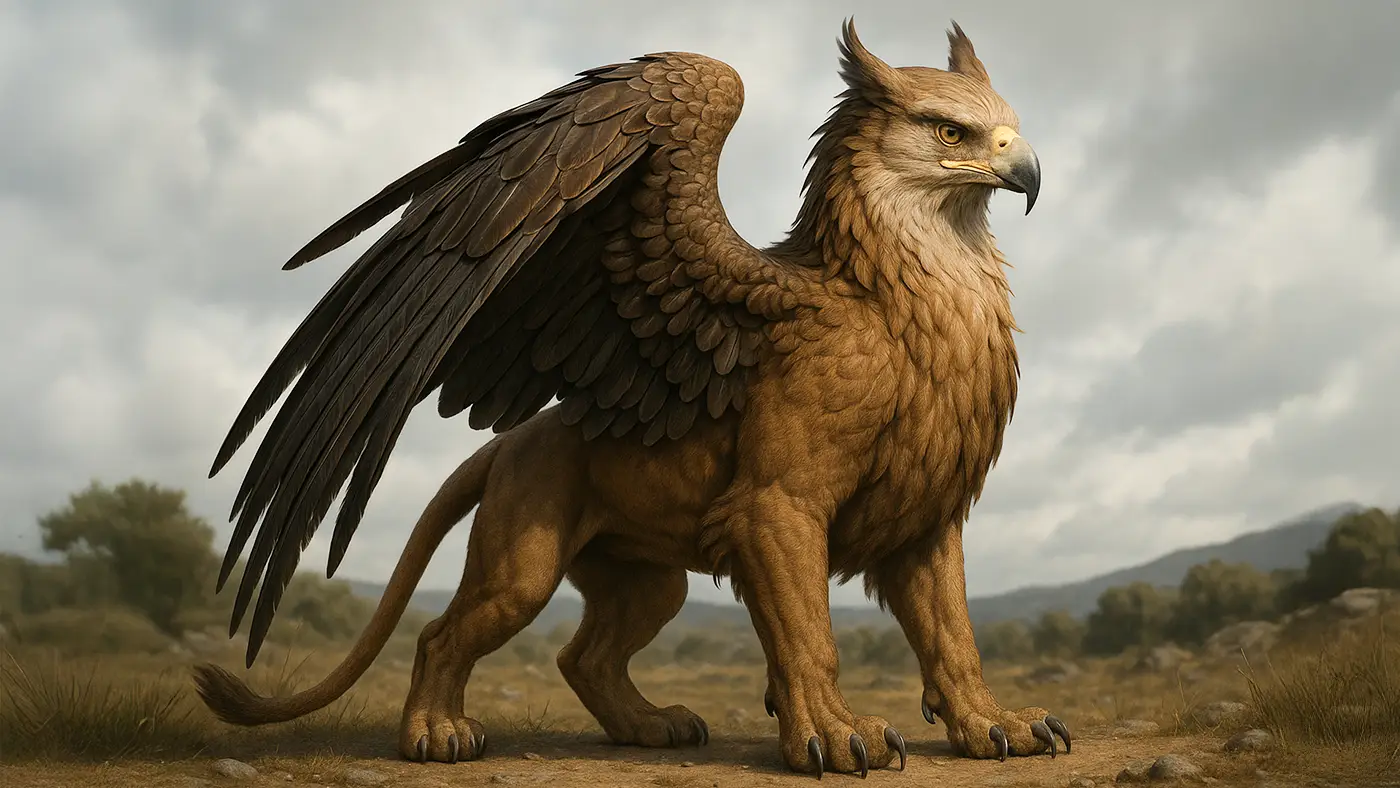
The Griffin, a creature from Greek mythology with the body of a lion and the head of an eagle, shares similarities with Chamrosh. Both are seen as guardians, symbolizing strength and vigilance in their respective cultures. Read More
Garuda
In Hindu mythology, Garuda is a divine bird-like creature serving as Vishnu’s mount. Like Chamrosh, Garuda is a protector, often depicted battling evil forces, highlighting parallels in their protective roles.
Roc
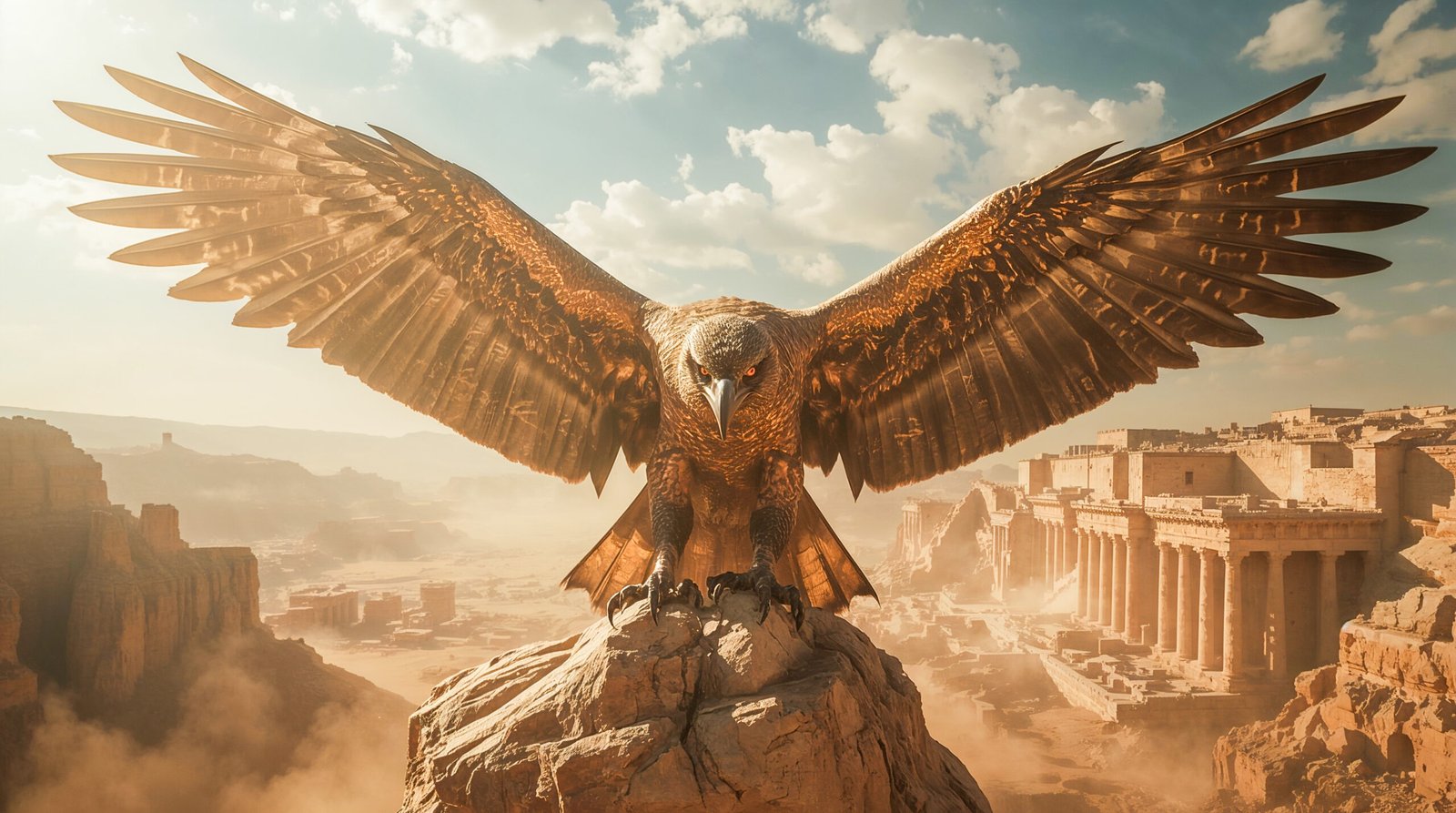
The Roc, a giant bird from Arabian folklore, resembles Chamrosh in its majestic and powerful nature. Both creatures are depicted as dominant forces in their mythologies, emphasizing themes of strength and majesty. Read More
Ziz

In Jewish mythology, Ziz is a colossal primordial bird associated with the sky and divine protection. Like Chamrosh, it represents cosmic guardianship and the safeguarding of creation rather than narrative heroism. Read More
Simargl
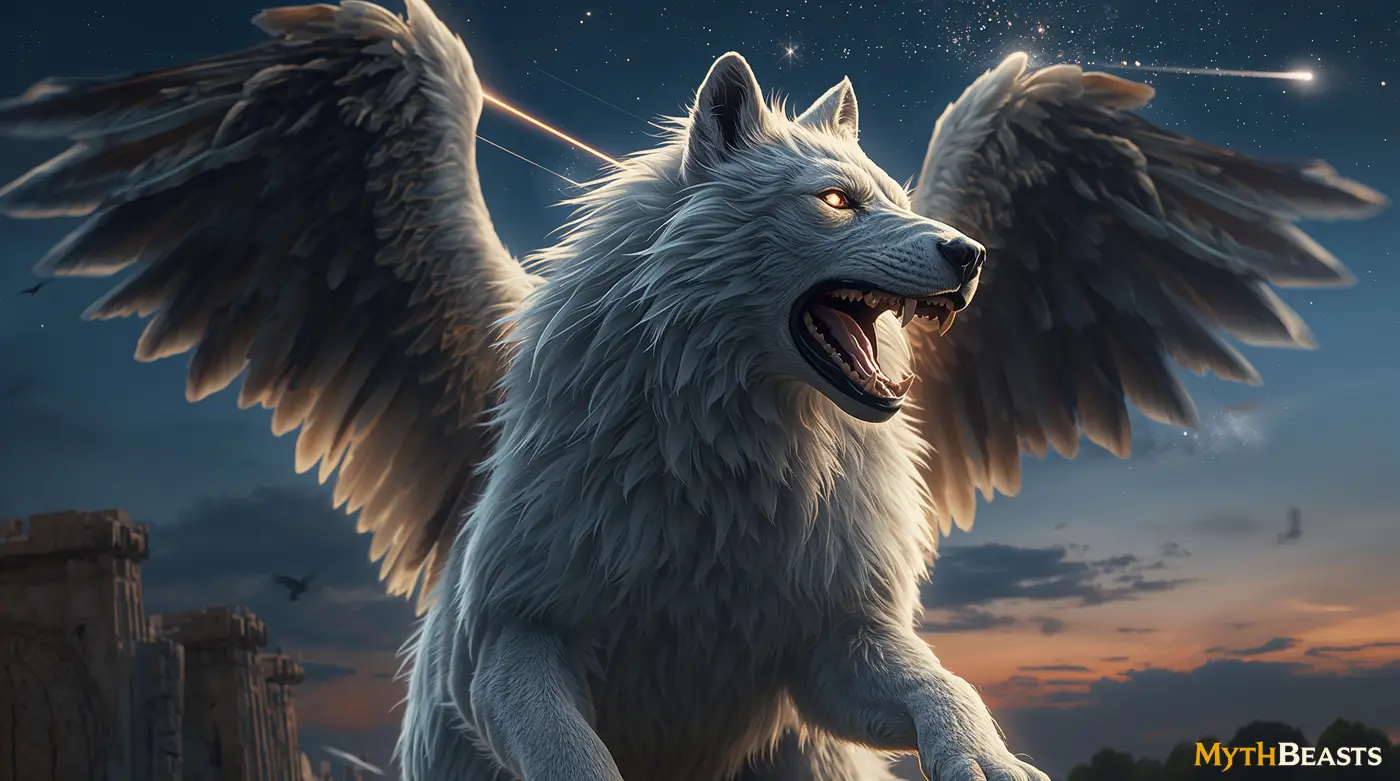
Simargl, a Slavic mythological creature with avian and canine traits, parallels Chamrosh as a hybrid guardian linked to fertility and vegetation. Both embody protective forces that ensure agricultural renewal and natural continuity.
Aralez
In Armenian mythology, the Aralez are dog-like supernatural beings that heal and revive fallen warriors. Their canine guardian role echoes Chamrosh’s protective function, though Aralez focus on life-restoration rather than cosmic maintenance.
Religion/Ritual
No verified sources describe specific rituals associated with Chamrosh in ancient texts. Its mythological role, however, suggests possible symbolic significance in Zoroastrian practices related to fertility and protection.
Chamrosh’s association with seed distribution may have inspired agricultural rituals, though no direct evidence supports this. The creature’s protective nature aligns with Zoroastrian themes of safeguarding the natural world.
While no direct rituals are recorded, Chamrosh’s presence in myth may have influenced religious narratives. Its role in maintaining balance reflects broader Zoroastrian religious concepts.
Modern interpretations suggest Chamrosh could symbolize ecological awareness in religious contexts. This view aligns with contemporary efforts to integrate ancient mythological symbols into environmental consciousness.
Scientific or Rational Explanations
From a modern analytical perspective, Chamrosh can be understood as a mythological personification of natural processes essential to ecological survival, particularly seed preservation and plant regeneration. Ancient Iranian societies depended heavily on agriculture, and the successful dispersal and protection of seeds would have appeared almost miraculous in a world without scientific explanations.
One rational interpretation views Chamrosh as a symbolic representation of natural seed dispersal mechanisms, such as birds, wind, and seasonal cycles. By attributing this vital process to a powerful guardian creature, early cultures could conceptualize and communicate the importance of protecting seeds from pests, environmental damage, and overexploitation.
Anthropologists also suggest that Chamrosh reflects a broader human tendency to externalize ecological responsibility through myth. By assigning guardianship of plant life to a supernatural being, societies reinforced social norms that discouraged the destruction of crops and promoted respect for natural resources.
In this sense, Chamrosh functioned as a mythic reinforcement of sustainable behavior.
Additionally, Chamrosh’s protective role may reflect psychological and social needs for reassurance in the face of natural uncertainty. Droughts, crop failure, and environmental threats posed existential risks, and mythological figures like Chamrosh provided a narrative framework through which communities could understand and endure these challenges.
Viewed through this lens, Chamrosh is not evidence of a literal creature, but rather a symbolic construct shaped by environmental realities, agricultural dependence, and religious cosmology, illustrating how ancient societies used myth to explain, protect, and regulate their relationship with the natural world.
Conclusion
The Chamrosh, a mythical creature from Persian mythology, serves as a symbol of protection and order. Its role in ancient texts highlights the importance of safeguarding the divine order and ensuring the prosperity of the realm.
Though not widely recognized today, its symbolic presence in mythology underscores the cultural values of ancient Persia.
In modern times, the Chamrosh continues to inspire creators and scholars, appearing in various cultural works. Its enduring legacy reflects the timeless nature of mythological storytelling and its ability to convey universal themes of protection and harmony.
The Chamrosh remains a testament to the rich tapestry of Persian mythology.
Further Reading
Chamrosh on Wikipedia – A verified summary of Chamrosh’s mythological role, appearance, and duties in Persian mythology, including references to Zoroastrian texts. Chamrosh (Persian Mythology) – Wikipedia
Chamrosh | Irantripedia – A cultural overview of Chamrosh from a site on Iranian mythological creatures, summarizing its role in ancient lore and connection to sacred seeds and protector duties. Chamrosh the Mythical Guardian Bird of Iran
Chamrosh on The Bestiary Project – A detailed narrative on Chamrosh’s functions in myth (seed distribution and defender of Persia), with links to related creatures like Simurgh. Chamrosh – The Bestiary Project