Introduction
The Näcken (Swedish) or Nøkk in Norwegian, is a water spirit from Scandinavian folklore and part of the wider Germanic “nixie” tradition. It is most often linked to fresh water – rivers, streams, and lakes – and commonly appears in stories as a humanlike, male-presenting figure connected to dangerous places near the water. Scandinavia
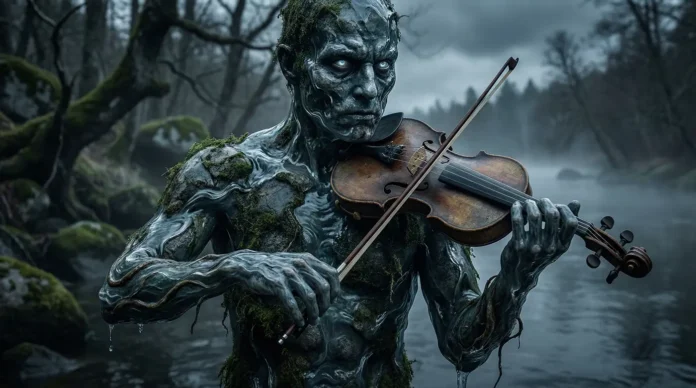
A defining trait of the Näcken is music, especially fiddle/violin playing. Folklore repeatedly describes the Näcken’s playing as irresistible: it can fascinate people, draw them toward the shoreline, and sometimes lead to drowning.
This makes the Näcken less of a “monster” in the simple sense and more of a folkloric warning symbol: beautiful, skillful, and lethal when approached without caution.
Across regions and retellings, the Näcken’s character shifts. Some versions treat it as purely dangerous; others allow it to be negotiated with, avoided through wise behavior, or even approached as a teacher of music in related Scandinavian water-spirit traditions.
That flexibility is normal in folk belief – the Näcken functions as a narrative tool for explaining risk, temptation, and the strange power of certain landscapes.
History/Origin
The Näcken does not belong to the core cast of named figures in the main Old Norse myth corpus in the way gods and giants do. Instead, it sits in vernacular folklore and folk belief, within a broader Germanic family of water beings often grouped under terms like nixie (and regional cognates).
What we can say confidently is that Northern Europe preserved a long-running tradition of water spirits tied to specific places – stretches of river, lakes, pools, and waterfalls – where drownings and disappearances were real hazards.
The “origin” of the Näcken is therefore best described as an evolving tradition rather than a single creation story. The creature’s traits (freshwater domain, luring behavior, music, and in some variants shapeshifting) align closely with the wider nix/neck complex across Germanic and Scandinavian regions.
The exact details vary by country and by local storytelling, which is expected in folklore that spread orally and adapted to local geographies and anxieties.
After Christianization, many Scandinavian folk beings were increasingly framed through moral lenses – temptation, danger, and the need for caution around forbidden places. It’s reasonable to describe this as a shift in interpretation rather than a total rewrite of the creature: the Näcken continues to function primarily as a warning presence connected to water, but some later retellings emphasize the creature’s threatening or deceptive nature more strongly.
Name Meaning
The name Näcken and its Scandinavian variants Näcken (Swedish) and Nøkk / Nøkken (Norwegian/Danish forms) belong to a wider Germanic family of words for water spirits often grouped under “nixie” terms. Linguists commonly trace these names to a Common Germanic root reconstructed as *nikwus / *nikwis(i), itself linked to a Proto-Indo-European root meaning “to wash.”
This etymology matches the being’s core identity across regions: a supernatural presence tied to fresh water and dangerous waterways. The creature’s name shifts by language and region (for example Swedish näck/näcken, Norwegian nykk/nøkk, and related forms across Germanic languages), but the shared concept stays consistent: a water spirit associated with lure, risk, and in Scandinavian tradition, music.
One important precision: it’s not best described as “from Old Norse language” alone. The Näcken terms are part of a broader Germanic naming complex with multiple descendants across North European languages, which is why you see parallel forms and close cousins across different countries.
Appearance
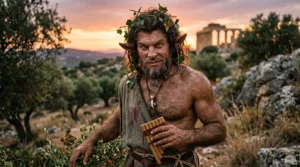
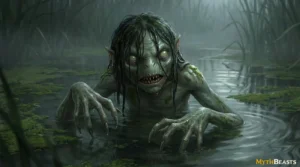
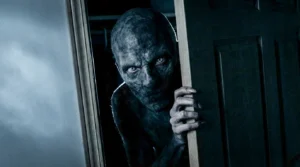
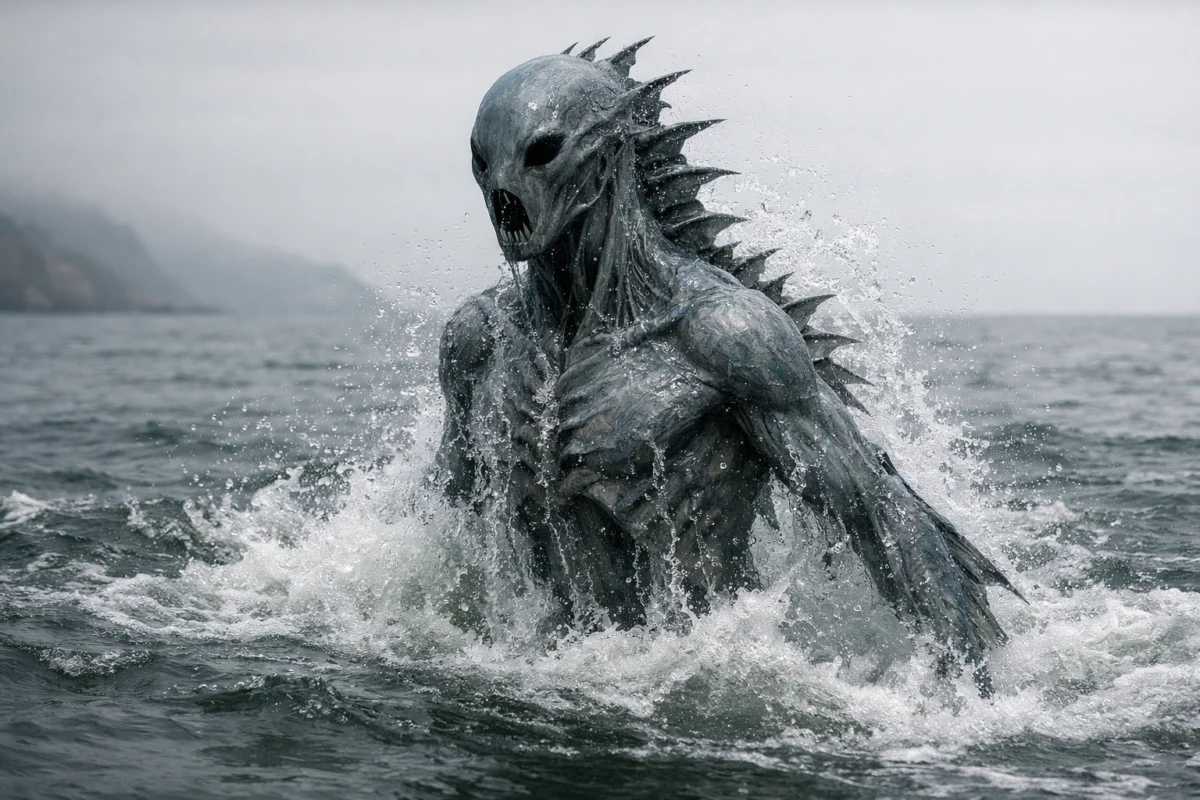
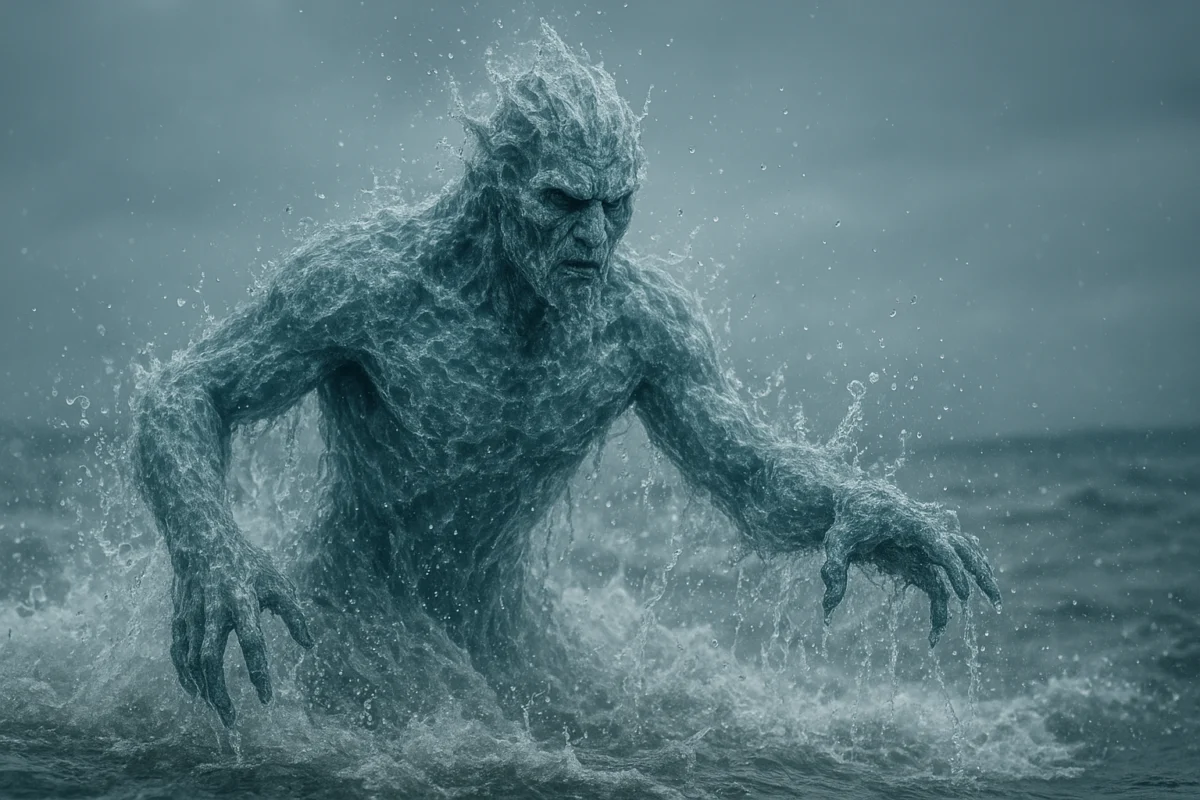
In Scandinavian folklore, the Näcken is frequently described as a male water spirit that can appear in a humanlike form, but there is no single “standard” look. Many retellings do present him as alluring or striking, yet just as often he is unsettling or uncanny.
A safer, accurate framing is that he appears as a manlike figure associated with water, whose appearance can be deliberately attention-grabbing in order to draw people closer.
A highly consistent motif is that the Näcken is linked to music, especially the fiddle/violin tradition. Related figures in the same Scandinavian complex (for example the foss(e)grim / strömkarlen traditions) are explicitly portrayed as a nude or humanlike male playing a fiddle in streams and waterfalls, and are described as closely connected or overlapping with Näcken/Nøkken/Näcken traditions in regional usage.
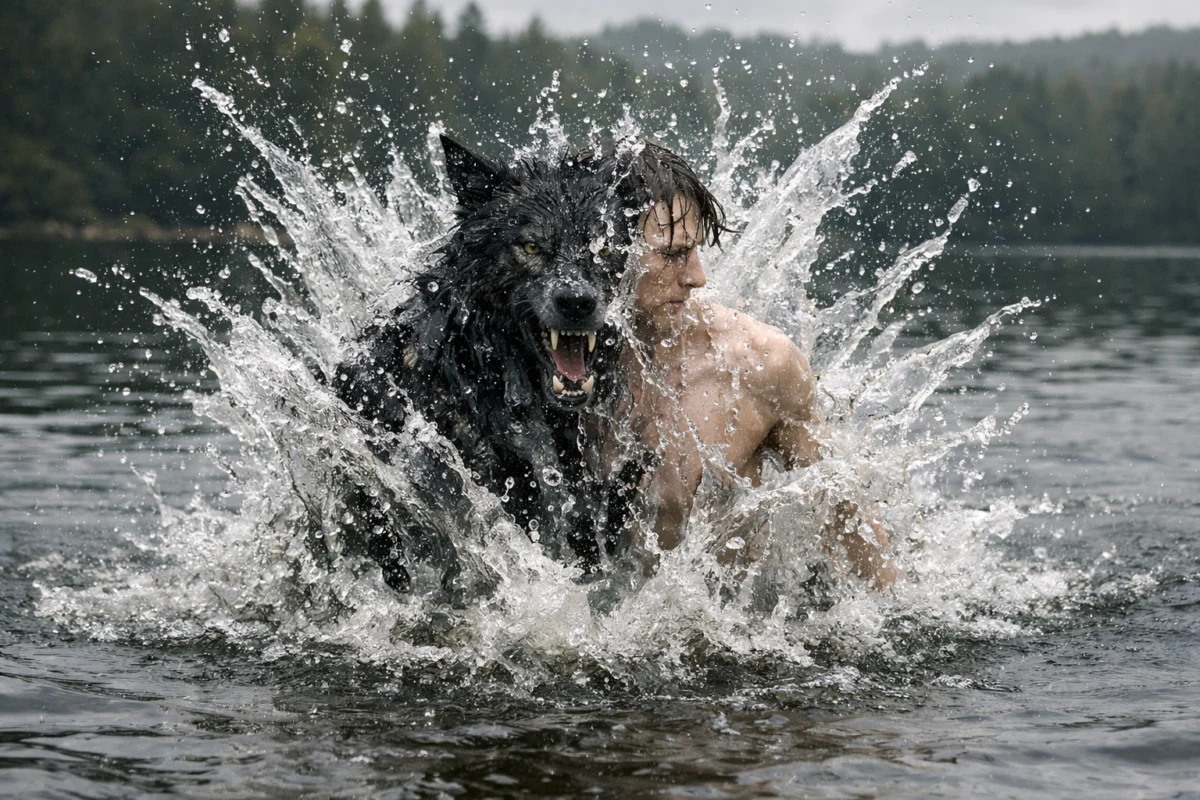
The Näcken is also commonly described as shapeshifting within the broader nix/neck complex, and Scandinavian traditions include water-spirits taking on animal forms, including the well-known “water horse” shape in Nordic folklore. Because of this, it’s better to say “often humanoid, sometimes shifting forms” rather than locking the appearance to “young handsome man with long hair.”
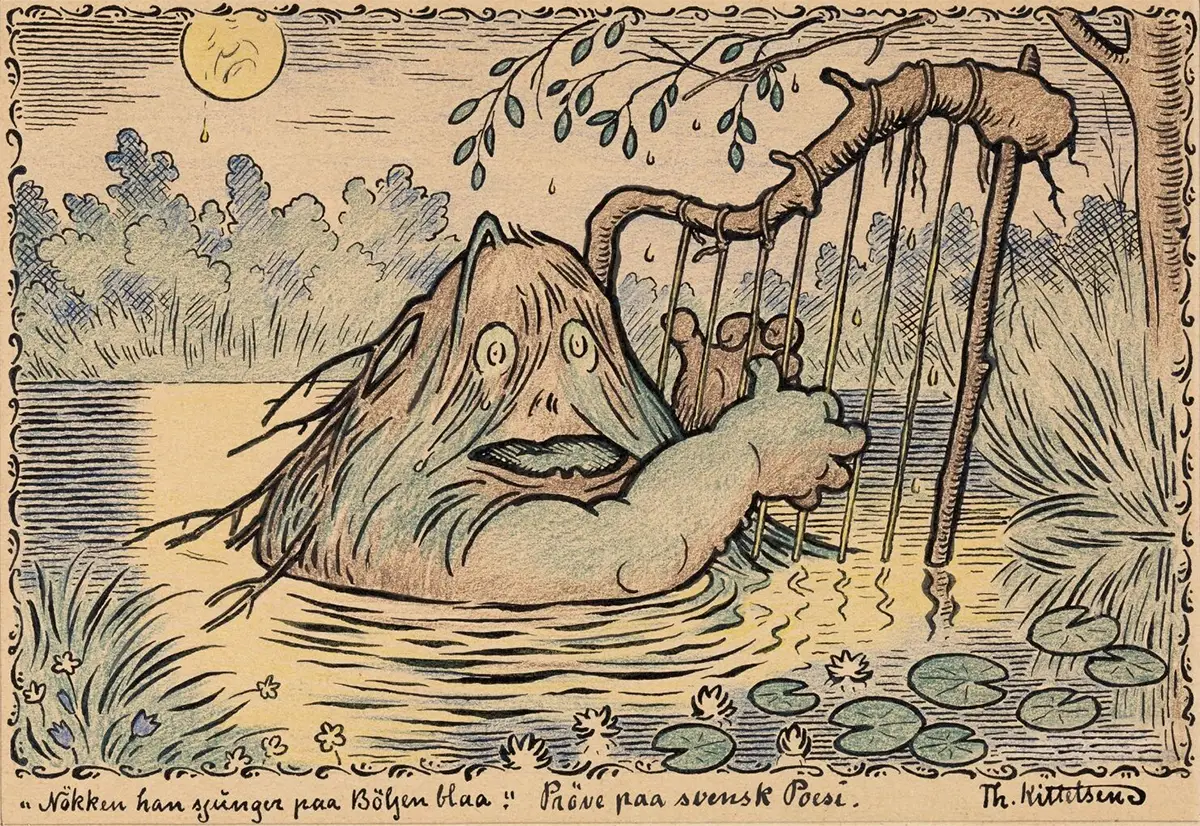
Finally, artistic depictions vary widely: some works emphasize seduction and beauty, others emphasize dread and drowning danger. That variability is expected in folklore, and it’s more accurate to treat the Näcken as a role (water-bound spirit + lure + music + risk) than as a single fixed character design.
Background Story
The Näcken tradition develops inside a broader Northern European belief landscape where fresh water is both essential and lethal. In Scandinavia, stories about water beings crystallized around specific risky environments: rivers, streams, lakes, waterfalls, and winter ice.
The Näcken becomes a recognizable folkloric figure in this context as a place-bound spirit whose presence explains why certain waters feel “alive,” unpredictable, or forbidden to approach carelessly.
Culturally, the Näcken is best understood as part of the Germanic water-spirit family often grouped under nixie-type beings, but in Scandinavian transmission it gains a distinctive identity through two reinforced motifs: music as lure and shifting appearance. Over time, this lets communities describe the same danger through different local story-forms: sometimes the Näcken is a beautiful man at the water’s edge, sometimes something uncanny, sometimes a horse-form used to trap the overconfident.
A key reason the belief persists is that the Näcken is not only a predator figure. In closely related Scandinavian traditions (often overlapping in naming and features), a water spirit may also be a teacher of exceptional music if approached through an exchange or offering.
That “teacher at the water” pattern explains why the Näcken complex survives not just as a scare-story, but as a legend about skill, temptation, and the price of mastery.
Finally, it’s accurate to keep your “no verified cult/ritual” stance: the Näcken is primarily preserved in folk belief and legend, not as a figure with stable historical worship. Local customs about avoiding certain waters can be inferred from the stories, but they aren’t the same thing as documented ritual practice.
Famous Folklore Stories
The Music at the Water’s Edge (the lure story)
A person hears extraordinary music near a stream or lake and moves closer to find the player. In many tellings, the musician is the Näcken, and the moment the listener steps onto unsafe ground, thin ice, or into shallow water, the situation flips from beautiful to lethal.
This is one of the clearest folk-warning structures: the story teaches that fascination overrides judgment, especially near water.
The Lesson Bargain (the “teach me” story)
Another durable story-form reverses the power dynamic: instead of being trapped, a person tries to gain something from the Näcken complex, usually music skill. In related Scandinavian traditions, the water spirit teaches only after a secretive offering, and the lesson is described as intense and costly.
This pattern survives because it does two jobs at once: it warns against dangerous waters, and it explains “impossibly good” musicians as having learned from something not human.
The Water Horse Trap (children and the expanding back)
A widely repeated oral motif (especially in Swedish framing) uses the horse-form: a beautiful white horse appears near water and invites children to climb on. As more climb up, the back grows to fit them, and once the last child mounts, the horse surges into the water to drown them.
This works as a generational safety story: it turns “don’t play near water” into a vivid, memorable image that spreads easily in retelling.
Cultural Impact
Across Scandinavia, the Näcken motif sits at the intersection of water danger and music culture. In both Sweden and Norway traditions, the figure is repeatedly framed as a powerful musician tied to rivers, rapids, waterfalls, and other risky water sites, where sound and movement make the place feel “alive” and unpredictable.
One of the most persistent cultural functions is practical: the Näcken helps communities narrate real drownings and near-drownings in a memorable, moralized form. The core warning is simple: water is alluring, water lies, and water can take you quickly.
Folklore and encyclopedia treatments describe the being as luring people with beautiful playing, sometimes to dancing, sometimes straight into drowning. (isof.se)
At the same time, the Näcken becomes a folk explanation for “impossibly good” musicianship. Multiple Scandinavian reference sources preserve a motif where people seek out the water-being to learn fiddling, usually through repeated visits and an offering.
The story both celebrates mastery and adds a price tag to it, with versions that frame the learning as spiritually risky.
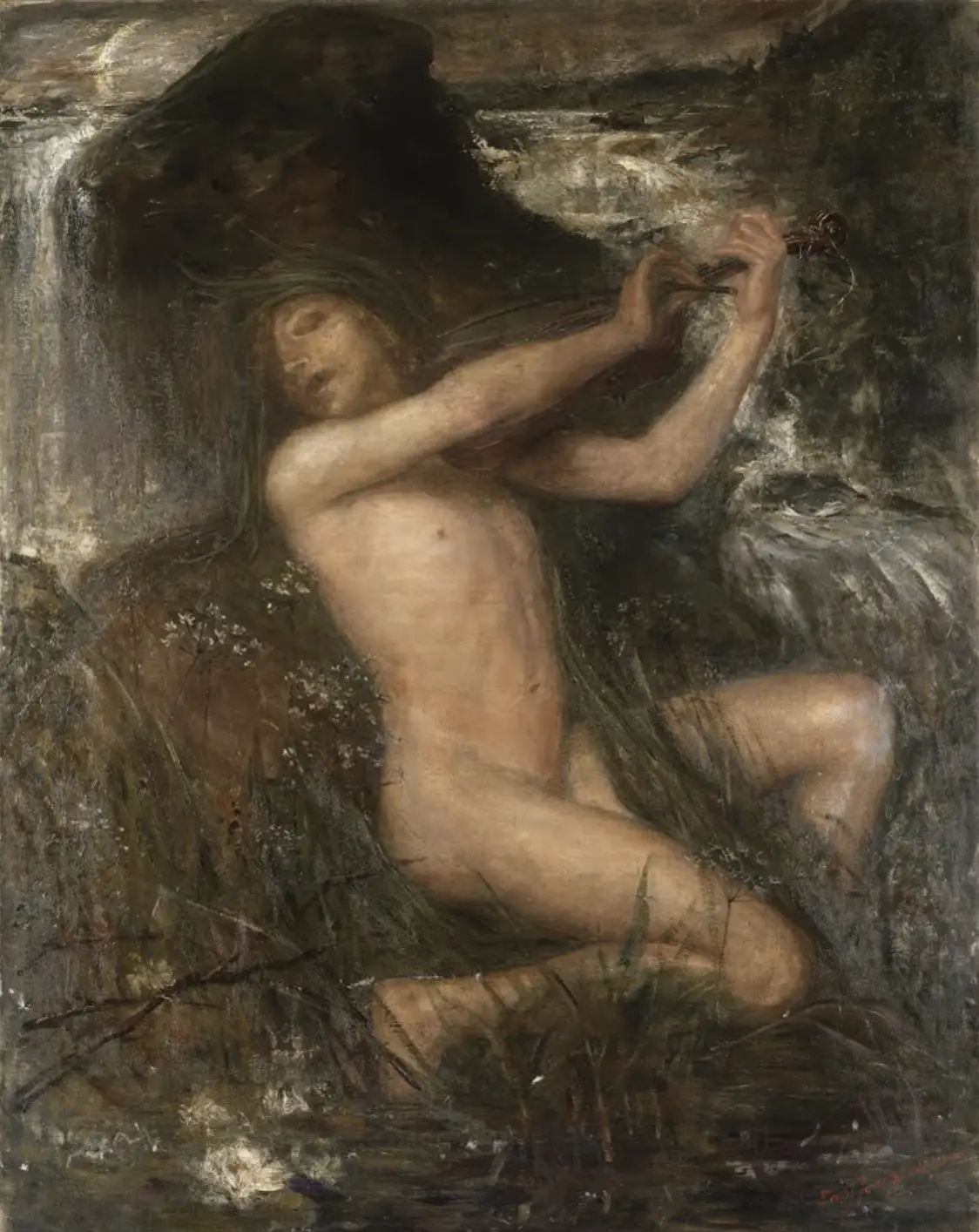
In the 1800s and early 1900s, the Näcken also becomes high-visibility cultural material in art and national romantic imagery. Ernst Josephson’s “The Water Sprite (Näcken)” is explicitly presented by Nationalmuseum as a tempting fiddler drawing the viewer toward dangerous water, and it is documented as a motif the artist returned to across multiple versions.
In Norwegian visual culture, Theodor Kittelsen produced canonical Nøkken imagery held by Nasjonalmuseet, reinforcing how the figure migrated from oral warning and local belief into “national” cultural iconography. (Nasjonalmuseet)
Similar Beasts
Rusalka
The closest overlap is functional rather than genealogical: Rusalki are water-linked spirits in Slavic traditions tied to drowning motifs and dangerous encounters near lakes and rivers. The key difference is category and narrative origin: standard reference treatments often frame rusalki as the restless dead (or dead-associated spirits), not as a water musician-teacher figure.
Kelpie

Kelpies share the “water hazard made personal” role, but they center on deception through form, not sound. Instead of music, the kelpie’s signature is shapeshifting into a horse (and sometimes human), with stories built around the trap: an inviting surface that becomes fatal once you get too close. Read More
Jenny Greenteeth
Jenny Greenteeth is structurally similar as a “nursery bogie” used to keep children away from canals, ponds, and river edges. The overlap is the protective social function and drowning focus.
The difference is tone and target: Jenny is typically a localized child-warning figure rather than a broader adult bargain-and-music tradition.
Vodyanoy

Vodyanoy traditions align with the Näcken on two axes: male water spirit and drowning risk. Where the Näcken often blends allure with artistry, Britannica’s profile emphasizes vodyanoy as vindictive and dangerous, with explicit prohibitions and risks attached to bathing and approaching water at certain times. Read More
Näcken compared to Vodyanoy and Rusalka
| Aspect | Näcken | Vodyanoy | Rusalka |
|---|---|---|---|
| Origin | The Näckens origins are rooted in Scandinavian folklore traditions. | Vodyanoy originates from Slavic mythology and folklore. | Rusalka is derived from Slavic water spirit legends. |
| Habitat | Näckens are typically associated with rivers, lakes, and streams. | Vodyanoy inhabits rivers, lakes, and sometimes ponds. | Rusalka is often linked to lakes and rivers in Slavic tales. |
| Appearance | The Näckens is depicted as a humanlike male figure. | Vodyanoy is usually portrayed as an old man with fish features. | Rusalka is often shown as a beautiful young woman. |
| Musical Ability | Näckens is renowned for its enchanting fiddle playing skills. | Vodyanoy is less known for music but can create sounds. | Rusalka is often associated with singing and enchanting melodies. |
| Behavior | Näckens can be dangerous, luring people to water's edge. | Vodyanoy is known for being vengeful towards those who disrespect water. | Rusalka can be both benevolent and malevolent, depending on the story. |
| Cultural Significance | Näckens serves as a warning symbol in Scandinavian culture. | Vodyanoy represents the dangers of water in Slavic beliefs. | Rusalka embodies themes of love, loss, and longing in folklore. |
Religion and Ritual
There is no solid evidence for a standardized, pan-Scandinavian cult or formal worship system centered specifically on the Näcken as a named deity. The figure primarily lives in folk belief, legend, and local practice rather than in canonical religious liturgy or temple-style rites.
What is well documented is a set of folk-practice motifs tied to either (a) learning music from the water-being or (b) protecting yourself from it. Swedish and Norwegian reference entries preserve a repeated pattern: visit the water on three Thursday evenings and make an offering (details vary by region and narrator).
The ritual logic is transactional, not devotional: you pay, you hear, you learn, and you accept the risk.
Another consistent layer is Christian reframing. Some versions explicitly interpret the bargain as spiritually dangerous, with the learning framed as “selling your soul” or otherwise crossing a moral boundary.
This does not prove an organized religion around the Näcken; it shows how church-centered moral language re-coded older belief material as temptation and sin.
Finally, local behavioral rules cluster around time and place: dangerous water spots (rapids, mills, waterfalls) and “high-risk” times (evenings, after dark, or moments when people are alone). These appear less as ritual worship and more as community safety norms expressed through narrative authority.
Scientific or Rational Explanations
The most defensible rational reading is social and environmental: Näcken stories encode risk management around waterways in preindustrial communities. Rivers, mill-runs, rapids, and waterfalls are genuinely hazardous, especially in low light, cold seasons, or when alcohol and solitude enter the mix.
Turning that hazard into an agent with intent makes the warning emotionally sticky and easy to transmit.
A second rational frame is explanatory, not just preventative. When drownings happen without witnesses, communities still need a cause that fits their worldview.
A water-being that “takes” people offers a coherent narrative model for sudden loss, especially in societies where the water’s surface can look calm while hiding undertow, slick stones, and fast current.
The music motif also maps cleanly onto lived experience. Water sites produce hypnotic, rhythmic soundscapes, and Scandinavian traditions are saturated with fiddle culture.
A story where the water itself “plays” (or teaches playing) fuses place, sound, and danger into one figure, then gives the figure a portable rule-set: don’t linger, don’t follow the sound, don’t treat water as harmless.
Last, the way the Näcken shifts between helper and threat is a realistic mirror of water’s dual role: it enables life (fishing, travel, power for mills) and it kills. Folklore often resolves that contradiction by giving nature a face that can reward skill and punish carelessness.
Modern Cultural References
Press materials and previews describe a specific Näcken variant in the game (a “dancing fool” figure) that weaponizes joy and rhythm into harm, which is a modern spin but still fits the traditional function of the Näcken as an embodied warning about water and losing control near it.
What matters culturally is the packaging: the name is not random flavor text. It signals a Scandinavian folkloric lineage, and the game uses that association (water, voice, trance, danger nearby) in a way mainstream audiences recognize instantly, even if they never read a single folktale. (Push Square)
One of the clearer modern signals is how the film (and its official behind-the-scenes talk) positions the Nokk as a shapeshifter with older myth roots, then reframes the threat into a character-growth trial. That is a classic modern adaptation pattern: keep the mythic silhouette, rewrite the moral outcome. (LaughingPlace.com)
The illustrated folklore side stays closer to the traditional catalog: modern editions and write-ups still list Näcken as a distinct figure with signature traits (water-bound presence and musical enchantment, often via fiddle/violin in Scandinavian retellings). This matters because it keeps the Näcken recognizable across formats: book-to-game-to-modern narrative reuse. (Grimfrost)
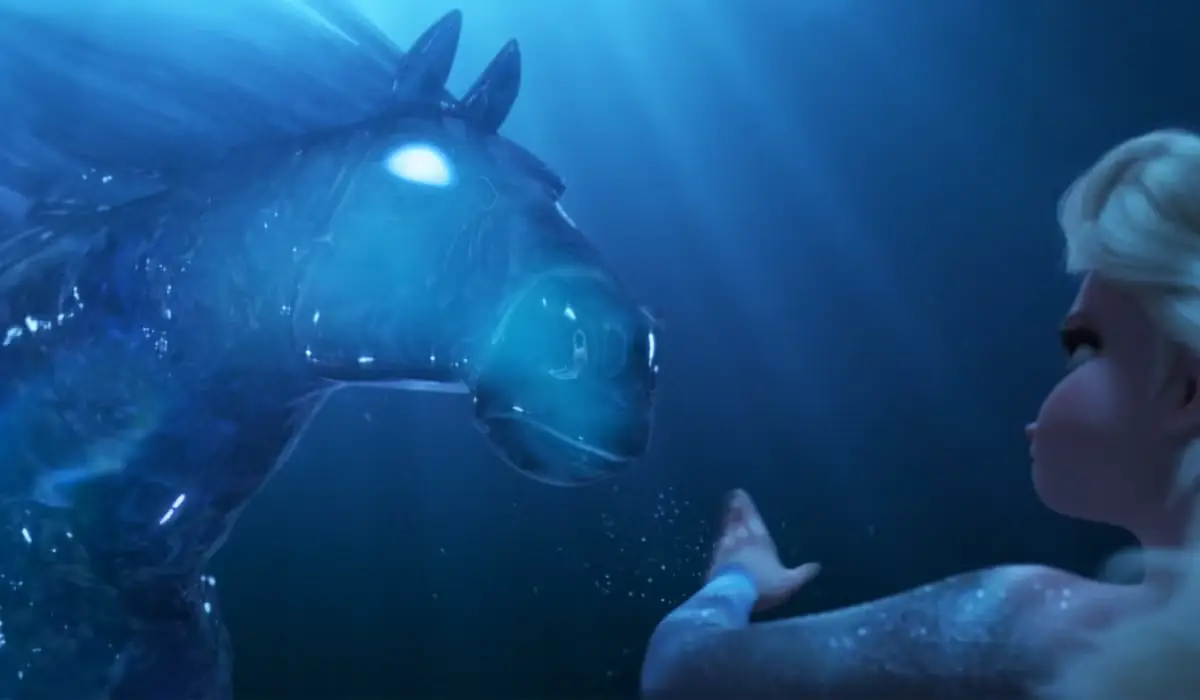
Frozen II (movie), 2019
Disney’s sequel reimagines the Nokk as a powerful water spirit, testing Elsa through danger and control, transforming a lethal folkloric lure into a trial aligned with research conducted during production.
https://movies.disney.com/frozen-2
God of War Ragnarök (video game), 2022
Santa Monica Studio adapts Nokken into chant-driven enemies whose songs empower foes, translating folkloric luring into gameplay mechanics while signaling Scandinavian lineage through naming, aquatic habitats, and voice-based control systems.
https://www.playstation.com/en-us/games/god-of-war-ragnarok/
Bramble: The Mountain King (video game), 2023
Dimfrost’s dark fairy-tale adventure presents Näcken as a named river entity, weaponizing music and dance to deceive players, preserving the traditional warning structure where fascination precedes sudden, fatal water-bound consequences.
https://www.bramblegame.com/
Vaesen: Nordic Horror Roleplaying (book / tabletop RPG), 2018
Free League’s illustrated roleplaying book systematizes Scandinavian spirits for modern storytelling, presenting Näcken as a playable investigation threat rooted in folklore, music, and water hazards rather than generic fantasy monsters.
https://freeleaguepublishing.com/games/vaesen/
Valheim (video game), 2021
Iron Gate’s survival game includes the Näcken as a hostile swamp creature inspired by Scandinavian folklore, translating regional naming into an enemy while keeping water proximity and attacks defining encounters.
https://www.valheimgame.com/
Nordic Creatures (book), 2016
Johan Egerkrans’ illustrated book popularizes Scandinavian folklore for contemporary readers, depicting Näcken with traditional traits, regional variants, and cautionary framing, bridging academic reference material and accessible modern visual storytelling traditions.
https://nobrow.net/shop/nordic-creatures/
Conclusion
The Näcken, a mythical creature from Scandinavian folklore, embodies the mysterious allure and dangers of water bodies. Its tales have traversed centuries, captivating audiences with stories of enchantment and peril.
Often depicted as a water spirit with musical talents, the Näcken’s role in folklore underscores the cultural interplay between humanity and nature. No verified sources describe specific rituals associated with the Näcken, highlighting its enigmatic presence in myth rather than historical practice.
Despite the absence of concrete historical practices, the Näcken’s symbolic significance remains potent. It serves as a reminder of nature’s unpredictability and the thin line between beauty and danger.
Modern interpretations continue to draw from these themes, ensuring the Näcken’s place in contemporary culture. Through literature, games, and media, the Näcken persists as a fascinating emblem of mythological intrigue, bridging ancient folklore with modern imagination.
Further Reading
Näcken (Väsengalleriet), Institutet för språk och folkminnen, n.d.
An authoritative Swedish folklore knowledge-bank entry describing Näcken as a dangerous water-being tied to streams, bridges, mills, and bathing places, including traditional risks (drowning, “näckabett”) and protective beliefs. (isof.se)
nøkken, Store norske leksikon, 2025
A Norwegian reference entry covering the nøkken’s role in folk belief (water spirit), its association with music and teaching fiddle-playing, and recurring motifs like risky bargains and repeated Thursday-night visits/offers in some traditions. (Store norske leksikon)
fossegrimen, Store norske leksikon, n.d.
A companion Norwegian reference entry describing fossegrimen as a waterfall and mill-associated being in folk tradition, often musical and sometimes presented as luring people in quiet evenings. Useful for separating “nøkken” vs “fossegrimen” variants across Scandinavia.
Näck (Nordisk familjebok, Uggleupplagan), Project Runeberg, 1914
A period encyclopedia entry (scanned facsimile) reflecting early 1900s Scandinavian reference framing of Näck/Näcken and related motifs, including folk-music attributions such as “Näckens polska.” (runeberg.org)
Scandinavian Folk Belief and Legend, Reimund Kvideland, 1988 (copyright)
A large, scholarly collection (hundreds of texts) translated from Norwegian, Danish, and Swedish traditions, designed to represent rural oral traditions and folk belief material. Good for cross-checking how water-spirits and “nøkk/näcken”-type figures function across regions and genres. (rodnovery.ru)
Skogsrået, näcken och Djävulen: erotiska naturväsen och demonisk sexualitet i 1600- och 1700-talens Sverige, Mikael Häll, 2013
An academic dissertation-level study that uses court records and early-modern sources to analyze Swedish nature-being beliefs (including Näcken) and how institutions framed them in demonological and moral terms during the 1600s–1700s. (lu.se)
Svenska folksägner, Bengt af Klintberg (editor), 1977
A major Swedish legends collection (LIBRIS record), explicitly centered on oral folk legends and typical motifs across Swedish regions, including encounters with beings like näck, skogsrå, and others. Useful for “mouth-to-ear” tradition grounding. (libris.kb.se)
The Water Sprite (Näcken), Ernst Josephson, 1882–1883
Museum-context art reference describing Josephson’s Näcken painting/version history and reception, useful for the creature’s cultural impact in 19th-century Scandinavian art and modern museum framing. (Google Arts & Culture)
“Nøkken han sjunger paa Bøljen blaa”, Theodor Kittelsen, after 1900
An official museum collection record for a canonical Norwegian visual depiction tied to the nøkken tradition, useful for validating modern cultural references in art without leaning on secondary retellings. (Nasjonalmuseet)
Nix (mythology), Encyclopaedia Britannica, n.d.
A high-level, curated reference entry for Germanic “nix” traditions, useful for careful comparative framing (what overlaps with Näcken/Nøkk motifs and what does not). (Encyclopedia Britannica)
Fakta om Näcken i folktron (Marvinter: Julkalendern 2017), Sveriges Radio, 2017
A reputable public-broadcast explainer summarizing common Swedish folk motifs around Näcken (water, violin, luring) in accessible form. Best used as a tertiary check, not the primary authority. (Sveriges Radio)
Trolls, Nokks and Joik singing: the Nordic cultural artefacts that inspired Frozen 2
Author: Ben Allen | Year: 2019
Production interview coverage that explicitly identifies the Nokk as a Scandinavian folklore water spirit and discusses adaptation choices.
https://www.radiotimes.com/movies/frozen-2-easter-eggs/
Spirited Away with Elsa: The Elemental Spirits of ‘Frozen 2’
Author: Alex Reif | Year: 2019
Behind-the-scenes reporting with quotes from filmmakers about researching Norse and Scandinavian folklore, including the Nokk.
https://www.laughingplace.com/w/blogs/alex-movie-blog/2019/11/05/spirited-away-with-elsa-the-elemental-spirits-of-frozen-2/