Introduction
The Predator is one of modern cinema’s most enduring science-fiction antagonists: a technologically advanced extraterrestrial hunter defined by ritual combat, thermal vision, and a strict warrior code. Introduced in Predator (1987), directed by John McTiernan and starring Arnold Schwarzenegger, the creature redefined the alien-in-the-jungle thriller by combining slasher tension with military action.
Within its own lore, the species is commonly called the Yautja, though that name emerges primarily in expanded-universe material rather than the original film. On screen, the Predator is characterized by adaptive camouflage, shoulder-mounted plasma weaponry, trophy-taking practices (notably skulls and spines), and a code that prioritizes worthy prey.
It hunts for sport rather than conquest.
Across sequels and crossovers, including Predator, Predator 2, Predators, The Predator, and Prey, the creature evolves from a single jungle stalker into a structured interstellar culture with clans, rites of passage, and internal hierarchy. What began as a suspense device becomes a mythos: the Predator as cosmic big-game hunter, ritual warrior, and embodiment of primal survival logic.
History / Origin
Creation in Film Development
The Predator was conceived during the development of the original 1987 film by screenwriters Jim Thomas and John Thomas. The now-famous design emerged after the initial creature concept proved unsatisfactory.
Special effects artist Stan Winston redesigned the alien, reportedly incorporating mandibles after a suggestion from James Cameron. The result was biomechanical yet tribal, an armored hunter blending futuristic technology with ritualistic aesthetics.
The performance by Kevin Peter Hall (who replaced the original suit performer) established the Predator’s physical presence: towering, deliberate, and animalistically poised.
In-Universe Origin
Within film canon, the Predator is an extraterrestrial species that travels across the galaxy to hunt dangerous life forms. The original film presents the creature as operating alone, but Predator 2 expands the mythology, revealing multiple Predators and implying a broader interstellar culture.
A key scene in Predator 2 shows a trophy room containing skulls from various alien species, including a Xenomorph skull, linking the franchise to Alien and later inspiring crossover films such as Alien vs. Predator.
Subsequent entries deepen the lore:
- Predators (2010) introduces rival Predator factions and the idea of a game-preserve planet.
- The Predator (2018) suggests genetic experimentation and species evolution.
- Prey (2022) repositions the timeline to 1719 North America, portraying an earlier form of Predator technology and culture.
Across these narratives, the Predator evolves from a singular monster into a ritualized alien civilization defined by honor, hierarchy, and the pursuit of worthy adversaries. The creature’s “origin” therefore exists on two levels: as a late-20th-century cinematic invention and as an in-universe species shaped by hunting, technology, and martial identity.
Name Meaning / Terminology
The term “Predator” originates as a descriptive label rather than an in-universe species name. In Predator, the creature is never formally named on screen; it is simply an unidentified hunter targeting elite soldiers.
The marketing and audience shorthand, “Predator”, reflects its defining behavior: it hunts sentient beings for sport.
The species name “Yautja” does not appear in the original film series but emerges in expanded-universe novels and comics, particularly those published by Dark Horse Comics in the 1990s. Over time, “Yautja” became the commonly accepted in-universe ethnonym among fans and tie-in media.
However, strictly within primary film canon, the creatures remain unnamed as a species.
The dual terminology creates two interpretive layers:
- Predator – a cinematic function and thematic identity.
- Yautja – a cultural species identity developed through expanded lore.
This distinction matters academically: “Predator” emphasizes narrative role (hunter), while “Yautja” supports anthropological reading (civilization, clans, rites).
Appearance & Physiology
The Predator’s design blends reptilian, humanoid, and arthropod influences into a physically imposing hunter. First fully revealed in Predator, the creature stands over seven feet tall, with digitigrade legs, mottled skin, and distinctive mandibles surrounding its mouth.
The mandibles, introduced in the redesign by Stan Winston, transformed the alien from a generic creature into an instantly recognizable species.
Key anatomical traits include:
- Dreadlock-like tendrils: Sensory appendages rather than hair.
- Mandibled jaws: Used for intimidation displays and vocalization.
- Enhanced musculature: Greater-than-human strength and agility.
- Thermal vision: Natural or mask-assisted infrared perception.
- Resilient biology: Capable of surviving extreme trauma and environmental conditions.

While humanoid in posture, the Predator’s proportions are subtly inhuman, elongated limbs, broader chest cavity, and biomechanical facial symmetry. Its blood (depicted as luminous green) and unique vocal mimicry abilities reinforce its alien physiology.
Importantly, much of what audiences associate with the Predator’s “look” is technological augmentation. The bio-mask provides multi-spectrum vision modes and targeting systems.
Without armor and mask, the creature appears more organic and vulnerable, as seen in both Predator and Prey.
Across sequels, physical variations suggest subspecies or clan divergence, particularly in Predators, which introduces larger “Super Predators” with altered facial structure and armor styles. These differences reinforce the idea of a diverse extraterrestrial species rather than a single monster template.
Technology & Weapons
The Predator’s threat level derives as much from its technology as from its physiology. In Predator, the creature is equipped with advanced alien weaponry that allows it to dominate heavily armed human soldiers while maintaining the structure of a hunt.
Core technologies include:
- Active Camouflage Cloak – A refractive invisibility field that bends light, allowing near-total visual concealment while moving.
- Bio-Mask Targeting System – A helmet with multi-spectrum vision modes, including thermal imaging, electromagnetic scanning, and tracking enhancements.
- Shoulder-Mounted Plasma Caster – A guided energy weapon synchronized with the Predator’s helmet targeting reticle.
- Wrist Blades – Retractable dual blades used in close combat and ritual finishing strikes.
- Self-Destruct Device – A forearm-mounted explosive used to prevent technological capture or dishonor in defeat.
Later films expand the arsenal. Predator 2 introduces a smart-disc weapon and net launcher. Predators and The Predator show variations in armor configuration and weapon scale, suggesting technological stratification across clans or castes.
In Prey, earlier technology appears more mechanical and analog, indicating either historical evolution or regional variation within the species.
Predator technology blends futurism with ritual minimalism. Despite superior firepower, the creature frequently discards ranged advantage in favor of close combat, reinforcing that the hunt, not efficiency, defines its identity.
Hunting Code & Honor System
Unlike indiscriminate invaders, Predators operate under a recognizable ethical framework. Across the film series, they selectively target armed and capable opponents while avoiding children, the unarmed, or the visibly vulnerable.

In Predator 2, a Predator scans a pregnant woman and chooses not to kill her after determining she is unarmed and carrying life. This moment confirms that the species distinguishes between worthy and unworthy prey.
Recurring behavioral principles include:
- Selective Engagement – Hunt those who can fight back.
- Trophy Collection – Remove skulls or spines as ritual proof of victory.
- One-on-One Combat Preference – When facing a proven warrior, the Predator often removes ranged advantage.
- Self-Termination Over Capture – Activation of self-destruct to preserve technological secrecy and personal honor.
In Prey, the Predator escalates prey size gradually, testing itself against increasingly dangerous opponents. This progression resembles ritual initiation or proof-of-merit.
Expanded-universe materials further codify this system as a warrior culture built on rites of passage and hierarchical advancement. Even without those external sources, film canon consistently portrays the Predator as governed by honor logic rather than chaotic aggression.
The result is a rare cinematic antagonist: a creature that kills ruthlessly, yet not randomly.
Social Structure & Culture
Early films present the Predator as solitary. However, Predator 2 reveals a collective presence when multiple Predators retrieve the fallen hunter’s body, suggesting organized clans.
Subsequent films deepen this implication:
- Predators (2010) depicts rival Predator types, hinting at internal conflict or subspecies hierarchy.
- The Predator (2018) introduces the concept of genetic augmentation within the species.
- Prey (2022) implies long-term interstellar hunting traditions spanning centuries.
Recurring cultural markers include:
- Clan-based armor variation
- Ritual scarring
- Trophy display rooms
- Symbolic engravings
- Ceremonial respect for fallen warriors
The Predator functions less as a monster and more as an alien aristocratic warrior caste. Hunting appears to be both sport and social validation.
Famous Hunts Across the Timeline
The Predator mythos spans multiple eras and environments:
- Central American Jungle (1987) – Elite military unit hunted in Predator.
- Los Angeles (1997 setting) – Urban heatwave hunt in Predator 2.
- Game Preserve Planet – Human combatants abducted for sport in Predators.
- 1719 Great Plains – Comanche warrior confrontation in Prey.
These varied settings reinforce a core narrative constant: the Predator adapts to terrain, studies prey behavior, and escalates challenge intentionally.
Predator compared to Alien and Chucky
| Aspect | Predator | Alien | Chucky |
|---|---|---|---|
| Origin | The Predator originates from a fictional universe created in the 1987 film. | The Alien species is rooted in the 1979 film directed by Ridley Scott. | Chucky is a character from the 1988 film Child's Play, created by Don Mancini. |
| Hunting Style | This species hunts using advanced tactics and a strict code of honor. | Aliens hunt using stealth, ambush, and overwhelming numbers to overpower prey. | Chucky relies on surprise and psychological manipulation to instill fear. |
| Technology | Predators utilize advanced technology like cloaking devices and plasma weapons. | Aliens possess bio-organic technology, including acid for blood and hive structures. | Chucky uses a possessed doll's body, relying on human-like cunning. |
| Cultural Background | The Yautja culture emphasizes honor, ritual, and respect for worthy opponents. | Aliens have a hive mentality, focusing on survival and reproduction. | Chucky's background is rooted in voodoo and the supernatural. |
| Notable Films | Notable films include Predator, Predator 2, and Prey, showcasing its evolution. | The Alien franchise includes Alien, Aliens, and Prometheus, exploring its lore. | Chucky appears in Child's Play, Cult of Chucky, and various sequels. |
| Weaknesses | Predators can be outsmarted and may underestimate human ingenuity. | Aliens are vulnerable to fire and explosive weaponry, which can kill them. | Chucky's weakness lies in his reliance on human hosts for mobility. |
Similar Beasts
Minotaur
In Greek mythology, the Minotaur is a human-bull hybrid confined to the Labyrinth of Crete, fed by ritual tribute. It represents controlled violence: a monster sustained by a system, not a random wild threat.
The Labyrinth turns predation into an environment, with rules, boundaries, and a sense of inescapable design.
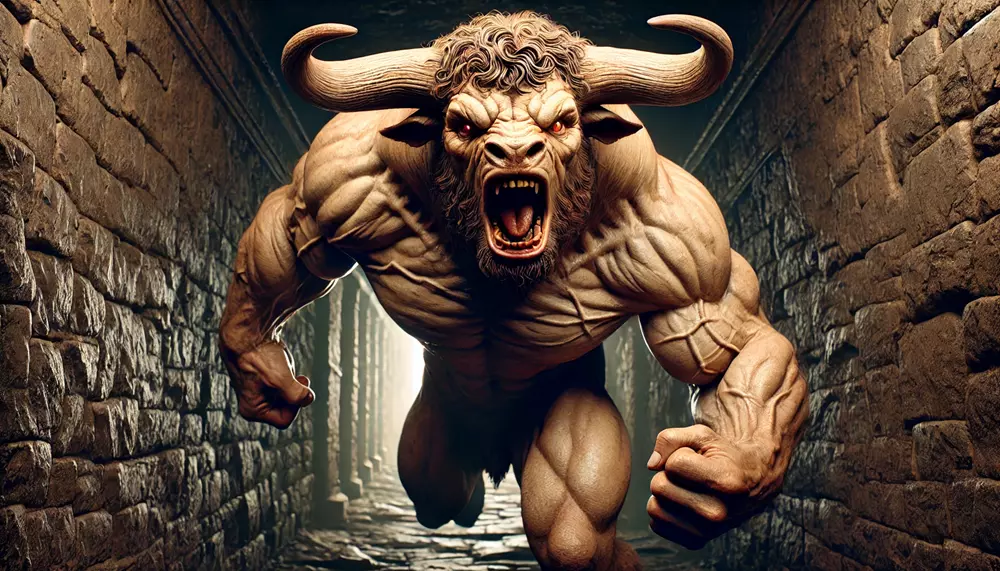
Like the Predator, the Minotaur functions as an apex hunter inside a structured arena. Both turn terrain into a weapon and force humans into a survival test.
The difference is motive: the Minotaur is a captive engine of terror, while the Predator chooses the hunt as identity. Read More
Grendel
Grendel, from the Old English epic Beowulf, is a nocturnal attacker who targets Heorot, the hall of King Hrothgar. He is portrayed as an outsider presence that breaks into human order, punishing pride and comfort.
Grendel’s violence is personal, repeated, and symbolic, making him more than an animal threat.
Like the Predator, Grendel hunts warriors and triggers a duel with a champion. Both figures create a “proof of worth” narrative: the monster forces a hero to earn survival through strength and tactics.
Grendel lacks a formal code, but his story still centers on selective confrontation and escalation.
Nemean Lion
The Nemean Lion is a Greek monster defeated by Heracles, famous for an impenetrable hide that makes ordinary weapons useless. It embodies the idea of prey that cannot be killed by standard force.
The myth frames it as an apex predator terrorizing a region until confronted by a uniquely capable hunter.
This parallels the Predator’s dynamic with human soldiers. Both expose the limits of conventional weapons and demand adaptation.
As Heracles must change tactics and fight up close, humans facing the Predator often survive only by abandoning standard combat rules.
Werewolf
Werewolves appear in medieval and early modern European tradition as humans transformed into predators, often tied to curses, sin, or taboo knowledge. The werewolf is frightening because it looks human, lives near human society, then flips into something that hunts people like animals.

That human-to-hunter switch matches a key Predator theme: the fear of being outclassed by a predator with intelligence. Both also carry “hunt logic” – tracking, stalking, ambush, and dominance displays – and both blur the line between warrior and beast. Read More
Cultural Impact
The Predator rapidly became one of cinema’s most recognizable creature designs. Its silhouette, bio-mask, dreadlock tendrils, shoulder cannon, is iconographically distinct.
The franchise intersects with the Alien universe through trophy-room imagery in Predator 2, later expanding into crossover films such as Alien vs. Predator.
Beyond film, the Predator influenced:
- Video game design
- Comic book mythologies
- Sci-fi creature costuming
- The “honor-bound alien warrior” archetype
The character persists because it merges primal hunting instinct with advanced technology, a fusion of caveman and astronaut.
Modern Cultural References
Prey (Film, 2022)
A period-set prequel that places a Predator hunt in 1719 among the Comanche. It refreshes the franchise by showing an earlier-tech hunter and framing the story through an Indigenous warrior’s tactics, skill, and survival intelligence.
https://www.imdb.com/title/tt11866324/
(IMDb)
Predator: Hunting Grounds (Video Game, 2020)
An asymmetrical multiplayer shooter built around the franchise’s core fantasy: one Predator stalks a human fireteam using stealth tech, traps, and trophy hunting. It translates the Predator’s hunt structure into competitive gameplay.
https://www.playstation.com/en-il/games/predator-hunting-grounds/
(PlayStation)
Predator (Marvel Comics series, 2022-2023)
Marvel’s mainline Predator comic run, written by Ed Brisson with art by Kev Walker, expands Predator storytelling into a long-form hunt narrative and brings the creature into Marvel’s modern comics ecosystem.
https://www.marvel.com/comics/series/30873/predator_2022_-_present
(Marvel)
Predator vs. Wolverine (Marvel Comics series, 2023)
A crossover miniseries that treats Wolverine as the ultimate long-game prey. It leans hard into the franchise’s “worthy opponent” logic and frames the Predator as a hunter testing itself against a near-unkillable target.
https://www.marvel.com/comics/series/37715/predator_vs._wolverine_%282023_-_present%29
(Marvel)
Alien vs. Predator (Film, 2004)
A blockbuster crossover that turns Predator hunting culture into a ritualized arena against Xenomorphs, building on the earlier franchise link hinted by the trophy imagery in Predator 2 and establishing AVP as a mainstream sub-branch.
https://www.imdb.com/title/tt0370263/
(IMDb)
Conclusion
The Predator endures because it is more than a movie monster. It is a structured myth built on a simple, primal idea: the ultimate hunter testing itself against worthy prey.
Introduced in Predator as a jungle stalker with superior technology, the creature evolved across sequels into a fully implied warrior civilization defined by ritual, hierarchy, and honor.
What distinguishes the Predator from many cinematic aliens is intention. It does not invade for territory, annihilate for ideology, or consume for survival alone.
It hunts for validation. Its code, weapons, and trophy-taking practices frame violence as competition rather than chaos. Even when technologically dominant, it often seeks balance by confronting opponents directly, reinforcing its identity as a ritual combatant.
Across entries such as Predator 2 and Prey, the franchise expands the creature’s cultural depth while preserving its core logic: adaptability determines survival. The Predator functions simultaneously as science-fiction antagonist, warrior archetype, and evolutionary metaphor.
Decades after its debut, the silhouette remains instantly recognizable. Armor, mask, shoulder cannon, mandibles, all serve a singular narrative purpose.
The Predator embodies the tension between technology and instinct, civilization and savagery. It is not simply a hunter from the stars.
It is cinema’s ritualized apex predator.
Further reading
AFI Catalog, Predator (1987). Authoritative production record with verified credits and context for the film’s development, including key personnel. Useful for grounding the creature’s real-world creation and release history. https://catalog.afi.com/Catalog/MovieDetails/57783
AFI Catalog, Predator 2 (1990). Verified sequel production entry that documents credits, franchise continuity, and context. Helpful for tracking the shift from a lone hunter to hints of broader Predator society. https://catalog.afi.com/Catalog/MovieDetails/58654
IMDb, Predator (1987) title page. Quick-access reference for core release data, cast, and crew that supports basic canon framing. Use alongside AFI for cross-checking production facts. https://www.imdb.com/title/tt0093773/
IMDb, Predator 2 (1990) title page. Useful for confirming release data and core cast, and for locating episode and media connections that shaped later Predator lore. https://www.imdb.com/title/tt0100403/
IMDb, Prey (2022) title page. Confirms the film’s basic premise and placement within the franchise, supporting modern references and the prequel framing that expands Predator hunting history across time periods. https://www.imdb.com/title/tt11866324/
Entertainment Weekly, “Prey… Comanche Nation teaser” (2022). Reputable entertainment journalism summarizing official positioning of Prey, including its setting, creative team, and cultural framing.
Useful for validating modern canon descriptions. https://ew.com/movies/predator-prequel-prey-comanche-nation-teaser-video/
PlayStation, Predator: Hunting Grounds official page. Primary publisher page describing the game’s asymmetric hunt structure and core premise.
Useful for modern cultural references and how Predator hunting translates into gameplay systems. https://www.playstation.com/en-il/games/predator-hunting-grounds/
Marvel, Predator (2022) – present series page. Official series listing that verifies publication run and issue list. Useful for confirming Predator’s modern comics continuity under Marvel’s licensing. https://www.marvel.com/comics/series/30873/predator_2022_-_present
Marvel, Predator (2022) #1 issue page. Official issue metadata confirming writer and artist credits (Ed Brisson, Kev Walker) and publication date, useful for accurate attribution in modern references. https://www.marvel.com/comics/issue/89617/predator_2022_1
Stan Winston School (Facebook), behind-the-scenes Predator making-of post. Studio-affiliated archival material that supports design and practical effects discussion. Useful for production-history context when paired with AFI and film credits. https://www.facebook.com/StanWinstonSchool/posts/here-you-can-see-a-never-before-seen-behind-the-scenes-video-about-the-making-of/1882170425151949/