Introduction
Typhon is a formidable figure in Greek mythology, often depicted as the most fearsome of all creatures. Known as the “Father of All Monsters,” Typhon’s legend is integral to the mythological narratives that describe the cosmic battles between gods and primordial forces.
His story is not just a tale of chaos and destruction but also one of the struggle for power and dominance in the ancient world. Typhon’s mythological presence highlights the Greeks’ attempts to personify and understand the natural disasters and phenomena that they observed in their environment.
In the mythos, Typhon represents the ultimate challenge to the Olympian gods, particularly Zeus, the king of the gods. His role serves as a critical turning point in Greek mythology, symbolizing the triumph of order over chaos.
The stories surrounding Typhon have been passed down through generations, influencing literature, art, and culture. His legacy is evident in various mythological texts, from Hesiod’s “Theogony” to Apollodorus’ “Bibliotheca,” where his battles and characteristics are vividly detailed.
Typhon compared to Fenrir, Kraken, and Leviathan
| Aspect | Typhon | Fenrir | Kraken | Leviathan |
|---|---|---|---|---|
| Origin | Typhon originates from ancient Greek mythology as a primordial being. | Fenrir is rooted in Norse mythology, born of Loki and a giantess. | Kraken is a legendary sea monster from Scandinavian folklore. | Leviathan is a biblical sea creature mentioned in ancient texts. |
| Mythological Role | Typhon embodies chaos and challenges the Olympian gods, especially Zeus. | Fenrir represents destruction and is prophesied to kill Odin during Ragnarok. | Kraken symbolizes the terror of the sea and sailors' fears. | Leviathan signifies chaos and is often associated with divine power. |
| Physical Description | Typhon is often depicted with multiple heads and serpentine features. | Fenrir is portrayed as a massive wolf with immense strength. | Kraken is described as a giant octopus or squid-like creature. | Leviathan is depicted as a colossal sea serpent or dragon. |
| Powers and Abilities | Typhon can create storms and earthquakes, showcasing his destructive nature. | Fenrir possesses immense strength and can break free from bindings. | Kraken can drag entire ships under the sea with its tentacles. | Leviathan can create chaos in the waters and is often invincible. |
| Cultural Impact | Typhon's legacy influences literature, art, and modern interpretations of monsters. | Fenrir's story has inspired various adaptations in literature and media. | Kraken has become a symbol of maritime folklore in popular culture. | Leviathan is referenced in various religious and philosophical texts. |
| Defeated By | Typhon was ultimately defeated by Zeus in a fierce battle. | Fenrir is foretold to be slain by Vidar during Ragnarok. | Kraken's fate often remains ambiguous in folklore, evading capture. | Leviathan is said to be defeated by God in biblical narratives. |
History/Origin
Typhon’s origins are deeply rooted in ancient Greek mythology, with his first appearances in texts dating back to the 8th century BCE. He is often described as the offspring of Gaia (Earth) and Tartarus, or in some accounts, Gaia and the primordial deity Typhoeus.
This lineage places Typhon among the primordial beings, suggesting his role as a fundamental force of nature. His birth is sometimes interpreted as Gaia’s response to the defeat of the Giants by the Olympian gods, a final attempt to reclaim power for the Titans.
The mythological narratives surrounding Typhon are primarily sourced from Hesiod’s “Theogony,” where he is depicted as a monstrous figure born to challenge Zeus. His presence in these early texts underscores the ancient Greeks’ fascination with the cosmic struggle between order and chaos.
As a mythological figure, Typhon has also been linked to other ancient Near Eastern myths, suggesting a possible cross-cultural exchange of mythological ideas and stories during the early centuries of Greek civilization.
Name Meaning
The name “Typhon” is believed to derive from the Greek word “typhos,” which means smoke or whirlwind, reflecting his association with destructive storms and volcanic eruptions. This etymology is fitting, as Typhon is often associated with chaotic natural forces that disrupt the natural order.
The name encapsulates his role as a symbol of chaos and the raw, untamed power of nature.
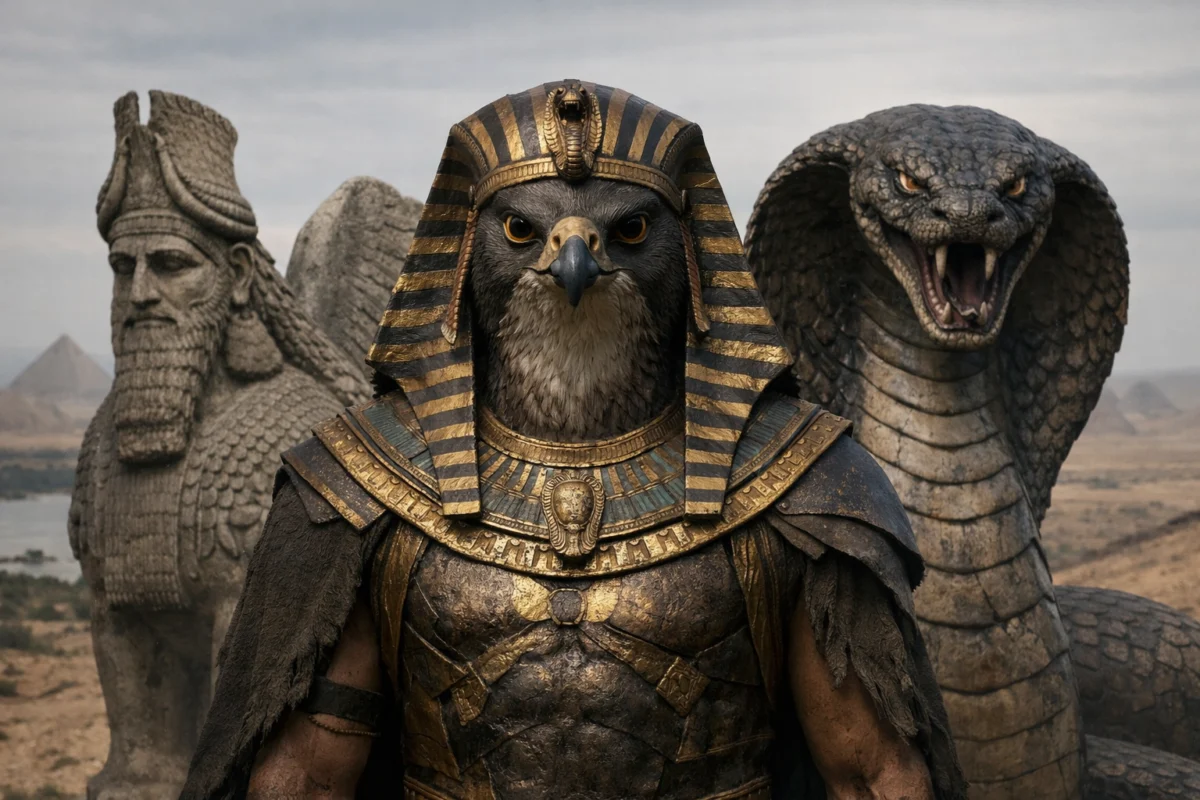
In addition to its Greek origins, the name Typhon may have connections to similar-sounding deities and monsters in other ancient cultures, such as the Egyptian god Set, who also embodies chaos and disorder.
This linguistic and cultural overlap suggests that Typhon’s myth may have been influenced by or have influenced other ancient civilizations’ mythologies, highlighting the interconnectedness of ancient cultures in their attempts to explain and personify the natural world.
Appearance
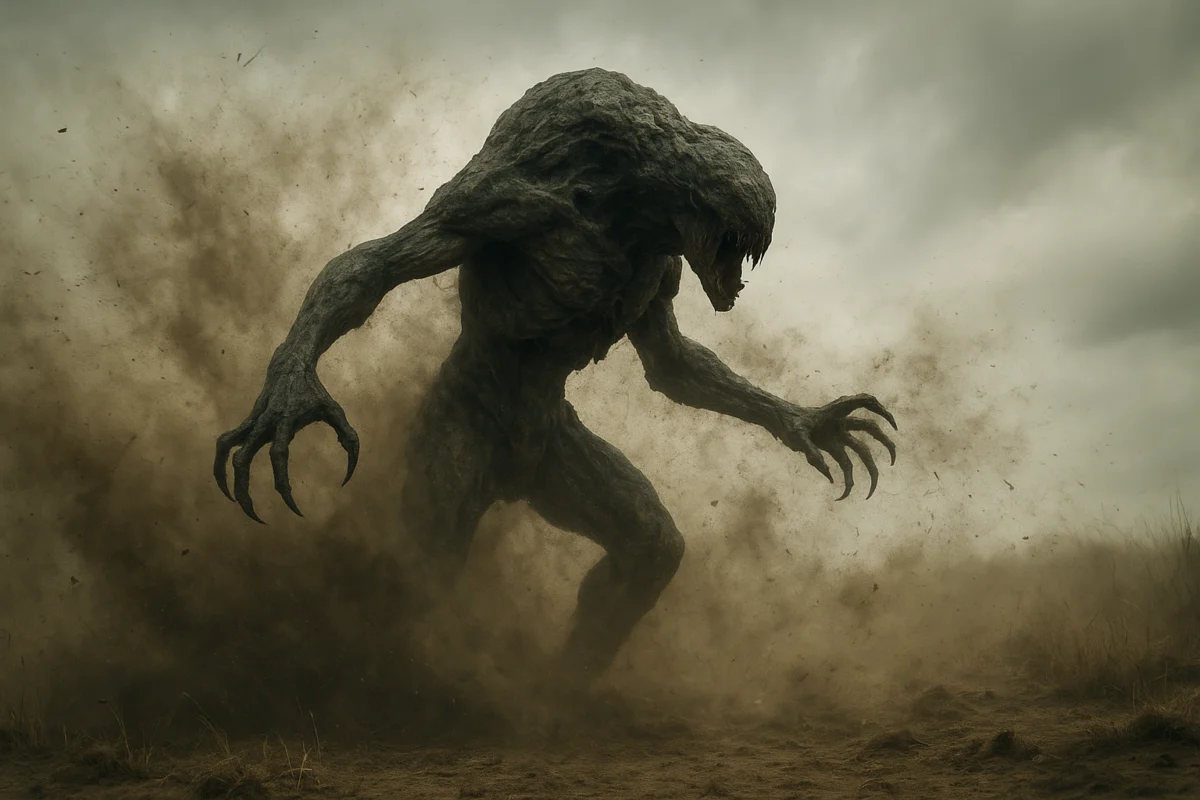
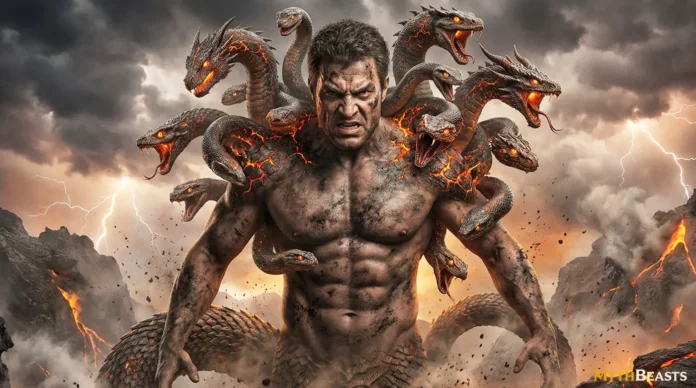
Typhon’s appearance is described as terrifying and monstrous, embodying the chaos he represents. According to Hesiod, he was a giant creature with a hundred dragon heads, each spewing fire and venom.
His body was covered in serpents, and his voice was a cacophony of roars, hisses, and screams. This depiction emphasizes his role as a formidable adversary to the gods, one that embodies the untamed and destructive aspects of nature.
In later accounts, such as those by Apollodorus, Typhon is described as having wings and a lower body composed of coiling serpents. His eyes flashed with fire, and his strength was unmatched by any other creature.
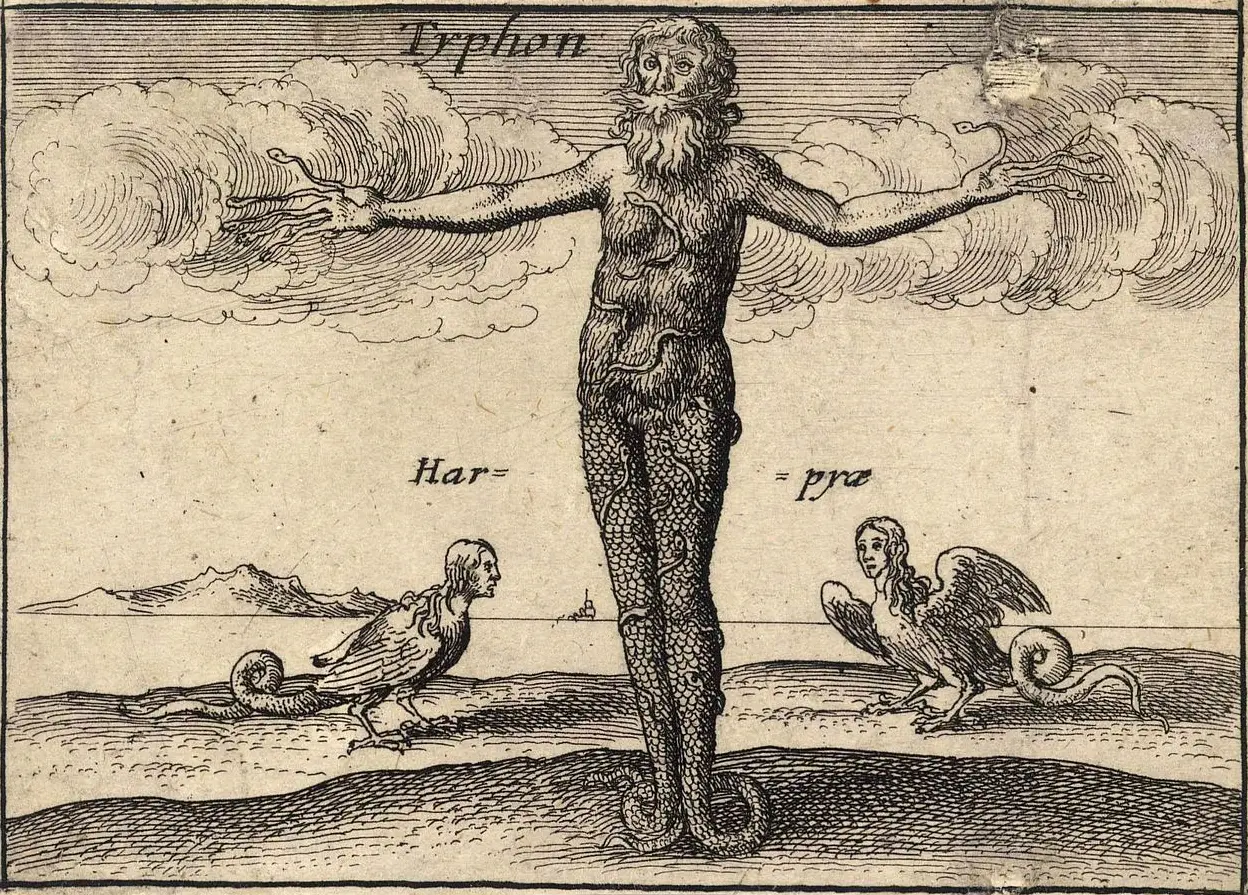
This terrifying image of Typhon not only highlights his physical power but also serves as a metaphor for the uncontrollable forces of nature that the ancient Greeks sought to understand and appease through their myths and religious practices.
Background Story
The background story of Typhon centers around his rebellion against the Olympian gods, particularly Zeus. According to myth, after the defeat of the Titans, Gaia, enraged by the imprisonment of her children, gave birth to Typhon as a last-ditch effort to overthrow the Olympian order.
Typhon’s assault on Mount Olympus marked one of the most significant challenges to Zeus’s reign, as he sought to usurp the throne and bring chaos to the cosmos.
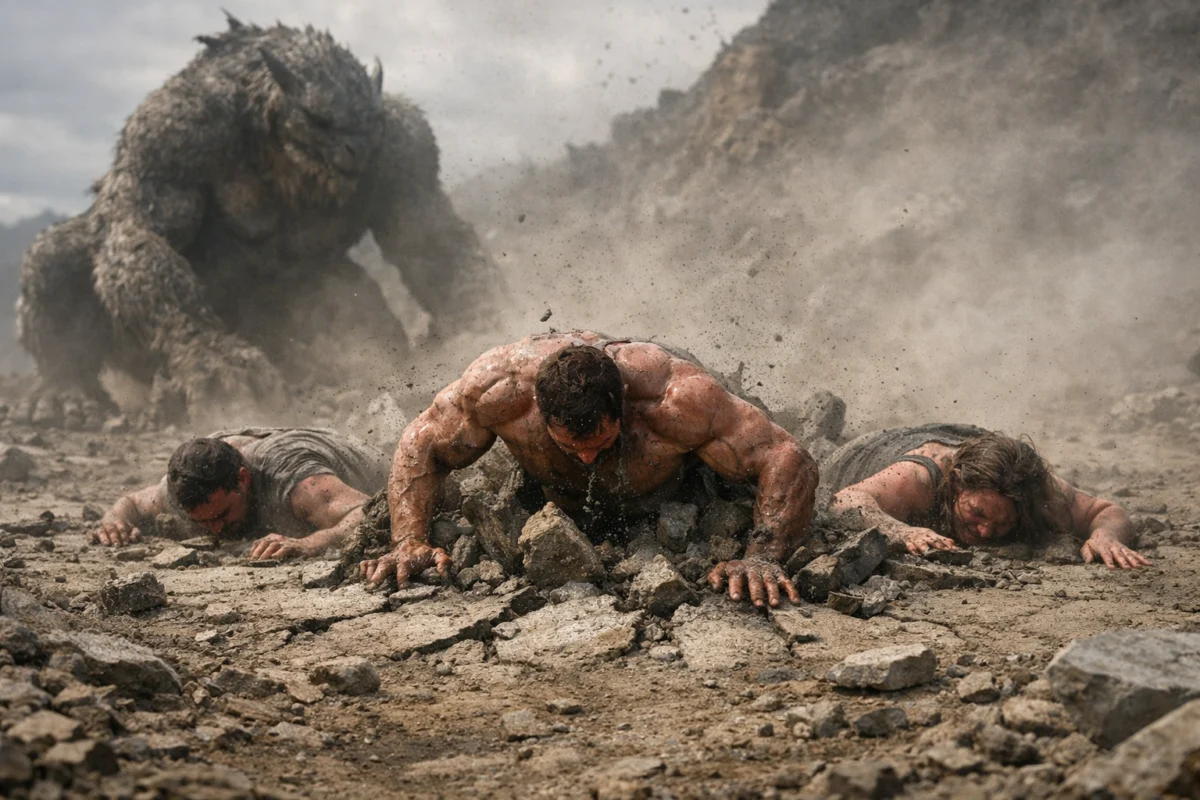
In the ensuing battle, Typhon managed to overpower many of the Olympian gods, forcing them to flee. However, Zeus, determined to maintain his rule, engaged Typhon in a fierce battle that spanned land and sea.
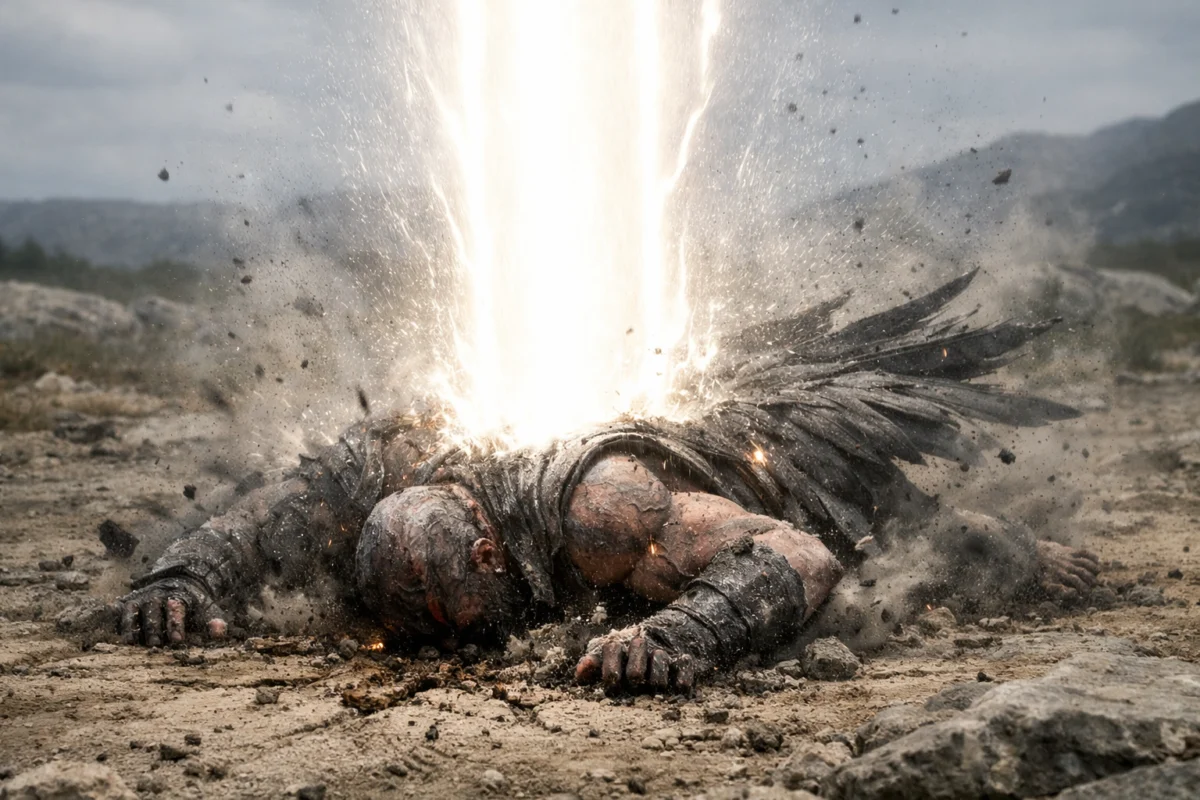
Ultimately, Zeus triumphed by using his thunderbolts to subdue Typhon, trapping him beneath Mount Etna. This victory not only solidified Zeus’s position as the king of the gods but also symbolized the triumph of order over chaos, a recurring theme in Greek mythology.
Famous Folklore Stories
The Battle with Zeus
The most renowned story involving Typhon is his epic battle with Zeus, the king of the gods. This tale is primarily recounted in Hesiod’s “Theogony,” where Typhon, a monstrous giant, challenges Zeus for control of the cosmos.
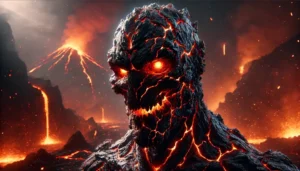
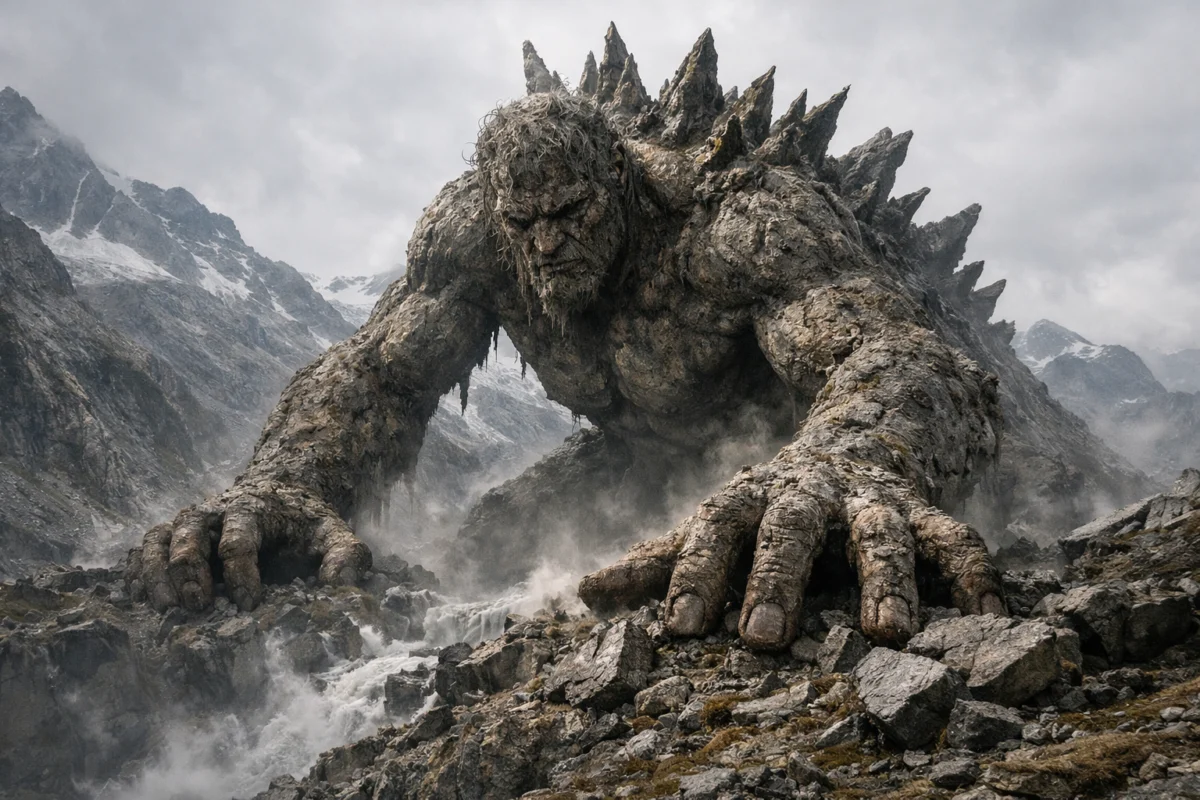
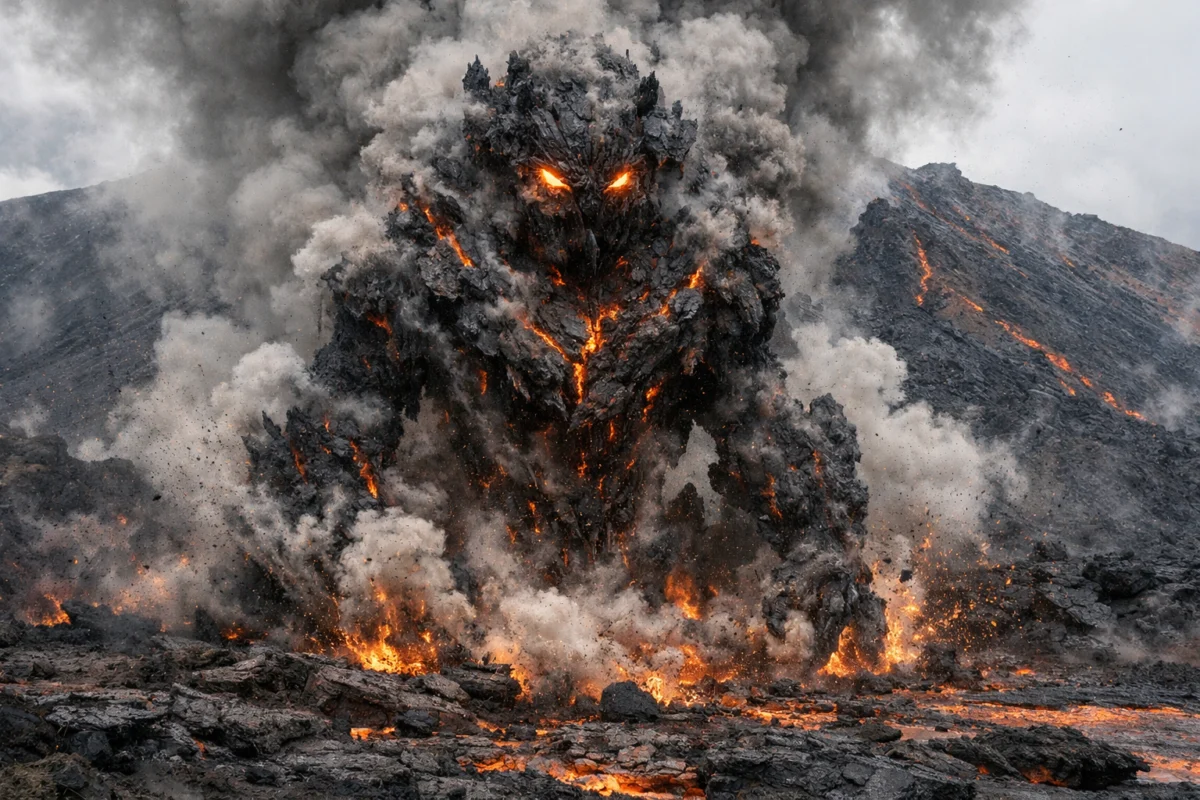
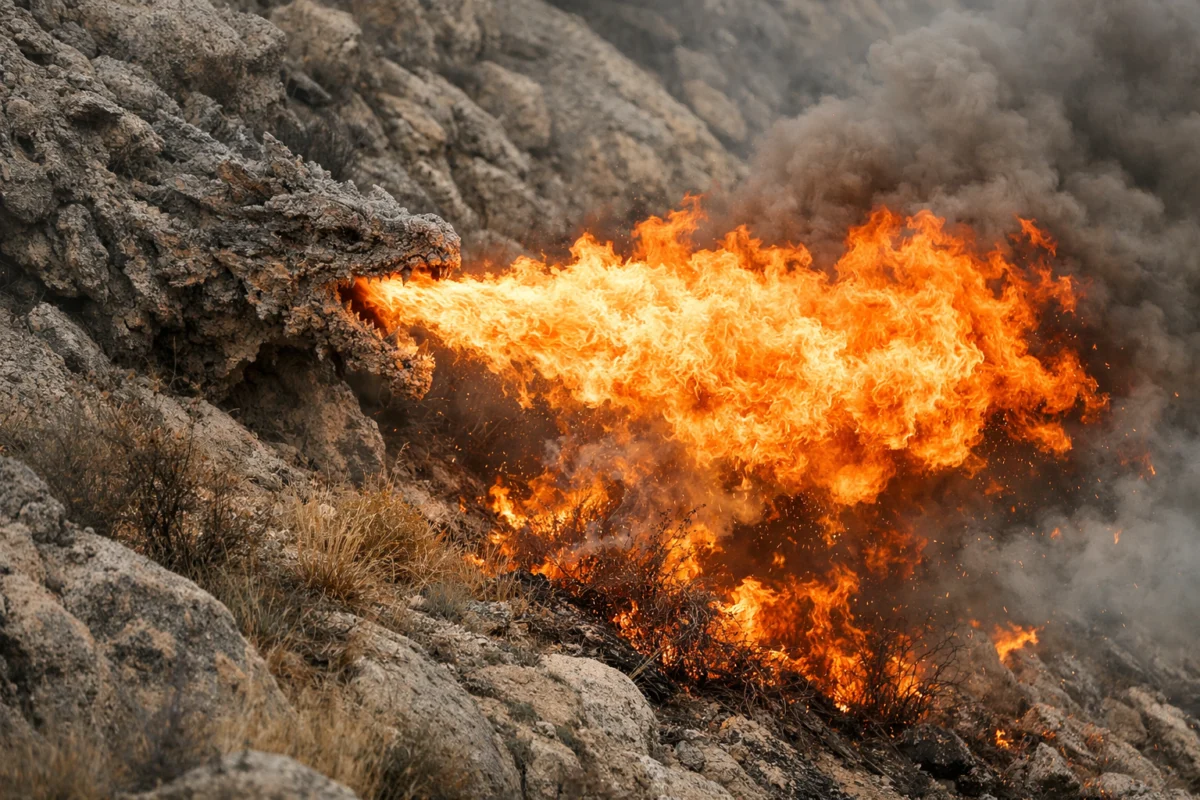
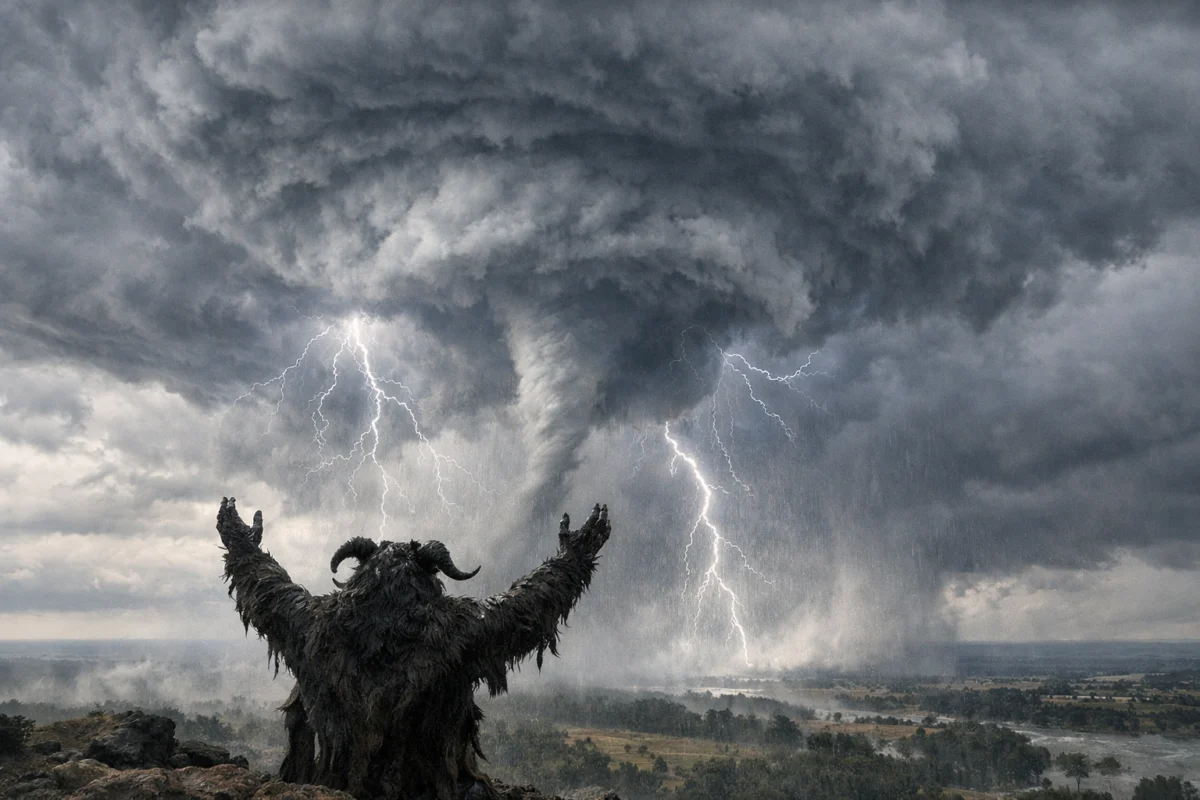
The battle is fierce, with Typhon hurling mountains and Zeus retaliating with thunderbolts. Ultimately, Zeus triumphs, imprisoning Typhon beneath Mount Etna, where his fiery breath is said to cause volcanic eruptions.
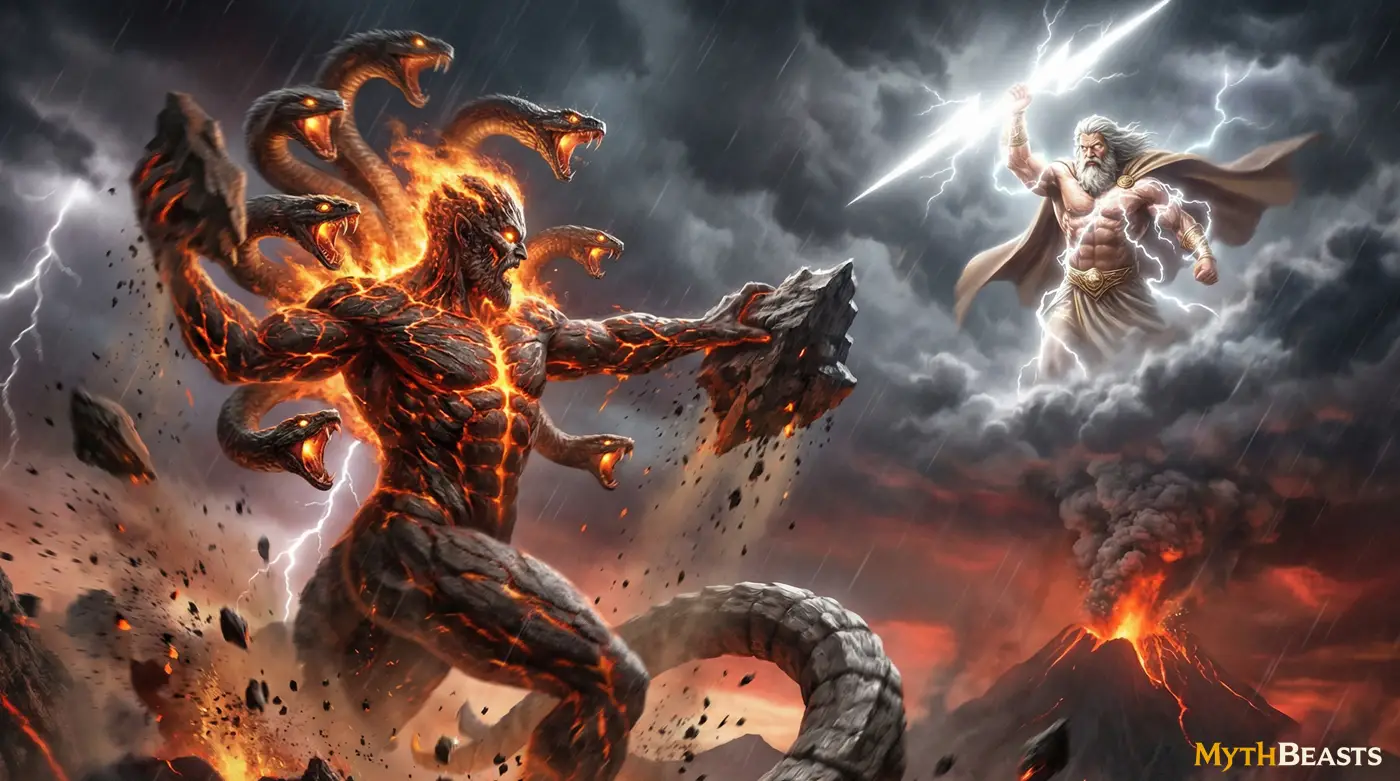
This story symbolizes the struggle between order and chaos, with Zeus representing the former and Typhon the latter.
Typhon and the Winds
Ancient sources, particularly Apollodorus, associate Typhon with violent storms and destructive winds, but not as their literal biological progenitor. After his defeat by Zeus, Typhon becomes symbolically linked with the turbulent forces that threaten sailors and coastal communities.
The Greeks understood chaotic tempests and sudden gales as expressions of Typhon’s lingering power beneath the earth. These associations gave narrative form to natural dangers without presenting Typhon as the literal father of specific wind deities.
This interpretation aligns with classical descriptions while avoiding later misconceptions.
The Birth of Monsters
An intriguing tale from the “Library of Apollodorus” describes Typhon as the father of many mythical beasts. Alongside Echidna, Typhon is said to have sired creatures like Cerberus, the Hydra, and the Chimera.
These offspring further emphasize Typhon’s role as a progenitor of chaos, with each beast embodying different aspects of fear and destruction. This narrative underscores the ancients’ attempts to explain the existence of monstrous creatures through mythological lineage.
Cultural Impact
Typhon’s myth profoundly shaped ancient Greek interpretations of natural disasters. His imprisonment beneath Mount Etna in Sicily provided a mythic explanation for volcanic eruptions, tremors, and bursts of fiery activity.
Poets and geographers repeatedly referenced this connection, cementing Typhon’s symbolic link to geological phenomena.
In art, Typhon appeared on pottery, mosaics, and reliefs, often depicted with serpentine limbs and monstrous features to emphasize his chaotic nature. His battle with Zeus served as a cultural metaphor for civilization triumphing over primordial disorder.
The modern English word “typhoon” does not originate from Typhon but developed from a blend of Greek typhōn (“whirlwind”), Arabic ṭūfān, and Chinese tai feng (台风). While the similarity in sound allowed European scholars to associate the storm with the mythic monster, this is a linguistic coincidence rather than direct derivation.
Typhon’s influence survives today in literature, games, and visual media, where he remains the archetype of the ultimate mythological monster.
Similar Beasts
Yamata no Orochi
A mythical Japanese dragon with eight heads and eight tails, Yamata no Orochi shares similarities with Typhon in its monstrous form and its defeat by a divine hero, Susanoo, echoing Typhon’s battle with Zeus.
Leviathan

LeviathanIn Hebrew mythology, Leviathan is a sea monster representing chaos and is often depicted as a serpent. Like Typhon, Leviathan embodies the untamed forces of nature and the struggle between divine order and chaos.
Jörmungandr
In Norse mythology, Jörmungandr, the Midgard Serpent, encircles the earth and is destined to fight Thor during Ragnarök. This serpent, like Typhon, symbolizes chaos and the cyclical nature of cosmic battles.
Fenrir

Another Norse beast, Fenrir is a monstrous wolf prophesied to kill Odin during Ragnarök. Similar to Typhon, Fenrir represents inevitable chaos and destruction, challenging the gods’ dominion.
Kraken
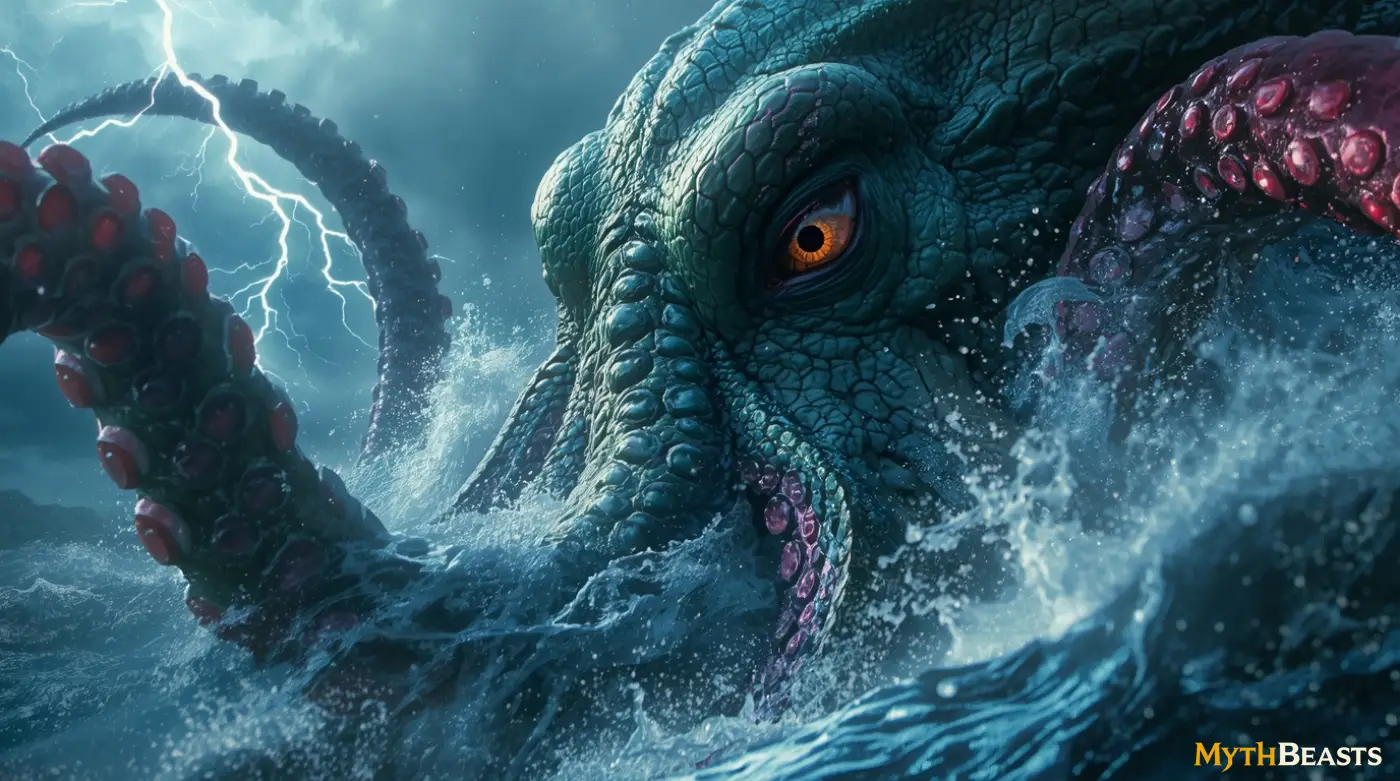
A legendary sea monster from Scandinavian folklore, the Kraken is known for its immense size and destructive power. Like Typhon, it embodies the fear of the unknown and the power of nature.
Religion/Ritual
Typhon did not receive worship, cult offerings, or formal ritual observance in ancient Greek religion. No temples, shrines, or dedicated festivals to Typhon existed, and no archaeological or literary evidence suggests he was ever the object of devotional practice.
Instead, Typhon functioned strictly as a mythological figure, not a religious one. His power appeared symbolically, especially through the mythic explanation of Mount Etna’s eruptions, but Greeks did not attempt to appease him or interact with him through ritual.
The only ritual element connected to Typhon’s mythic cycle involved honoring Zeus, whose victory over Typhon reinforced divine order. However, such celebrations were general Zeus festivals, not Typhon-specific ones.
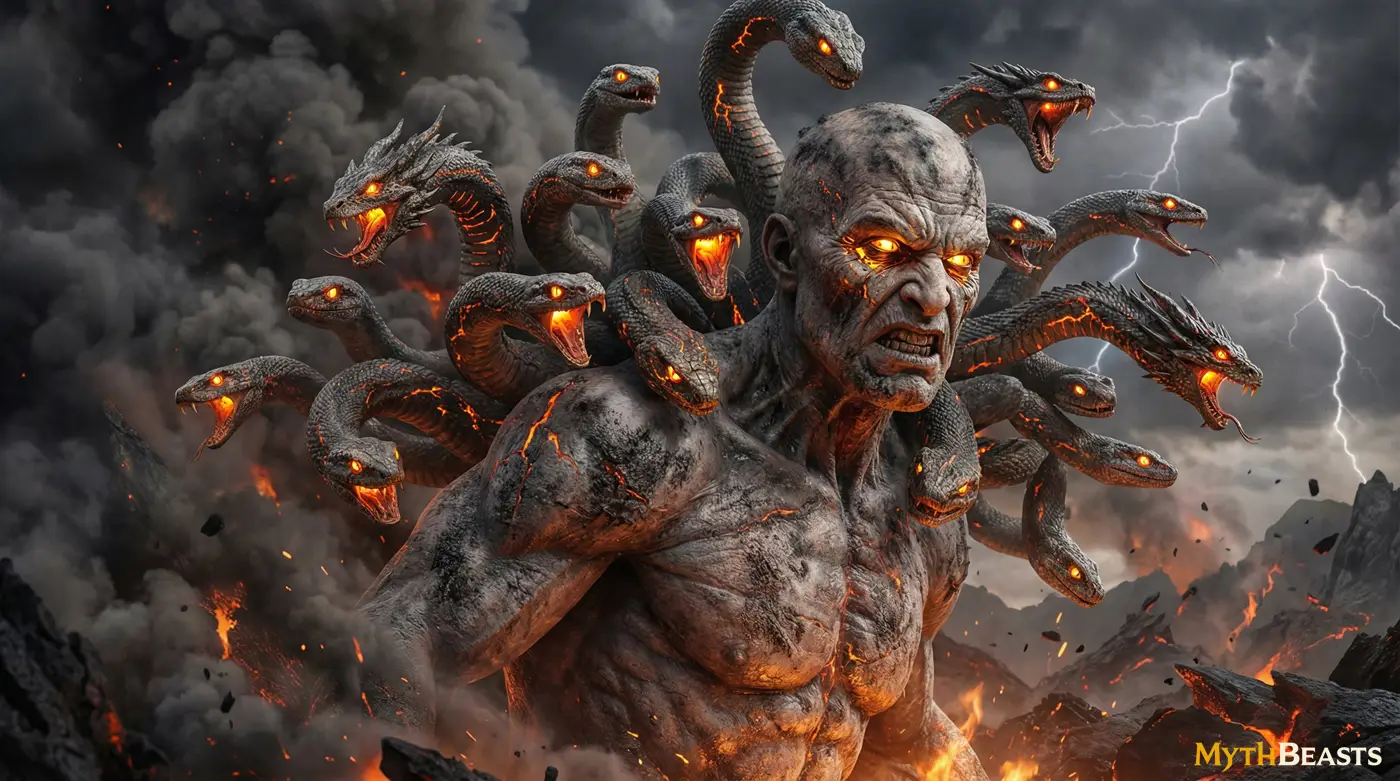
Typhon’s religious role, therefore, is best understood as indirect and symbolic: he represented the chaotic forces that the gods, particularly Zeus, were believed to control. His presence in religion was conceptual rather than devotional, functioning as a reminder of the cosmos’s fragile balance between order and destruction.
Scientific or Rational Explanations
Modern interpretations of Typhon often focus on his symbolic representation of natural disasters, particularly volcanic eruptions and storms. His imprisonment beneath Mount Etna is seen as an ancient attempt to explain volcanic activity, with Typhon’s fiery breath causing eruptions.
Some scholars suggest that Typhon’s myths may have originated from real geological events, such as earthquakes and volcanic eruptions, which ancient peoples sought to understand through storytelling. These narratives provided a framework for interpreting the unpredictable and often terrifying forces of nature.
Additionally, Typhon’s association with storms and winds reflects an early understanding of meteorological phenomena. By personifying these elements as a monstrous being, ancient Greeks could conceptualize and communicate the chaotic and destructive power of nature in a tangible way.
Modern Cultural References
God of War III (2010). In this popular video game, Typhon is depicted as a massive, chained titan whom the protagonist, Kratos, encounters.
This portrayal emphasizes his monstrous nature and ties into the game’s themes of Greek mythology. IMDB
Percy Jackson & the Olympians: The Last Olympian (2009). In Rick Riordan’s book, Typhon is a powerful adversary who poses a significant threat to the protagonists.
The story modernizes Greek myths for a young audience. Rick Riordan
Clash of the Titans (2010). While Typhon himself does not appear, the film features creatures inspired by Greek mythology, and his legacy is felt through the monstrous beings that challenge the hero. IMDB
Immortals (2011). The film includes elements inspired by the myth of Typhon, with giants and titans playing a crucial role in the narrative, reflecting his chaotic influence. IMDB
Assassin’s Creed Odyssey (2018). This game allows players to explore a world inspired by ancient Greece, where mythical creatures, including Typhon-like beings, can be encountered. Ubisoft
Conclusion
Typhon stands as one of Greek mythology’s most formidable figures, embodying chaos and the raw power of nature. His mythological narrative, filled with epic battles against the Olympian gods, underscores themes of struggle and the balance between order and disorder.
Over the centuries, Typhon’s story has been interpreted and reimagined in various cultural contexts, maintaining his status as an enduring symbol of monstrous might.
In modern times, Typhon continues to inspire creators across different media, from literature to video games, reflecting his lasting impact on storytelling. His presence in contemporary works often highlights the timeless allure of mythological tales and their ability to adapt to new cultural landscapes.
As a symbol of primal chaos, Typhon’s legend remains a potent reminder of the ancient world’s fascination with the forces of nature and the divine.
Further Reading
Mythology: Timeless Tales of Gods and Heroes by Edith Hamilton, Little, Brown and Company, 2011.
A comprehensive collection of Greek myths, including the story of Typhon.
Little, Brown and Company