Introduction
The Yacumama is a legendary creature from South American folklore, particularly prominent in the Amazonian regions. Known as a giant serpent, it is often associated with the vast and mysterious Amazon River.
Its mythological significance is deeply rooted in the indigenous cultures of Peru and Brazil, where it is considered a powerful spirit of the water.
This mythical beast has captured the imagination of locals and researchers alike, contributing to a rich tapestry of stories and beliefs. The Yacumama is often portrayed as a guardian of aquatic life, embodying the awe-inspiring and sometimes terrifying aspects of nature.
Its presence in folklore underscores the deep connection between the people and their environment.
As a symbol of the untamed wilderness, the Yacumama represents the mysteries and dangers lurking within the Amazon. Its legend serves as a reminder of the respect and caution required when navigating these waters.
The creature’s influence extends beyond mere folklore, impacting cultural practices and local traditions.
Despite its mythical status, the Yacumama has become a subject of interest for cryptozoologists and folklorists. They seek to understand its origins and the cultural contexts that have kept its legend alive for generations.
The creature’s enduring presence in stories highlights the human fascination with the unknown and the supernatural.
History/Origin
The origins of the Yacumama legend can be traced back to the indigenous tribes of the Amazon rainforest. These communities have long revered the creature as a powerful entity, integral to their understanding of the natural world.
Its myth predates European contact, rooted in ancient oral traditions.
Indigenous peoples, such as the Yagua and the Shipibo-Conibo, have passed down tales of the Yacumama through generations. These stories often emphasize the creature’s role as a protector of the waterways, a guardian against intruders.
The Yacumama’s presence in these narratives reflects the tribes’ deep spiritual connection to their environment.
European explorers first encountered the Yacumama legend during their expeditions into the Amazon in the 16th century. The tales of a massive serpent lurking in the waters intrigued and terrified these early adventurers, adding to the mystique of the unexplored territories.
This encounter marked the beginning of the Yacumama’s introduction to a broader audience.
Over time, the legend of the Yacumama has evolved, influenced by cultural exchanges and the blending of indigenous and European beliefs. Despite these changes, the core elements of the myth have remained consistent, preserving the creature’s significance in Amazonian folklore.
Name Meaning
The name “Yacumama” derives from the Quechua language, spoken by many indigenous peoples in the Andes and Amazon regions. “Yacu” means water, and “mama” translates to mother, together signifying “Mother of the Water.”
This name reflects the creature’s association with aquatic environments and its perceived role as a life-giving force.
The term encapsulates the reverence and fear that the Yacumama inspires among those who dwell near its supposed habitat. As a mother figure, it is seen as nurturing yet formidable, embodying the dual nature of water as both a source of life and a potential threat.
In the context of indigenous belief systems, the Yacumama’s name underscores its status as a spiritual entity. It embodies the interconnectedness of all living things and the sacredness of natural resources.
This linguistic heritage highlights the cultural significance of the creature within these communities.
While the name “Yacumama” is most commonly used, variations exist across different tribes and regions. These variations often reflect the linguistic diversity of the Amazon and the nuanced interpretations of the creature’s role in local mythology.
Appearance
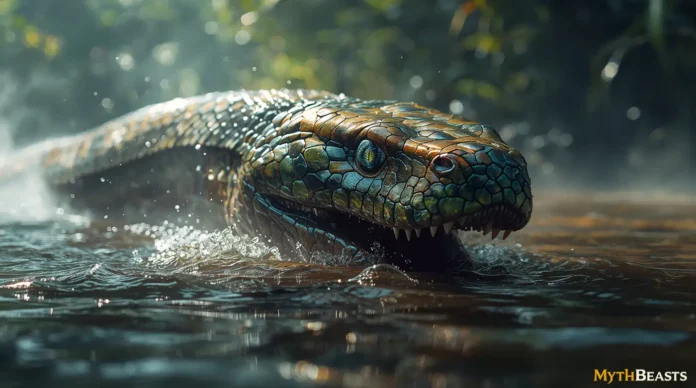
The Yacumama is typically described as a colossal serpent, often measuring over 30 meters in length. Its immense size and strength make it a formidable presence in the waters it inhabits.
The creature is said to have a wide, gaping mouth capable of swallowing large prey whole.
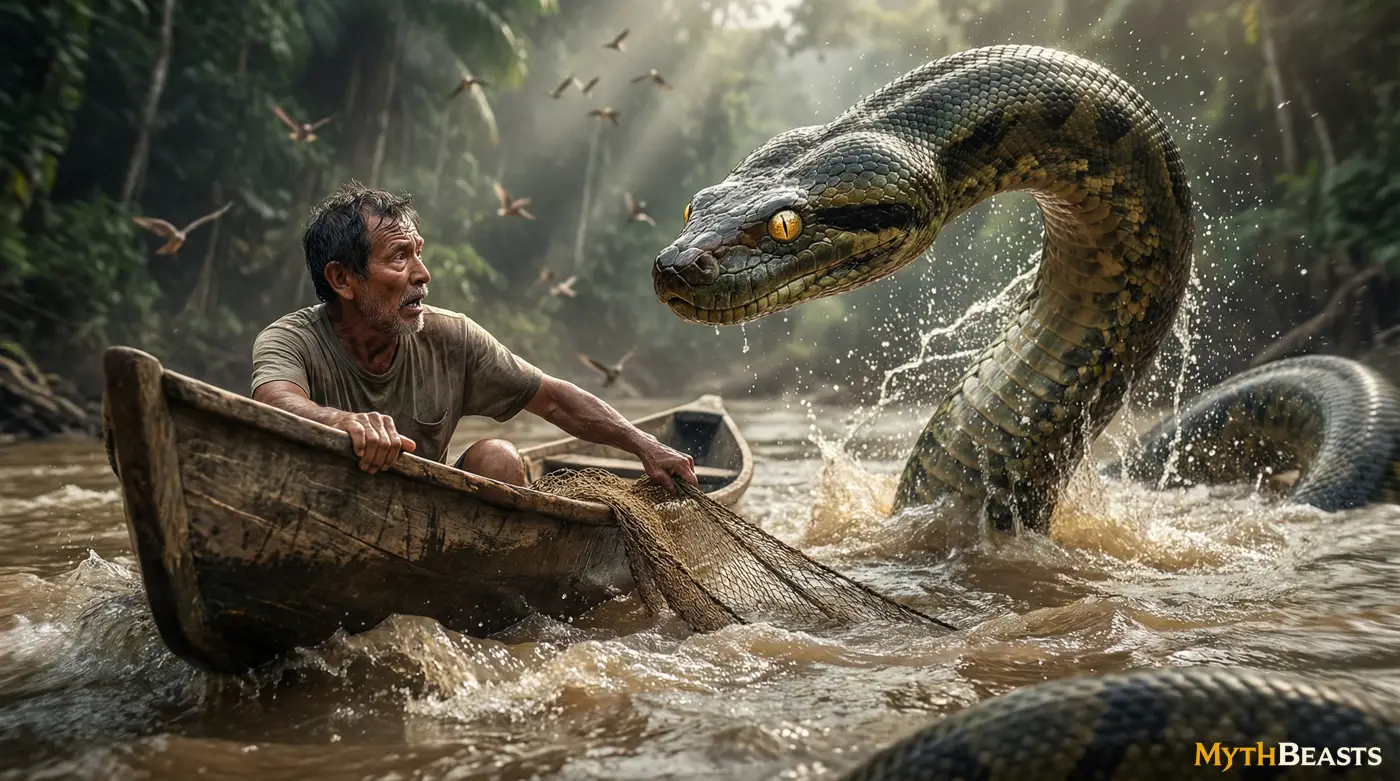
Accounts of the Yacumama’s appearance vary slightly between different cultural narratives. Some describe it with vibrant, scale-covered skin that glimmers in the sunlight, while others depict it as dark and shadowy, blending seamlessly into the murky waters.
The creature is often associated with the sounds it makes, such as a deep, resonant bellow that echoes through the jungle. This auditory element adds to its mystique, as the sound is believed to be a warning to those who venture too close.
Despite its fearsome reputation, some stories portray the Yacumama as a benevolent protector of the river’s inhabitants. This duality in its depiction highlights the complex relationship between humans and the natural world in Amazonian mythology.
Background Story
The Yacumama’s mythological narrative is rich with themes of protection, danger, and respect for nature. One popular story tells of the creature’s role in safeguarding the Amazon’s delicate ecosystem.
It is said to punish those who exploit the river’s resources recklessly.
In this narrative, the Yacumama acts as a guardian spirit, ensuring the balance between human activity and environmental preservation. Its presence serves as a deterrent against overfishing and pollution, reminding communities of the consequences of their actions.
Another tale recounts the Yacumama’s interactions with indigenous shamans, who seek its guidance and blessings. These spiritual leaders are believed to communicate with the creature through rituals and offerings, seeking its favor for bountiful harvests and protection against natural disasters.
No verified sources describe specific rituals or ceremonies dedicated exclusively to the Yacumama. However, its influence is evident in the broader spiritual practices of Amazonian tribes, where water spirits play a crucial role in cultural and religious life.
Famous Folklore Stories
The Fisherman’s Encounter
In Amazonian folklore, a well-known tale describes a fisherman who encounters the Yacumama while navigating the river. As he casts his net, the waters suddenly churn, and the massive serpent appears.
The fisherman, terrified by the creature’s size and presence, quickly retreats. The Yacumama, believed to protect the waters, spares him, allowing him to return home with a story of awe and respect.
This story emphasizes the Yacumama’s role as a guardian of the river, instilling fear and reverence among those who rely on the waterways for their livelihood.
The Lost Explorer
Another tale involves an explorer who ventured too far into the Amazon and encountered the Yacumama. Ignoring local warnings, he ventured deeper, seeking riches and knowledge.
The Yacumama, angered by his intrusion, unleashed a powerful wave, sweeping him away. Locals recount this as a lesson in respecting the natural world and its mystical guardians.
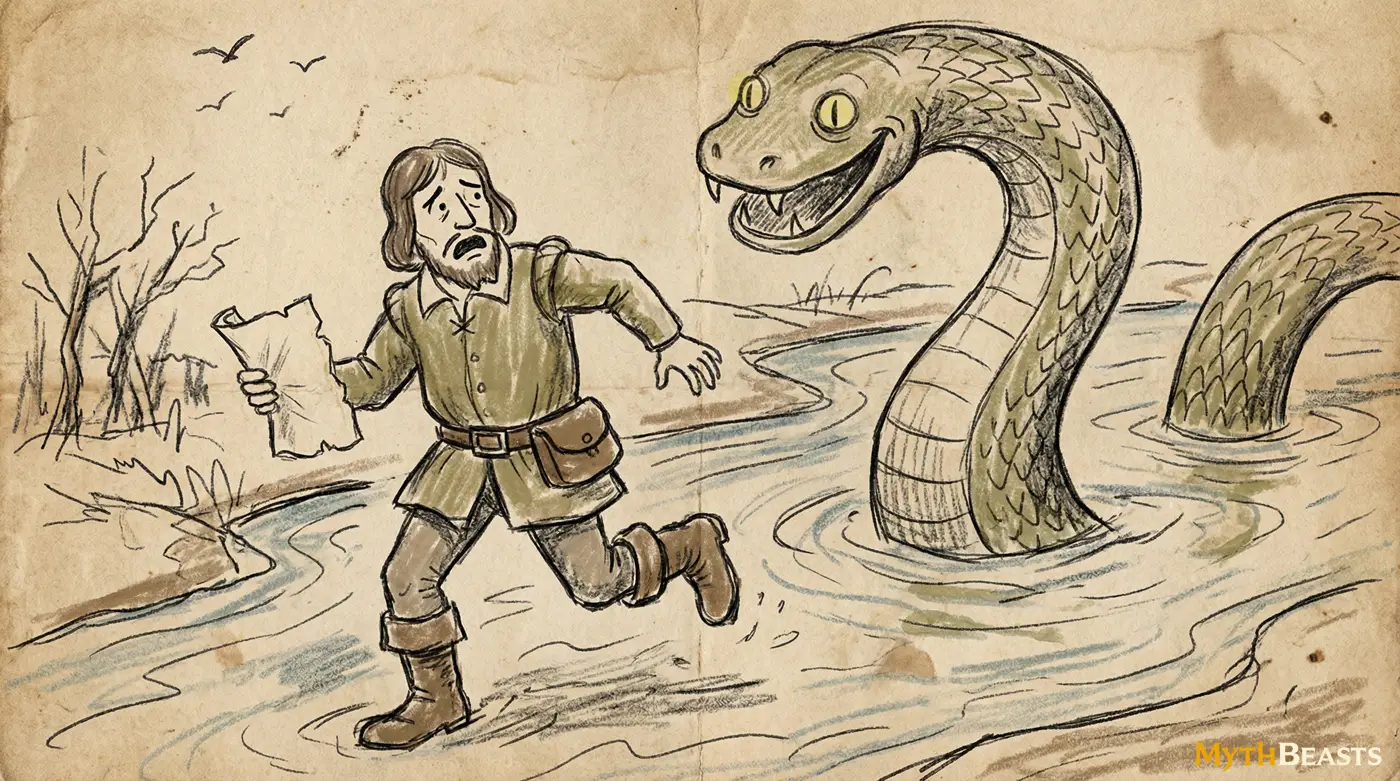
This story serves as a cautionary tale, illustrating the consequences of human arrogance and the importance of heeding local wisdom.
The Shaman’s Vision
In a tale from the Shipibo-Conibo people, a shaman receives a vision of the Yacumama during a spiritual journey. The serpent reveals secrets of the river and its life-giving powers.
The shaman returns to his village, sharing insights and knowledge gained from the encounter. This story highlights the Yacumama’s role as a source of wisdom and spiritual guidance.
It underscores the connection between the natural and spiritual worlds, emphasizing the reverence indigenous cultures hold for the Yacumama.
Cultural Impact
The Yacumama has long been a potent symbol in Amazonian cultures, representing both the dangers and the life-giving properties of the river. Its presence in folklore underscores its significance in daily life.
Historically, the Yacumama was seen as a guardian of the waters, reflecting the deep respect indigenous people have for nature. This reverence is evident in the numerous stories and oral traditions surrounding the creature.
In modern times, scholars view the Yacumama as a symbol of ecological balance. It represents the intricate relationship between humans and the environment, highlighting the need for sustainable practices.
Contemporary interpretations often frame the Yacumama as a metaphor for environmental protection, emphasizing the importance of preserving natural habitats and respecting indigenous knowledge.
These modern perspectives align with global environmental movements, showcasing the enduring relevance of the Yacumama in discussions about conservation and cultural heritage.
Similar Beasts
Mokele-Mbembe
Found in Central African folklore, the Mokele-Mbembe is a large, water-dwelling creature. Like the Yacumama, it is believed to inhabit rivers and has been described as a guardian of its domain.
Nessie

The Loch Ness Monster, or Nessie, from Scottish folklore, shares similarities with the Yacumama. Both are large aquatic creatures, shrouded in mystery, and inspire tales of awe and fear. Read More
Ogopogo

Ogopogo is a legendary creature said to inhabit Okanagan Lake in Canada. Similar to the Yacumama, it is depicted as a serpent-like being, often associated with local indigenous folklore and spiritual beliefs. Read More
Jormungandr
In Norse mythology, Jormungandr, the World Serpent, encircles the Earth. While not aquatic, its immense size and serpentine nature draw parallels to the Yacumama’s formidable presence in its environment.
Amphiptere
Amphipteres are winged serpents from European folklore. Though different in habitat, their serpentine form and mythical status echo the Yacumama’s legendary depiction as a powerful, awe-inspiring creature.
Yacumama compared to Ogopogo and Loch Ness Monster
| Aspect | Yacumama | Ogopogo | Loch Ness Monster |
|---|---|---|---|
| Origin | Yacumama originates from Indigenous Amazonian folklore, particularly in Peru and Brazil. | Ogopogo is rooted in Canadian folklore, specifically from the Okanagan Lake region. | Loch Ness Monster is a creature of Scottish folklore, associated with Loch Ness. |
| Habitat | This serpent is primarily found in the Amazon River and its tributaries. | Ogopogo is said to inhabit Okanagan Lake in British Columbia, Canada. | The Loch Ness Monster is believed to reside in Loch Ness, Scotland. |
| Physical Description | Yacumama is depicted as a giant serpent, often described as enormous and powerful. | Ogopogo is often described as a long, serpentine creature with a horse-like head. | The Loch Ness Monster is typically portrayed as a large, aquatic creature with a long neck. |
| Cultural Significance | In local culture, Yacumama symbolizes the guardian of rivers and aquatic life. | Ogopogo is considered a protector of the lake and its ecosystem in local beliefs. | The Loch Ness Monster has become a symbol of mystery and intrigue in Scottish culture. |
| Legends | Legends of Yacumama emphasize respect for nature and the dangers of the river. | Ogopogo legends often involve tales of sightings and encounters by locals and tourists. | Loch Ness Monster legends include numerous sightings and stories of its elusive nature. |
| Research Interest | Yacumama attracts interest from folklorists studying Indigenous myths and environmental connections. | Ogopogo is a subject of research for cryptozoologists and folklore enthusiasts alike. | The Loch Ness Monster has been a focus for researchers investigating cryptids and local lore. |
Religion/Ritual
No verified sources describe specific religious rituals dedicated to the Yacumama. However, it is believed that offerings were made to appease the creature, ensuring safe passage along the rivers.
These offerings likely consisted of small tokens or food, presented with prayers for protection and favor. Such practices reflect the deep respect and fear the Yacumama inspired among riverine communities.
Some interpretations suggest that shamans might have invoked the Yacumama during spiritual ceremonies, seeking guidance or blessings. However, no direct evidence supports these claims.
The Yacumama’s presence in spiritual narratives highlights its role as a bridge between the physical and metaphysical realms, embodying the mysteries of the natural world.
While specific rituals remain undocumented, the Yacumama’s symbolic significance in spiritual practices underscores its enduring influence in Amazonian belief systems.
Scientific or Rational Explanations
Some historians propose that the Yacumama legend may stem from real encounters with large anacondas or other sizeable aquatic creatures native to the Amazon. These animals could have inspired fear and awe, giving rise to the myth.
Anthropologists suggest that the Yacumama serves as a cultural metaphor for the unpredictable and often dangerous nature of river ecosystems. Its depiction as a guardian reflects the community’s relationship with their environment.
Biologists believe that exaggerated tales of the Yacumama may have been fueled by rare sightings of unusually large snakes or other riverine animals, contributing to its legendary status.
Some theories posit that the Yacumama symbolizes the unknown and unexplored aspects of the Amazon, embodying the mysteries and challenges faced by those who venture into its depths.
These scientific interpretations underscore the complex interplay between myth and reality, illustrating how natural phenomena can influence cultural narratives and beliefs.
Modern Cultural References
Carnival Row, TV series, created by René Echevarria and Travis Beacham, 2019. This fantasy series includes mythical creatures and draws inspiration from various folklore, including the Yacumama, in its depiction of mystical beings. IMDB Page
Amazonia, novel, James Rollins, 2002. This thriller novel features a mysterious creature resembling the Yacumama in the depths of the Amazon, blending adventure with mythological elements. Publisher Page
Uncharted: Golden Abyss, video game, developed by Bend Studio, 2011. This action-adventure game includes references to South American myths, with elements inspired by the legend of the Yacumama. IMDB Page
The Green Inferno, film, directed by Eli Roth, 2013. This horror film explores the Amazon rainforest’s mysteries and includes nods to local legends, such as the Yacumama, to enhance its eerie atmosphere. IMDB Page
Conclusion
The Yacumama stands as a powerful symbol of nature’s untamed and mysterious forces. Its mythological roots in the Amazonian rainforest underscore the deep connection between indigenous cultures and their environment.
The creature’s portrayal as a guardian of the waters reflects the reverence for natural resources and the need to respect their power. While no verified ancient texts describe specific rituals or stories about the Yacumama, its enduring presence in folklore highlights its significance in cultural narratives.
In modern times, the Yacumama continues to inspire various forms of media, reflecting the creature’s adaptability to contemporary storytelling. Its mythical allure remains potent, serving as a reminder of the world’s uncharted mysteries and the cultural richness of the Amazon.
The Yacumama’s legacy, as both a fearsome and protective entity, invites ongoing exploration and appreciation of the mythological tapestry that shapes human understanding of nature’s wonders.