Austria – an Overview
Austria is a geographical and historical context for diverse religious and folkloric evidence, not a single documented mythology with one continuous national system.
The present state’s territory contains evidence from prehistoric communities, Roman provinces, medieval Christian societies, and later regional folklore traditions.
Calling these materials “Austrian mythology” is a modern classificatory convenience, not proof that historical communities shared one mythology under that name.
Austria is relevant because local traditions emerged within identifiable Alpine and Danubian regions now largely inside its borders.
Historical and Environmental Context
Time Frame and Location
The territory includes the eastern Alps and the Danube basin, environments that shaped settlement patterns and regional connections across different historical periods.
Prehistoric archaeological evidence in this area documents material cultures, but artifacts alone rarely establish the names or narratives of supernatural beings.
Roman administration incorporated parts of present-day Austria into provinces including Noricum and Pannonia, connecting local communities with imperial institutions and religious practices.
Medieval political formations developed after Roman rule, but their boundaries and populations do not correspond neatly to the modern Austrian state.
Contact and Cultural Exchange
Roman provincial evidence demonstrates religious exchange through inscriptions, sanctuaries, and material remains, although local interpretations cannot always be recovered from these sources.
Christianization altered religious institutions across the region over centuries, with local practices documented unevenly in surviving historical records.
Alpine routes and Danubian corridors connected communities beyond present borders, making cultural exchange more historically plausible than complete regional isolation.
Mythological Framework
Spiritual or Supernatural Categories
Historical folklore collections from German-speaking Alpine regions record beliefs in beings associated with seasonal customs, household life, landscape, and the dead.
Such categories reflect collected regional belief rather than evidence for a unified Austrian pantheon or consistent national doctrine.
Earlier archaeological and Roman-period evidence cannot automatically be interpreted through later folklore categories, because the sources belong to different historical contexts.
Folklore and Narrative Tradition
Recurring Mythological Themes
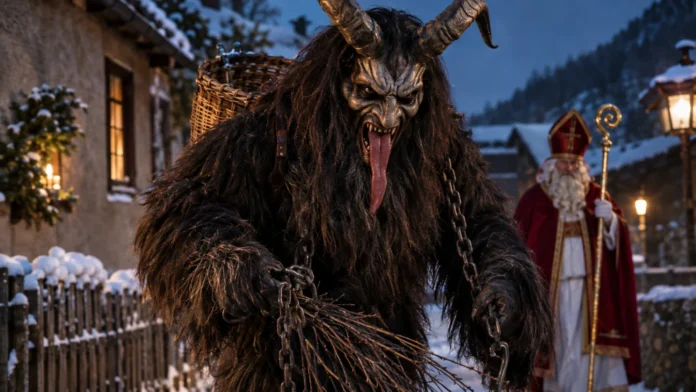
Alpine folklore records recurring associations between supernatural beings and particular seasons, especially winter customs documented in later regional accounts.
These associations classify narratives through calendar and locality, rather than establishing a single cosmological system shared throughout Austria.
Mountain landscapes appear as settings in regional accounts, but their narrative significance varies among communities and collected traditions.
Transmission and Preservation
Oral transmission preserved local narratives before and alongside their collection by folklorists, although precise earlier wording is generally unrecoverable.
Nineteenth-century folklore collection provides evidence for beliefs recorded at that time, not transparent access to unchanged ancient traditions.
Printed collections preserve selected accounts through editorial choices, so their contents cannot represent every community or performer equally.
Internal Variation and Temporal Change
Folklore varied across Alpine valleys, foothills, and Danubian settlements, reflecting distinct local settings rather than a uniform Austrian tradition.
Recorded customs also changed over time, as collection dates and historical descriptions indicate different forms of practice and interpretation.
Modern national borders encompass communities with historical ties to neighboring regions, complicating any claim of exclusively Austrian cultural ownership.
Related Cultural Origins and Myth Sources
German-speaking Bavarian traditions provide a close comparison for parts of western Austria, reflecting linguistic and regional connections across present borders.
That relationship does not make Bavarian and Austrian folklore interchangeable, because local narratives and customs require evidence from their specific communities.
Roman religious evidence offers a separate historical comparison, distinct from later Alpine folklore in chronology, source type, and religious setting.
Evidence Limits and Scholarly Uncertainty
Prehistoric material remains rarely identify supernatural figures directly, limiting confident reconstruction of belief from archaeological evidence alone.
Roman inscriptions and objects document religious activity, yet they do not consistently reveal how every local community understood associated practices.
Folklore records are unevenly distributed by region and period, leaving substantial gaps in the historical documentation of local traditions.
No verified sources describe a single, continuous Austrian mythology shared across the territory throughout antiquity and the medieval period.
Scholarly interpretation must distinguish documented local belief from later national classifications, whose boundaries can obscure older regional variation.