Ancient Guardians - an Overview
Ancient Guardians serve as mythological motifs representing protective forces across various traditions. They often embody timeless wisdom, defending sacred spaces or cosmic order. Their presence emphasizes the boundary between the known and the unknown, highlighting cultural significance.Core Characteristics and Themes
Narrative Function
Ancient Guardians often appear in mythological narratives as protectors of sacred artifacts or lands. They challenge heroes, test virtues, or offer guidance. This role underscores their importance in maintaining cosmic balance.Symbolic Meaning
Symbolically, these guardians represent the values and fears of their cultures. They manifest the sacred duty of protection, embodying virtues such as loyalty, valor, and vigilance. Their presence often signifies the defense of moral or spiritual purity.Cultural Context and Worldview
Relationship to Religion and Belief
In religious contexts, Ancient Guardians are closely tied to deities or sacred laws. They may serve as intermediaries between gods and humans, ensuring that divine will is respected. Their role reinforces cosmological hierarchies.Role in Social or Moral Order
By enforcing boundaries, Ancient Guardians uphold societal norms and ethical codes. They embody the ideals of justice and order, often punishing transgressors. This reinforces the moral teachings within the community and establishes clear ethical guidelines.Associated Mythological Beings
Common Creature Archetypes
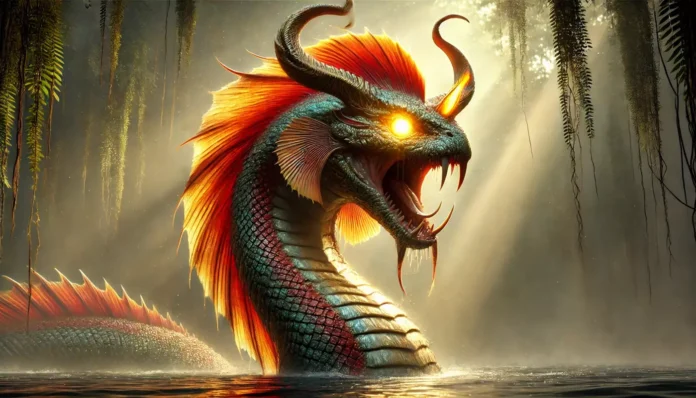
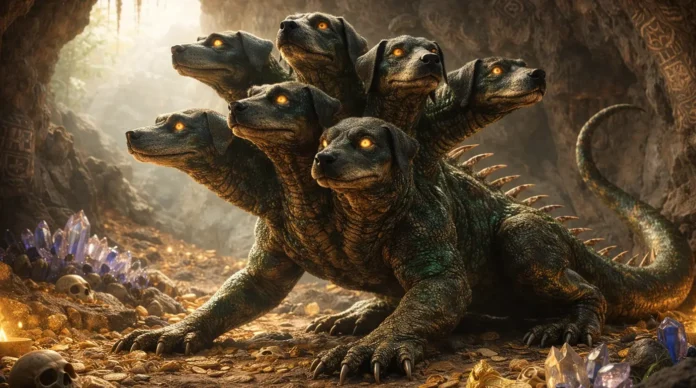
Common archetypes include dragons, sphinxes, or griffins, often depicted as formidable and wise. These creatures symbolize the combination of strength and intellect, essential traits for those guarding sacred or forbidden realms.Non-Creature Manifestations
Ancient Guardians may also appear as enchanted objects or natural phenomena, such as mountains or rivers deemed sacred. These manifestations highlight the belief in animate landscapes, where nature itself acts as a protective force.Variations Across Cultures
Regional Interpretations
In different cultures, the specific form and function of Ancient Guardians vary. For example, in some Asian traditions, they may appear as benevolent dragon deities, while in Western lore, they are often stern and fearsome protectors.Shared Structural Patterns
Despite cultural differences, Ancient Guardians consistently reflect themes of protection and boundary maintenance. Across traditions, they serve similar purposes, indicating a shared human need to conceptualize guardianship within mythological frameworks.Persistence and Transmission
Oral and Written Traditions
These guardians have been preserved through oral tales and sacred texts, ensuring their continued relevance. Storytellers and scribes played vital roles in transmitting these narratives, adapting them to cultural shifts and audience needs.Adaptation Over Time
Over centuries, the portrayal of Ancient Guardians has evolved. While core characteristics remain, interpretations shift to reflect contemporary concerns. This adaptability demonstrates their enduring significance within ever-changing cultural contexts.Scholarly Interpretation and Uncertainty
Symbolic vs Literal Readings
Scholars often debate whether guardians should be viewed symbolically or literally. Some argue for symbolic interpretations as cultural metaphors, while others suggest they reflect literal beliefs in protective entities.Limits of Historical Evidence
Historical evidence for Ancient Guardians varies in clarity and completeness. Many traditions lack comprehensive documentation, leading to scholarly debates. Consequently, some interpretations remain speculative, relying on fragmented sources or oral histories.Classification Notes
Distinction from Related Lore Types
Ancient Guardians differ from generic protective spirits in their explicit association with sacred duty and cosmological order. Unlike ordinary guardians, they embody specific cultural values, making their role uniquely significant.Use in Mythological Taxonomy
In taxonomy, Ancient Guardians serve as a distinct category, crucial for understanding mythological systems. Their classification emphasizes the cultural logic of protection and boundary, making them indispensable for analyzing mythological narratives.