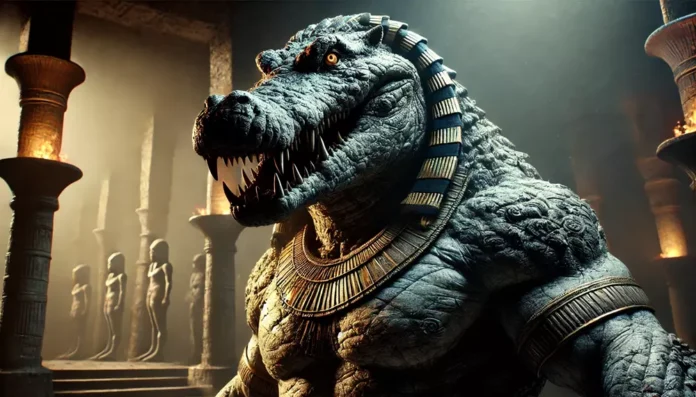
Overview of the Ancient Egypt Period
Ancient Egypt conventionally spans from the formation of territorial kingship around 3100 BCE to the Roman annexation in 30 BCE. This long chronology contains changing political settings rather than one uniform civilization.
Pharaonic culture developed along the Nile, where agricultural communities, royal institutions, and temple centers shaped distinctive religious traditions. Later periods included Persian, Ptolemaic, and Roman rule, each altering Egypt’s historical context.
Mythological traditions endured through political change because temples, burials, household practices, and royal representation repeatedly engaged divine powers. Their evidence does not establish that every Egyptian community shared identical beliefs.
Cultural and Religious Worldviews
Dominant Belief Systems
Egyptian religion recognized numerous deities associated with natural processes, social institutions, and cosmic order. Divine identity could be expressed through human, animal, or combined forms in images and religious texts.
Ma’at represented cosmic order, justice, and proper conduct in Egyptian thought. Royal inscriptions and funerary sources connect its maintenance with legitimate rule, though surviving texts reflect particular institutions and periods.
Egyptian accounts of the cosmos commonly described creation as the emergence of ordered existence from primordial conditions. Creation traditions differed among centers, including Heliopolis, Memphis, and Hermopolis; they should not be collapsed into one canonical account.
Role of Myth in Daily Life
Myths gave religious meaning to kingship by presenting the ruler in relationship with divine authority. Such accounts disclose idealized political theology, not transparent records of ordinary people’s opinions.
Funerary compositions offered deceased people models and resources for negotiating the afterlife. Their presence in tombs demonstrates institutional concern with posthumous existence, but does not reveal how consistently individuals interpreted them.
Household objects and protective formulas show that supernatural concerns extended beyond temples and royal monuments. These materials indicate practical engagement with danger, health, and fortune without proving a uniform popular theology.
Mythological Beasts and Supernatural Entities
Common Types of Mythical Creatures
Egyptian supernatural beings included deities with animal features, protective spirits, and composite figures. Their classification depends on context: an animal-headed image might represent a god, an attribute, or a distinct being.
Serpents occupied varied positions in Egyptian religious imagery. Apophis, the hostile serpent opposing the sun god’s passage, differs sharply from protective serpentine figures represented in royal and funerary settings.
Hybrid guardians combined features such as human faces and animal bodies in monumental sculpture. The sphinx is especially prominent, but its meaning varied across periods and settings rather than defining every composite creature.
Dangerous beings also appear in funerary texts as obstacles or agents within the afterlife. Their names and functions are often text-specific, making broad categories safer than treating them as a single stable species.
Symbolism and Meaning
Animal features could communicate qualities associated with particular deities, including strength, fertility, vigilance, or solar power. These associations depended on established imagery and context, not on a universal Egyptian animal symbolism.
Protective beings marked boundaries between secure and dangerous spaces, especially in tomb decoration and religious objects. This function links supernatural imagery to concerns about bodily safety and continued existence.
Hostile entities represented disorder or impediments to cosmic stability in certain religious compositions. Their opposition to divine order is documented within those compositions, rather than serving as a general explanation for every monster.
Folklore Traditions and Storytelling
Oral and Written Transmission
Egyptian myths survive through temple inscriptions, tomb texts, papyri, and decorated objects. These sources preserve selected religious expressions; they are not comprehensive transcripts of everyday oral storytelling.
Literary tales written in Egyptian languages sometimes include supernatural events and extraordinary beings. Their surviving manuscripts indicate scribal transmission, although the extent of earlier oral circulation usually cannot be established.
Funerary compositions changed across periods and social settings, with different versions appearing in royal and nonroyal contexts. This variation cautions against describing Egyptian religious literature as a fixed, universally accessible canon.
Regional Variations
Religious centers developed distinct accounts of creation and divine relationships. Heliopolitan traditions emphasized a genealogy of gods, while Memphite theology gave Ptah a central creative role; neither represents all Egyptian belief.
Thebes became especially associated with Amun, whose prominence expanded in particular historical periods. This regional development demonstrates changing religious emphasis rather than a replacement of every local deity or tradition.
Local animal cults and divine forms varied across Egypt, but surviving evidence is uneven. No verified sources describe this for every community, so regional distinctions must remain tied to documented places and periods.
Relationship Between Humans and the Mythical World
Fear, Protection, and Reverence
People addressed supernatural danger through protective objects, written formulas, and appeals to divine powers. Such evidence supports the existence of practical religious responses, not assumptions about private feelings or universal fear.
Some supernatural beings were revered as divine manifestations, whereas others appeared as threats in specific texts. This divergence means that animal form alone cannot determine whether an entity was benevolent or dangerous.
Judgment scenes in funerary sources associate moral conduct with posthumous consequences. These images express religious ideals, but historians cannot treat them as evidence that every Egyptian understood morality identically.
Influence on Art and Material Culture
Animal-headed deities and composite guardians appeared in sculpture, relief, amulets, and painted decoration. Their placement and attributes help identify religious contexts, though an image’s precise meaning may remain uncertain.
Monumental sphinxes joined royal representation with protective imagery at significant architectural sites. Their form varied, and interpretation requires attention to date, location, and accompanying inscriptions rather than appearance alone.
Amulets bearing divine or animal imagery circulated in funerary and daily contexts. Their archaeological presence documents material engagement with protection, but cannot establish a single standardized meaning for every wearer.
Transition and Legacy of the Ancient Egypt Period
Egyptian religious traditions adapted under Greek and Roman rule, with older deities continuing in transformed political and temple environments. Continuity was substantial, but local practices and institutional conditions changed.
Isis gained worshippers beyond Egypt during the Hellenistic and Roman periods. Her wider reception involved cultural adaptation; it should not be described as simple unchanged export of an Egyptian religious system.
Later accounts of Egyptian religion often filtered its symbols through Greek, Roman, and subsequent interpretations. Such reception histories are distinct from evidence for what Egyptians themselves believed in earlier periods.
Historical Reliability and Interpretation
Most surviving evidence was produced or preserved by institutions, literate specialists, and wealthy patrons. Its social selectivity limits claims about the beliefs of people whose voices left fewer written records.
Religious images and texts use symbolic conventions that require contextual interpretation. A figure’s appearance alone rarely establishes its complete identity, function, or significance across different historical settings.
Mythological statements are evidence for religious representation, not automatic confirmation of supernatural events as historical fact. Responsible analysis distinguishes documented practices from theological claims and acknowledges unresolved interpretive questions.