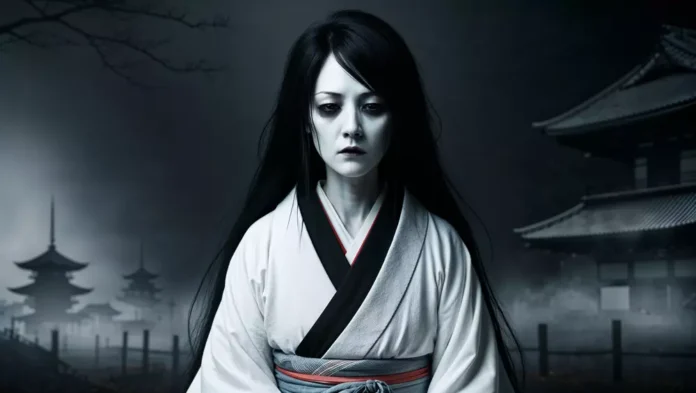
Ghost – Overview
Ghost designates an apparition or presence understood as a deceased person persisting after bodily death. It is a comparative category, not a single creature shared uniformly across traditions.
Its defining feature is the connection between an apparent presence and death, rather than animal anatomy, elemental substance, or membership in a single supernatural species.
Ghost accounts commonly address unresolved relations between living communities and their dead. Their significance depends on local ideas about personhood, death, memory, and the continuing obligations of kinship.
Defining Characteristics
Physical Form and Morphology
Ghosts are often represented in human likeness because their identity depends upon recognition as deceased persons. Such likeness may preserve remembered clothing, age, or bodily appearance.
Visibility varies across traditions and accounts: apparitions may appear fully embodied, faintly perceptible, or only through sounds and disturbances. No single visual form defines the category.
Ontological Nature
Many historical belief systems understand ghosts as persons surviving death in some altered condition. This does not establish a universal doctrine about souls, spirits, or bodily continuity.
Some traditions connect apparitions with improper burial, sudden death, or neglected obligations. These explanations belong to particular cultural settings and cannot safely be generalized to every ghost belief.
Ghosts occupy a boundary between the living and dead in many accounts. Their presence challenges the presumed separation of those domains without necessarily overturning a culture’s cosmology.
Mythological Role and Function
Place in Mythological Systems
Within religious worldviews, ghosts may indicate that death has not ended every social relationship. Their appearance can make remembrance, burial, or family duty cosmologically consequential.
Ghosts are not consistently subordinate to gods or hostile to humans. Their status depends on local accounts of divine authority, afterlife conditions, and relations between living people and ancestors.
Perception and Meaning
Communities may interpret a ghost as a warning, an unsettled dead person, or evidence of continuing attachment. These meanings depend on specific beliefs, not a universal symbolic code.
Some ghost traditions emphasize danger, whereas others allow deceased relatives a continuing social presence. This contrast cautions against reducing apparitions to either threats or protective ancestors.
Distinction from Related Beast Types
Conceptual Boundaries
A ghost is distinguished principally by its identification with a dead person. Elemental beings instead derive their identity from natural substances or forces, not human mortality.
Undead categories can overlap with ghosts, but often describe physically active corpses or revenants. A disembodied apparition and a returned body therefore require separate classification.
Humanoid monsters resemble people in shape, yet need not represent the dead. Ghost classification requires a culturally grounded connection to postmortem identity, not appearance alone.
Common Sources of Confusion
Translation encourages conflation because words for spirits, shades, ancestors, and ghosts rarely match precisely across languages. Comparative analysis must preserve indigenous distinctions where evidence permits.
Researchers distinguish categories by examining each being’s origin, body, social status, and relation to death. These criteria avoid treating every invisible presence as a ghost.
Canonical Beasts Associated with This Beast Type
Gui
In Chinese religious and folkloric traditions, gui can refer broadly to ghosts or spirits of the dead. Its range makes it representative, but not equivalent to every local ghost concept.
Yūrei
Japanese yūrei are apparitions of deceased persons in religious and folkloric contexts. Their classification as ghosts rests on their postmortem identity, although accounts and interpretations vary historically.
Eidōlon
Ancient Greek eidōlon could denote an image, phantom, or shade associated with a person. Its semantic range is broader than modern “ghost,” requiring contextual interpretation.
Historical Distribution and Cultural Context
Beliefs in apparitions occur across many documented societies, but comparable reports do not prove identical doctrines. Local burial customs, kinship structures, and afterlife concepts shape interpretation.
Ancient Greek, Chinese, Japanese, and European sources preserve distinct vocabularies and explanations for the dead’s appearances. Their chronology and textual forms differ, preventing a single historical origin claim.
Written records disproportionately reflect literate institutions and elite concerns. Oral practices and everyday beliefs are less completely documented, especially where historical sources are fragmentary or mediated.
Scholarly Interpretation and Uncertainty
Variation in Definitions
Comparative scholarship uses ghost as a practical umbrella for postmortem apparitions, while historical communities may distinguish shades, ancestors, revenants, and other presences sharply.
Some accounts focus on personal survival; others emphasize social memory or disrupted relations. These emphases are analytical distinctions, not interchangeable explanations of every tradition.
Limits of Available Evidence
Descriptions often survive through literary, legal, or religious sources rather than direct testimony about ordinary experience. Their genre can shape how apparitions are depicted and classified.
No verified sources describe a universal ghost doctrine shared across these societies. Claims about common appearance, motivation, or afterlife status must therefore remain qualified and context-specific.
Mythological Role Across Cultures
Ghost traditions recur partly because death raises questions about personal continuity and obligations toward the deceased. Apparition beliefs provide culturally specific ways to frame those concerns.
Comparative study is useful when it identifies recurring social questions without erasing doctrinal differences. Ghosts consequently illuminate how communities define death, memory, and belonging.