Overview of the Modern Australia Period
Modern Australia generally describes the period following British colonisation, especially the federation established in 1901. It is not a single ancient mythological era or culturally uniform historical period.
Aboriginal and Torres Strait Islander societies have distinct, continuing histories that long predate colonisation. Their traditions cannot be treated as remnants belonging only to Australia’s modern period.
Colonisation brought British institutions and settlers, followed by migration from many regions. These historical changes created new settings for folklore without replacing Indigenous cultural traditions.
Myth and folklore remain culturally important because they communicate relationships among people, ancestral beings, Country, animals, and places. Their meanings vary among communities and historical circumstances.
Cultural and Religious Worldviews
Dominant Belief Systems
There is no single dominant worldview for Modern Australia. Indigenous traditions, Christianity, other religions, secular perspectives, and local spiritual practices coexist within a diverse society.
For many Aboriginal peoples, ancestral narratives connect particular beings, places, laws, and responsibilities. Specific knowledge belongs to particular communities; broad summaries cannot represent every tradition accurately.
Torres Strait Islander beliefs have their own histories and cultural contexts, distinct from Aboriginal traditions. Their cosmologies should not be collapsed into a generalised account of Indigenous spirituality.
Christian beliefs shaped settler institutions and community life, but their presence did not eliminate other religious or nonreligious views. Historical influence differed across regions and generations.
Role of Myth in Daily Life
In many Indigenous contexts, ancestral narratives support knowledge of place, kinship, law, and responsibility. Their authority is culturally situated rather than reducible to entertainment or metaphor.
Public accounts of these traditions may omit restricted or community-specific knowledge. No verified sources describe this for this context when a particular practice is not identified.
Settler folklore has also helped communities express local identity, especially through stories associated with unfamiliar landscapes. Such accounts do not necessarily represent historically verified events.
Mythological Beasts and Supernatural Entities
Common Types of Mythical Creatures
Australian traditions include ancestral beings whose forms and roles differ between communities. Some are associated with animals, landforms, or waters, but no single classification covers them all.
Settler folklore developed accounts of unusual animals and unexplained encounters. These stories reflect local storytelling and uncertainty, rather than establishing that the reported creatures existed.
Accounts concerning bunyips appear in colonial-era writing and folklore, with descriptions varying considerably. This variation prevents treating the bunyip as one consistently defined being.
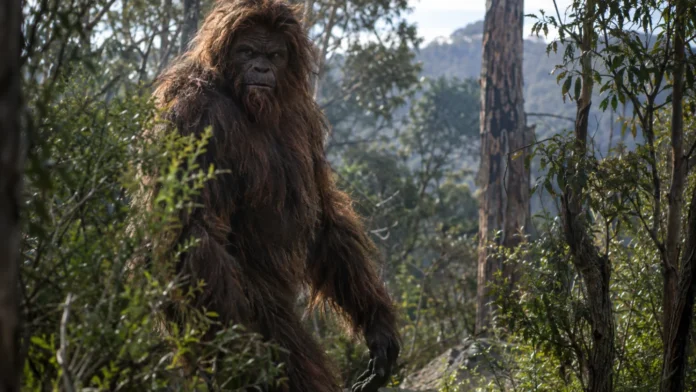
Yowie accounts belong to comparatively recent Australian folklore, not an established universal Indigenous category. Their interpretation requires attention to the specific source and historical setting.
Symbolism and Meaning
Within particular Indigenous traditions, ancestral beings may express relationships between people, Country, and customary responsibilities. Their significance depends on community knowledge and cannot safely be generalised.
In settler accounts, mysterious creatures could give narrative form to uncertainty about unfamiliar environments. This interpretation concerns storytelling patterns, not proof of a creature’s existence.
Animal figures may carry spiritual, social, or ecological meanings in specific traditions. Assigning one symbolic meaning across Australia would erase important differences among communities.
Folklore Traditions and Storytelling
Oral and Written Transmission
Oral transmission remains central to many Indigenous knowledge systems, though practices differ among communities. Knowledge may be shared according to relationships, authority, and cultural protocols.
Written records include colonial accounts, newspapers, collected narratives, and later community publications. Each source reflects its authors, purposes, and historical conditions.
Recording oral material can preserve information, but it cannot automatically reproduce performance, context, or community authority. Written versions therefore require careful interpretation.
Christian texts informed settler religious life, while newspapers and books circulated local legends. These media documented folklore rather than serving as evidence for supernatural events.
Regional Variations
Indigenous traditions are tied to particular Countries and communities, producing substantial regional variation. Similar motifs do not establish identical meanings or shared narratives.
Torres Strait Islander storytelling reflects island environments and distinct cultural histories. It should be discussed on its own terms rather than as a regional variant of Aboriginal traditions.
Settler legends also vary by locality, reflecting distinct landscapes and settlement histories. A story recorded in one region cannot automatically be attributed to another.
Relationship Between Humans and the Mythical World
Fear, Protection, and Reverence
Some traditions describe ancestral beings as connected with obligations and place, rather than simply as threats or protectors. Their roles depend on specific cultural accounts.
Settler reports sometimes frame unknown creatures as dangers, but such descriptions document perceptions and narrative conventions. They do not independently verify supernatural encounters.
Reverence toward culturally significant beings cannot be inferred from isolated descriptions. Reliable interpretation requires community-specific evidence and respect for knowledge that may not be public.
Influence on Art and Material Culture
Indigenous visual traditions may express ancestral relationships through designs, performance, and objects. Meanings are culturally governed and should not be detached from their communities.
Publicly displayed artworks do not necessarily disclose the full significance of depicted beings. Interpretation should rely on artists’ and communities’ explanations where available.
Settler folklore appeared in print, illustration, and local commemoration, though representations changed over time. Such material documents cultural reception rather than ancient continuity.
Transition and Legacy of the Modern Australia Period
Folklore continues to change through migration, urban life, education, and media. These conditions influence circulation, but do not make distinct traditions interchangeable.
Indigenous cultural continuity is not adequately described as survival from a past era. Communities maintain and adapt knowledge under changing historical conditions.
Settler legends may be reinterpreted as heritage or regional identity. Their later popularity does not establish that their supernatural claims were historically factual.
Historical Reliability and Interpretation
Evidence includes oral testimony, community knowledge, archival records, and material culture, each with different strengths. No single source type provides a complete account.
Colonial records may reflect misunderstanding, unequal power, or the recorder’s assumptions. Their descriptions should not be treated as transparent accounts of Indigenous belief.
Scholars distinguish documented cultural meanings from claims about supernatural events. Historical evidence can establish that stories circulated without proving their extraordinary content.
Interpretation remains limited where sources are absent, restricted, or contested. No verified sources describe this for this context when evidence cannot support a specific claim.