
back to top

Winged Flight

Explore the mythological concept of winged flight, a legendary skill symbolizing freedom and divine power across various cultures.

Relevant Beasts
Asia
Giant Bird
Roc - Achaemenid empire
Ghaznavid Empire

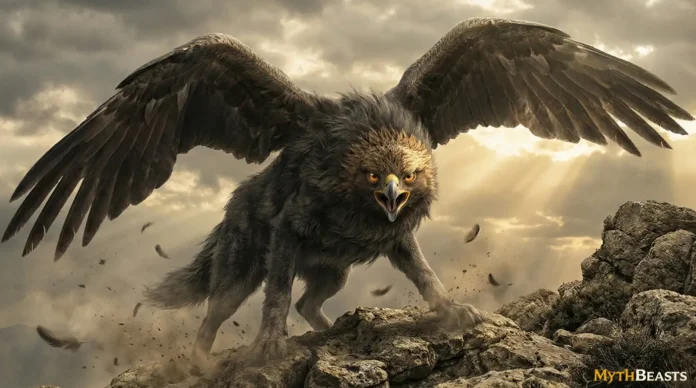
Roc

Colossal bird from Persian & Arabian tales, famous in Sinbad’s voyages for lifting elephants & wrecking ships with its...
  • Skills
Physical StrengthStrength
  • Weaknesses
BeheadingElement Sensitivities
Native American
Giant Bird
Thunderbird - Native American Folklore
Native American

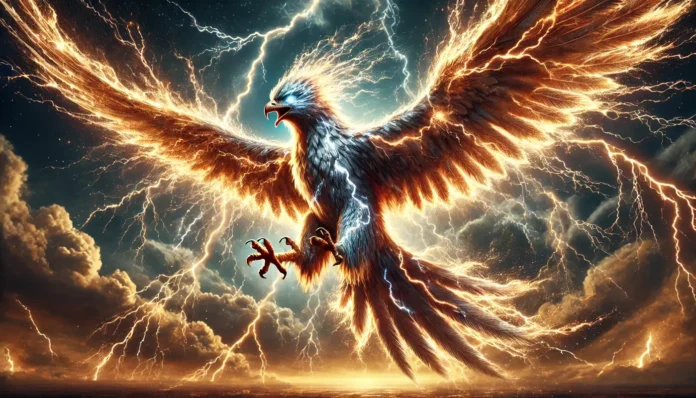
Thunderbird

The Thunderbird, a powerful symbol of storms and divine wrath, is a legendary bird from North American Indigenous cultures....
  • Skills
Lightning SummoningPhysical Strength
  • Weaknesses
Lightning DamageWind Impact
Asia
Guardian Spirit
Tengu - Japanese Folklore
Japan

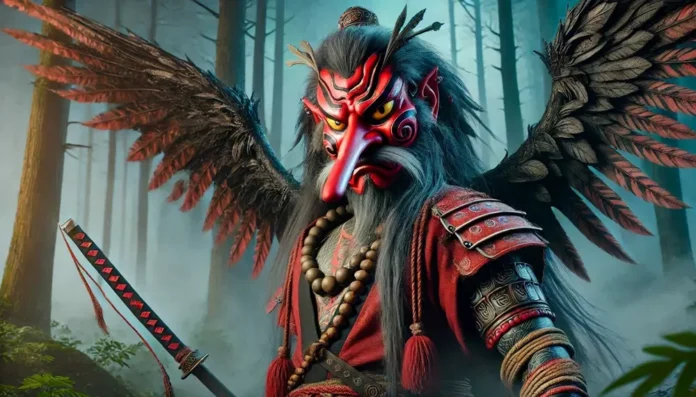
Tengu

Tengu are supernatural beings from Japanese folklore with human-like features, avian traits, and a reputation as guardians of mountains...
  • Skills
Aura of TerrorEnhanced Agility
  • Weaknesses
Aura CollapseOverconfidence
Hebrews
Giant Bird
Ziz- jewish - folklore
Hebrews

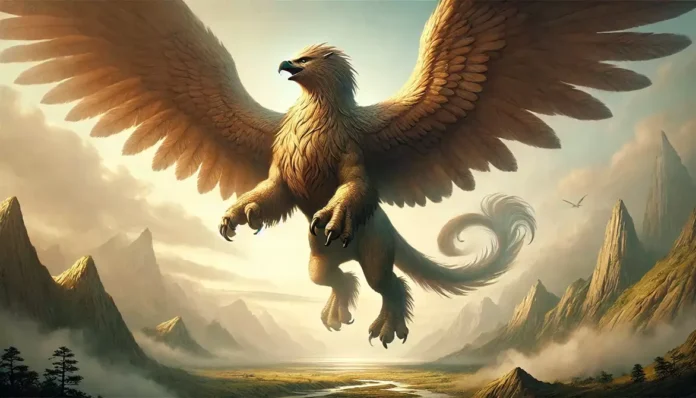
Ziz

The Ziz is a colossal bird from Jewish mythology, believed to rule the skies alongside the Behemoth and Leviathan....

  • Skills
Control WeatherElement Control
  • Weaknesses
Element SensitivitiesLightning Damage

Winged Flight – an Overview

Winged Flight is a distinct mythological function characterized by the ability to transcend physical and metaphysical boundaries. In mythological systems, Winged Flight is recognized for its capacity to connect realms, facilitate divine communication, and represent freedom. Unlike general supernatural abilities, Winged Flight is often seen as an exclusive trait, attributed to divine or semi-divine beings, marking a separation from earthly limitations. Its classification as a unique function underscores its rarity and symbolic depth, distinguishing it from other forms of transcendence or movement.

Manifestation and Constraints

How Winged Flight Is Expressed

Winged Flight manifests in mythological traditions through transformative events and significant environmental impacts. Beings with this ability often cause disturbances when traversing skies, symbolizing shifts in cosmic order. Historical texts frequently describe Winged Flight as an awe-inspiring phenomenon, with divine beings appearing amidst storms or celestial lights, indicating a profound alteration of natural laws. Such manifestations are not just visual but carry implications of power and divine favor, marking significant narrative events.

Limits and Conditions

The constraints of Winged Flight are deeply rooted in symbolic, moral, and cosmological contexts. Traditions often restrict this function to beings of specific moral standing or divine favor, reinforcing social hierarchies and ethical norms. In many narratives, misuse or unauthorized access to Winged Flight leads to consequences, such as exile or transformation, illustrating its role as a divine right rather than an inherent ability. These limitations emphasize the sacredness and exclusivity of Winged Flight, reinforcing its significance within mythological frameworks.

Mythological Role and Meaning

Symbolic and Cultural Significance

Within mythological worldviews, Winged Flight represents freedom, transcendence, and divine authority. It symbolizes the ability to surpass earthly constraints, embodying spiritual elevation and enlightenment. In various cultures, Winged Flight is a metaphor for liberation from mortal suffering, reflecting aspirations for spiritual ascension. Socially, it often delineates hierarchies, with those possessing this ability seen as closer to the divine or holding greater authority. Thus, Winged Flight fosters moral reflection on one’s life journey and ultimate goals.

Winged Flight in Myth and Folklore

In mythological narratives, Winged Flight often structures authority and transformation. Characters endowed with this function frequently serve as divine messengers or boundary-crossers, facilitating communication between realms. Their journeys often mark pivotal plot developments, symbolizing transitions and transformations. The ability to traverse different worlds underscores themes of exploration and the expansion of consciousness, illustrating the transformative power inherent in Winged Flight. This function is essential for defining characters’ roles and narrative trajectories within these stories.

Beasts with Winged Flight

Phoenix

The Phoenix, originating in Ancient Egyptian and later Western myths, embodies renewal through Winged Flight. Its ability to rise from ashes signifies rebirth, making Winged Flight integral to its mythos. Without this, its symbolism of immortality and cyclical regeneration would be lost, diminishing its role as a cultural metaphor for eternal life and transformation.

Garuda

In Hindu and Buddhist traditions, Garuda is a divine bird whose Winged Flight represents strength and protection. As the mount of Vishnu, Garuda’s ability to fly reinforces his role in divine intervention and cosmic battles. This function emphasizes his power to navigate between worlds, underscoring themes of divine allegiance and spiritual guardianship.

Roc

The Roc, prominent in Middle Eastern folklore, is a giant bird whose Winged Flight signifies strength and dominance. Its immense wings allow it to carry elephants, representing overwhelming power. Without Winged Flight, the Roc would lose its emblematic status as a force of nature, crucial for understanding themes of awe and the sublime in regional narratives.

Cultural Interpretations and Regional Emphasis

Winged Flight varies across cultures, highlighting differences in symbolism and cosmological roles. In Western traditions, it often signifies personal freedom and transcendence. In contrast, Eastern cultures may emphasize spiritual enlightenment and divine order. Such divergences reflect varying cultural values, with Winged Flight adapting to local cosmologies and moral frameworks. These interpretations provide insight into how cultures understand the sacred and the aspirational, illustrating the adaptability of Winged Flight’s symbolism.

Similar or Related Mythological Functions

Levitation and astral travel are related functions conceptually adjacent to Winged Flight. While they share themes of transcendence, Winged Flight involves a physical transformation or manifestation, distinguishing it from purely spiritual or mental journeys. This separation highlights Winged Flight’s emphasis on visible impact and divine interaction, maintaining its unique classification. Winged Flight’s tangible expression and its role in mythological narratives set it apart from these related functions.

Historical Interpretation and Evidence Limits

Scholarly interpretations of Winged Flight often grapple with its symbolic versus literal readings. Some traditions emphasize its metaphorical significance, while others document literal occurrences in mythic texts. However, gaps in historical sources and potential biases exist, limiting comprehensive understanding. Scholars acknowledge the lack of uniformity in descriptions, emphasizing caution in interpretations. No verified sources describe specific rituals or practices for invoking Winged Flight, underscoring its reserved status for divine entities across traditions.