
back to top

Blessed Weapon

Blessed Weapon serves as a fixed vulnerability for many mythological entities, representing a consistent point of weakness against supernatural foes.

Relevant Beasts
Achaemenid Empire
Hybrid Creature
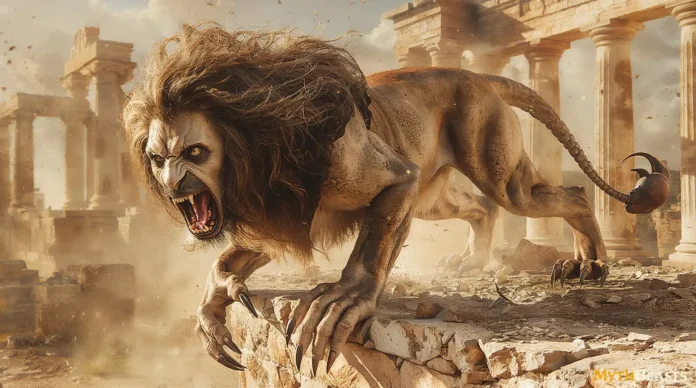
Manticore - Persian Mythology
Achaemenid Empire

Manticore

Hybrid Persian man-eater with human face, lion body and barbed tail, famed in Greek and later bestiaries as a...
  • Skills
Nature ManipulationPhysical Strength
  • Weaknesses
BeheadingBlessed Weapon
Achaemenid Empire
Demonic Form
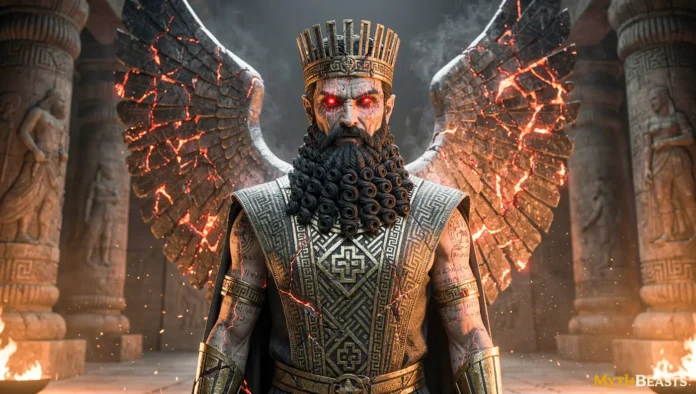
Aeshma - the Zoroastrian demon
Achaemenid Empire

Aeshma

Aeshma - a Zoroastrian demon of wrath and violence who disrupts ritual, drives humans to rage and bloodshed, and...

  • Skills
Disease ManipulationFear Inducement
  • Weaknesses
Blessed WeaponDivine Restrictions
Celtic
Celestial Being
Morrigan - Celtic mythology
Celtic

Mórrígan

Morrigan is a prominent figure in Irish mythology, often depicted as a complex and multifaceted deity associated with war,...

  • Skills
Death & NecromancyDeath Inducement
  • Weaknesses
Blessed WeaponDivine Restrictions
Celtic
Water Shifter
Kelpie - A water spirit in the form of a dark, ghostly horse with wet, shimmering mane and intense eyes
Celtic

Kelpie

The Kelpie is a shape-shifting water spirit from Scottish folklore, known to appear as a horse and lure victims...

  • Skills
Element ControlIllusions
  • Weaknesses
Blessed WeaponDivine Restrictions
Celtic
Ghostly Apparition
Bean Nighe - Scotish Folklore
Celtic

Bean Nighe

The Bean Nighe is a Scottish spirit from Celtic lore, known as a harbinger of death who washes bloodied...

  • Skills
Death & NecromancyDeath Sense
  • Weaknesses
Blessed WeaponDivine Restrictions
Celtic
Vampire
Baobhan Sith - Celtic folklore
Celtic

Baobhan Sith

Baobhan Sith are vampiric fae from Scottish folklore who prey on travelers at night, seducing them before feeding. Active...

  • Skills
Healing & LifeLife Drain
  • Weaknesses
Blessed WeaponDivine Restrictions

Blessed Weapon – Overview

The concept known as Blessed Weapon represents a significant mythological weakness, acting as a structured limitation within many cultural mythologies. It is not merely an incidental flaw but rather a crucial component that underscores the vulnerabilities of powerful beings. Blessed Weapon functions as a boundary that demarcates power and introduces a vulnerability that even the mightiest entities cannot overcome. This emphasizes the idea that absolute invulnerability is impossible, preserving cosmic balance and moral order within mythological narratives.

Defining Characteristics of the Weakness

Nature of the Limitation

Blessed Weapon is fundamentally a metaphysical restriction, indicating a specific vulnerability that transcends physical limitations. Mythologically, it represents the idea that no being can escape mortality or divine consequence entirely. This cosmological boundary ensures that even those imbued with extraordinary power are subject to limits, often enforced through weapons or objects sanctified by divine or sacred forces. It is not a mere physical or situational vulnerability but an existential constraint.

Conditions of Exposure

Blessed Weapon becomes active under conditions imbued with symbolic or moral significance. Often, specific rituals or circumstances imbue a weapon with power capable of penetrating otherwise invulnerable defenses. These conditions are typically defined by cosmological or environmental contexts, such as alignment with sacred events or moral purity. The activation of this weakness is usually tied to the overarching spiritual or ethical orders within a given mythological framework.

Mythological Role and Function

Function Within Mythological Systems

Within mythological systems, Blessed Weapon serves to regulate power and maintain cosmic balance. It acts as a check against hubris, ensuring that no being dominates absolutely or disrupts the fundamental order. By enforcing this vulnerability, mythologies preserve a dynamic equilibrium where potential downfall remains possible for all. This structural role prevents the narrative stagnation that would result from unchecked power, maintaining tension and moral consequence.

Symbolic and Cultural Meaning

Symbolically, Blessed Weapon represents moral consequence and the inevitability of limitation. Across cultures, it serves as a reminder of sacred law and the boundaries of hubris. It underscores that even the most powerful must confront mortality and divine judgment. In doing so, it emphasizes that cosmic and moral orders are inviolable. The existence of such a weakness reflects cultural narratives about the dangers of overreaching power and the need for humility and respect for sacred laws.

Distinction from Related Mythological Weaknesses

Conceptual Boundaries

Blessed Weapon is distinct from general mortality or physical injury, which affect all beings indiscriminately. Unlike divine punishment, it is not a response to transgression but a built-in constraint. It diverges from taboo violation by its inherent nature, existing independently of specific actions. Unlike situational defeat, Blessed Weapon is not contingent on circumstance but an absolute vulnerability. Its inclusion in mythological classification ensures that power remains subject to higher cosmic laws.

Common Sources of Misclassification

Misclassification of Blessed Weapon often arises from oversimplification or conflation with general vulnerabilities. Scholars sometimes mistake it for a narrative convenience or tactical device rather than a central constraint. Comparative mythology clarifies this by situating Blessed Weapon within a framework of sacred limitation and cosmic balance. This distinguishes it from other vulnerabilities, highlighting its role in defining the limits of power and enforcing moral order.

Canonical Beings Defined by Blessed Weapon

Achilles

In Greek mythology, Achilles is defined by his vulnerability to the Blessed Weapon, specifically through his heel. Despite his near invincibility, this singular weakness emphasizes the inevitability of divine order and mortal limitation, reflecting Greek cultural narratives on hubris.

Fafnir

From Norse mythology, Fafnir’s fate is sealed by a Blessed Weapon, Sigurd’s sword Gram, highlighting a divine intervention. This constraint underscores Norse themes of inevitable fate and the moral consequences of greed, reinforcing cosmic balance through sacred weaponry.

Balor

In Irish mythology, Balor, a powerful giant, is defeated by a Blessed Weapon wielded by Lugh. This mythical narrative emphasizes the concept of moral balance and the inevitable downfall of tyranny, pivotal within the cultural framework of Irish heroic epics.

Historical Distribution and Cultural Context

Blessed Weapon appears in diverse cultural mythologies, manifesting in Greek, Norse, and Celtic traditions, among others. Its historical distribution underscores a common need to express the limits of power and the consequences of hubris. These patterns reflect shared human concerns about unchecked dominance and the moral imperatives governing power. The recurring presence of this weakness across various mythologies signifies its deep-rooted role in maintaining moral and cosmic equilibrium.

Scholarly Interpretation and Uncertainty

Variation in Interpretation

Interpretations of Blessed Weapon vary significantly across cultures and scholarly frameworks. Some view it as a metaphor for moral checks, while others see it as a literal narrative device. Symbolic readings emphasize inevitable limitations imposed by divine order, whereas literal interpretations focus on the narrative function. This variation highlights the complexity of understanding mythological weaknesses within diverse cultural contexts.

Limits of the Evidence

The evidence for Blessed Weapon is sometimes ambiguous, and scholarly debates persist regarding its interpretation. Established interpretations focus on its role within mythological narratives and its symbolic significance. However, uncertainties remain about the exact nature of its application and the historical context of specific examples. Scholars must navigate these gaps conservatively, acknowledging where evidence is limited or interpretations remain contested.

Mythological Function Across Cultures

The recurrence of Blessed Weapon across mythological traditions highlights shared human concerns regarding the limits of power and the potential for moral downfall. This weakness serves a symbolic need to reinforce cosmic order and the inevitability of divine law, acting as a universal narrative constraint. Recognizing this weakness enhances comparative interpretation by emphasizing the universal themes of limitation and moral balance inherent in mythological systems, offering insights into shared cultural values and beliefs.