
Greek mythology is filled with incredible creatures that shaped some of the most famous stories in ancient literature. From fire-breathing monsters to powerful guardians of treasure, these beasts brought danger, mystery, and excitement to the world of heroes and gods.
Many of these creatures appeared in legendary tales involving heroes like Heracles, Bellerophon, and Odysseus. Their battles against terrifying beasts became central moments in Greek storytelling and helped define the heroic adventures we still read today.
This guide explores twelve of the most fascinating beasts from Greek mythology, revealing their appearance, abilities, famous stories, and surprising facts that continue to inspire myths, art, and fantasy even today.
Hydra
The Lernaean Hydra is one of the most feared monsters in Greek mythology. It lived in the swamp of Lerna in southern Greece, an area ancient Greeks already considered mysterious and dangerous.
According to myth, the creature was born from the monstrous pair Typhon and Echidna, parents of several famous mythological beasts. The Hydra terrorized the surrounding land, poisoning the water and killing anyone who approached its marshy home.
What made the creature especially terrifying was its strange regenerative power. Instead of weakening when attacked, it became stronger, making it one of the most difficult monsters any hero could face.
The Hydra is most famous for appearing in the legendary Twelve Labors of Heracles, where defeating it required both strength and clever thinking.
Beast ID
Name in original language: Ὕδρα Λερναία (Hydra Lernaia)
Also known as: Lernaean Hydra
Period of time: Classical Greece
Beast Type/s: Serpentine beast, Hybrid creature
Similar Beasts: Ladon, Python, Basilisk
Skills: Regeneration, Poison Emission, Enhanced Durability
Weakness: Fire Vulnerable, Beheading
Appearance
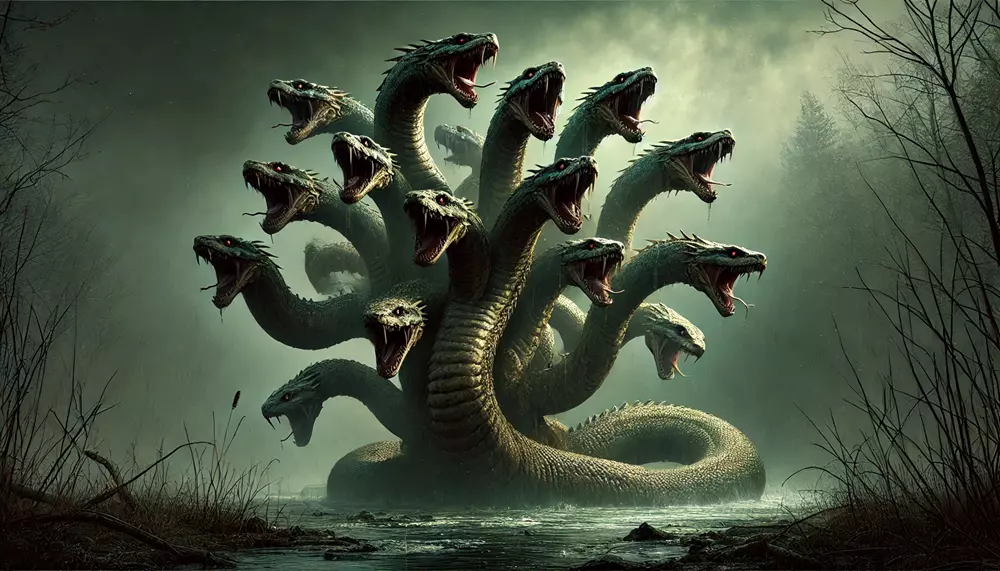
The Hydra was usually described as a gigantic serpent rising from the swamp waters. Ancient sources often say the creature had nine heads, although some later versions suggest many more.
Each head sat at the end of a long neck that could strike quickly in different directions. One of the heads was said to be immortal, meaning it could never truly die.
The creature’s blood and breath were extremely poisonous, and even the ground near its lair became toxic. In ancient Greek art, the Hydra often appears as a massive snake with several twisting necks spreading outward like branches from a single body.
Special Skills & Weaknesses
The Hydra’s greatest ability was regeneration. Whenever a head was cut off, two new heads immediately grew in its place, making direct attacks almost useless.
This ability allowed the monster to overwhelm opponents who tried to defeat it through strength alone. Its blood was also extremely poisonous, capable of killing instantly.
However, the Hydra did have a weakness. Burning the wound after cutting off a head stopped new ones from growing.
This discovery allowed Heracles and his companion Iolaus to finally defeat the creature.
Famous Mythology Stories
The Hydra appears in the Second Labor of Heracles. King Eurystheus ordered the hero to destroy the monster that was terrorizing Lerna.
When Heracles began cutting off the Hydra’s heads, he quickly realized the problem, two heads grew back for every one he removed. With help from his nephew Iolaus, he developed a strategy.
Heracles cut off the heads while Iolaus burned each neck with a torch to stop regeneration. Finally, the hero removed the immortal head and buried it beneath a massive rock.
After the battle, Heracles dipped his arrows into the Hydra’s poisonous blood, creating weapons that later played a role in several other Greek myths.
Fun Facts
• The Hydra’s swamp in Lerna was believed to contain a mythical entrance to the Underworld, which made the monster’s presence even more terrifying in ancient Greek belief.
• Heracles used the Hydra’s poisonous blood on his arrows, and these weapons later caused the death of several important mythological figures.
• The phrase “Hydra-headed problem” still appears today and describes a situation that becomes worse every time someone tries to solve it.
Cerberus
Cerberus is the legendary guardian of the Greek Underworld, the realm ruled by the god Hades. His role was simple but extremely important: allow the souls of the dead to enter, but prevent them from ever escaping.
In ancient Greek belief, death was meant to be permanent, and Cerberus ensured that the natural order of life and death remained intact. Unlike many monsters that wandered the world attacking humans, Cerberus stayed at the gates of the Underworld and performed his duty as a loyal servant of Hades.
Despite this role, the creature still appears in several myths involving heroes who attempted to enter or escape the land of the dead.
Beast ID
Name in original language: Κέρβερος (Kerberos)
Also known as: Hound of Hades
Period of time: Classical Greece
Beast Type: Guardian animal, Hybrid creature
Similar Beasts: Orthrus, Fenrir, Garmr
Skills: Enhanced Strength, Enhanced Endurance, Sonic Roar
Weakness: Sleep Inducement, Food Distraction
Appearance
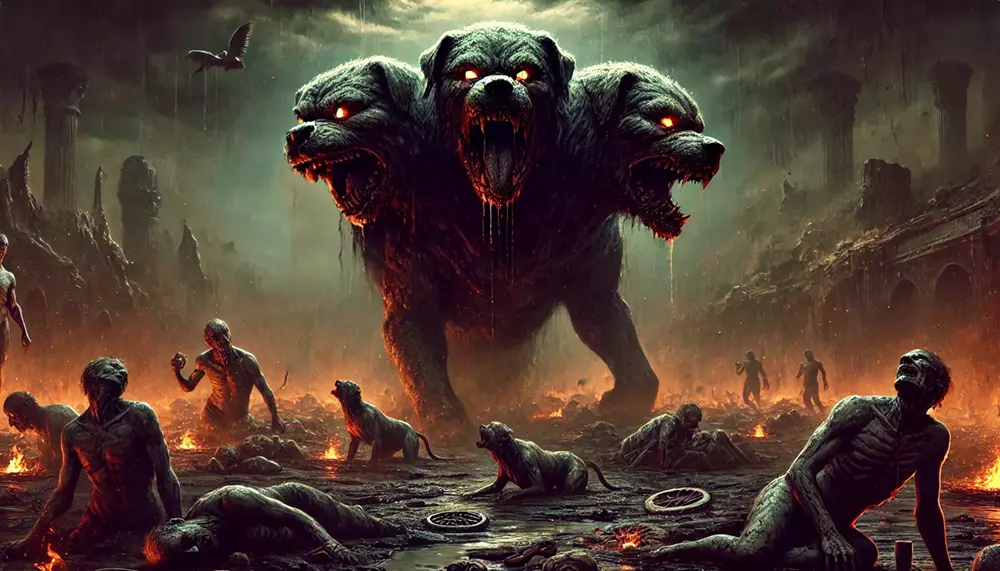
Cerberus is most commonly described as a gigantic three-headed dog. Each head had sharp teeth and glowing eyes capable of attacking enemies from multiple directions.
Ancient descriptions also mention snakes growing from his back and a serpent forming his tail. The creature’s body was enormous, far larger than any normal animal, and his deep growls echoed through the caves of the Underworld.
Some ancient writers even suggested that Cerberus originally had many more heads, but later myths settled on the famous three-headed version.
Special Skills & Weaknesses
Cerberus possessed tremendous strength and endurance, allowing him to guard the gates of the Underworld endlessly. His multiple heads meant he could watch several directions at once, making it nearly impossible for spirits to escape unnoticed.
Despite his terrifying reputation, myths reveal that Cerberus could be distracted. Some stories describe travelers offering honey cakes to keep him occupied.
Music could also calm the creature, suggesting that even the most fearsome guardian could briefly lower his guard.
Famous Mythology Stories
Cerberus appears most famously in the Twelfth Labor of Heracles. In this final task, Heracles was ordered to capture the monstrous hound and bring it to the surface world.
With permission from Hades, the hero confronted the beast without using weapons. After a fierce struggle, Heracles managed to overpower Cerberus and carry him to King Eurystheus.
Once the task was completed, the hero returned the guardian safely to the Underworld. Cerberus also appears in the myth of Orpheus, whose magical music calmed the creature while he entered the land of the dead.
Fun Facts
• In early Greek poetry, Cerberus was sometimes described as having fifty or even one hundred heads, although the three-headed version eventually became the most famous depiction.
• Some scholars believe the name Cerberus may mean “spotted,” suggesting the terrifying guardian might originally have had a surprisingly ordinary dog name.
• Cerberus inspired many later legends about supernatural hellhounds across European folklore.
Chimera
The Chimera is one of the most unusual monsters in Greek mythology because it is not a single animal but a terrifying hybrid creature made from several different animals combined together. The monster lived in Lycia, a region of ancient Anatolia, where it burned fields and villages with fire.
According to myth, the Chimera was another child of Typhon and Echidna, making it part of the same monstrous family as the Hydra and Cerberus.
The creature’s strange appearance and destructive power made it one of the most memorable beasts in Greek storytelling, especially in the famous myth involving the hero Bellerophon.

Beast ID
Name in original language: Χίμαιρα (Chimaira)
Also known as: Fire-Breathing Chimera
Period of time: Classical Greece
Beast Types: Hybrid creature, Fire-breathing beast
Similar Beasts: Hydra, Griffin, Manticore
Skills: Fire Breathing, Enhanced Strength, Enhanced Durability
Weakness: Piercing Kill, Height Vulnerability
Appearance
The Chimera had one of the strangest bodies in mythology. Ancient descriptions explain that it had the body of a lion, a goat’s head growing from its back, and a serpent for a tail.
The lion head at the front was usually the main head of the creature, and it was capable of breathing fire. The goat head sometimes appeared as an additional snapping mouth, while the snake tail could strike enemies from behind.
This unusual combination of animals made the Chimera one of the most visually distinctive monsters in ancient myth.
Special Skills & Weaknesses
The Chimera’s most dangerous ability was fire breathing, which allowed it to burn villages and farmland across Lycia. Its lion body gave it powerful strength and speed, while the serpent tail added another attacking weapon.
Because of its flames and ferocity, confronting the monster directly was extremely dangerous. However, attacking from a distance or from the air made the creature more vulnerable, which became the key to its defeat.
Famous Mythology Stories
The Chimera was eventually defeated by the hero Bellerophon. Riding the winged horse Pegasus, Bellerophon attacked the creature from the sky.
This aerial advantage allowed him to avoid the monster’s flames and strike safely from above. According to one version of the myth, he killed the Chimera by driving a spear tipped with lead into its mouth.
The intense heat of the creature’s fire melted the lead, which then hardened inside its throat and suffocated the monster.
Fun Facts
• The modern word “chimera” now describes something made from several different parts or an idea that seems imaginative but impossible in reality.
• Ancient Greek artists often depicted the Chimera on pottery and shields, making it one of the earliest widely illustrated mythological monsters.
• Some historians believe the myth may have been inspired by volcanic flames in Lycia, where natural gas fires burned from mountain rocks.
Hydra compared to Cerberus and Chimera
| Aspect | Hydra | Cerberus | Chimera |
|---|---|---|---|
| Origin | Born from Typhon and Echidna, the Hydra is a significant creature in Greek lore. | Originating from the underworld, Cerberus serves as a guardian of the gates. | The Chimera is a hybrid beast, combining features of multiple animals in its design. |
| Abilities | The Hydra regenerates two heads for each one cut off, making it formidable. | Cerberus possesses three heads, each representing a different aspect of the underworld. | The Chimera breathes fire, showcasing its fierce and dangerous nature. |
| Famous Story | Heracles famously battled the Hydra as one of his twelve labors, showcasing heroism. | Cerberus was encountered by Orpheus, who sought to retrieve his beloved from the underworld. | Bellerophon fought the Chimera, demonstrating bravery and skill in Greek mythology. |
| Appearance | The Hydra is depicted as a serpent-like creature with multiple heads and a venomous bite. | Cerberus is often illustrated with three heads, a serpent's tail, and a fierce demeanor. | The Chimera is portrayed with a lion's head, a goat's body, and a serpent's tail. |
| Weakness | The Hydra's regeneration makes it nearly impossible to defeat without clever tactics. | Cerberus can be lulled to sleep, revealing a vulnerability in its fierce nature. | The Chimera's fire-breathing ability is its primary strength, but it can be outsmarted. |
| Significance | The Hydra symbolizes the challenges heroes face, representing persistence and resilience. | Cerberus embodies the theme of guarding the threshold between life and death. | The Chimera represents the chaos and danger that heroes must confront in their journeys. |
Griffin
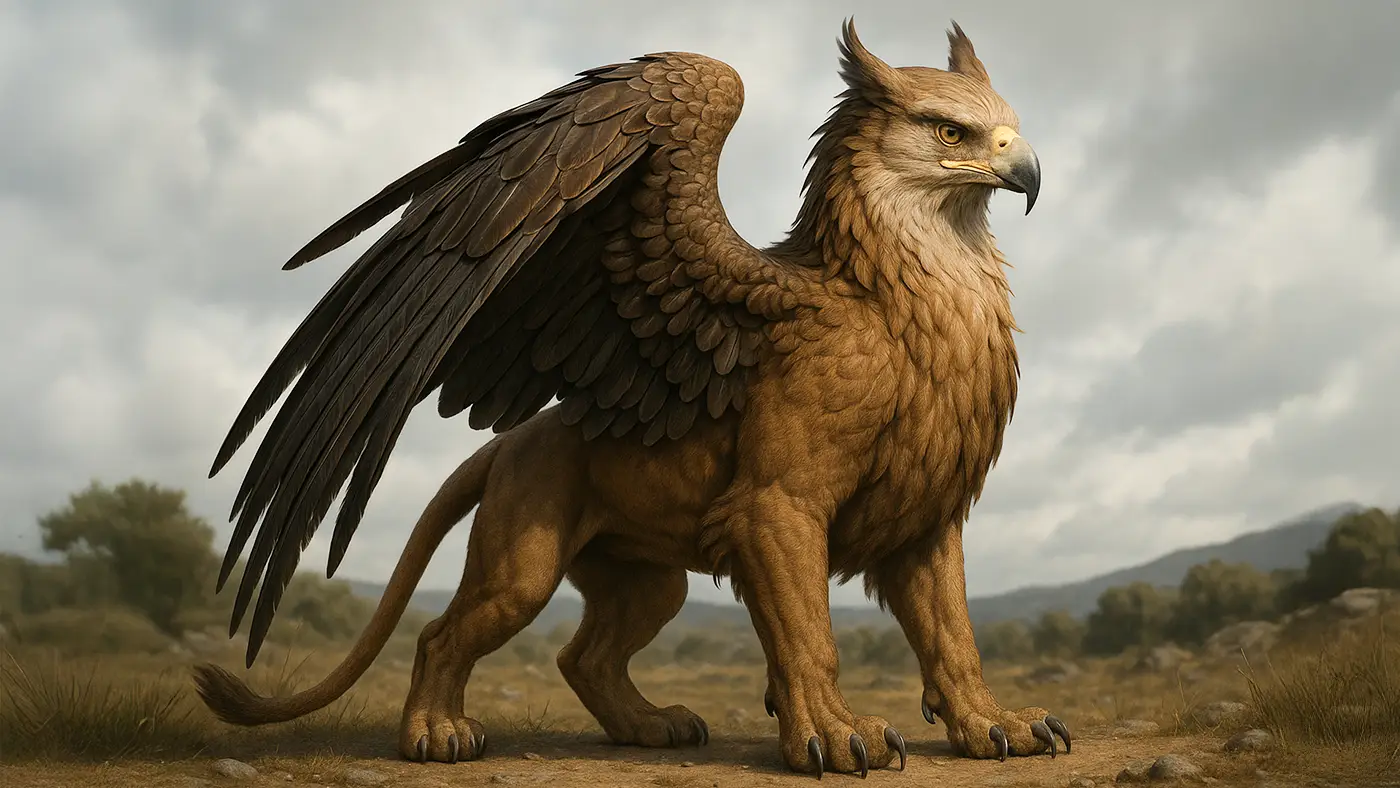
The Griffin is one of the most recognizable creatures from ancient mythology. Combining the power of a lion and the sharp vision of an eagle, the creature symbolized strength and vigilance.
Greek writers often placed griffins in distant mountain regions rich with gold and precious stones.
These legendary guardians appeared in stories told by travelers and historians describing lands beyond the Greek world. Because they combined two powerful animals, griffins became symbols of watchfulness, authority, and divine protection in ancient mythology.
Beast ID
Name in original language: Γρύψ (Gryps)
Also known as: Gryphon
Period of time: Classical Greece
Beast Types: Hybrid creature, Guardian animal
Similar Beasts: Chimera, Sphinx, Manticore
Skills: Flight, Enhanced Strength, Enhanced Agility
Weakness: Piercing Kill, Blunt Force
Appearance
The griffin combined the most powerful features of two animals. Its body, hind legs, and tail belonged to a lion, giving it tremendous physical strength and stability on land.
The front part of its body resembled an eagle. It had a sharp curved beak, fierce eyes, and large feathered wings that allowed it to fly across mountains and wide deserts.
Ancient Greek artwork often shows griffins standing proudly beside treasure or sacred objects. Their powerful claws and wings made them appear both majestic and dangerous.
Special Skills & Weaknesses
Griffins possessed powerful physical abilities. Their lion body allowed them to fight fiercely on land, while their eagle wings gave them speed and control in the air.
Their sharp eyesight meant they could detect intruders from great distances. Despite their strength, griffins were still vulnerable to skilled hunters or heroes capable of overcoming them with weapons and strategy.
Famous Mythology Stories
Greek historian Herodotus wrote about griffins guarding gold in distant lands near Central Asia. According to these stories, the creatures fiercely protected treasure hidden in remote mountain regions.
Legends say a one-eyed tribe called the Arimaspians attempted to steal this gold. Griffins attacked anyone approaching their territory, creating dramatic tales of conflict between humans and mythical guardians.
Fun Facts
• Griffins became extremely popular in ancient art and architecture. Greek craftsmen carved them on temples, shields, and jewelry as symbols of strength and protective power.
• Later European heraldry adopted the griffin as a symbol of courage and authority because it combined the king of beasts and the king of birds.
• Some historians believe griffin legends may have been inspired by dinosaur fossils discovered in Central Asia that resembled giant beaked creatures with large claws.
Pegasus
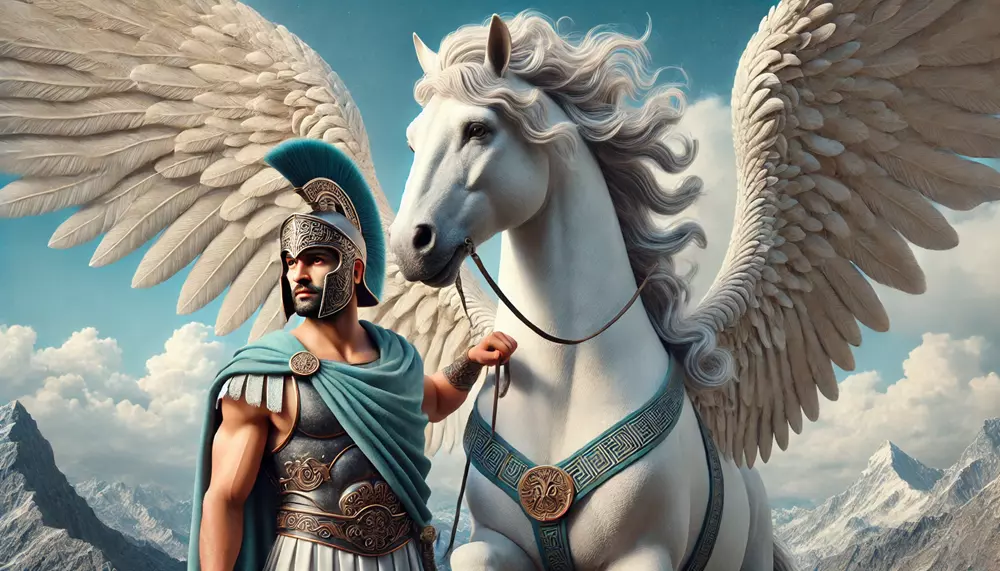
Pegasus is the legendary winged horse of Greek mythology. Unlike many mythical beasts, Pegasus was not a destructive creature.
Instead, he represented freedom, inspiration, and divine power. His stories connect heroes, gods, and the natural world.
The creature became famous after appearing in several heroic legends. Pegasus eventually became one of the most beloved mythological animals and remains one of the most recognizable creatures in mythology today.
Beast ID
Name in original language: Πήγασος (Pegasos)
Also known as: Winged Horse of Olympus
Period of time: Classical Greece
Beast Types: Winged beast, Legendary horse
Similar Beasts: Griffin, Hippocampus, Unicorn
Skills: Flight, Enhanced Speed, Enhanced Agility
Weakness: Physical Exhaustion, Piercing Kill
Appearance
Pegasus appeared as a magnificent white horse with enormous feathered wings growing from his back. These wings allowed him to fly effortlessly through the sky and reach places no ordinary creature could travel.
Ancient Greek artists often depicted Pegasus surrounded by clouds or standing on high mountain peaks. His bright appearance symbolized divine origins and his connection to the gods of Olympus.
The creature’s graceful form and powerful wings made him appear both noble and powerful in ancient artwork.
Special Skills & Weaknesses
Pegasus possessed extraordinary speed and agility. His wings allowed him to travel through the sky and carry heroes safely across dangerous landscapes and long distances.
Because Pegasus was still a physical creature, long journeys or difficult battles could exhaust him. Despite his divine connections, he remained vulnerable to weapons or injuries during combat.
Famous Mythology Stories
Pegasus is best known for helping the hero Bellerophon defeat the Chimera. Riding the winged horse allowed Bellerophon to attack the monster safely from above.
This aerial advantage allowed him to avoid the creature’s fire and strike effectively. Without Pegasus, defeating the Chimera would have been far more difficult.
Fun Facts
• Pegasus later became associated with the constellation Pegasus, which ancient astronomers believed represented the winged horse placed among the stars by Zeus.
• According to myth, Pegasus created the Hippocrene spring by striking Mount Helicon with his hoof, producing water believed to inspire poets and artists.
• Because of this connection to inspiration, Pegasus became a lasting symbol of creativity and imagination in literature, art, and storytelling.
Basilisk
The Basilisk is a legendary serpent often described as the king of snakes. Early descriptions appear in Greek and Roman writings that describe a reptile capable of killing with its gaze or poisonous breath.
Although the creature became especially famous during the medieval period, its roots can be traced back to ancient natural histories and mythological traditions describing deadly serpents.
Beast ID
Name in original language: Βασιλίσκος (Basiliskos)
Also known as: King of Serpents
Period of time: Classical Greece
Beast Types: Serpentine beast
Similar Beasts: Hydra, Catoblepas, Python
Skills: Petrification, Poison Emission, Fear Inducement
Weakness: Magic Reflection, Piercing Kill
Appearance
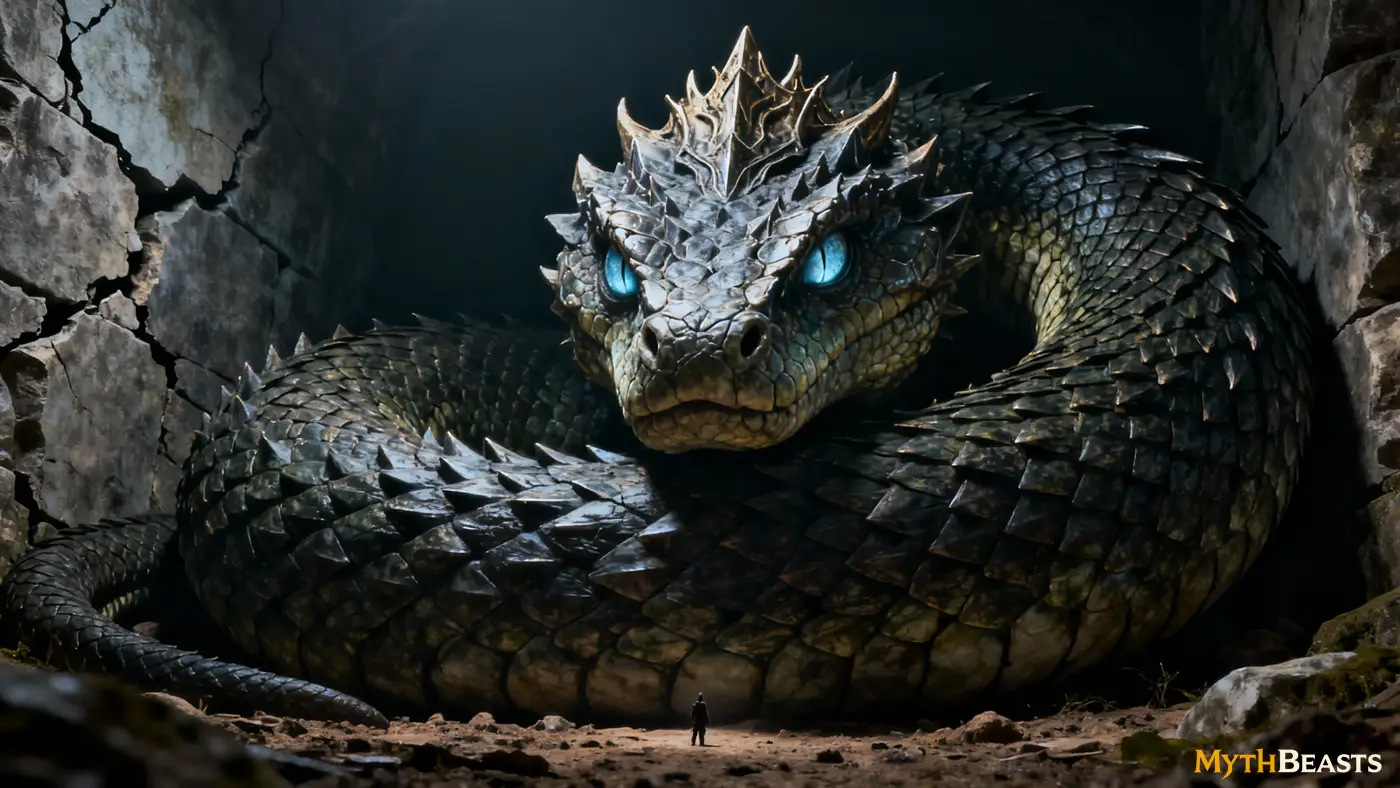
Ancient writers described the Basilisk as a small but extremely dangerous serpent. The creature was said to have a crown-shaped crest on its head, which inspired its royal title.
Later traditions expanded the creature into a larger reptile or dragon-like monster. Despite the different descriptions, the Basilisk was always feared for its deadly gaze.
Its presence was believed to poison the surrounding environment, making the land itself dangerous.
Special Skills & Weaknesses
The Basilisk’s most feared ability was its deadly gaze. Many stories claim anyone who looked directly into its eyes would die instantly.
Other traditions describe the creature turning living beings to stone. However, legends say the Basilisk could be defeated if its gaze was reflected back toward it.
Famous Mythology Stories
Roman writer Pliny the Elder described the Basilisk in his work Natural History. He wrote that the serpent was so poisonous that plants withered and stones cracked wherever it moved.
Because of these deadly powers, encountering a Basilisk was considered certain death in ancient legend.
Fun Facts
• The name Basilisk comes from a Greek word meaning “little king,” referring to the crown-like crest believed to grow on the serpent’s head.
• Medieval folklore later expanded the Basilisk myth, turning the creature into a dragon-like monster capable of killing with its gaze.
• One strange legend claimed the Basilisk could be killed by a weasel, creating one of the most unusual predator relationships in mythological storytelling.
Typhon
Typhon is considered the most powerful monster in Greek mythology. Ancient writers described him as the final and greatest threat to the Olympian gods.
Born from the earth goddess Gaia, Typhon represented pure chaos and destruction.
According to myth, Gaia created Typhon to challenge the rule of Zeus after the Titans were defeated. This led to one of the largest battles in Greek mythology, a cosmic struggle between order and chaos.
Beast ID
Name in original language: Τυφῶν (Typhōn)
Also known as: Typhaon
Period of time: Classical Greece
Beast Types: Hybrid creature, Serpentine beast
Similar Beasts: Hydra, Chimera, Ladon
Skills: Fire Breathing, Enhanced Strength, Enhanced Durability
Weakness: Divine Smite, Mountain Trap
Appearance
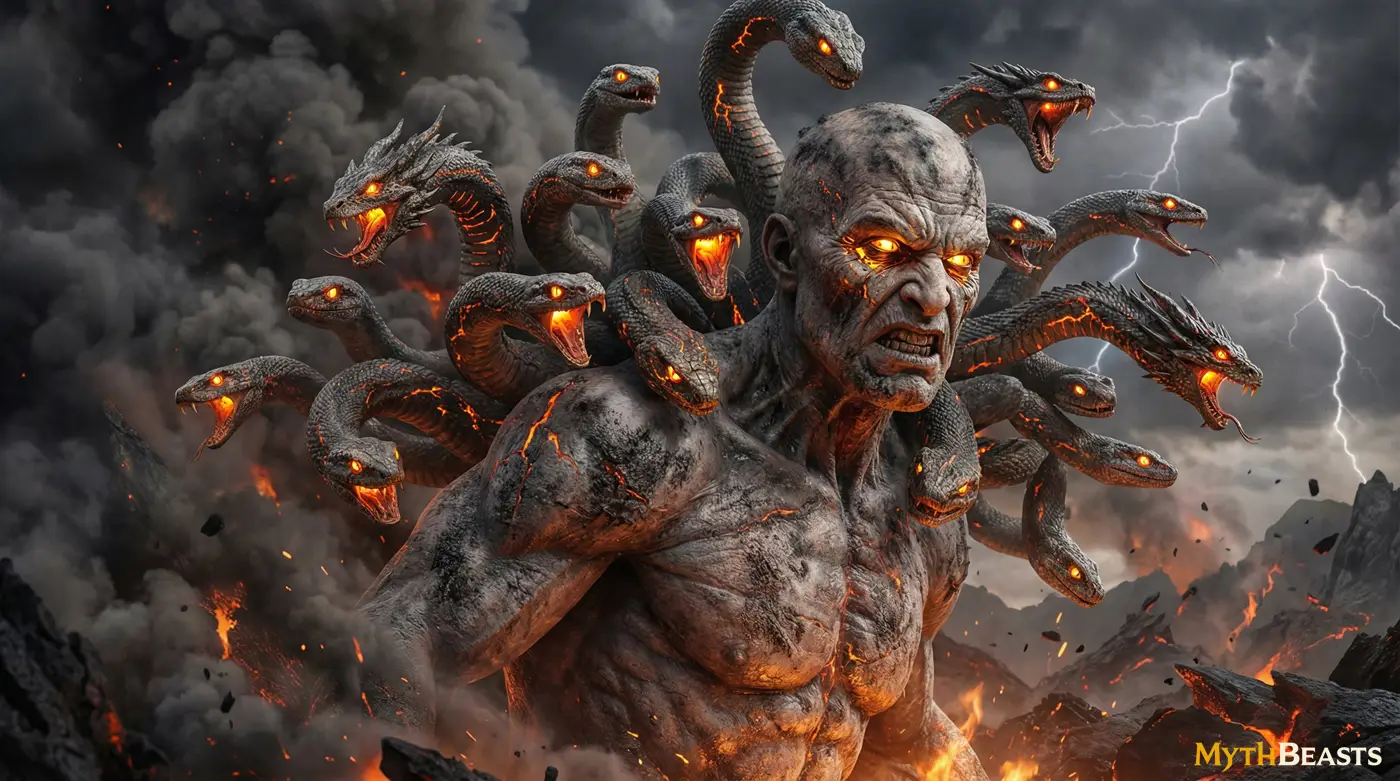
Ancient poets described Typhon as an enormous creature whose size reached the sky. His upper body resembled a gigantic humanoid figure, while his lower body consisted of enormous twisting serpents.
From his shoulders rose hundreds of snake heads that hissed and spat fire. His wings were said to be so wide they could block the sun.
Typhon’s eyes burned with flames, and his voice produced terrifying sounds resembling roaring animals, violent storms, and thunder.
Special Skills & Weaknesses
Typhon possessed immense strength and destructive power. His many serpent heads allowed him to attack from several directions at once, while his fiery breath could devastate entire landscapes.
Despite his terrifying power, Typhon was ultimately defeated by Zeus. Using thunderbolts and divine strength, Zeus trapped the monster beneath Mount Etna, where his rage was believed to cause volcanic eruptions.
Famous Mythology Stories
Typhon’s greatest myth is his battle against Zeus for control of the universe.
According to the story, Typhon initially overwhelmed the gods and forced them to flee. Zeus eventually returned and defeated the monster after a massive battle filled with lightning and storms.
After the victory, Zeus buried Typhon beneath Mount Etna in Sicily. Ancient Greeks believed the volcano’s eruptions were caused by Typhon struggling beneath the mountain.
Fun Facts
• Typhon and Echidna were believed to be the parents of many famous monsters including the Hydra, Cerberus, Chimera, and the Sphinx.
• The word “typhoon” may share linguistic roots with Typhon, connecting the mythological monster with powerful destructive storms.
• In mythology Typhon symbolized the ultimate force of chaos opposing the rule of the Olympian gods.
Scylla
Scylla is one of the most terrifying sea monsters in Greek mythology. She lived on a rocky cliff beside a narrow sea passage and attacked ships sailing too close to her lair.
The creature appears most famously in Homer’s Odyssey, where the hero Odysseus must sail past her during his long journey home from the Trojan War.

Beast ID
Name in original language: Σκύλλα (Skylla)
Also known as: Sea Monster Scylla
Period of time: Classical Greece
Beast Types: Hybrid creature, Aquatic hybrid
Similar Beasts: Charybdis, Hydra, Kraken
Skills: Surprise Attack, Enhanced Strength, Fear Induction
Weakness: Beheading, Physical Exhaustion
Appearance
Scylla lived inside a rocky cave high above the sea. From her body stretched six long necks, each ending in a terrifying dog-like head.
Each head had rows of sharp teeth designed to grab sailors from passing ships. Ancient writers described the monster as barking and snapping constantly.
Her lower body remained hidden within the rock, making it almost impossible for sailors to attack her directly.
Special Skills & Weaknesses
Scylla was an ambush predator. Her long necks allowed her to reach down and seize sailors from ships passing below.
Each head could strike quickly, meaning several victims could be taken at once. Because most of her body was hidden inside the cliff, attacking her directly was extremely difficult.
However, her long exposed necks made her vulnerable if a powerful hero managed to strike them.
Famous Mythology Stories
Scylla appears in The Odyssey, when Odysseus must guide his ship through a dangerous narrow strait.
On the opposite side waits the deadly whirlpool Charybdis. Odysseus decides to sail closer to Scylla to avoid losing the entire ship.
As the vessel passes, Scylla grabs six sailors from the deck, demonstrating the terrifying danger of the creature.
Fun Facts
• The phrase “between Scylla and Charybdis” became a famous expression describing a situation where someone must choose between two equally dangerous options.
• Ancient Greek writers connected Scylla with the Strait of Messina, the narrow passage between Italy and Sicily known for strong currents.
• Some myths claim Scylla was once a beautiful sea nymph transformed into a monster through jealousy and magic.
Charybdis
Charybdis is a terrifying sea creature representing the destructive power of the ocean. Unlike most monsters, she is rarely described as a visible animal but as a massive whirlpool that devours ships.
Ancient sailors feared narrow sea passages where powerful currents formed violent whirlpools. These dangerous waters helped inspire the myth of Charybdis.

Beast ID
Name in original language: Χάρυβδις (Charybdis)
Also known as: The Great Whirlpool
Period of time: Classical Greece
Beast Types: Water beast, Elemental force
Similar Beasts: Scylla, Leviathan, Kraken
Skills: Whirlpool Creation, Water Manipulation, Pressure Absorption
Weakness: Tidal Vulnerability, Environmental Limits
Appearance
Charybdis usually appeared as a gigantic whirlpool forming suddenly in the sea. Ancient writers believed the creature swallowed enormous amounts of seawater before violently releasing it again.
The swirling waters created destructive currents capable of pulling entire ships beneath the surface.
Although rarely seen directly, the monster was imagined as a massive sea creature hidden beneath the waves.
Special Skills & Weaknesses
Charybdis possessed the terrifying ability to create enormous whirlpools. These spinning waters dragged ships into the depths and destroyed them within moments.
Her power depended on the surrounding sea conditions. When ships kept their distance from the whirlpool, the creature’s destructive force weakened.
This made navigation skill and careful timing essential for sailors.
Famous Mythology Stories
Charybdis appears alongside Scylla in Homer’s Odyssey.
Odysseus must sail through the narrow passage between the two monsters. Choosing the safer path, he sails closer to Scylla to avoid losing his entire ship.
Later in the journey, his vessel is destroyed by Charybdis, and Odysseus survives only by clinging to a tree until the sea releases the wreckage.
Fun Facts
• The myth of Charybdis was likely inspired by real whirlpools in the Strait of Messina, where strong tidal currents create dangerous spinning waters.
• Ancient sailors used stories of Scylla and Charybdis to explain the dangers of navigating narrow straits filled with unpredictable ocean currents.
• Charybdis represents the uncontrollable power of the sea, one of the greatest fears for ancient civilizations dependent on maritime travel.
Minotaur
The Minotaur is one of the most famous monsters in Greek mythology. The creature lived inside the Labyrinth of Crete, a massive maze built to imprison the beast.
The Minotaur became a symbol of danger, power, and the terrifying consequences of defying the gods.
The monster’s story is closely connected with the royal family of Crete and the legendary hero Theseus. Its myth combines themes of punishment, sacrifice, and heroic courage.

Beast ID
Name in original language: Μινώταυρος (Minotauros)
Also known as: Bull of Minos
Period of time: Classical Greece
Beast Types: Hybrid creature
Similar Beasts: Chimera, Sphinx, Griffin
Skills: Enhanced Strength, Rage Strength, Surprise Attack
Weakness: Beheading, Piercing Kill
Appearance
The Minotaur had the body of a powerful man and the head of a bull. Its enormous horns, muscular frame, and towering height made it an extremely intimidating creature.
Ancient artwork often shows the Minotaur as a massive beast wandering the corridors of the Labyrinth. The creature’s strength and aggression made it nearly impossible for ordinary people to defeat.
Because it was trapped inside the maze, the Minotaur became a terrifying presence hidden within darkness and stone walls.
Special Skills & Weaknesses
The Minotaur possessed incredible physical strength. Its powerful build allowed it to overpower opponents easily, making close combat extremely dangerous.
However, the monster relied heavily on brute force. Skilled fighters could exploit this weakness by using strategy or weapons rather than confronting it directly.
Famous Mythology Stories
The Minotaur’s most famous story involves the hero Theseus. As punishment for a previous conflict, Athens was forced to send young people to Crete as sacrifices for the monster.
Theseus volunteered to enter the Labyrinth and kill the beast. With help from Ariadne, who gave him a thread to navigate the maze, Theseus found the Minotaur and defeated it.
Fun Facts
• The Labyrinth that held the Minotaur was designed by the legendary inventor Daedalus, who created a maze so complex that escaping it without guidance was nearly impossible.
• Some historians believe the Minotaur myth may reflect ancient bull-worship traditions from Minoan Crete, where bulls were important religious symbols.
• The word “labyrinth” today still describes complex mazes, largely because of the famous myth involving Theseus and the Minotaur.
Catoblepas
The Catoblepas is a strange and dangerous creature mentioned in Greek and later Roman mythology. Ancient writers described it as a swamp-dwelling beast whose deadly gaze could kill anyone who looked directly into its eyes.
Although less famous than other monsters, the Catoblepas fascinated ancient storytellers because of its unusual appearance and mysterious powers.

Beast ID
Name in original language: Κατωβλέπας (Katoblepas)
Also known as: The Downward-Gazing Beast
Period of time: Classical Greece
Beast Types: Hybrid creature
Similar Beasts: Basilisk, Gorgon, Hydra
Skills: Petrification, Fear Inducement
Weakness: Slow Movement, Piercing Kill
Appearance
The Catoblepas was described as a heavy, buffalo-like creature with a large head that hung close to the ground. Its neck was thick and muscular but appeared strained under the weight of its head.
Because of this heavy posture, the creature usually looked downward. Ancient descriptions often mention dark skin, thick fur, and glowing eyes capable of causing instant death.
The creature lived in marshes and swampy areas, where it moved slowly through muddy terrain.
Special Skills & Weaknesses
The Catoblepas possessed a deadly gaze that could kill or petrify victims instantly. Because of this power, anyone who looked directly into its eyes risked immediate death.
However, the creature’s body was extremely heavy and slow. Its head often dragged near the ground, making its movements sluggish and limiting its ability to pursue prey.
Famous Mythology Stories
The Catoblepas appears in ancient writings such as those of Pliny the Elder, who described the creature in his work Natural History.
Pliny claimed the beast lived in Ethiopia and possessed a deadly gaze capable of killing anyone who looked directly at it.
These descriptions helped establish the creature as one of the strangest monsters mentioned in ancient natural histories.
Fun Facts
• The name Catoblepas means “one who looks downward,” describing the creature’s heavy head that constantly faced the ground.
• Some scholars believe the legend may have been inspired by real animals such as wildebeest or buffalo seen by travelers in Africa.
• The Catoblepas later influenced medieval bestiaries, where it was often portrayed as a dangerous creature symbolizing death and decay.
Greek Dragon (Drakon)
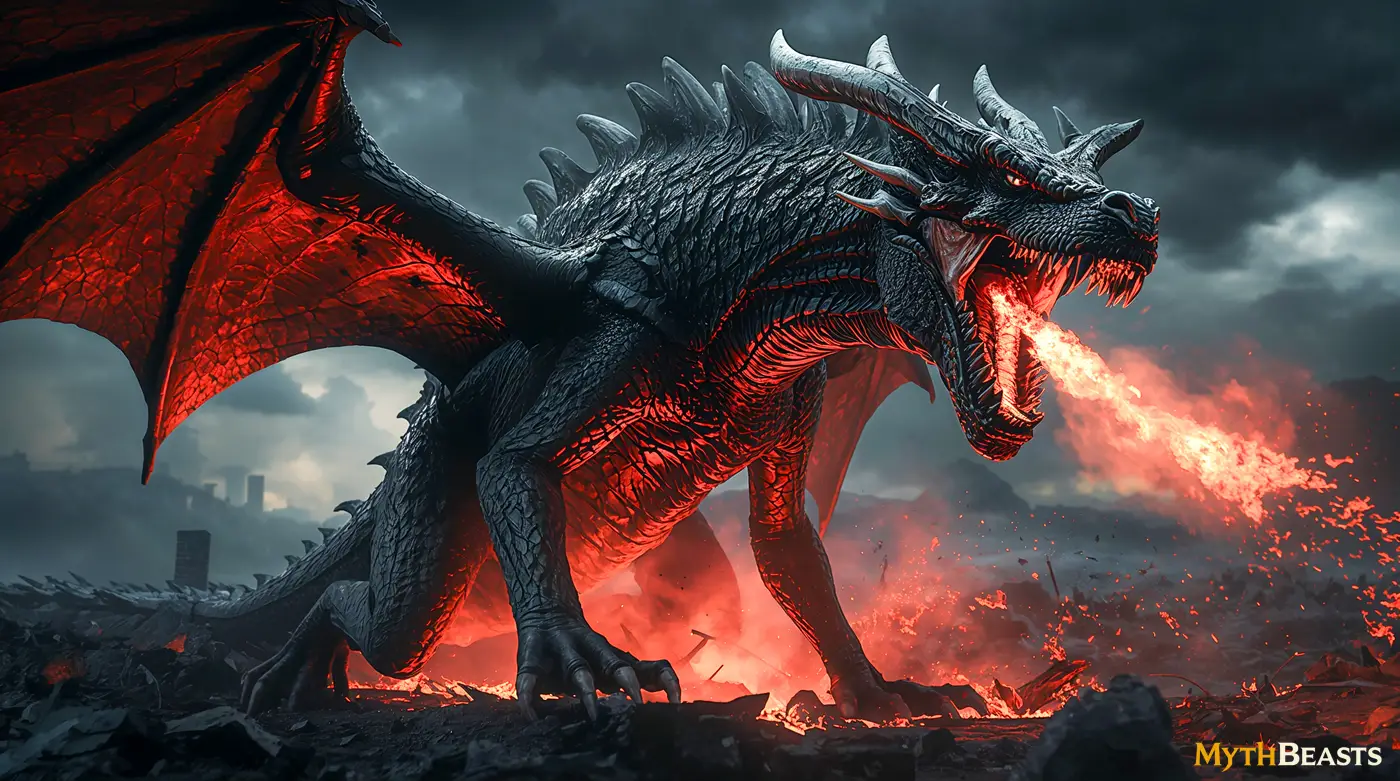
In Greek mythology, dragons were often called Drakons, meaning large serpents or guardian monsters. These creatures appeared in many myths as protectors of sacred places, treasures, or magical objects.
Unlike later medieval dragons, Greek drakons were usually enormous serpents rather than winged reptiles. They represented ancient, powerful forces connected to the earth and the gods.
Beast ID
Name in original language: Δράκων (Drakon)
Also known as: Greek Dragon
Period of time: Classical Greece
Beast Types: Serpentine beast
Similar Beasts: Hydra, Ladon, Python
Skills: Fear Induction, Enhanced Strength, Poison Emission
Weakness: Piercing Kill, Beheading
Appearance
Greek dragons were typically described as gigantic serpents covered in scales. Their bodies were long and powerful, allowing them to coil around trees, rocks, or treasure hoards.
Some myths describe drakons with glowing eyes and venomous breath. Their size and strength made them formidable guardians that few heroes could defeat.
Unlike later dragon myths, many Greek drakons were wingless but still incredibly dangerous.
Special Skills & Weaknesses
Drakons were known for their strength, endurance, and terrifying presence. Their massive bodies allowed them to crush enemies or defend sacred locations.
However, many heroes defeated these dragons using strategy and powerful weapons. Piercing attacks or decapitation often appeared as the creature’s ultimate weakness in mythological stories.
Famous Mythology Stories
One famous Greek dragon was Ladon, the serpent that guarded the golden apples in the Garden of the Hesperides.
During his Eleventh Labor, the hero Heracles defeated Ladon while attempting to obtain the sacred apples. The dragon’s defeat allowed the hero to complete one of his legendary tasks.
Fun Facts
• The Greek word “drakon” originally meant a large serpent rather than the winged dragon seen in later medieval European mythology.
• Several Greek myths include dragon guardians protecting sacred treasures, magical gardens, or divine objects.
• The modern word “dragon” comes directly from the ancient Greek word “drakon,” showing how deeply these creatures influenced later mythology and fantasy.