back to top

Human - Animal Hybrid

Conceptual DefinitionHuman-Animal Hybrid refers to mythological beings with combined human and animal traits. Human-Animal Hybrids often embody both human and an

Relevant Beasts

Celtic
Human - Animal Hybrid
Wulver - Scottish folklore
Celtic

Wulver

The Wulver is a benevolent werewolf-like creature from Shetland folklore, known for kindness and solitude. A Neutral Force tied...
  • Skills
Healing & LifeHealing Touch
  • Weaknesses
Magic BoundariesSpell Trapped
Asia
Guardian Spirit
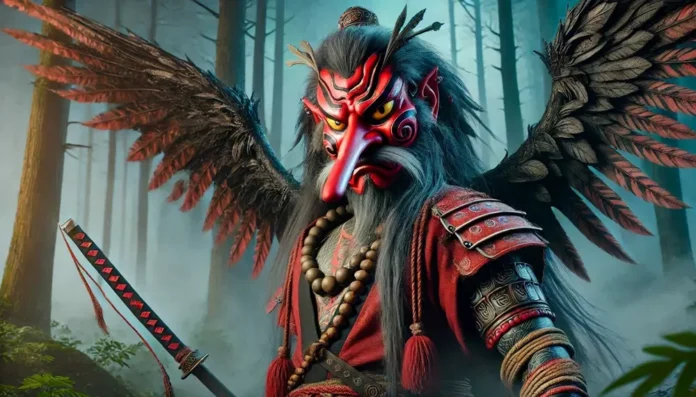
Tengu - Japanese Folklore
Japan

Tengu

Tengu are supernatural beings from Japanese folklore with human-like features, avian traits, and a reputation as guardians of mountains...
  • Skills
Aura of TerrorEnhanced Agility
  • Weaknesses
Aura CollapseOverconfidence
Akkadian Empire
Demonic Form
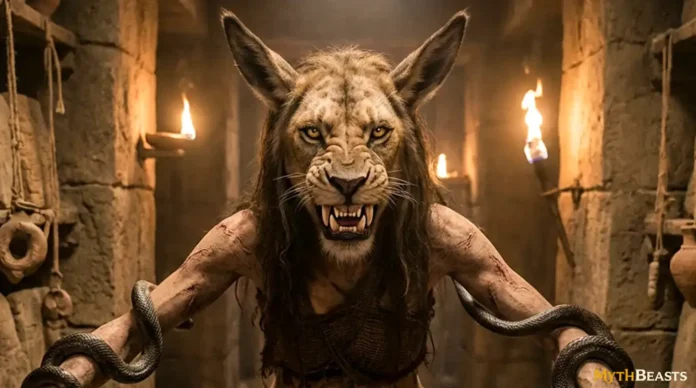
Lamashtu - Mesopotamian Mythology
Akkadian Empire

Lamashtu

Lamashtu is a terrifying demoness from Mesopotamian mythology, known for preying on mothers and infants. She has a lioness-like...

  • Skills
Disease ManipulationShape Shifting
  • Weaknesses
Amulet BlockHoly Symbol
Greece
Human - Animal Hybrid
Greece

Medusa

A cursed being with serpentine hair who turns those who gaze upon her into stone, Medusa was once a...

  • Skills
Gaze of DeathPetrification
  • Weaknesses
BeheadingBlessed Weapon

Human-Animal Hybrid – Overview

Human-Animal Hybrids are entities characterized by a combination of human and animal features. These beings frequently appear in mythologies worldwide, often embodying the intersection between the human and natural realms. They represent the blending of animalistic traits with human intelligence, serving as symbols of power, transformation, and liminality. Across cultures, these hybrids often fulfill roles that challenge conventional boundaries, offering insights into the coexistence of humanity and nature.

Defining Characteristics

Physical Form and Morphology

Typically, Human-Animal Hybrids possess both human-like and animal-specific features. Common configurations include human torsos with animal heads or limbs, reflecting a synthesis of characteristics. The form may highlight animalistic strength paired with human dexterity or intellect, suggesting dual capabilities. These hybrids often maintain a humanoid structure, ensuring they can engage in actions attributed to humans while exhibiting animal prowess.

Ontological Nature

Mythologically, Human-Animal Hybrids are often seen as supernatural or liminal beings. They exist on the boundaries between worlds, acting as mediators or guardians. Their hybrid nature enables them to transcend typical physical and metaphysical limitations, embodying the union of diverse ontological realms. Often associated with cosmic order, they represent the convergence of natural and human existence, enabling cross-boundary interactions.

Mythological Role and Function

Place in Mythological Systems

Within mythological systems, Human-Animal Hybrids frequently serve as boundary markers or enforcers. They play roles in creation myths, embodying primordial chaos or divine intervention. These hybrids often function as intermediaries, facilitating communication between gods and humans. Their dual nature enables them to operate in both divine and mortal realms, bridging metaphysical divides.

Perception and Meaning

Culturally, Human-Animal Hybrids may be perceived as protectors or threats, depending on context. They can embody nature’s unpredictability, acting as guardians of natural laws or as omens. As symbols of transformation, they illustrate the fluidity of identity and existence. Through their hybrid nature, they challenge societal norms and inspire awe or fear, reflecting cultural attitudes towards the unknown.

Distinction from Related Beast Types

Conceptual Boundaries

Human-Animal Hybrids differ from elemental beings and spirits by their physical manifestation. Unlike purely spiritual entities, they possess tangible forms that combine human and animal traits. This distinguishes them from animal-based creatures that lack human features. These hybrids are not undead entities, as they do not typically relate to death or the afterlife, instead emphasizing life’s dualities.

Common Sources of Confusion

Confusion often arises when Human-Animal Hybrids are conflated with shapeshifters or trickster spirits. Hybrids maintain a consistent dual nature rather than altering forms. Scholars distinguish them by emphasizing their role in mythological expression rather than deception or disguise. This clarity in function and form helps differentiate them from other mythological categories.

Canonical Beasts Associated with This Beast Type

Minotaur

The Minotaur, originating from Greek mythology, is a classic Human-Animal Hybrid example. With a bull’s head and human body, it symbolizes the fusion of human intellect and animalistic strength, embodying dual nature.

Ganesha

In Hindu mythology, Ganesha is a revered deity with an elephant’s head and human body. This hybrid form represents wisdom and power, symbolizing the ability to transcend obstacles through divine and earthly attributes.

Anubis

Anubis, an Egyptian deity with a canine head, serves as a Human-Animal Hybrid. He oversees embalming and the dead, reflecting the connection between human practices and animal symbolism, bridging the mortal and divine.

Historical Distribution and Cultural Context

Human-Animal Hybrids appear across many cultures and eras, from ancient Egypt to Mesoamerica. Their presence in diverse mythologies, from the Indus Valley to Greek traditions, suggests a universal exploration of life’s boundaries. These hybrids often emerge in periods when human societies are contemplating their relationship with the natural world. They embody shared cultural concerns about identity, transformation, and coexistence.

Scholarly Interpretation and Uncertainty

Variation in Definitions

Definitions of Human-Animal Hybrids vary, influenced by cultural perspectives and historical contexts. Some scholars emphasize their role as transitional figures, while others focus on their symbolic significance. Interpretations evolve, reflecting the fluidity of mythological studies.

Limits of Available Evidence

No verified sources describe this for every context, as mythologies often lack comprehensive records. Interpretations are reconstructed from available artifacts, texts, and oral traditions. Scholars acknowledge these gaps, ensuring cautious analysis of these hybrids.

Mythological Role Across Cultures

The recurrence of Human-Animal Hybrids across mythologies highlights shared human concerns, such as identity, transformation, and the natural world. They serve as vehicles for exploring these themes, providing insights into the human condition. Recognizing their roles across cultures enhances our understanding of mythological systems, revealing commonalities and cultural distinctiveness. This analytical approach aids comparative mythology, offering a broader view of human creativity and symbolic expression.