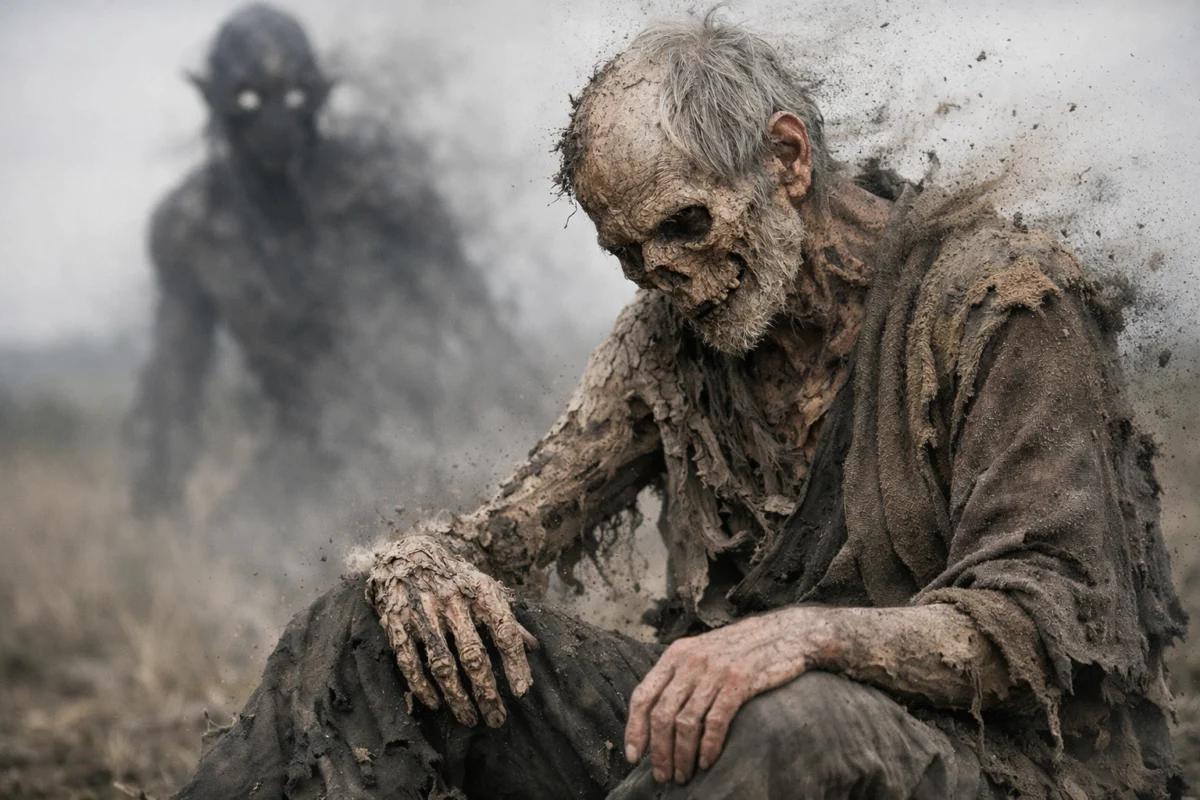

The Banshee is a legendary figure rooted deeply in Irish mythology, recognized primarily for her mournful wail that is said to herald the death of a family member. This spectral figure is often associated with ancient Celtic beliefs and has been a staple of Irish folklore for centuries.
The Banshee is not just a harbinger of death but also a symbol of the connection between the physical world and the spiritual realm, embodying the deep-seated cultural practices surrounding death and mourning in Irish tradition.
Despite her ominous role, the Banshee is not considered malevolent. Instead, she is viewed as a messenger, a spiritual entity tasked with warning families of impending loss.
Her presence in folklore highlights the Celtic reverence for ancestry and the afterlife. Over time, the legend of the Banshee has permeated popular culture, influencing literature, film, and music, thus ensuring her place in the pantheon of mythological creatures known worldwide.
History/Origin
The origins of the Banshee can be traced back to the early Celtic societies of Ireland, where she was known as a “bean sídhe,” meaning “woman of the fairy mound.” These mounds, or “síde,” were believed to be portals to the otherworld, inhabited by fairies and spirits.
The Banshee’s association with these mystical sites underscores her role as a bridge between the earthly and spiritual planes. Her mythological roots are intertwined with the ancient Celtic belief system that revered nature and the supernatural.
Historical accounts suggest that the Banshee’s wailing was first documented in medieval Irish literature, with references appearing in manuscripts such as the “Annals of the Four Masters” and the “Book of Leinster.” These texts, compiled by monks, preserved oral traditions and folklore, ensuring the survival of the Banshee’s legend through the ages.
Over time, her tale spread beyond Ireland, influencing Scottish and Welsh folklore, where similar spectral figures emerged.
Name Meaning
The term “Banshee” is derived from the Irish “bean sídhe,” which translates to “woman of the fairy mound” or “fairy woman.” This nomenclature reflects her origins in the fairy mounds of Ireland, which were believed to be the dwellings of supernatural beings.
The name encapsulates her dual nature as both a fairy and a spectral messenger, emphasizing her role within the Celtic belief system as a link between the living and the dead.
In different regions of Ireland, the Banshee is known by various names, each reflecting local dialects and cultural nuances. For instance, in some parts of the country, she is referred to as the “bean chaointe,” or “keening woman,” highlighting her role in the traditional practice of keening, a form of vocal lamentation for the dead.
This diversity in nomenclature underscores the widespread influence of the Banshee across Irish culture.
Appearance
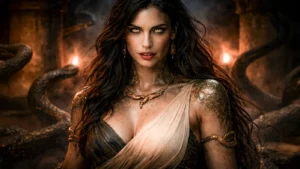
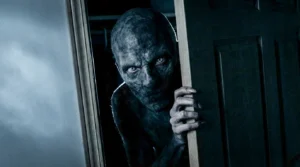
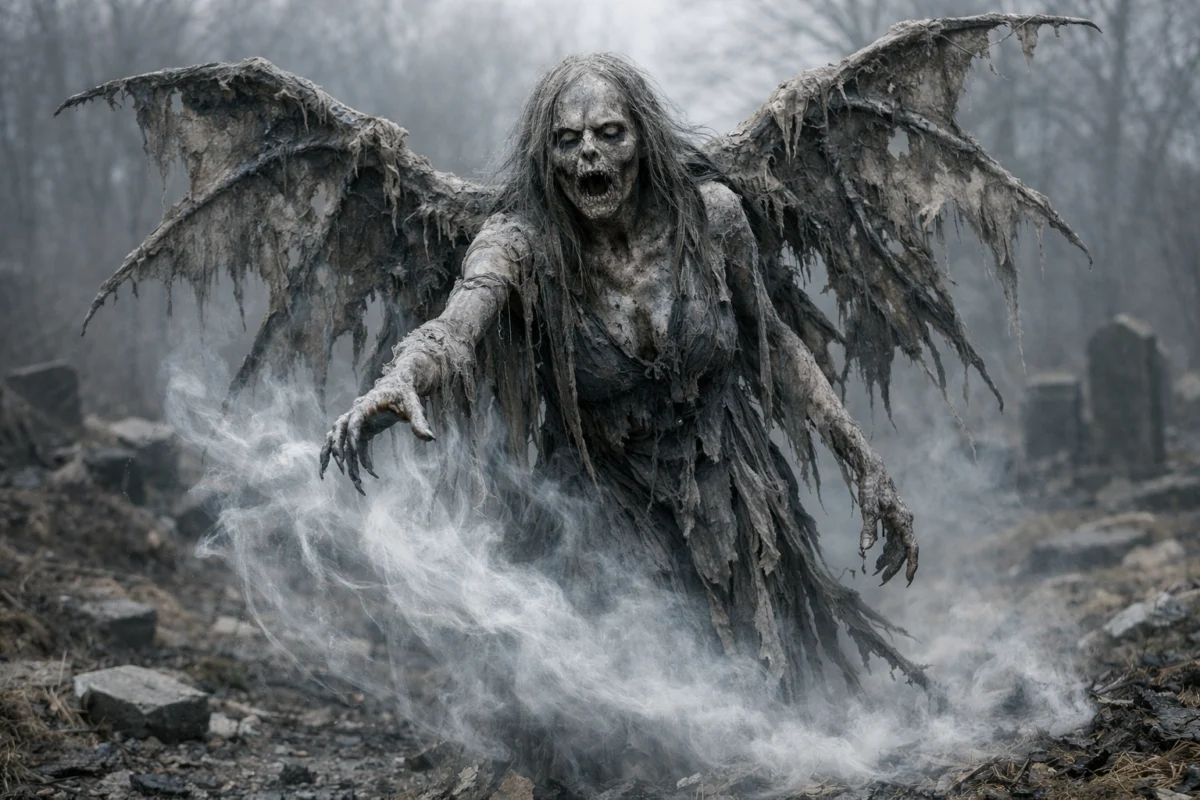
The Banshee’s appearance varies across different accounts, but she is commonly depicted as a pale, ethereal woman with long, flowing hair and a mournful expression. Her attire often consists of a gray or white robe, which adds to her ghostly aura.
In some tales, she is described as an old woman with a wrinkled face, while in others, she appears as a young, beautiful maiden, symbolizing the duality of life and death.

Her hair, whether silver, white, or fiery red, is a prominent feature, often described as being wild and unkempt, reflecting the chaotic nature of her lament. The Banshee’s eyes are said to be red from weeping, a testament to her eternal role in mourning.
This haunting visage serves to reinforce her role as a harbinger of death, a visual embodiment of sorrow and loss.
Background Story
The Banshee’s background is steeped in the rich tapestry of Irish folklore, where she is often portrayed as a solitary figure, bound to certain families or clans. According to legend, the Banshee is attached to families of pure Irish descent, particularly those with surnames beginning with “O'” or “Mac,” such as O’Neill or MacCarthy.
Her presence is considered an omen, signaling the impending death of a family member.
Different stories offer various origins for the Banshee. Some suggest she is the spirit of a woman who died in childbirth or a tragic accident, destined to forewarn others of their fate.
Other tales propose that she is a fairy woman, cursed to mourn the dead for eternity. Despite these variations, the core narrative remains consistent: the Banshee is a compassionate figure, offering families the opportunity to prepare for the inevitable loss, thus honoring the dead with proper rites and rituals.
Famous Folklore Stories
The Wailing of O’Neill
This story originates from the O’Neill clan in Ireland. It tells of a Banshee who appeared to the family, wailing mournfully the night before the death of one of their prominent leaders.
The Banshee’s appearance and cries were seen as an omen of the impending tragedy, illustrating the creature’s role as a harbinger of death within Irish folklore.
The Legend of the MacCarthy Banshee
In the tale of the MacCarthy family, a Banshee is said to have been attached to the clan for generations. Known as the White Lady of MacCarthy, she would appear before the death of a family member.
This story highlights the belief that Banshees are linked to specific families, particularly those of noble lineage, reinforcing their role as familial spirits.

The Cry of the O’Brien Banshee
The O’Brien family has long told the story of their Banshee, who is said to have been heard crying by the River Shannon before the sudden death of a young heir. This tale emphasizes the Banshee’s connection to water and how her presence near such locations often signals an impending death, a common motif in Banshee lore.
Cultural Impact
The Banshee has left a significant mark on Irish culture, symbolizing the inescapable nature of death. Her wails have been interpreted in literature and art as a poignant reminder of mortality, influencing works by authors like W.B. Yeats.
In modern media, the Banshee continues to captivate audiences through films and television, often portrayed as a mysterious and haunting figure. This enduring presence underscores the Banshee’s role as a cultural icon of fear and mystique.
Beyond Ireland, the Banshee’s legend has permeated global folklore, inspiring similar tales in other cultures, showcasing her universal appeal as a symbol of death’s inevitability.
Similar Beasts
La Llorona

A spirit from Mexican folklore, La Llorona is known for her mournful cries, similar to the Banshee. She is said to weep for her lost children, serving as a warning to those who hear her.
Bean Nighe

From Scottish folklore, the Bean Nighe is a washerwoman who cleans the clothes of those about to die. Like the Banshee, she is considered an omen of death, often appearing near water.
White Lady
Common in European folklore, the White Lady is a ghostly figure often associated with tragedy and death. Her spectral presence and sorrowful demeanor parallel the Banshee’s role as a death omen.
Churel
In South Asian folklore, the Churel is a vengeful female spirit known for her eerie cries. Although associated with different cultural contexts, her haunting nature aligns with that of the Banshee.
Religion/Ritual
The Banshee’s origins are deeply intertwined with Celtic spiritual beliefs, where she is often viewed as a messenger from the Otherworld. Her presence is sometimes linked to the ancient Druidic traditions that revered the spirit world.
In some interpretations, the Banshee’s wail is seen as a form of keening, a traditional Irish lament for the dead. This ritualistic aspect underscores her role in guiding souls to the afterlife, a sacred duty in Celtic culture.
Despite her fearsome reputation, the Banshee is sometimes perceived as a protective spirit, particularly for families with whom she is associated. This dual role reflects the complex nature of death in religious and cultural practices.
Scientific or Rational Explanations
Some scholars suggest that Banshee sightings can be attributed to natural phenomena, such as the sound of the wind or the cries of nocturnal animals, which were misinterpreted as supernatural occurrences.
Banshee compared to La Llorna, Bean Nighe, and White Lady
| Aspect | Banshee | La Llorna | Bean Nighe | White Lady |
|---|---|---|---|---|
| Cultural Origin | Originates from Irish mythology and ancient Celtic beliefs. | Rooted in Mexican folklore and associated with weeping. | Derived from Scottish folklore and Celtic traditions. | Found in various European legends, often linked to mourning. |
| Role in Folklore | Her wail signifies the impending death of a family member. | Her cries are said to warn of a tragic death. | She is known to foretell death through her appearance. | Her presence often indicates a tragic event or loss. |
| Symbolism | Represents the connection between the living and the dead. | Symbolizes sorrow and loss in family contexts. | Embodies themes of fate and the afterlife. | Represents grief and the mourning process in society. |
| Appearance | Typically depicted as a pale woman with long hair. | Often shown as a woman in white, weeping. | Described as a ghostly figure with a dark appearance. | Usually portrayed as a lady in white or gray. |
| Associated Death | Her presence is linked to the death of family members. | Associated with the death of children or loved ones. | Foretells the death of warriors or noble figures. | Linked to the demise of individuals in tragic tales. |
| Geographical Region | Primarily associated with Ireland and its cultural heritage. | Connected to regions in Mexico and Latin America. | Found in Scottish and Irish regions, especially Highlands. | Commonly linked to various European countries and folklore. |
Psychological explanations propose that the Banshee legend may arise from the human tendency to seek patterns and meaning in random events, particularly in the context of grief and loss.
Folklorists argue that the Banshee serves as a cultural narrative to cope with the inevitability of death, using myth to provide comfort and understanding in the face of mortality.
Modern Cultural References
X-Men: The Animated Series (1992-1997). In this popular animated television series, the character Banshee is a mutant with the ability to produce powerful sonic screams, reminiscent of the traditional Banshee’s wailing.
This character brought the mythological creature into mainstream pop culture. IMDB
Darby O’Gill and the Little People (1959). A Disney film that features a Banshee as a harbinger of death, staying true to the creature’s mythological roots.
The Banshee’s appearance is both eerie and integral to the film’s plot. IMDB
Supernatural (2005-2020). This long-running TV series features a Banshee in the episode “Into the Mystic” (Season 11, Episode 11), where it is portrayed as a supernatural entity that preys on vulnerable victims. IMDB
Teen Wolf (2011-2017). The character Lydia Martin discovers she is a Banshee, using her abilities to predict death and assist her friends.
Her journey explores the modern interpretation of Banshee powers. IMDB
Fables by Bill Willingham (2002-2015). This comic book series includes a Banshee character who is part of a larger narrative involving fairy tale characters living in the modern world. DC Comics
Conclusion
The Banshee remains a compelling figure in mythology, embodying themes of death and the supernatural. From its origins in Irish folklore, the Banshee has been portrayed as both a fearsome and mournful presence, warning families of impending death.
Its depiction has evolved over time, yet it consistently reflects the cultural fascination with life, death, and the unknown.
In modern culture, the Banshee continues to captivate audiences, appearing in various forms of media and entertainment. Whether as a foreboding figure in films and television or as a nuanced character in literature and comics, the Banshee’s legacy endures.
This enduring presence underscores the creature’s adaptability and the timeless nature of its myth.
Further Reading
True Irish Ghost Stories, Chapter VII: Banshees, St. John D. Seymour & Harry L. Neligan, 1914, Sacred Texts Archive
A classic collection of first-hand and second-hand Banshee stories from Ireland, documenting regional beliefs, typical appearances, and how families interpreted the wail as a hereditary death omen across generations.
https://sacred-texts.com/neu/celt/tigs/tigs09.htm
The Banshee, Galway County Heritage Office
Short article presenting local Banshee traditions from County Galway, including specific family stories, descriptions of her appearance, and how rural communities understood her cries as warnings rather than random hauntings.
https://heritage.galwaycommunityheritage.org/content/topics/folklore-and-cures/the-banshee
Folktale – The Banshee, The Schools’ Collection, Dúchas.ie, National Folklore Collection
A transcribed schoolchild-collected folktale about a family Banshee, showing how ordinary people described her appearance, hair-combing motif, and connection to particular lineages, preserved from 1930s Irish oral tradition.
https://www.duchas.ie/en/cbes/5044672/5030944/5145073
In Search of the Irish Family Banshee, Her Cry Echoing Across Time, Smithsonian Center for Folklife and Cultural Heritage, 2023
A modern essay examining historical and contemporary perspectives on the Banshee, linking keening, colonial attitudes, Irish identity, and ongoing family traditions surrounding the death-messenger figure.
https://folklife.si.edu/magazine/irish-banshee
Myths and Legends of the Celtic Race by T.W. Rolleston, Dover Publications, 1990. A comprehensive guide to Celtic mythology, including a section on the Banshee. Dover Publications
The Banshee in Irish Folklore, Dúchas Folklore Collection, National Folklore Archive (Ireland)
This archival resource presents authentic firsthand accounts of Banshee encounters gathered from Irish oral tradition, highlighting regional variations, keening symbolism, family lineage spirits, and the cultural context in which death omens were understood.
https://www.duchas.ie/en/src?txt=banshee