Introduction
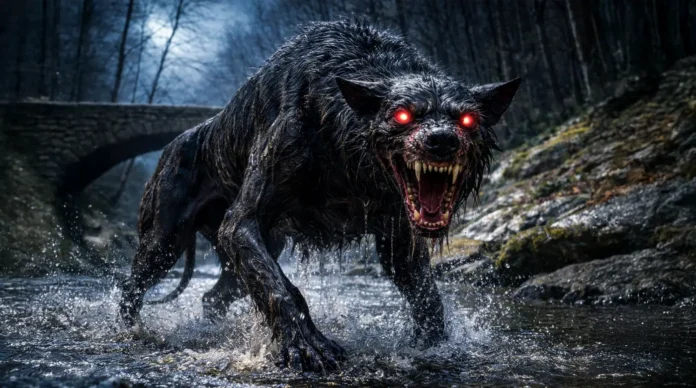
The Dip is a mythical black dog from Catalan folklore, especially tied to the village of Pratdip in northeastern Spain. It is depicted as an unnatural hound associated with evil and misfortune, often believed to be an emissary of dark forces.
Local tradition describes the Dip as a nocturnal creature that preys on livestock and unwary travelers, earning its reputation as a fearsome supernatural presence. This legend has persisted in oral tradition and regional imagery for centuries, forming an enduring part of Catalonia’s folkloric identity.
The Dip is notably featured in early depictions dating back to 17th-century religious altarpieces in Pratdip, showing the creature within sacred artistic contexts. The legend also hints that its fearsome image may have been used historically as a warning against wandering after dark.
Although not widely known outside Catalan culture, the Dip remains a vivid example of how myth and local history blend, revealing underlying fears surrounding night, predation, and community boundaries in rural life.
History/Origin
Belief in the Dip has roots in Catalonia’s rural tradition, where black dog legends were common, often symbolizing night dangers and unknown predators. The earliest visual evidence comes from the altarpiece of Santa Marina in Pratdip, dated 1602, where figures resembling the Dip appear, showing its age and local importance.
Another representation from 1730 reinforces that the Dip was known in the region by at least the early modern period. These religious artworks indicate the creature was integrated into community cultural memory much earlier than written folklore collections suggest.
The name Pratdip itself has been linked in local tradition to the Dip, hinting that the legend was widespread enough to influence place identity and communal storytelling. Stories of these hounds traditionally served practical purposes, such as cautioning villagers against danger at night.
Although specific written documents are rare before modern times, the Dip’s consistent presence in art, oral tradition, and regional lore strongly roots its origin in long-standing Catalan mythological patterns.
Name Meaning
The word Dip is the established Catalan name used for the creature in Pratdip’s local legend. In practice, it works like a proper noun, naming a specific kind of feared night hound.
Because the legend is so strongly tied to Pratdip, popular retellings often treat the place name and the creature name as a matched pair. People explain Pratdip as a meadow linked to dips.
That explanation is meaningful as folklore, because it shows how communities connect a scary story to their landscape. Still, it should not be treated as proven linguistic origin.
Philologist Joan Coromines offered a different reading in his discussion of the toponym. He links Pratdip to Prat d’Ib and glosses it as a riverside meadow.
So the safest verified framing is this. Dip is the stable name of the legend’s vampire dog, while the deeper etymology of Pratdip remains debated in accessible scholarship.
Appearance
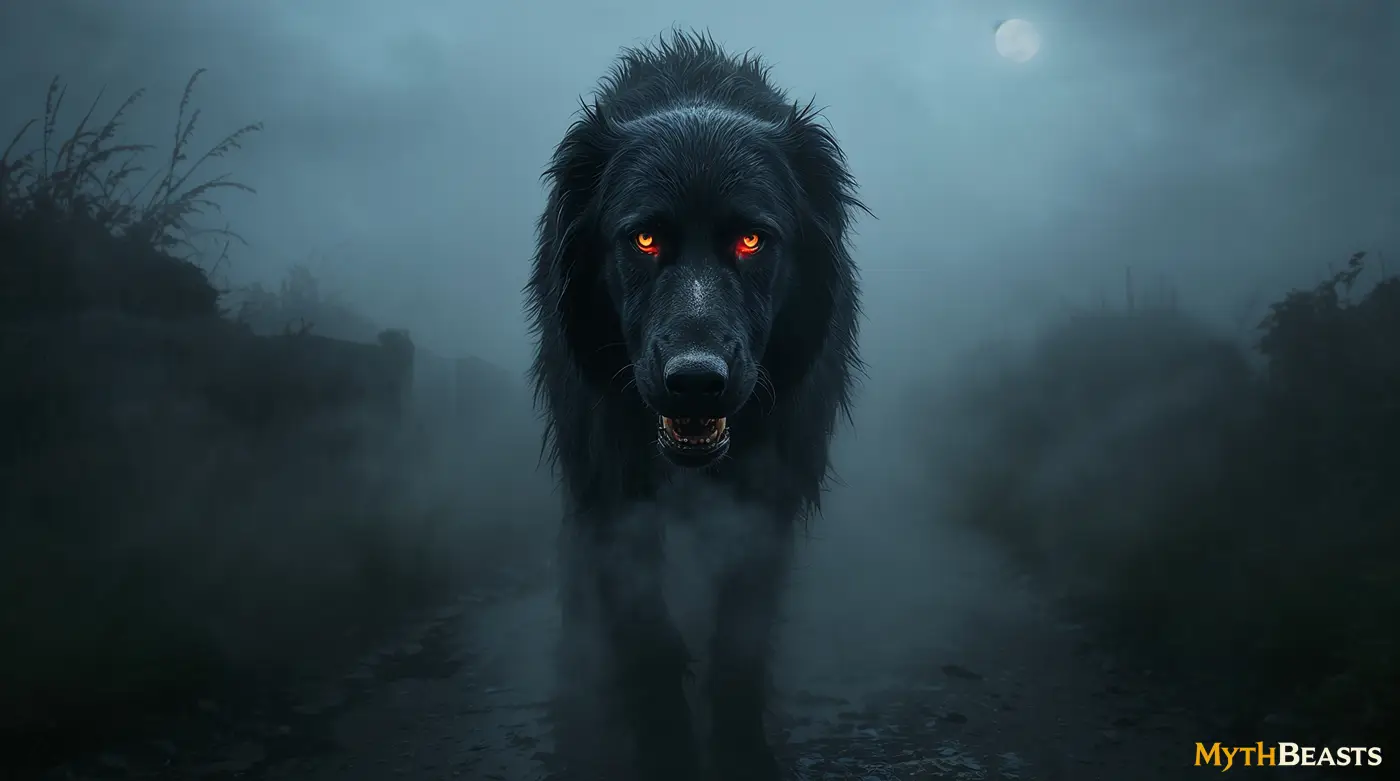
In Catalan folklore summaries, the Dip appears as a dark, dog-like entity tied to night, fear, and harmful intent. Many descriptions present it as a hellhound figure connected with the Devil.
Accounts repeatedly stress its vampiric behavior. The Dip attacks cattle and sometimes people, feeding by sucking blood, which explains why it became a rural explanation for losses and panic.
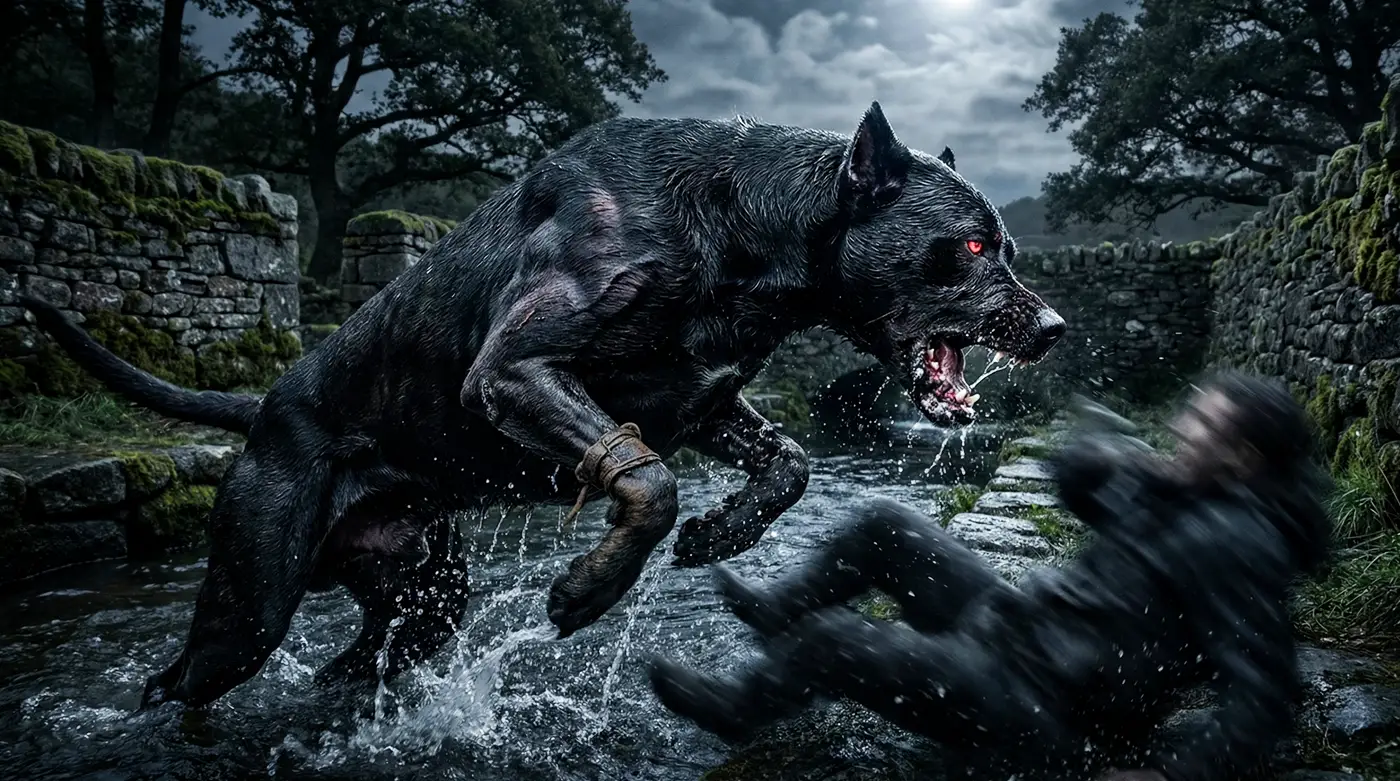
One of its most distinctive traits is physical. Multiple modern folklore references note the Dip is lame in one leg, a detail that separates it from more generic black dog legends.
Visual tradition supports the legend’s age. Depictions of vampire dogs appear in local religious art, including the 1602 altarpiece of Santa Marina in Pratdip, and later works cited by writers.
Eye imagery also recurs in retellings. The Dip is often described with bright or burning eyes seen in darkness, reinforcing the idea of a predator glimpsed at the edge of human safety.
Background Story
The Dip legend grew in the mountains and valleys around Pratdip, where night travel, livestock herding, and isolated farm paths shaped everyday fear. Folklore turned those risks into a hunting presence.
Stories describe dips as dark vampire dogs that targeted cattle, sheep, and goats. When animals died without clear cause, the tale gave a name and intention to loss.
The creature also became a social warning. Many retellings frame dips as attackers of people returning late from taverns, turning nightlife and recklessness into a dangerous moral lesson.
Pratdip’s community memory kept the Dip visible through local symbols and storytelling, not only through spoken legend. Early church art in the area suggests the image already mattered by the 1600s.
Over time, the Dip settled into a stable role. It stood for night danger, blood loss, and the idea that some landscapes punish careless movement after dark.
Famous Folklore Stories
Eyes on the Night Road
A recurring story-form describes travelers noticing watching eyes on rural paths near Pratdip. They sense a presence behind them, but cannot clearly see a body in the darkness.
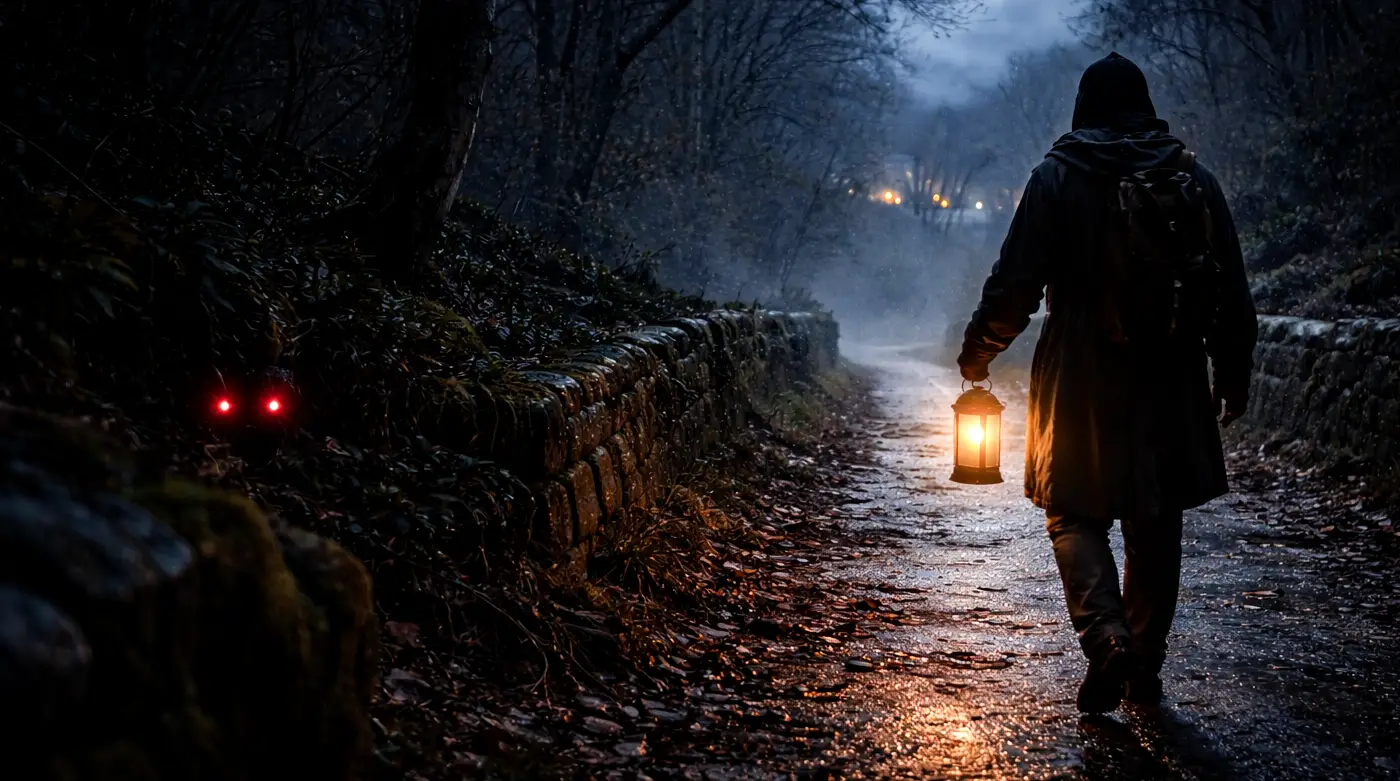
The tension comes from partial sight and uncertainty. The Dip is felt as pursuit, and the safest response is to keep moving until lights and people break the threat.
The Herd Found Drained
Another well known motif centers on livestock found weak or dead after the night. The Dip is blamed for attacking cattle, sheep, or goats and drinking their blood.
This story-form turns unexplained rural loss into an intentional act. It also frames the Dip as a predator that targets what keeps a household alive and stable.
The Late Walk Home
A third commonly repeated theme warns against walking home late, especially after drinking. In these versions, the Dip waits on the route back, where judgment and visibility fail.
The tale acts as social control through fear. It links unsafe night behavior to supernatural consequence, keeping the Dip tied to roads, darkness, and vulnerability.
Dip compared to Black Shuck and Barghest
| Aspect | Dip | Black Shuck | Barghest |
|---|---|---|---|
| Origin | The Dip originates from Catalonia's rural folklore, particularly in Pratdip. | Black Shuck is rooted in English folklore, particularly in East Anglia. | Barghest is a creature from northern England, often linked to Yorkshire. |
| Appearance | The Dip is depicted as a large, unnatural black dog with ominous features. | Black Shuck is often described as a large black dog with glowing eyes. | Barghest is typically portrayed as a monstrous black dog or wolf-like creature. |
| Behavior | The Dip is known for preying on livestock and travelers during the night. | Black Shuck is said to appear before death or disaster, instilling fear. | Barghest is believed to haunt graveyards and crossroads, causing terror. |
| Cultural Significance | The Dip reflects fears of the night and community boundaries in rural life. | Black Shuck symbolizes death and misfortune in local English lore. | Barghest represents the supernatural and serves as a cautionary tale. |
| Associated Myths | The Dip is associated with dark forces and misfortune in local tradition. | Black Shuck is linked to various legends of death and omens. | Barghest is often connected to tales of lost souls and hauntings. |
| Regional Variations | The Dip is primarily recognized in Catalonia, with limited awareness elsewhere. | Black Shuck is well-known in England, especially in folklore studies. | Barghest has regional significance in northern England, particularly in Yorkshire. |
Cultural Impact
In Pratdip, the Dip is not just a story. It functions as a civic symbol that marks local identity, appearing in public imagery and shaping how the town presents its folklore.
The legend also lives through local ritual theater. Pratdip’s municipal materials note the Dip as an emblem used by the town’s Diables group, linking the creature to contemporary festive performance.
Tourism projects use the Dip as a guide to place. Visitor routes and town experiences invite people to search for Dip figures around streets and landmarks, turning legend into exploration.
Institutional storytelling keeps the creature active. Regional tourism listings describe events that stage the Dip legend for audiences, showing how oral tradition becomes public culture without losing its darker tone.
The Dip also entered modern Catalan literature. References commonly point to Joan Perucho, who drew on the Dip myth to build a vampire narrative linked to Pratdip’s landscape.
Similar Beasts
Black Shuck
Black Shuck is a phantom black dog from East Anglia in England, often described as an omen linked to night travel, lonely roads, and sudden fear. The legend focuses on encounter and warning, not on feeding.
Like the Dip, Black Shuck compresses danger into a single, memorable form that people claim they saw briefly. The comparison works best as a shared function, a canine sign that the night has rules. Read More
Barghest
The Barghest is a black dog figure from northern English tradition, commonly framed as a death omen or a threatening presence connected to specific places. Many accounts emphasize dread, silence, and the feeling of being followed.
This makes it structurally similar to the Dip as a night hazard turned into an agent with intent. The difference is motive, since the Barghest warns or terrorizes more than it feeds like a vampire dog.
El Cadejo
El Cadejo is a spirit dog from Central American folklore, often tied to nighttime travel and moral behavior. Variants describe an encounter on a road where a dog appears and the outcome depends on the traveler’s choices.
That moral framing echoes how Dip stories work as community safety lessons, especially for people wandering late. The Dip is more predatory in many retellings, but both use a dog spirit to police the night.
Scientific or Rational Explanations
One practical source for Dip stories is rural livestock death with unclear causes. Predators, disease, or injury can produce sudden losses, and blood imagery intensifies fear and memory.
In low light, people also misread movement and shape. Large dogs, wolves, or feral animals can appear unnatural in fog or moonlight, especially when seen briefly at distance.
Eye shine adds another trigger. Reflected light from animal eyes can look like burning points in darkness, supporting the recurring motif of eyes watching from the roadside.
A second explanation is social regulation. Some retellings connect dips to people returning late from taverns, turning the legend into a warning against risk, alcohol, and solitary travel.
Finally, the Dip fits a wider pattern where communities personalize danger as an agent. A named creature makes the rule simple, avoid certain roads at night, protect herds, stay cautious.
Modern Cultural References
Les històries naturals, Lazzigags Produccions (stage musical), 2022
Stage musical adaptation of Joan Perucho’s vampire novel. The story centers on deaths in Pratdip blamed on Onofre de Dip, bringing the Dip legend into mainstream theatre audiences.
https://www.lazzigags.cat/les-histories-naturals-o-28-ca/
Dip. Más allá de la oscuridad, Eva Sánchez Gómez (children’s picture book), 2015
Illustrated album based on the Pratdip Dip legend.
It reframes the vampire dog myth through a fear focused story, aimed at younger readers, while keeping the dips as the central threat.
https://www.amazon.com/-/es/Dip-alla-oscuridad-S%C3%A1nchez-G%C3%B3mez/dp/8414001432
Nou vermouth Dos Déus Dip, Sommeliers de Catalunya (alcohol product release article), 2021
News coverage of Dos Déus Dip vermouth, a limited edition named after the Dip legend and explicitly connected to Pratdip and the land of dips, using local myth for branding.
https://www.sommeliers.cat/cat/noticia/nou-vermouth-dos-deus-dip-inspirat-en-els-whiskies-dislay-el-bourbon-america-i-pratdip
Pratdip Llegendari, Associació Pratdip Llegendari (festival event), n.d.
Official festival site built around Pratdip’s own legend. It features Onofre de Dip as a central character and stages the story through performances and themed programming.
https://www.pratdipllegendari.cat/
Conclusion
The Dip stands as one of the most distinctive figures in Catalan folklore, shaped by local landscape, rural fear, and long-standing community memory rather than widespread literary tradition or mythic canon.
Its image as a vampiric black dog concentrates practical dangers into a single form, transforming livestock loss, night travel, and isolation into a recognizable and cautionary supernatural presence.
Unlike many legendary beasts, the Dip’s strength lies in its specificity. Its connection to Pratdip, its appearance in early religious art, and its survival in local culture anchor it firmly in place.
The legend’s endurance shows how folklore adapts without losing structure. The Dip continues to function as warning, symbol, and identity marker rather than fading into abstract monster imagery.
By examining the Dip through verified tradition, art, and modern cultural use, the creature remains grounded as a product of lived experience rather than invention, preserving its role as a credible and unsettling folkloric beast.
Further Reading
Figures from Catalan Myths and Folklore, Barcelona Metropolitan
An overview of key Catalan mythical beings, including the Dip, with discussion of its appearance in early altarpiece art and local tavern warnings.
https://www.barcelona-metropolitan.com/features/culture/figures-from-catalan-myths-and-folklore/
Dip (Mitología), Spanish Mythology Compendium
Spanish language summary identifying Dip’s vampiric dog nature, role in Pratdip legend, and depiction in 17th and 18th century religious art.
https://es.wikipedia.org/wiki/Dip_%28mitolog%C3%ADa%29
uns i altres: literatura i traducció, Centre de Lectura, 2017
PDF issue that references Joan Coromines on the place name Pratdip, arguing it relates to Prat d’Ib and means riverside meadow, not a monster etymology.
https://www.centrelectura.cat/revistadigital/wp-content/uploads/2017/06/edicions-135.pdf
PRATDIP: La llegenda dels dips, Cultura i Paisatge
Local cultural article summarizing the Dip tradition around Pratdip, describing dark vampire dogs that hunted livestock and frightened travelers, and discussing their place in community memory.
https://culturaipaisatge.cat/noticies/pratdip-la-llegenda-dels-dips/
Pratdip, the Spanish village of vampire dogs, Fascinating Spain
Travel focused folklore explainer recounting the Dip as a black vampire dog with fire-bright eyes and a lame leg, tied to nighttime attacks on cattle and fear of wandering locals.
https://www.fascinatingspain.com/articulo/what-to-see-in-catalonia/spanish-village-vampire-dogs/20241024105826067554.html
El Dip, Ajuntament de Pratdip, n.d.
Municipal page summarizing local tradition. Mentions dips following muleteers at night, their watching eyes, and attacks on livestock where they drink blood, explaining their vampiric reputation.
https://www.pratdip.net/pagines/dip
Celebrate Pratdip Legendario at this Exciting Festival, Catalunya.com, n.d.
Tourism listing that summarizes the Dip legend as blood-sucking creatures that frightened inhabitants and harmed cattle, showing how the tradition survives in public cultural storytelling today.
https://www.catalunya.com/en/continguts/esdeveniments-agenda/pratdip-legendario-1-1-560880
Searching for Diabolic Dips of Pratdip, Costa Daurada, n.d.
Visitor experience that documents a mapped hunt for Dip figures across Pratdip.
Useful proof of modern cultural presence, town branding, and public folklore interpretation.
https://costadaurada.info/en/experiences/searching-for-diabolic-dips-of-pratdip
The myth of the dips, dogs Pratdip vampires, axis of the new Interpretation Centre Llaberia, Salou.com, 2011
News report on a local interpretation center where the Dip myth anchors visitor engagement.
Shows institutional use of mythology within regional tourism and heritage promotion.
https://www.salou.com/en_GB/news/culture/myth-dips-dogs-pratdip-vampires-axis-new-interpretation-centre-llaberia
Shuck, Shock, Oxford Reference, n.d.
Reference note describing Old Shuck or Black Shuck as a phantom dog in Norfolk and Suffolk lore.
Useful for validated comparison to Dip as a black dog warning figure.
https://www.oxfordreference.com/display/10.1093/oi/authority.20110803100503883
This monstrous hellhound is thought to have inspired Dracula, Countryfile
Explains the Barghest as northern English legend, often framed as an ominous black dog.
Useful for comparing Dip to other European canine fear figures.
https://www.countryfile.com/culture/barghest
El Cadejo, El Salvador, USC Digital Folklore Archives
A collected student folklore entry presenting El Cadejo as a spirit dog associated with night travel and moral warnings.
Useful for cross-cultural comparison to Dip’s function.
https://folklore.usc.edu/el-cadejo-el-salvador/
Phantom Black Dogs in Latin America, Simon Burchell, 2007
Scholarly style survey linking black dog spirit traditions in Latin America, including Cadejo variants, with quotes from documented folklore collectors.
Helps compare structural motifs across regions.
https://www.hoap.co.uk/pbdla.pdf