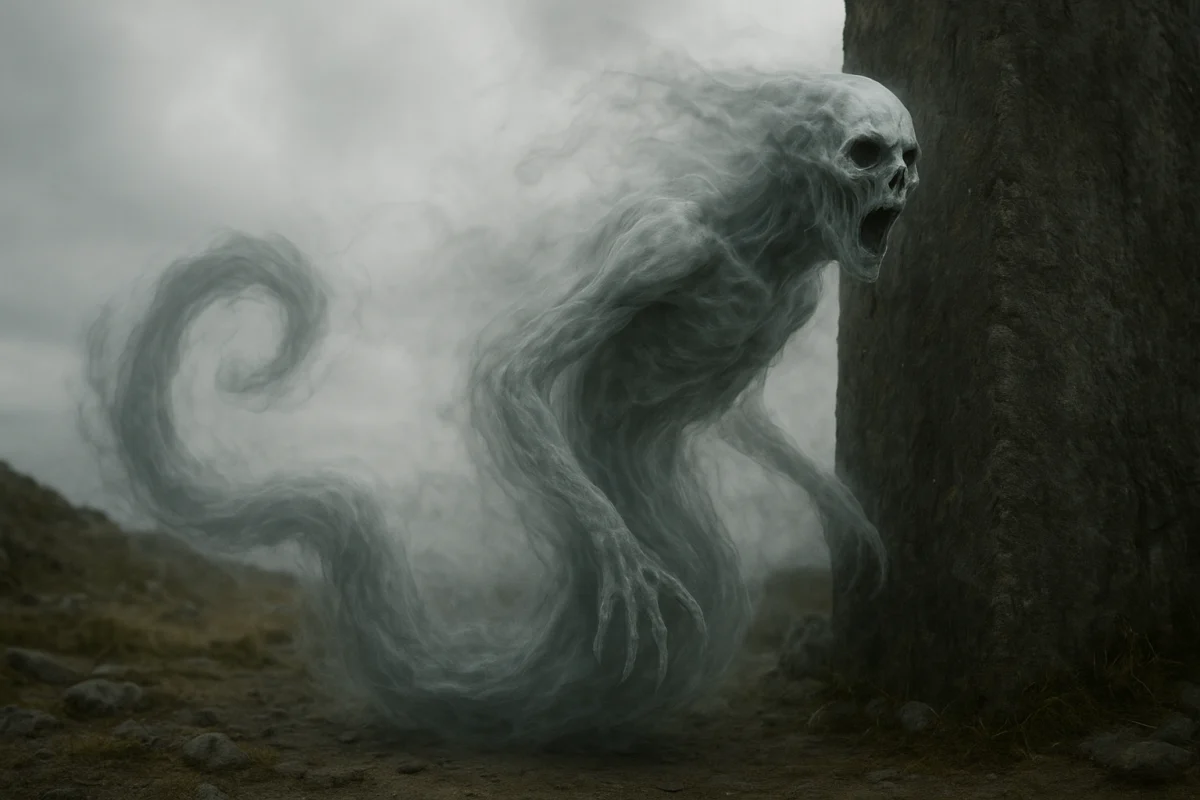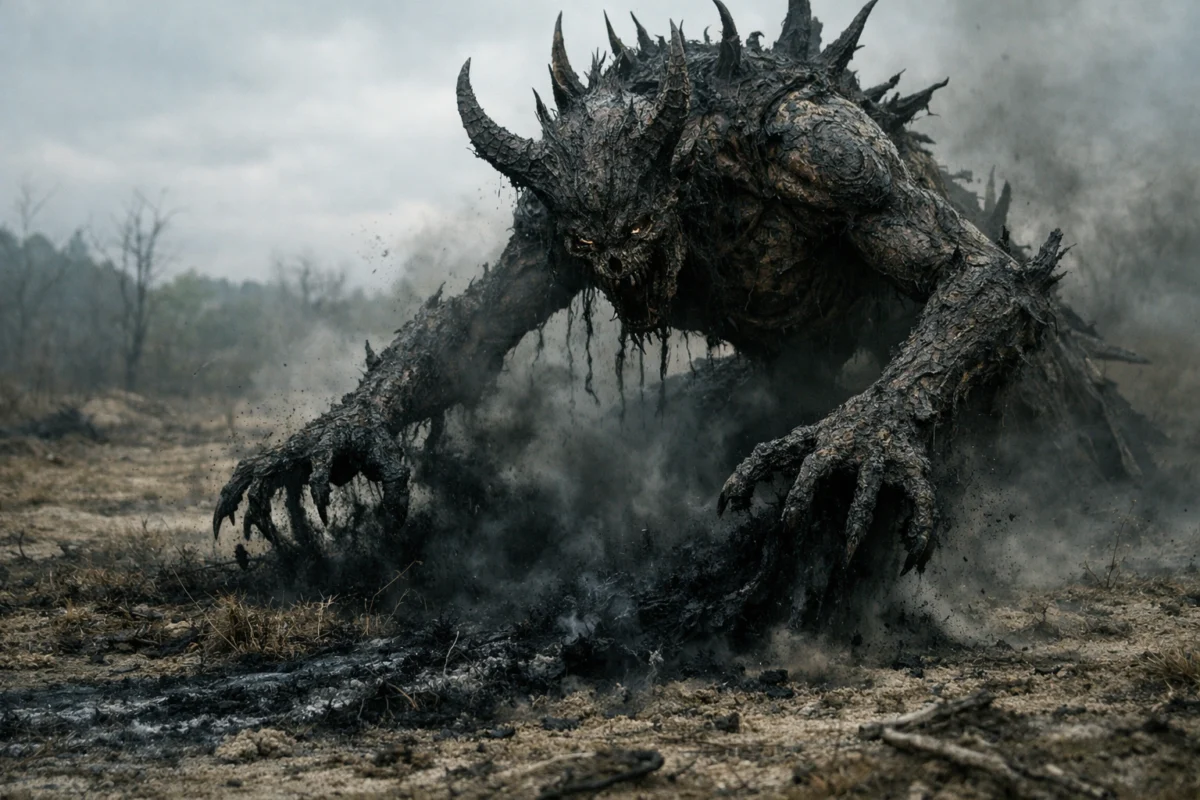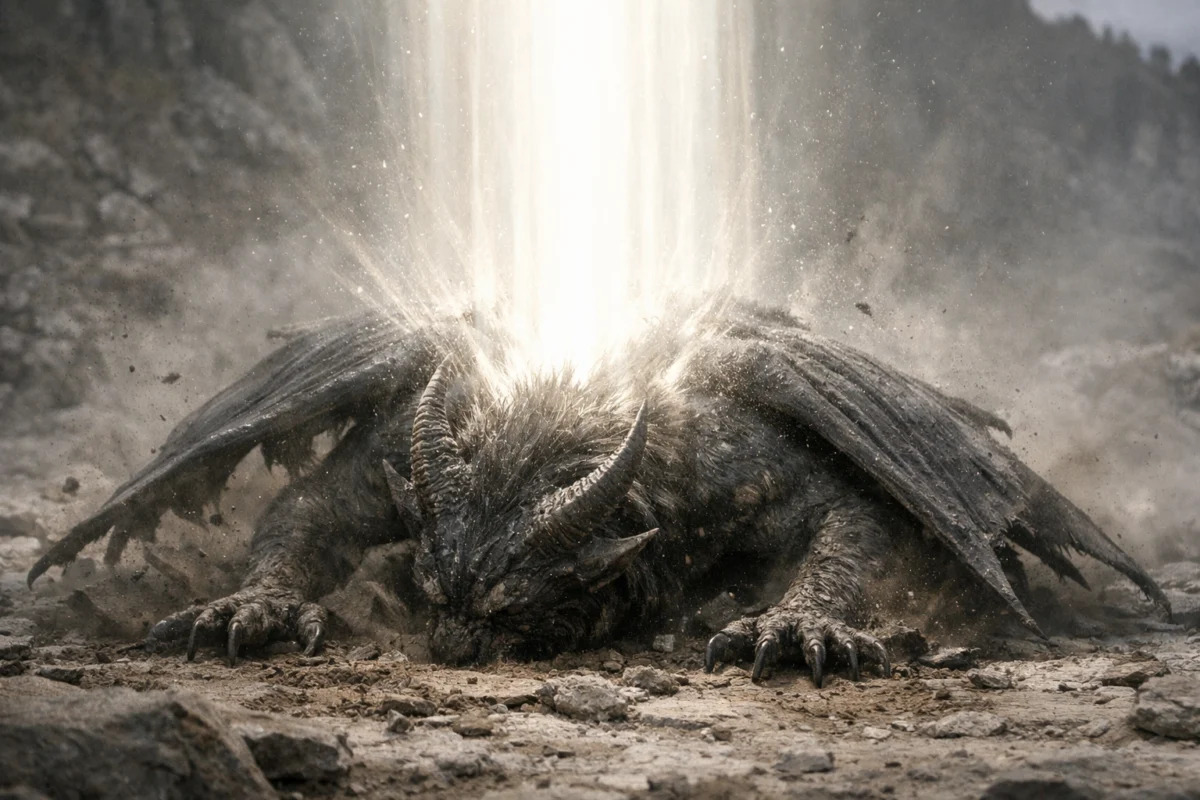


Introduction
Lamia (Greek: Λάμια) sits in a strange spot in Greek myth: part tragic royal figure, part nursery nightmare. Some traditions remember her as a Libyan queen caught in Zeus’ orbit, then broken by Hera’s punishment.
Others treat Lamia less like a single character and more like a category of dangerous night beings used to explain fear, loss, and predation.
What makes Lamia stick is the emotional engine behind the horror. Ancient writers connect her to grief, envy, and the collapse of motherhood into monstrosity.
That shift turns a personal disaster into a warning story that could be told and retold in different places and centuries.
Later literature pushes Lamia even further into the supernatural. By the early imperial period, she can appear as a seductive, vampiric “lamia” who lures a victim with luxury and affection, then reveals a predatory goal.
Across these layers, Lamia becomes a flexible symbol for what people fear after dark: the beautiful thing that hides teeth.
History/Origin
The earliest securely cited, extended ancient narrative that names Lamia as a Libyan queen appears in Diodorus Siculus (1st century BCE). In his Libyan digression, he reports a local story that placed her birth at a cave near a rocky peak, and then reframed her legend in rationalized terms: not magic, but human cruelty, reputation, and folklore memory.
“At the base of this rock was a large cave… in which according to myth had been born Lamia, a queen of surpassing beauty.”
Diodorus then explains how Lamia’s name became terrifying to children because of what she supposedly did to other families. In his version, her own children had died, and her envy curdled into violence.
She ordered newborns seized and killed, and that behavior, he says, is why later generations kept her name as a threat in child culture. This is an important Myth Beasts distinction: one of our oldest full accounts already treats Lamia as a legendary “bogey” grounded in social memory and moral fear, not only as a literal monster.
“Wherefore… the story of this woman remains among the children and her name is most terrifying to them.” (Penelope)
A separate ancient strand shows Lamia as a proverb-like figure used for moral comparison. Plutarch (late 1st to early 2nd century CE) uses “the Lamia in the fable” to describe someone blind at home but sharp-sighted about others, explaining that she stores her eyes away and only “puts them in” when she goes out.
This matters because it proves detachable eyes were already a known Lamia motif by Plutarch’s time, even when used as a metaphor rather than a monster manual.
“But as it is, like the Lamia in the fable… sleeps in blindness with her eyes stored away in a jar…” (Penelope)
By the 3rd century CE, Philostratus (Life of Apollonius of Tyana) preserves another major evolution: lamias as seductive predators. In the famous Corinth episode, Apollonius exposes a glamorous “bride” as a lamia-like being who feeds on human bodies.
This pushes Lamia from child-terror to adult sexual danger, and it shows how the name “lamia” could expand into a broader class of night-haunting threats.
“…this fine bride is one of the vampires… whom the many regard as lamias and hobgoblins.” (Livius)
One more key datapoint: Roman-era Horace assumes his readers already understand Lamia as a child-devouring figure, using her as a benchmark for unbelievable fantasy. That casual reference is strong evidence the Lamia-as-child-eater idea had become culturally familiar well beyond a single story.
Name Meaning
The name Lamia derives from the ancient Greek Λάμια. Classical lexicons connect it to the Greek word laimos, meaning “throat” or “gullet,” a fitting association for a figure later described as devouring children or draining life from victims.
While the etymology is widely accepted in ancient scholarship, it likely reflects retroactive interpretation: once Lamia became known as a devourer, her name was naturally linked to consumption.
Over time, Lamia shifted from proper noun to common noun. In later Greek and Roman usage, lamia could refer not only to the Libyan queen of legend but to a broader class of female night-demons.
The plural lamiai appears in imperial literature, signaling that the name had evolved into a category. This linguistic transformation mirrors the myth’s trajectory: from one tragic figure into a reusable archetype of predatory femininity.
By Late Antiquity, “lamia” could function less as biography and more as diagnosis, a label for a type of threat rather than a single being.
Appearance
In the earliest extended literary account, Diodorus Siculus describes Lamia as a woman of extraordinary beauty. He does not give her claws, scales, or a serpent body.
Her transformation into something “monstrous” is moral and social rather than anatomical. The horror lies in her actions, particularly her violence toward children, not in a fixed physical deformity.
Later Greek and Roman writers expand the concept of lamia beyond a single named queen. By the imperial period, the word lamia can refer to seductive, predatory female night-beings.
Philostratus, in his Life of Apollonius of Tyana, describes a lamia who appears as a wealthy and beautiful bride before being revealed as a devourer. The emphasis again falls on deception and appetite rather than detailed creature anatomy.
Plutarch’s reference to the Lamia of the fable, who removes and replaces her eyes, adds a striking supernatural detail. Yet even here, the motif functions symbolically and proverbially rather than as part of a standardized monster body.
Ancient texts provide memorable features, but they do not establish a consistent zoological blueprint.
Across early sources, Lamia’s most stable trait is not a serpent tail or animal limbs. It is deceptive beauty.
She appears human, alluring, and socially integrated, until her predatory nature becomes visible. The instability of her form reflects her narrative role: danger concealed beneath familiarity.
Visual Evolution of Lamia
Classical and Roman Periods
In Antiquity, Lamia’s visual identity remains fluid. Literary sources define her through story and behavior rather than through fixed creature anatomy.
This ambiguity left later artists with interpretive freedom. There is no surviving classical “standard form” that dictates how Lamia must look.
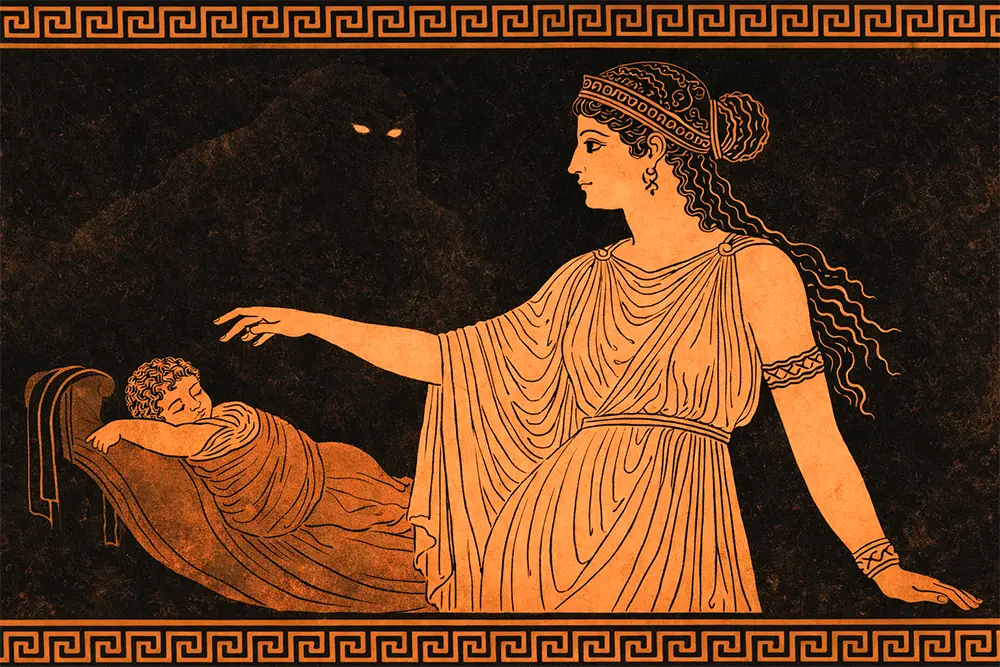
By the Roman period, as lamia becomes a broader category of nocturnal predator, visual imagination expands. The figure is associated with illusion, seduction, and concealed appetite.
However, ancient descriptions still avoid detailed hybrid schematics. The monster is conceptual before it is anatomical.
Medieval and Renaissance Transformations
A decisive shift occurs in medieval and early modern Europe, when scholars attempt to catalogue monsters alongside animals in encyclopedic works and bestiaries. In this context, Lamia is illustrated as a composite creature: often with a woman’s head and torso joined to a quadruped body, sometimes feline or hoofed, and frequently covered in scales.
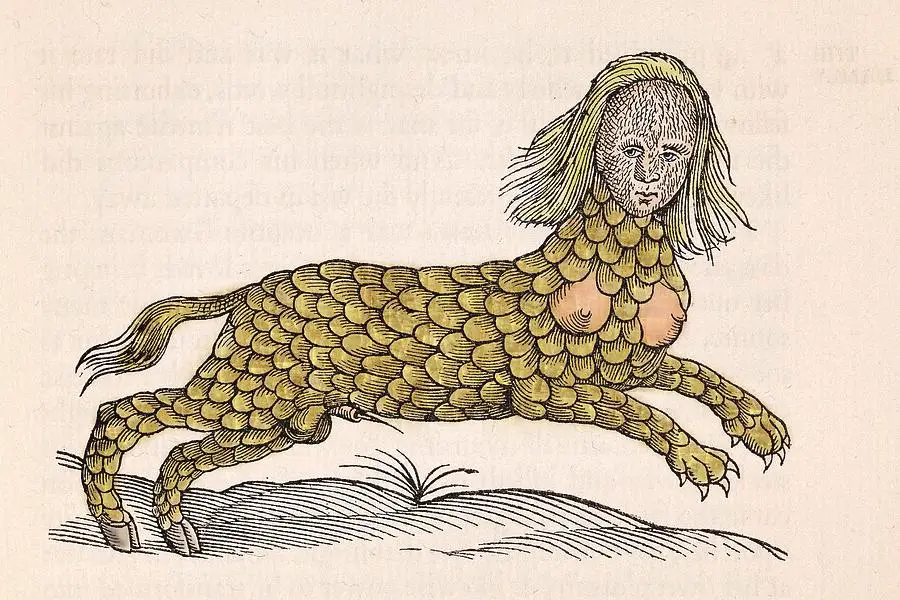
Edward Topsell’s seventeenth-century natural history compilation is a well-known example of this visual form. Here, Lamia is rendered as a structured hybrid beast, placed within a taxonomy of marvels.
This design reflects early modern classification logic rather than classical Greek mythology. The Lamia becomes zoologically defined, visually dramatic, and physically monstrous.
Romantic Reinterpretation
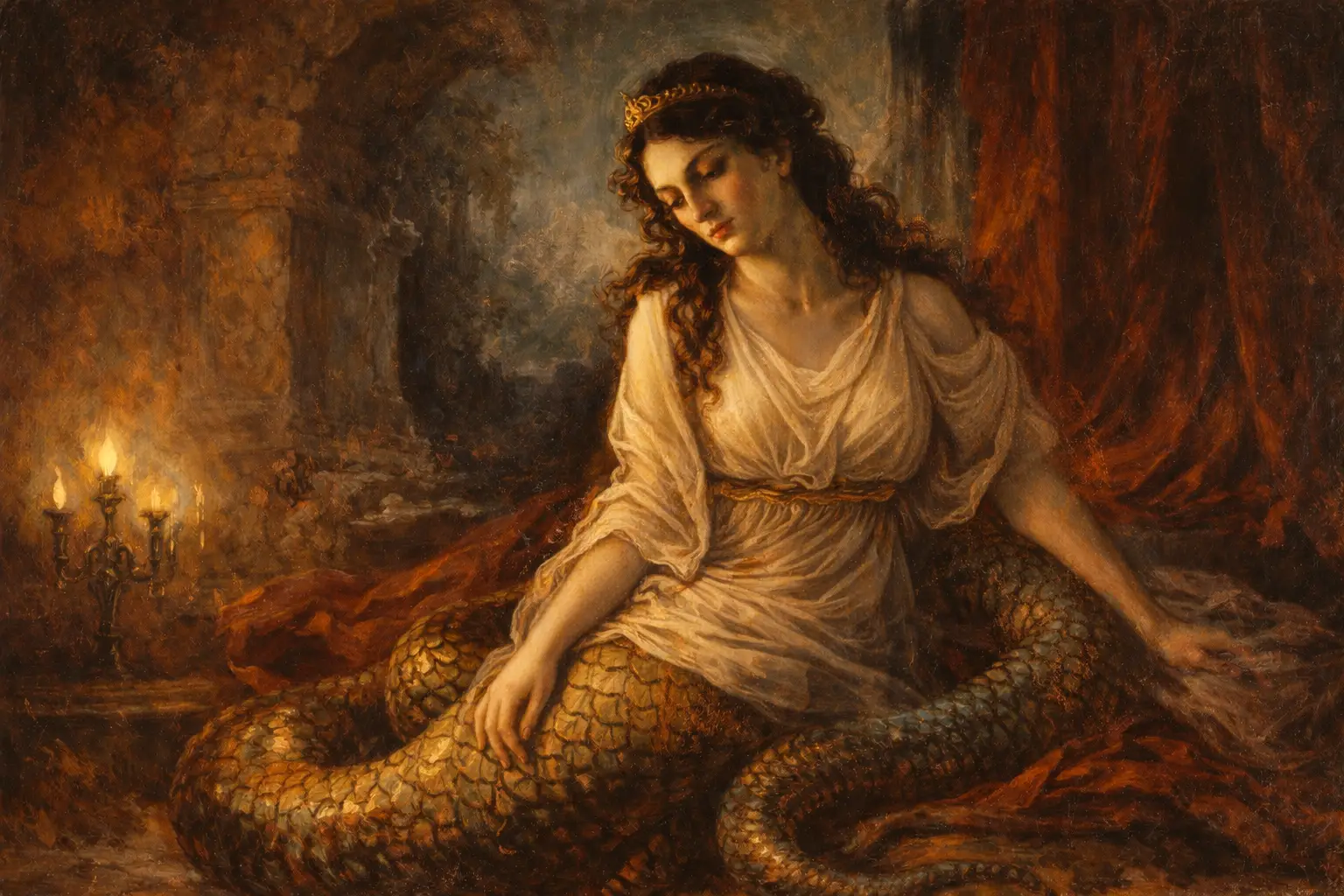
In the early nineteenth century, John Keats’ poem Lamia popularizes a different image: a serpent transformed into a woman. This Romantic version reinforces the serpent-woman form as a powerful symbol of beauty masking danger.
The transformation motif offers artists a clear visual narrative, and the serpent association becomes increasingly dominant in artistic imagination.
Modern Fantasy Standardization
Twentieth- and twenty-first-century fantasy literature, games, and visual media tend to stabilize Lamia as a half-woman, half-snake being. This form is visually legible, immediately recognizable, and distinct from other hybrid creatures.
It blends the Romantic serpent imagery with broader fantasy conventions.
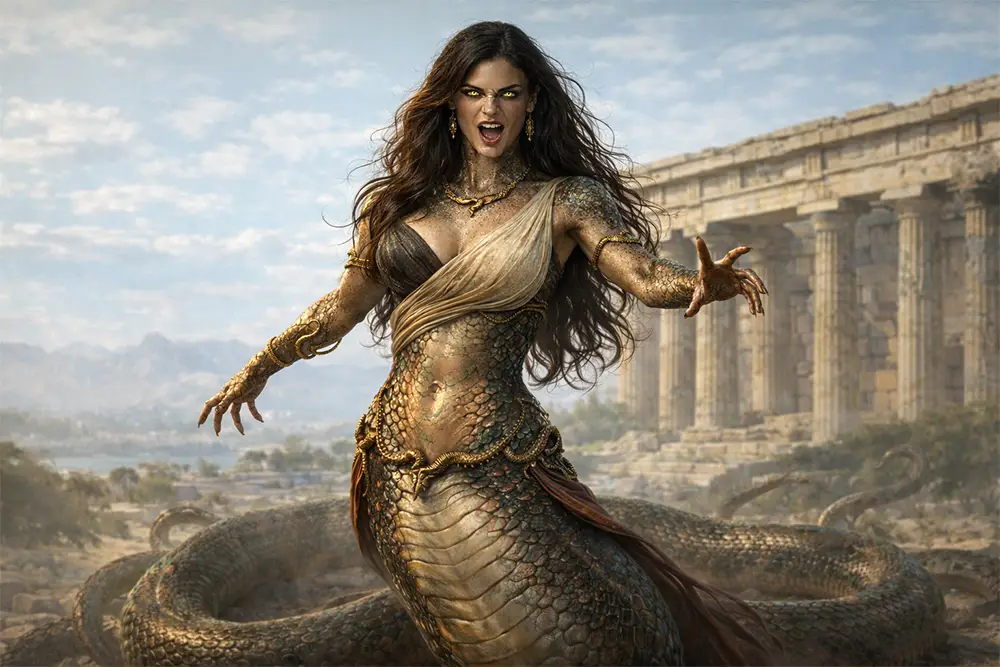
The result is a layered visual history. Lamia begins as a morally monstrous queen with no fixed anatomy, evolves into a class of seductive daemons, acquires composite animal features in Renaissance bestiary tradition, and finally settles into the now-familiar serpent-woman archetype in modern fantasy.
Each phase reflects the cultural priorities of its era rather than a single, unbroken visual tradition.
Background Story
Lamia’s myth emerges from Greek storytelling culture, where fear was often personified into named figures. Greek societies regularly externalized danger through daimon-like beings who explained unpredictable harm, especially to children.
Lamia fits squarely into this tradition. Her legend transforms private tragedy into public warning.
The Libyan setting is significant. Greek writers frequently placed morally ambiguous or extreme narratives at the edges of the known world.
Libya functions as a cultural borderland, distant enough to feel exotic, close enough to be integrated into Greek myth-history. By situating Lamia there, storytellers could frame her as both historical and uncanny.
In Diodorus’ account, Lamia’s children die, and she responds with envy-driven violence toward others’ offspring. This narrative mechanism reflects a broader mythic pattern: grief becomes transgressive, and transgression becomes monstrous identity.
Importantly, the story also explains its own survival. Lamia’s name persists because it becomes useful, a verbal tool for discipline, a shorthand for danger.
As the myth evolves, Lamia ceases to be only a person and becomes a category. The shift from Lamia to lamiai signals a transition from localized legend to recurring folklore function.
Once the name detaches from biography, it can be applied to any narrative that needs a child-haunting or seductively predatory figure. This is how myth scales: from story to symbol.
Famous Folklore Stories
Lamia the Libyan Queen and the Child-Frighter Tradition
Diodorus Siculus records a Libyan tradition where Lamia begins as a queen known for beauty, then becomes infamous for harming other families’ children. The core “folklore mechanism” is the point: her name survives as something used to frighten children, turning a person into a lasting bogey figure.
Menippus and the Lamia Bride of Corinth
In Philostratus’ Life of Apollonius of Tyana, a young philosopher named Menippus falls for a stunning, wealthy bride. Apollonius exposes her as a lamia-like predator who uses romance, luxury, and illusion to lure a victim.
This story shifts Lamia from child-terror toward seductive, vampiric danger.
The Jar of Eyes
Plutarch references a well-known fable in which Lamia stores her eyes in a jar at home and only “puts them in” when she goes out. He uses it as a moral metaphor about people who watch others closely but ignore their own faults.
The detail matters because it shows the myth had household-level familiarity.
Cultural Impact
Lamia’s cultural power lies in her flexibility. In Classical and Roman literature, her name functions as a familiar reference point.
Writers assume audiences already understand what “Lamia” implies, danger to children, deceptive femininity, and nocturnal threat. That shared recognition proves her integration into everyday moral vocabulary.
In Late Antiquity, the plural lamiai demonstrates that the figure had expanded beyond a single legend. The name now designates a type of being rather than a biography.
This shift influences how later demonologies and folklore traditions classify female night-spirits. Lamia becomes part of a wider Mediterranean pattern of child-threatening or seductive daemons.
By the Romantic period, Lamia acquires new literary life. John Keats’ 1819 poem Lamia reimagines her as a serpent transformed into a woman who falls tragically in love.
This reinterpretation reframes her from bogey figure to symbol of illusion versus rationality, desire versus philosophy. The myth adapts to new intellectual anxieties while retaining its core structure: beauty masking danger.
In modern fantasy and horror media, Lamia persists because she solves a narrative problem. She personifies hidden appetite.
Whether portrayed as a cursed witch, a vampiric seductress, or a serpentine monster, the archetype remains intact. Across 2,000 years of reinterpretation, the essential mechanism survives: Lamia embodies the fear that what appears nurturing, loving, or desirable may conceal consumption.
Similar Beasts
Bogeyman
The bogeyman is a role found across cultures, not one single mythic species. It is the unnamed thing in the dark that grabs careless kids, waits beyond the doorway, or punishes rule-breaking.
Its power comes from vagueness and adaptability. Read More
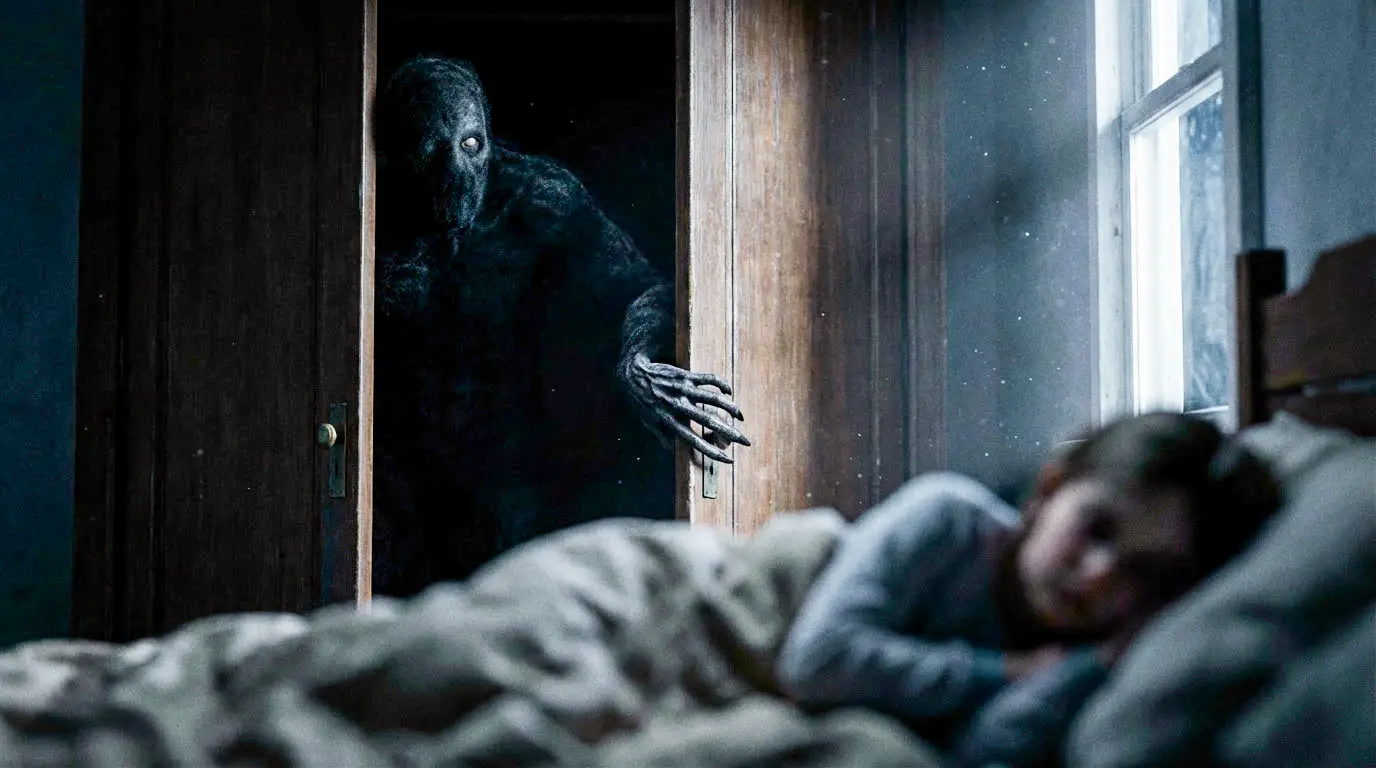
Lamia often functions exactly like a bogeyman. Even when the myth starts with a named queen, the later cultural use turns her into a warning word.
Like the bogeyman, Lamia is less about anatomy and more about behavioral control through fear.
Empusa
Empusa is a Greek daemon linked to Hecate. Stories describe her as a shapeshifter who appears as an attractive woman, then reveals something wrong – animal legs, a monstrous mouth, or a predatory nature.
She shows up in comedy and folklore as a threat that mixes fear with deception.
Like Lamia, Empusa weaponizes appearance. Both figures hide danger behind beauty and get used as cautionary examples about lust, gullibility, and nighttime encounters.
Empusa also overlaps with the later idea of “lamiai” as a wider class of female predators.
Baobhan Sith
The Baobhan Sith is a Scottish Highland fairy woman, often described as beautiful, elegantly dressed, and deadly. She lures men, usually hunters or travelers, and drains their life.
The story connects strongly to wilderness danger and the risk of following charm into isolation. Read More

This resembles Lamia’s later seductress phase. Both figures operate through attraction and false safety, then turn predatory. The difference is setting and logic: Baobhan Sith sits in fairy folklore and outdoor spaces, while Lamia is rooted in classical daemon lore and moral warning.
Mormo
Mormo is a Greek bogey figure used to frighten children into obedience. She is not always given a fixed look, because her job is psychological: a name that makes kids stop, stay close, and listen.
Some traditions treat her as a child-snatcher or devourer.
Mormo matches Lamia’s social function. Both act like verbal safety fences around the home and the night. When Lamia becomes “the monster you tell kids about,” she is working in the same lane as Mormo: fear as parenting tech in ancient culture.
Strix
The Strix comes from Roman and Italic tradition as a night creature often described as a screeching bird. It is blamed for attacking infants, stealing blood, or bringing sickness.
Writers treat it as something that explains sudden child harm and keeps families alert at night.
Strix lines up with Lamia in target and timing: children, darkness, helplessness. Both become explanations for tragedies that feel impossible to control.
They also share the same practical use – a story adults repeat to keep kids indoors and under watch.
Lamashtu
Lamashtu is a Mesopotamian female demon feared for harming pregnant women and infants. Unlike a simple fireside story, she appears in protective traditions: amulets, incantations, and rituals meant to block her influence.
She is treated as an active supernatural threat. Read More
Lamia compared to Bogeyman, Succubus, and Yuki-onna
| Aspect | Lamia | Bogeyman | Succubus | Yuki-onna |
|---|---|---|---|---|
| Origin | Lamia is rooted in Greek mythology as a tragic figure and queen. | The Bogeyman originates from various folklore traditions as a fearsome creature. | Succubus has origins in medieval European folklore as a seductress. | Yuki-onna comes from Japanese folklore, often depicted as a snow spirit. |
| Appearance | Lamia is often depicted with a serpent-like body and human features. | The Bogeyman is typically portrayed as a shadowy, monstrous figure. | Succubus is usually shown as a beautiful woman with alluring traits. | Yuki-onna is often illustrated as a pale woman in white, resembling snow. |
| Behavior | Lamia lures victims with charm but reveals her predatory nature. | The Bogeyman instills fear by lurking in the dark and preying on children. | Succubus seduces men in their dreams, leading to their demise. | Yuki-onna can be both benevolent and malevolent, depending on the story. |
| Symbolism | Lamia symbolizes the collapse of motherhood and the horror of loss. | The Bogeyman represents childhood fears and the unknown dangers of night. | Succubus embodies sexual desire and the dangers of temptation. | Yuki-onna symbolizes the beauty and danger of nature's coldness. |
| Cultural Impact | Lamia has influenced literature and art, representing complex emotions. | The Bogeyman has become a universal symbol of fear across cultures. | Succubus has inspired numerous stories and media focused on seduction. | Yuki-onna has appeared in various films and anime, showcasing her mystique. |
| Modern Interpretations | Modern interpretations of Lamia often emphasize her tragic backstory. | The Bogeyman is frequently referenced in contemporary horror and children's tales. | Succubus is often portrayed in modern media as a complex character. | Yuki-onna continues to be a popular figure in modern Japanese culture. |
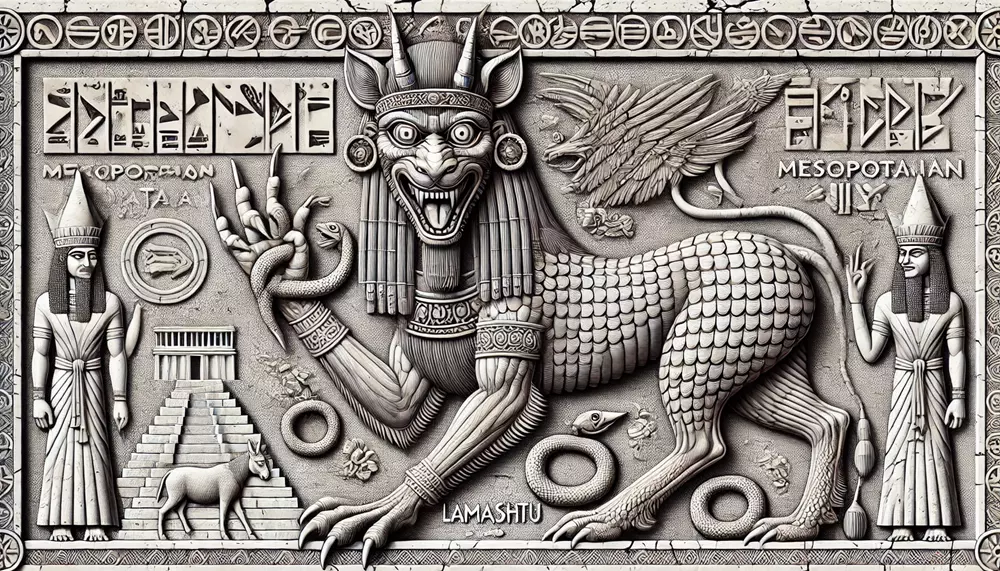
Lamia overlaps in the fear focus: motherhood, babies, and night danger. The key difference is structure. Lamia mostly lives in folklore and literature, while Lamashtu is tied to formal protective practice.
Both show how societies personified infant risk into a named enemy.
Succubus
The succubus is a medieval Christian demon concept, described as a female spirit that tempts men sexually, often through dreams or nighttime visits. The idea is tied to moral panic, sin, and spiritual vulnerability, explaining desire as an external attacking force.
Succubus parallels Lamia when Lamia becomes a seductive predator rather than only a child-frightener. Both link beauty with danger and make lust feel risky.
The main difference is worldview: succubi belong to Christian demonology, while Lamia grows from Greek myth and folklore.
Churel
The Churel is a South Asian female spirit, often connected to death in childbirth, injustice, or betrayal. Many versions describe her as appearing beautiful or familiar before revealing something wrong – reversed feet, decay, or a sudden predatory intent toward men and families.
Churel matches Lamia through the grief-to-monster pathway. Both can be read as stories where suffering mutates into danger, especially around family life.
They also share the lure mechanic: a convincing surface that hides threat, used as a warning about trust and boundaries.
Yuki-onna
Yuki-onna is a Japanese yōkai associated with snowstorms and winter nights. She often appears as a beautiful, pale woman in the cold, sometimes offering help, sometimes bringing death or disappearance.
Her myth fits harsh climates and the fear of nature’s quiet violence. Read More

Yuki-onna resembles Lamia in the beauty-versus-danger contrast. Both can appear calm and alluring, then reveal lethal intent. The difference is what they explain: Lamia often polices social and household fears, while Yuki-onna expresses environmental dread and winter survival anxiety.
Religion/Ritual
Lamia does not behave like a god or a saint in Greek religion. Ancient sources treat her as a daimon-like threat and a folklore tool, not a figure with temples, priests, or public festivals.
In other words, people talked about Lamia, warned about Lamia, and used her name to control behavior, but they did not gather to worship her.
Where Lamia does touch ritual life is indirect. Late Antique and Byzantine protective magic shows a clear obsession with child-killing demons, especially threats connected to pregnancy, birth, and the newborn period.
Many surviving amulets and texts focus on named female child-killers like Gello, but they also show how these demons blur together in practice. Over time, labels could slide, and “lamia” could function as a generic tag for a child-threatening night spirit in learned and popular language.
A key ritual pattern repeats across the Eastern Mediterranean: identify the demon, force it to reveal its secret names, and then use those names in writing or recitation as a shield. This matters for Myth Beasts because it shows the ritual logic that sits behind the fear.
People believed naming the threat, listing its aliases, and invoking protective powers could block it. Lamia’s cultural role fits this ecosystem even when she is not the main demon on the object.
In short, Lamia is not a cult figure. She is part of a broader religious-adjacent zone where folklore fear meets practical protection, especially around childbirth and infant survival.
Scientific or Rational Explanations
A grounded way to read Lamia is as a social tool built for high-risk realities. In the ancient world, infant and child death was common and often unexplained.
A figure like Lamia turns that chaos into a narrative with an enemy, a motive, and a warning. It does not solve the tragedy, but it makes it feel legible: “something did this,” and “here is how to avoid it.”
Lamia also works as boundary policing. Many traditions place her attack zone at night, outdoors, or in liminal spaces.
That maps neatly to real dangers: wandering into darkness, strangers, animals, accidents, exposure. The myth teaches risk management in a form kids remember.
This is why sources treat her name as part of child discipline, not as a theological doctrine.
Another rational layer is psychology and moral storytelling. The Libyan queen tradition connects Lamia to grief, envy, and the fear of a caregiver becoming unsafe.
That theme appears in many cultures because it is emotionally intense and socially taboo. Myth turns the taboo into a monster so a community can talk about it without accusing real people.
Finally, later stories that frame lamias as seductive predators can be read as cautionary narratives about exploitation. The “beautiful trap” plot warns about being lured by status, pleasure, and fantasy.
It encodes a risk model for young men: charm can be performance, and appetite can be predation. In that sense, Lamia becomes a mythic vocabulary for manipulation and consent anxiety, long before modern terms existed.
Modern Cultural References
Domino Day (TV Series, 2024)
A BBC Three supernatural drama set in Manchester. The main character, Domino, is explicitly identified as a lamia – a predatory being who must feed on human life force to survive.
The show modernizes the myth by framing lamia hunger as both biological need and moral conflict, blending urban fantasy with identity drama.
https://www.imdb.com/title/tt14466446/
Drag Me to Hell (Film, 2009)
Directed by Sam Raimi, this horror film centers on a curse that binds its victim to a powerful demon known as the Lamia, also called the Black Goat. After being cursed, the protagonist is tormented for three days by escalating supernatural attacks before the demon comes to claim her soul.
The film does not retell the Greek myth of Lamia. Instead, it uses the name as a demonic title within a broader folkloric framework, presenting the Lamia as an unstoppable infernal force rather than a child-devouring queen or seductive spirit from classical tradition.
https://www.imdb.com/title/tt1127180/
Merlin – Season 4, Episode 8: “Lamia” (TV Episode, 2011)
In this BBC fantasy series episode, Lamia appears as a beautiful young woman who entrances men and drains their life. The episode draws directly on the myth’s central motif: seductive appearance masking lethal intent.
https://www.imdb.com/title/tt2098295/
Stardust (Film, 2007)
In this fantasy adventure film based on Neil Gaiman’s novel, Michelle Pfeiffer plays Lamia, leader of a coven of witches seeking immortality. Though adapted into a fairy-tale framework, the character preserves Lamia’s association with predatory hunger and dangerous beauty.
https://www.imdb.com/title/tt0486655/
Monster Musume: Everyday Life with Monster Girls (TV Series, 2015)
This anime adaptation of the manga features Miia, a lamia – a snake-bodied humanoid girl – living in modern Japan. The series transforms Lamia from horror figure into a fantasy species within a romantic comedy setting, showing how far the myth has evolved in contemporary media.

https://www.imdb.com/title/tt4831392
Conclusion
The myth of Lamia continues to captivate audiences with its complex portrayal of a creature that embodies both horror and tragedy. Her story reflects ancient fears of the unknown and the consequences of unchecked desires.
As a symbol of transformation and vengeance, Lamia serves as a reminder of the thin line between humanity and monstrosity. Her enduring presence in modern culture underscores the timeless nature of her myth, illustrating how ancient tales continue to resonate with contemporary themes and anxieties.

Throughout history, Lamia has been depicted as a cautionary figure, warning against the dangers of succumbing to desire and the destructive power of jealousy. Her narrative has evolved over time, adapting to cultural shifts while maintaining its core themes.
As a subject of scholarly interest, Lamia provides insight into ancient Greek mythology and its influence on modern storytelling. The myth of Lamia remains a rich tapestry of horror, seduction, and transformation, offering endless possibilities for reinterpretation and exploration.
Further reading
Diodorus Siculus, Library of History, Book 20.41 (C.H. Oldfather trans.). Explains Lamia as a Libyan queen in a rationalized tradition, including child-terror folklore and the detachable-eyes motif. https://penelope.uchicago.edu/Thayer/E/Roman/Texts/Diodorus_Siculus/20B*.html
Plutarch, Moralia, On Being a Busybody (De curiositate) 2 (Loeb-based public text). Uses the “Lamia in the fable” image of eyes stored in a jar, proving the motif’s circulation. https://penelope.uchicago.edu/Thayer/E/Roman/Texts/Plutarch/Moralia/De_curiositate*.html
Philostratus, Life of Apollonius of Tyana 4.21-25 (public translation). Presents a lamia as a vampiric seductress exposed at Corinth, showing how “lamia” expands into a class of predators. https://www.livius.org/sources/content/philostratus-life-of-apollonius/philostratus-life-of-apollonius-4.21-25/
Horace, Ars Poetica line 340 (Latin text). Treats the Lamia belly-child motif as a known reference point for implausible storytelling, indicating wide cultural familiarity in Roman literary circles. https://www.thelatinlibrary.com/horace/arspoet.shtml
Oxford Classical Dictionary, “Lamia.” Discusses the evolution of Lamia’s form and the blending of her traits with other female daemonic figures in later Greek and Roman tradition.
https://global.oup.com/academic/product/the-oxford-classical-dictionary-9780199545568
Liddell and Scott, A Greek-English Lexicon, revised by Jones and McKenzie. Authoritative classical lexicon explaining Λάμια and its linguistic roots, including connection to laimos and later plural lamiai usage.
https://logeion.uchicago.edu/%CE%9B%CE%AC%CE%BC%CE%B9%CE%B1
Doroszewska, J. “Eyes and Vision in Plutarch’s De Curiositate” (Greek, Roman, and Byzantine Studies, 2019). Academic discussion of the Lamia-eyes motif and how Plutarch uses it, useful for separating folklore tradition from later fantasy details.
https://grbs.library.duke.edu/index.php/grbs/article/download/16090/7199/19853
Encyclopaedia Britannica, “Lamia” (updated Feb 6, 2026). Clear reference overview that frames Lamia as a child-devouring daemon and a bogey figure, with no evidence of formal cult worship.
https://www.britannica.com/topic/Lamia-Greek-mythology (Encyclopedia Britannica)
Björklund, Helle (2017). “Protecting Against Child-Killing Demons: Uterus Amulets in the Late Antique and Byzantine Magical World.” Research on protective amulets and the demon categories tied to pregnancy and infants, crucial for understanding ritual context around child-killers.
https://helda.helsinki.fi/items/fb47114b-00a1-4661-b423-79fae927cf57 (Helda)
Björklund, Helle (2017). “Metamorphosis, Mixanthropy and the Child-Killing Demon in Greco-Roman Antiquity and the Byzantine Period” (JSTOR landing page).
Tracks how child-killing demon traditions evolve and overlap, useful for separating Lamia-as-person from lamia-as-category.
https://www.jstor.org/stable/26347120 (JSTOR)
Spier, Jeffrey (1993). “Medieval Byzantine Magical Amulets and Their Tradition” (PDF). Discusses common amulet narratives where demons are forced to reveal names and swear off a household, showing the protective logic used against child-killing threats.
https://ia802307.us.archive.org/4/items/spier-1993-byz-medieval-amulets/Spier_1993_Byz_Medieval_Amulets.pdf (ia802307.us.archive.org)
Melammu Project, entry collecting Diodorus Siculus text on Lamia. Provides the child-frightener framing and the rationalized tradition, key for social-function explanations.
https://melammu-project.eu/database/gen_html/a0000356.html (melammu-project.eu)
Preternature (2013). “Magic and Vampirism in Philostratus’s Life of Apollonius of Tyana.” Scholarly analysis of the Corinth lamia episode and what it signals about seduction, illusion, and predation in late antique storytelling.
https://scholarlypublishingcollective.org/psup/preternature/article/2/2/113/290337/Magic-and-Vampirism-in-Philostratus-s-Life-of (scholarlypublishingcollective.org)
Corinthian Matters (2011). “The Vampire on the Isthmus.” A location-aware discussion of the Menippus episode that helps connect the tale to urban anxieties, travel, and Corinth as a setting for illusion and danger.
https://corinthianmatters.org/2011/10/31/the-vampire-on-the-isthmus-a-halloween-tale/ (Corinthian Matters)
Topsell, Edward, The History of Four-Footed Beasts and Serpents (1658), Archive.org scan. Full access to the early modern monster-catalogue context that produced composite Lamia designs and other hybrid creatures. https://archive.org/details/historyoffourfoo00tops
The Public Domain Review, The History of Four-Footed Beasts and Serpents (1658). Contextual overview of Topsell’s compilation and its reuse of earlier natural history imagery, explaining why monsters were visualized as animal catalog entries. https://publicdomainreview.org/collection/the-history-of-four-footed-beasts-and-serpents-1658/
Keats, John, Lamia (text), Project Gutenberg. Romantic-era depiction that strongly reinforces the serpent-to-woman transformation image and becomes influential for later serpent-woman visual tradition. https://www.gutenberg.org/files/2490/2490-h/2490-h.htm