Overview of the Classical Antiquity Period
Classical Antiquity conventionally denotes the ancient Mediterranean world from the emergence of Greek city-states around the eighth century BCE through the late Roman Empire in the fifth century CE.
Greek, Roman, Egyptian, and other neighboring societies shaped this broad period, though its chronological boundaries vary across historical disciplines and regional contexts.
Its cultural importance arose partly from sustained exchange across the Mediterranean, where travel, trade, warfare, and settlement circulated religious images and narrative forms.
Myths helped communities explain divine agency, extraordinary natural events, human origins, and the perceived boundaries between mortal and supernatural existence.
Cultural and Religious Worldviews
Dominant Belief Systems
Many Greek and Roman communities practiced polytheistic religions, recognizing multiple deities with distinct civic, familial, natural, and cosmic associations.
These traditions did not constitute uniform systems: local cults, philosophical schools, household observances, and civic practices could express differing accounts of divine power.
People commonly understood the natural world as potentially subject to divine influence, although surviving sources rarely establish one consistent explanation for every event.
Greek philosophical inquiry increasingly offered explanations of nature through argument and observation, without simply displacing established religious practices or popular supernatural beliefs.
Role of Myth in Daily Life
Myths supplied shared narratives through which communities represented ancestry, civic identity, divine favor, and the consequences of human conduct.
Public festivals and civic worship connected religious stories with communal life, although practices differed substantially between cities and periods.
Mythic examples could support ethical reflection by depicting obligations toward guests, kin, rulers, or gods, but interpretations were not universally fixed.
Local legends also attached supernatural significance to particular landscapes, giving communities narrative frameworks for understanding shrines, springs, caves, and boundaries.
Mythological Beasts and Supernatural Entities
Common Types of Mythical Creatures
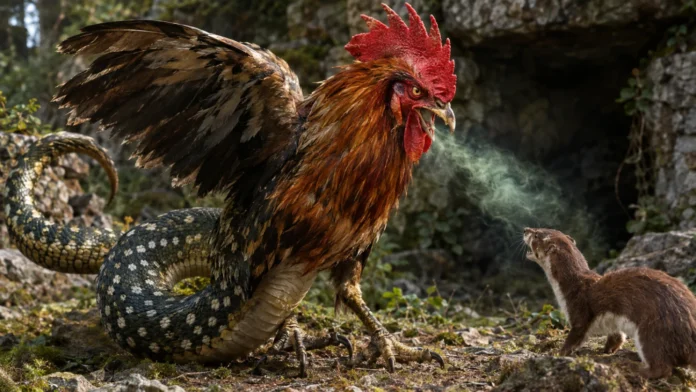
Greek and Roman traditions include hybrid creatures combining human and animal features, such as centaurs, satyrs, sphinxes, and the Minotaur.
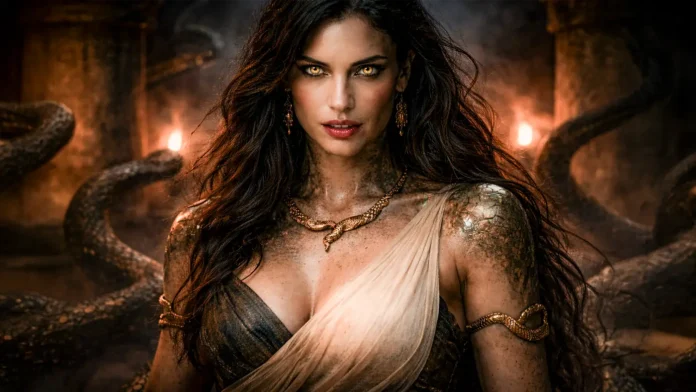
Other categories include divine messengers, protective figures, dangerous spirits, and monstrous beings associated with particular narratives or places.
These categories were not equivalent: a creature might function as a divine attendant in one account, while another narrative casts it as an obstacle.
Egyptian religious imagery also represented gods through human, animal, or composite forms, a tradition shaped by distinct theological and artistic conventions.
Symbolism and Meaning
Hybrid bodies could make visible distinctions between human order and animal characteristics, especially in Greek art and narrative traditions.
Monsters in Greek heroic narratives frequently test a protagonist’s capacity to restore social order, although their meanings vary by story and source.
In Roman contexts, prodigies and unusual creatures could be interpreted as signs requiring religious or political attention, according to particular historical accounts.
Egyptian composite divine forms expressed specific relationships between deities and powers; they should not be reduced to a general symbolism of disorder.
Folklore Traditions and Storytelling
Oral and Written Transmission
Oral performance preserved and adapted stories before and alongside their written forms, though the precise development of individual tales is often unrecoverable.
Greek epic poetry transmitted mythic material through performance and later textual preservation, making surviving versions evidence of change rather than transparent records of origins.
Drama, poetry, historical writing, and philosophical works reused supernatural narratives for differing purposes, including entertainment, civic reflection, and argument.
Inscriptions and visual objects provide additional evidence for religious imagery, but they do not always clarify the stories audiences associated with them.
Regional Variations
Greek myths varied among communities, with local traditions emphasizing particular sanctuaries, heroes, divine relationships, or accounts of regional origins.
Roman religious narratives developed within a different civic history, adapting some Greek figures while retaining distinct names, institutions, and political associations.
Egyptian traditions preserved their own divine genealogies and symbolic conventions, which cannot be treated as interchangeable with Greek or Roman systems.
Contact produced borrowing and reinterpretation, yet shared imagery does not by itself prove that different cultures assigned identical meanings to a creature.
Relationship Between Humans and the Mythical World
Fear, Protection, and Reverence
Some supernatural beings represented hazards associated with wilderness, disease, unexplained events, or the limits of human control in particular narratives.
Other figures served protective functions in religious imagery, including guardians positioned at entrances or associated with sacred and funerary settings.
Divine messengers and omens could connect human affairs with supernatural authority, although interpretations depended on local religious and political circumstances.
Reverence and fear were not mutually exclusive responses: a powerful deity could be respected while also regarded as capable of punishment.
Influence on Art and Material Culture
Mythical beings appeared on Greek pottery, where painted scenes conveyed recognizable episodes or figures to viewers familiar with traditional narratives.
Roman sculpture and architectural decoration incorporated mythic subjects to express religious, civic, funerary, or elite associations in specific settings.
Egyptian temples and funerary objects represented deities through established visual conventions, linking divine identity with ritual spaces and beliefs about death.
Images on coins, tools, clothing, and domestic objects varied in purpose; their presence alone cannot establish the beliefs of every owner.
Transition and Legacy of the Classical Antiquity Period
Late antiquity brought major religious changes across the Roman world, including Christianity’s increasing institutional influence and the continuing presence of older practices.
Earlier mythic figures persisted through literary adaptation, visual reuse, and reinterpretation, although their religious status changed across communities and historical periods.
Medieval European writers transmitted many classical narratives, while selecting and reframing them within Christian intellectual and moral contexts.
Classical imagery later informed artistic and literary traditions, but such reception represents historical transformation rather than uninterrupted survival of ancient belief.
Historical Reliability and Interpretation
Evidence for ancient supernatural beliefs comes from varied sources, including literature, inscriptions, archaeological contexts, and visual representations with differing purposes.
Literary works may preserve religious traditions while also reshaping them through genre, political circumstance, authorial choices, or poetic convention.
Archaeological images can document the circulation of motifs, but their meanings remain uncertain when inscriptions or contextual evidence are absent.
Historians distinguish evidence for a story’s cultural presence from proof that every community accepted its events as literal history.
Modern interpretations of mythical creatures are analytical reconstructions, not direct access to ancient psychology; conclusions therefore require attention to region, date, and source.