Introduction
The Roc, or Rukh, is a legendary bird of enormous size and strength, often featured in Middle Eastern mythology. Known for its ability to carry off elephants, the Roc has captured imaginations for centuries.
Stories of the Roc appear in various cultures, particularly in Arabian and Persian tales. The creature has been depicted as both a fearsome predator and a symbol of power and majesty.
Its mythological significance is profound.
Throughout history, the Roc has been featured in numerous literary works, most notably in “One Thousand and One Nights.” Its depiction varies, but its grandeur remains a constant across narratives.
The Roc’s mythical status has made it a subject of fascination for scholars and enthusiasts alike. Its presence in folklore underscores the human desire to explore and understand the unknown.
History/Origin
The Roc’s origins are deeply rooted in Middle Eastern and South Asian mythology. The earliest references to the Roc can be traced back to Persian and Arabic literature, where it is often described as a gigantic bird.
Arabian tales, such as those in “One Thousand and One Nights,” frequently mention the Roc. It is depicted as a creature capable of carrying large animals, highlighting its immense strength and size.
Some scholars believe the Roc may have been inspired by real birds, such as the now-extinct Aepyornis of Madagascar. This bird’s impressive size could have fueled the mythological descriptions of the Roc.
Despite its mythical nature, the Roc has been a subject of interest for explorers and writers throughout history. Its legendary status has ensured its place in the annals of mythological creatures.
Name Meaning
The name “Roc” is derived from the Arabic word “Rukh,” which signifies a legendary bird of great size. This name has been used in various cultures to describe the mythical creature.
The name “Roc” became popular through translations of Arabian tales, particularly those in “One Thousand and One Nights.” These stories introduced the creature to a wider audience, solidifying its mythical status.
The Roc’s name has become synonymous with grandeur and power, reflecting its portrayal in folklore. Its etymology highlights the cultural exchanges that shaped its mythological narrative.
Appearance
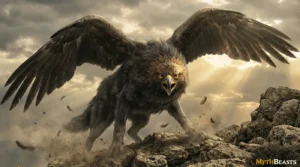
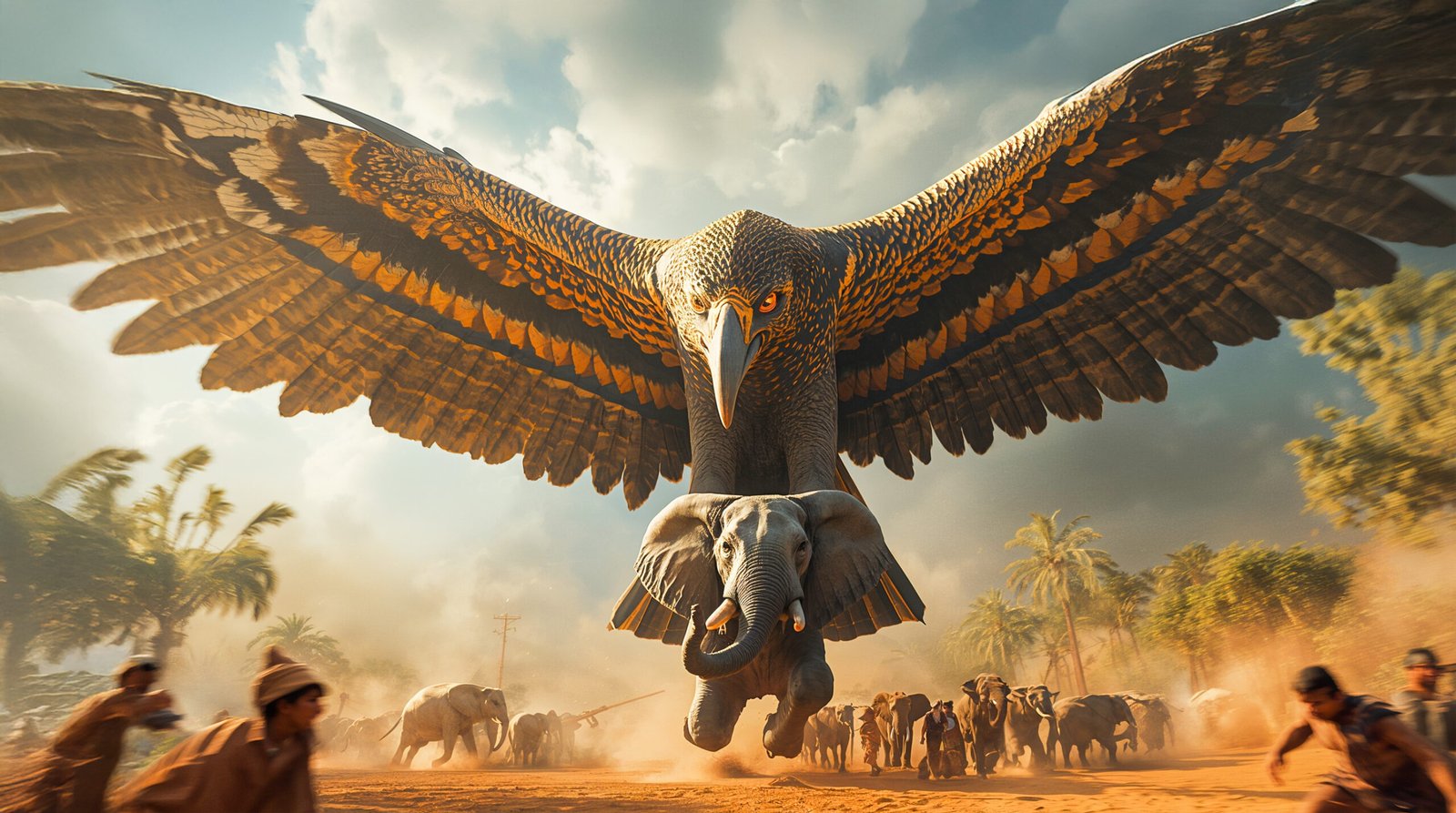
The Roc is typically described as a bird of enormous size, with wings spanning vast distances. Its plumage is often depicted as vibrant and colorful, adding to its majestic appearance.
In many tales, the Roc’s wings are said to be so large that they can block out the sun when fully extended. This imagery emphasizes the creature’s awe-inspiring presence in the sky.
The Roc’s beak and talons are often portrayed as formidable weapons, capable of capturing and carrying large prey. This depiction underscores the bird’s role as a powerful predator in mythology.
While descriptions of the Roc’s appearance vary, its size and strength remain consistent across different cultural narratives. These attributes contribute to its enduring legacy as a mythical beast.
Background Story
The Roc’s most famous appearances are in Arabian tales, where it often interacts with sailors and adventurers. In these stories, the Roc is both a threat and a marvel, showcasing its dual nature.
One of the most well-known stories involves Sinbad the Sailor, who encounters the Roc during his voyages. The bird’s massive size and strength are highlighted when it carries off an elephant.
The Roc is also featured in other Middle Eastern and South Asian folklore, where it is sometimes depicted as a guardian or protector. These stories emphasize its significance in various cultural contexts.
No verified sources describe specific rituals or ceremonies associated with the Roc. Its role in mythology is primarily as a symbol of power and mystery, rather than a focus of worship.
Famous Folklore Stories
No verified primary sources, historical records, or direct ritual descriptions exist for this aspect of the creature. Modern interpretations are speculative.
Sinbad’s Encounter with the Roc
One of the most famous tales involving the Roc is found in “The Arabian Nights,” where Sinbad the Sailor encounters the giant bird. During his second voyage, Sinbad finds himself stranded on a deserted island.
As he explores, he discovers a massive egg, realizing it belongs to the Roc. Seeking escape, Sinbad ties himself to the bird’s leg, hoping it will carry him to safety.

The Roc flies him to a valley full of diamonds and snakes. Sinbad cleverly escapes by using the Roc again, showcasing the bird’s immense power and size.
Marco Polo’s Description
In “The Travels of Marco Polo,” the explorer describes the Roc as a gigantic bird capable of lifting elephants. Polo claims to have heard stories about the Roc from the inhabitants of Madagascar during his journeys.
According to his accounts, the Roc’s wingspan was so vast that it could block out the sun. Polo’s descriptions contributed significantly to the Roc’s myth, blending adventure with wonder.
His writings helped introduce the Roc to European audiences, further cementing its place in global folklore.
Cultural Impact
The Roc holds a significant place in Middle Eastern folklore, symbolizing power and mystery. Its presence in “The Arabian Nights” highlights its role in storytelling and cultural imagination.
Historically, the Roc was seen as a creature of immense power, reflecting the vast and unexplored nature of the world. Its size and strength inspired awe and fear, shaping local myths.
In modern interpretations, scholars view the Roc as a symbol of human curiosity and exploration. Its stories are analyzed for insights into historical trade routes and cultural exchanges.
Contemporary scholars often explore the Roc’s tales to understand how ancient cultures perceived the natural world. The bird’s mythical attributes are seen as reflections of human wonder and the unknown.
Similar Beasts
Thunderbird

The Thunderbird is a legendary creature in Native American mythology, often depicted as a powerful bird that brings storms and thunder. Like the Roc, it symbolizes strength and dominates the skies.
Garuda
In Hindu and Buddhist mythology, Garuda is a divine bird-like creature. Known for its immense size and speed, Garuda serves as the mount of the god Vishnu, paralleling the Roc’s grandeur.
Ziz

In Jewish mythology, the Ziz is a giant bird said to be large enough to block out the sun. It shares similarities with the Roc in its depiction as a colossal avian creature.
Simurgh
The Simurgh is a benevolent, mythical bird in Persian folklore. Though not as fearsome as the Roc, it shares the theme of being a gigantic bird with mystical qualities and wisdom.
Roc compared to Thunderbird, Ziz, and Anzu
| Aspect | Roc | Thunderbird | Ziz | Anzu |
|---|---|---|---|---|
| Mythological Origin | The Roc originates from Middle Eastern and South Asian mythology. | The Thunderbird is rooted in Native American folklore and traditions. | The Ziz is mentioned in Jewish texts and is part of their mythology. | Anzu is derived from ancient Mesopotamian mythology and literature. |
| Cultural Significance | The Roc symbolizes power and majesty in various cultures. | The Thunderbird represents strength and protection in Native American beliefs. | The Ziz symbolizes divine protection and is often associated with the heavens. | Anzu is often seen as a symbol of chaos and disorder in mythology. |
| Physical Description | The Roc is described as a gigantic bird capable of immense feats. | The Thunderbird is depicted as a large bird with thunderous wings. | The Ziz is portrayed as a massive bird, often larger than an eagle. | Anzu is described as a lion-headed bird, combining features of both. |
| Abilities | The Roc is known for its ability to carry off large animals like elephants. | The Thunderbird is said to control the weather and create storms. | The Ziz is believed to protect the skies and control the winds. | Anzu is known for stealing the Tablet of Destinies, causing chaos. |
| Literary Appearances | The Roc appears prominently in "One Thousand and One Nights" and other tales. | The Thunderbird features in many Native American stories and legends. | The Ziz is referenced in various Jewish texts and folklore. | Anzu appears in ancient Sumerian and Akkadian literature, notably in the Epic of Gilgamesh. |
| Symbolism | The Roc embodies the human fascination with the unknown and the extraordinary. | The Thunderbird reflects the connection between nature and spirituality. | The Ziz represents the intersection of mythology and divine protection. | Anzu illustrates the struggle between order and chaos in ancient myths. |
Anzu

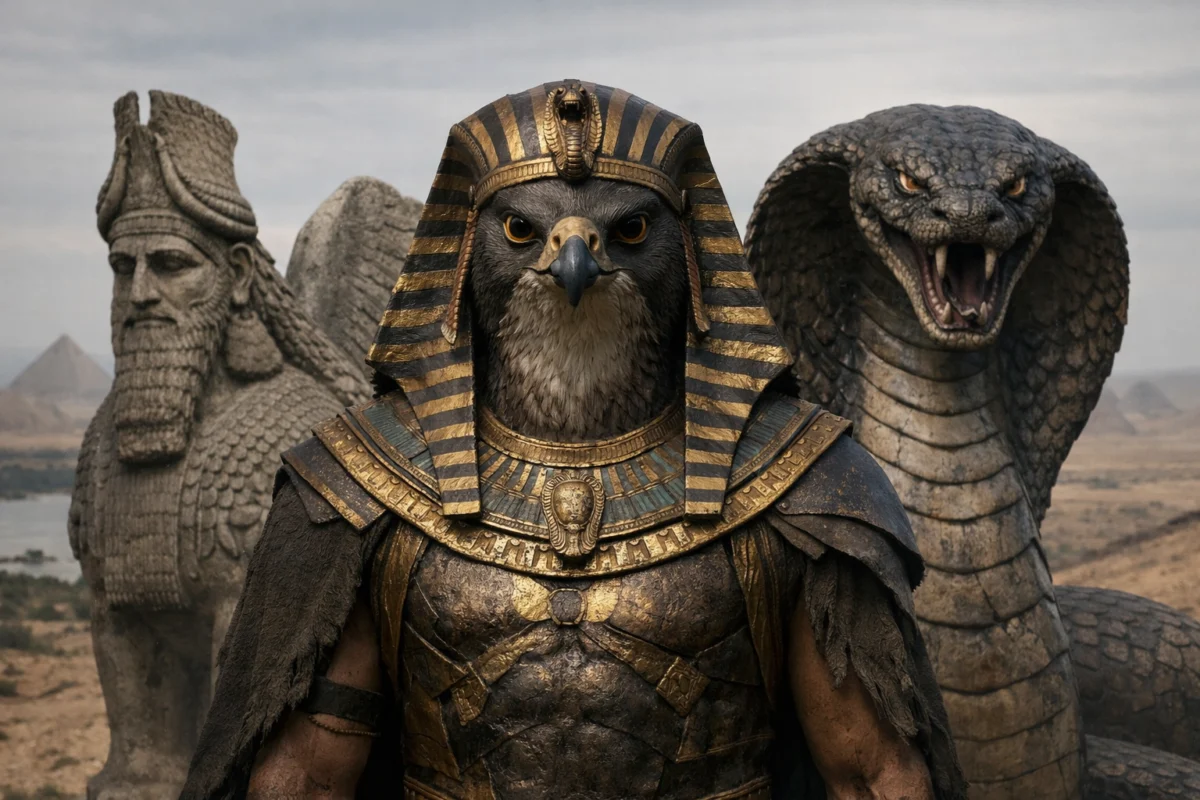
In Mesopotamian mythology, Anzu is a bird-like creature associated with storms and chaos. While not as large as the Roc, it shares the theme of being an influential and powerful bird.
Religion/Ritual
No verified sources describe religious rituals specifically dedicated to the Roc. However, its presence in myth suggests it may have held symbolic significance in ancient cultures.
Some interpretations suggest the Roc could symbolize divine power or protection, reflecting its mythical ability to dominate the skies and transport individuals to safety.
In cultures where the Roc appeared in stories, it might have been viewed as a representation of natural forces or as a guardian figure, although no direct evidence supports this.
Modern scholars theorize that the Roc’s tales could have been used in moral or educational stories, teaching lessons about bravery and resourcefulness through its mythical encounters.
Scientific or Rational Explanations
Some historians propose that the Roc myth may have originated from sightings of large birds, such as the now-extinct Aepyornis or “elephant bird” of Madagascar, known for its massive size.
Anthropologists suggest that tales of the Roc could be exaggerated accounts of real birds, amplified by explorers and traders to entertain and awe their audiences with tales of distant lands.
Other theories propose that the Roc was a symbolic representation of natural phenomena, such as storms or eclipses, interpreted by ancient people as the actions of a giant bird.
While no concrete evidence confirms the Roc’s existence, its stories reflect human fascination with the unknown and the desire to explain extraordinary natural occurrences through myth.
Modern Cultural References
Sinbad: Legend of the Seven Seas, film, directed by Patrick Gilmore and Tim Johnson, 2003. This animated film features a giant Roc as one of the mythical creatures Sinbad encounters on his adventures. IMDB
Assassin’s Creed: Origins, video game, developed by Ubisoft, 2017. This game, set in Ancient Egypt, features a Roc-inspired creature as part of its mythical expansion, exploring legendary beasts. Ubisoft
One Thousand and One Nights, novel, translated by multiple authors over centuries. This collection of Middle Eastern folk tales includes stories of the Roc, emphasizing its legendary size and strength. Britannica
Pathfinder Roleplaying Game, tabletop game, published by Paizo Publishing, 2009. The game includes the Roc as a creature players can encounter, highlighting its traditional attributes of immense size and power. Paizo
Conclusion
The Roc, or Rukh, stands as a symbol of immense power and majesty in mythological lore. Its legendary size and strength have captured the imagination of storytellers and audiences alike.
While primarily known through Middle Eastern folklore, the Roc’s influence extends into various cultural narratives worldwide, showcasing its universal appeal. Its presence in modern media underscores its enduring legacy as a creature of wonder and awe.
Despite the lack of verified historical sources detailing specific rituals or beliefs associated with the Roc, its mythical presence is undeniable. The Roc serves as a reminder of humanity’s fascination with the natural world and the mysteries it holds.
Through stories and modern adaptations, the Roc continues to inspire awe and curiosity, embodying the timeless allure of the unknown.
Further Reading
Roc (Legendary Bird), Encyclopaedia Britannica
A reliable overview of the Roc as a mythical bird, including its legendary attributes and place in folklore.
https://www.britannica.com/topic/roc-legendary-bird
Sinbad the Sailor, Encyclopaedia Britannica
Authoritative background on Sinbad’s voyages, including his encounters with mythical creatures like the Roc, and how these tales fit into Middle Eastern narrative tradition.
https://www.britannica.com/topic/Sindbad-the-Sailor
The Rukh of Marco Polo, Wikisource / Essays on Early Ornithology and Kindred Subjects
Primary-source historical material on how the giant bird (Rukh or Roc) appears in Marco Polo’s travel narratives, illustrating how such legends influenced European imagination.
https://en.wikisource.org/wiki/Essays_on_Early_Ornithology_and_Kindred_Subjects/The_Rukh_of_Marco_Polo